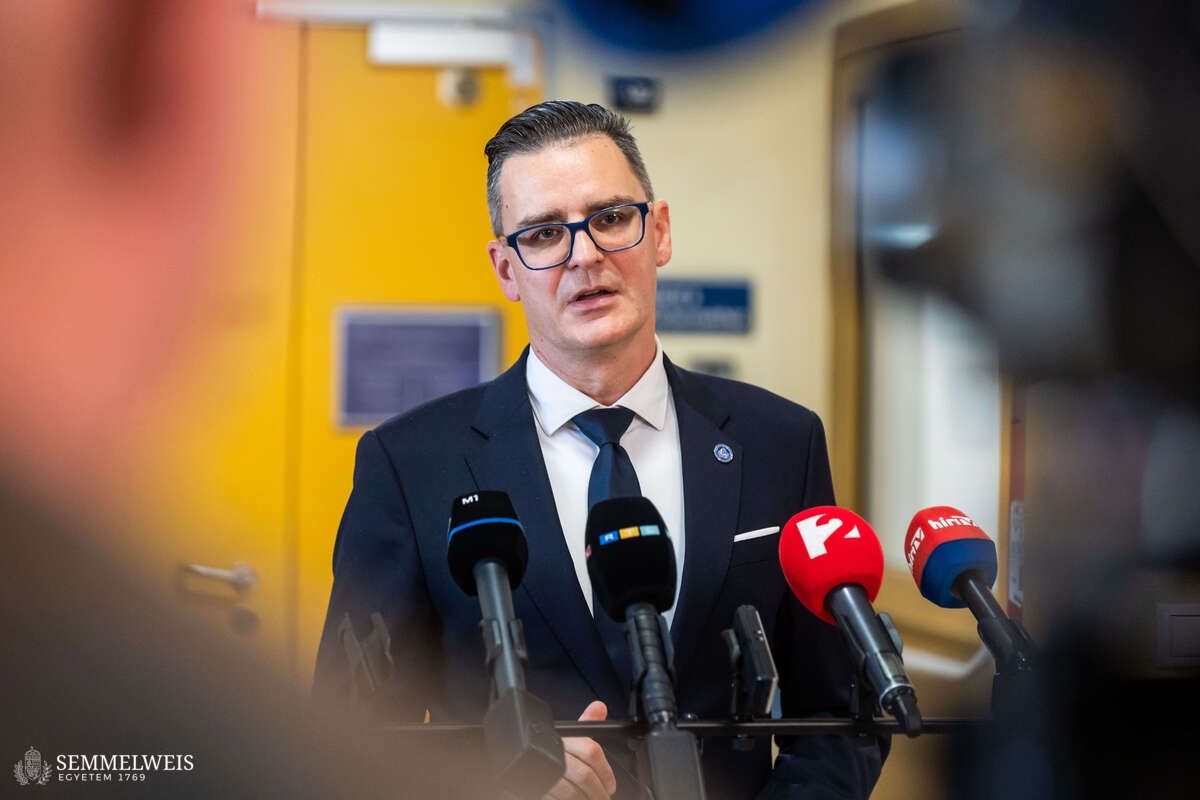
 Similarly to the European practice, the so-called “cross-donation” or “kidney exchange” has been available in Hungary since 2024. The basic idea is that if someone has a donor (e.g., a family member), but the two are immunologically incompatible, another pair in a similar situation is sought, and the donor from one pair donates a kidney to the recipient of the other pair, and vice versa, explains Dr. Attila Szijártó, Director of the Department of Surgery, Transplantation and Gastroenterology (StéG) at Semmelweis University. The most important message of these initiatives is that people with kidney failure could receive a new organ sooner if more of their relatives and close friends were to donate their kidneys.
Until the summer of 2025, organ transplants were only possible between two pairs of individuals; the first cross-donation was performed earlier this year at the University of Pécs Clinical Center. However, following a statutory amendment last summer, multiple couples can now participate in the otherwise anonymous organ exchange, which significantly increases the likelihood of optimal matches and, consequently, the chances of successful kidney transplants, added Dr. Attila Szijártó.
Since the number of organs from deceased donors is limited, living donor donations are growing in importance, as they can help reduce the current average waiting time of 3.5 years. – Dr. Attila Szijártó
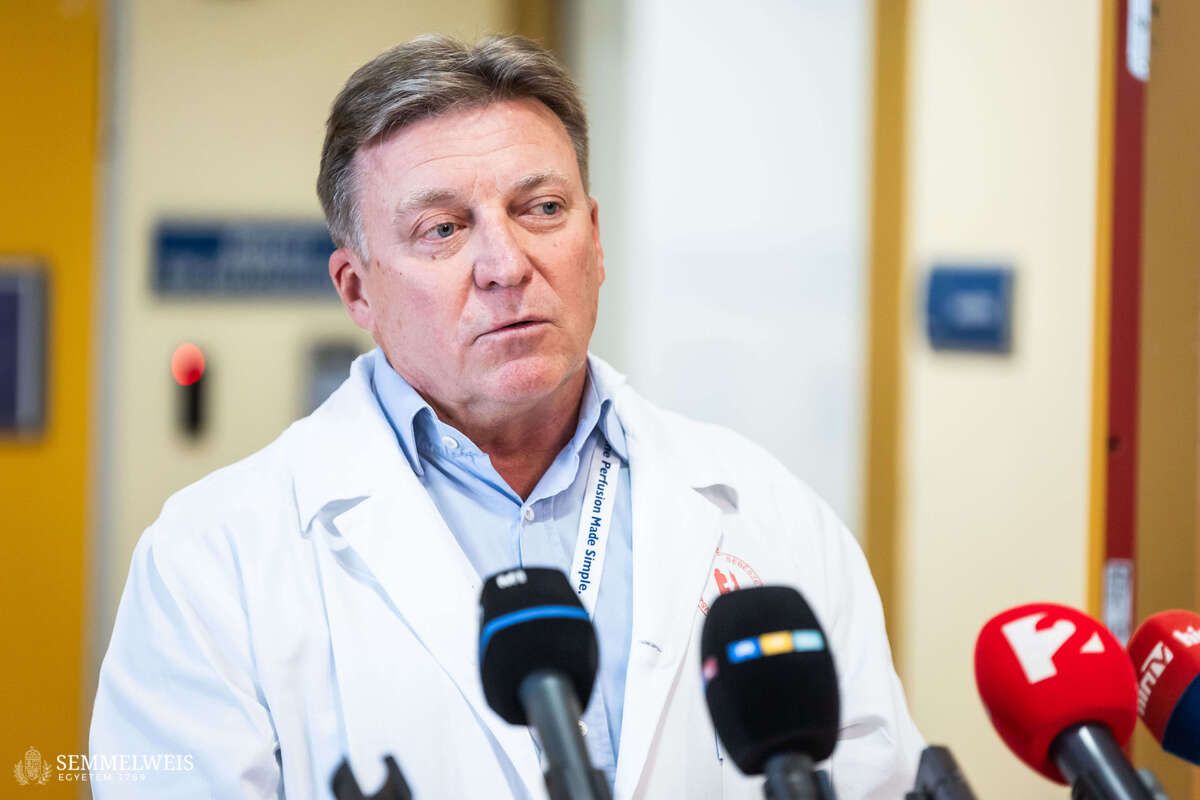 Dr. János Balázs Kovács, Assistant Professor at STéG and head of the kidney transplant program, said that the unusual transplant had required the coordinated efforts of nearly thirty healthcare professionals, including doctors, assistants, nurses, and coordinators. Then it took roughly six hours of intense work in the operating room to successfully perform the country’s first triple living-donor kidney transplant.
The procedures were performed simultaneously in three adjacent operating rooms: In the morning, the donors were anesthetized and the kidneys were removed – one of them using robotic assistance. Then, in the afternoon, the kidneys were transplanted with only a minimal time lag. — Dr. János Balázs Kovács
Dr. János Balázs Kovács shared that one of the patients involved in the cross-donation had already undergone a third kidney transplant. For the other two patients, immunological incompatibility had previously posed an insurmountable obstacle, which the three-way exchange has now successfully resolved.
Cross-donation provided an extraordinary opportunity to immediately improve the lives of my wife and another person. – Sándor Bóta
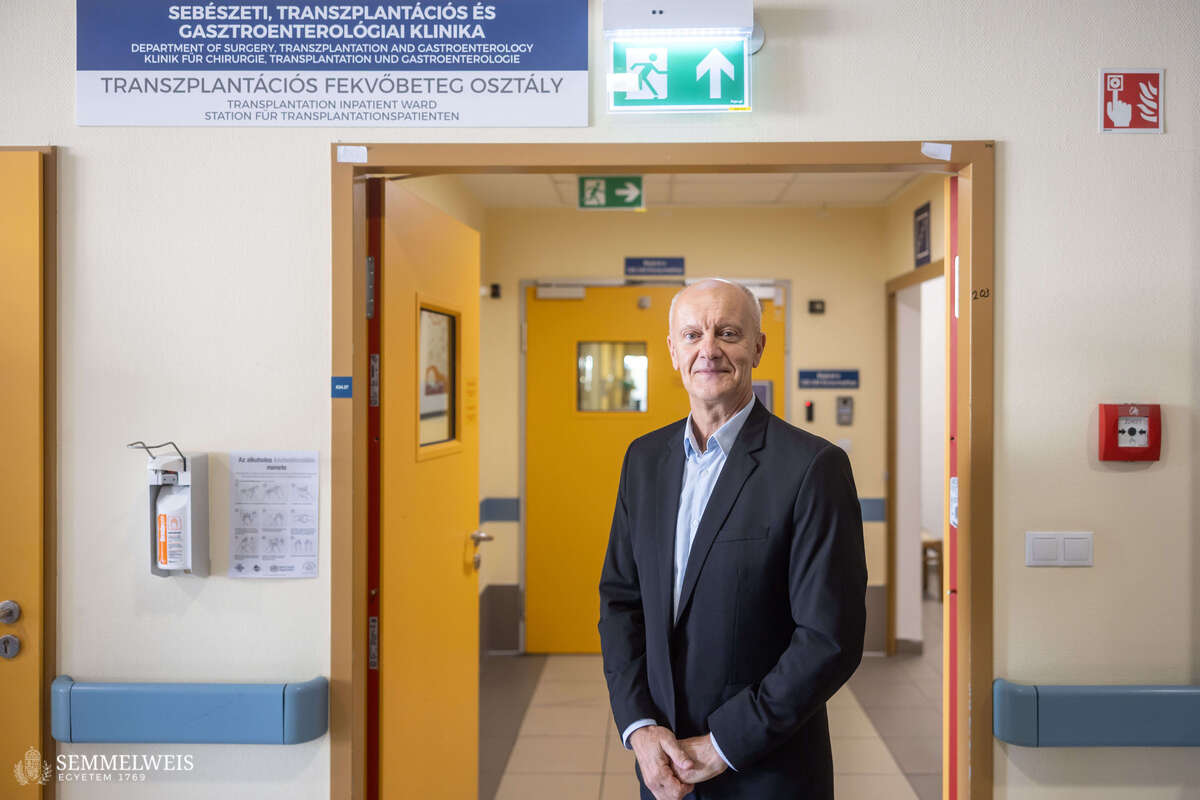 Sándor Bóta is one of the donors and the husband of one of the patients. They are both recovering at home. He added that, based on his experience, he would not decide differently even now, and he encourages everyone to trust in the professionalism of the Hungarian transplant team.
As part of the living-donor kidney transplant program, two female and one male patient received new kidneys at Semmelweis, giving them the opportunity to enjoy a better quality of life.
Eszter Csatári-Földváry
Translation: Judit Dőtsch
Photos and illustration by Bálint Barta – Semmelweis University