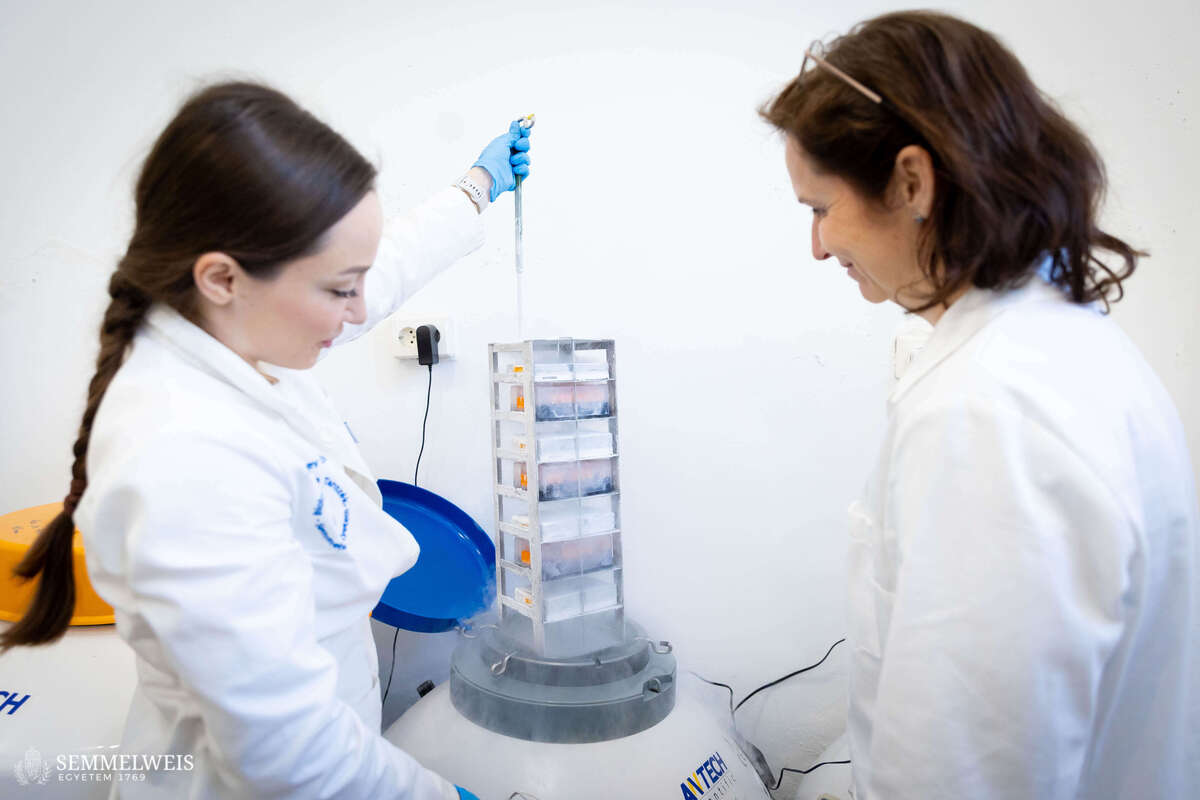
 “Tissue samples are stored at minus 190 degrees Celsius using liquid nitrogen cooling. These samples will later be used to isolate RNA, which contains genetic material, in order to track the processes occurring in tumors,” explains Dr. Otília Menyhart, Assistant Professor in the Department of Bioinformatics at Semmelweis University. The researcher, who was awarded the Hugonnai Vilma Medal for her scientific achievements, is a mother of four. She previously worked as a zoologist studying the social behavior of birds, and today, in addition to her work in cancer research and bioinformatics, she experiments in her flower garden, developing new methods.
OnkoBank, a researcher tissue bank was established over five years ago. It collects tissue samples directly from clinics following surgical procedures. The samples are gathered in person using professional methods and stored frozen here, along with their cataloging information. “Based on RNA sequenced from tissue samples, we can determine the gene expression associated with a given gene, and using statistical methods, algorithms, and infographics, we can provide data that is useful to other researchers as well,” she explains. As an example, she also mentions the freely accessible web server called Cancer Hallmark, which she recently developed together with a colleague who is both a physician and a programmer.
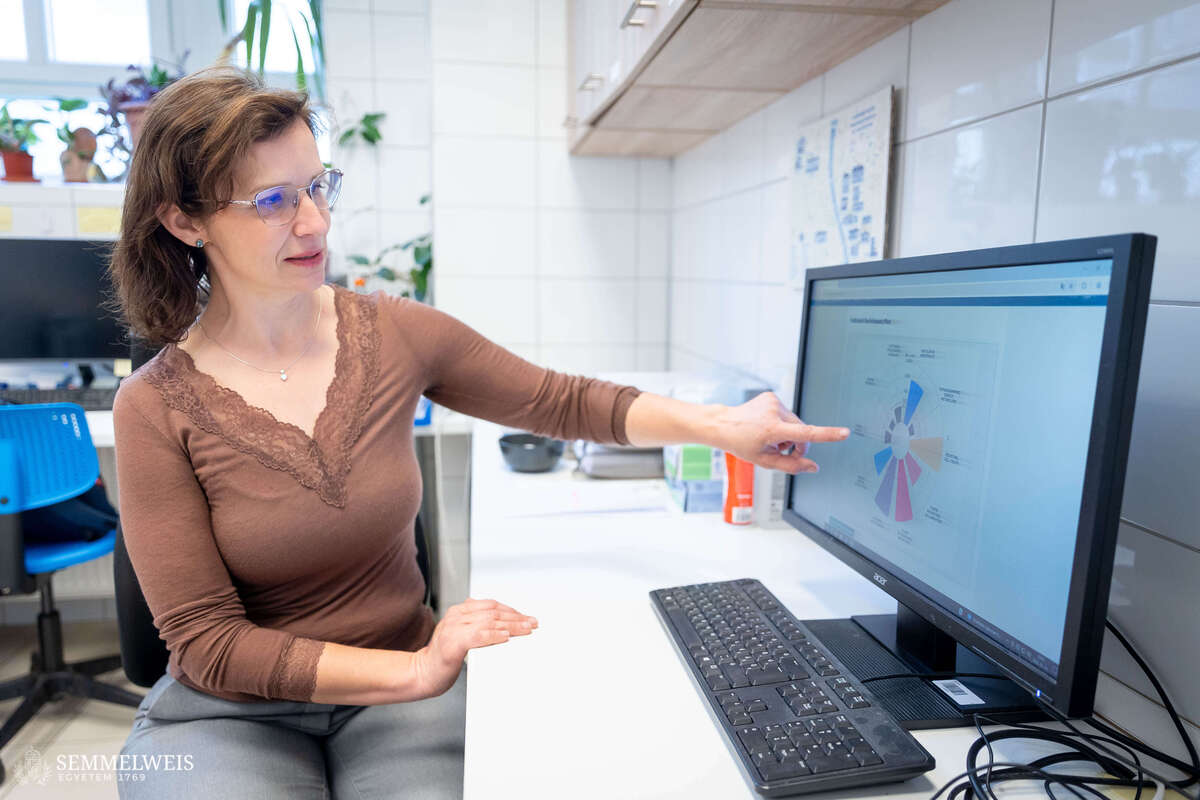
“Any researcher or molecular biologist, wherever they are in the world, can enter the list of genes derived from their own tissue samples or research to see which processes associated with cancer are more active in those samples. The 10 segments of the diagram correspond to 10 cancer hallmarks; these include, for example, resistance to cell death, increased angiogenesis, the presence of tumor-promoting inflammation, resistance to the immune system, or an increased risk of invasion and metastasis. The larger the circle, the more significant the given marker is, and the more evident it is that these processes dominate the user’s uploaded genetic profile,” she explains. Dr. Otília Menyhart also mentions that they published a paper on this topic last year, which, based on the number of citations it has received, is already among the highly cited top 1 percent of articles in the Web of Science.
“It is a great inspiration for me to be able to work on these developments under the guidance of Dr. Balázs Győrffy, Head of the Department of Bioinformatics and one of the most cited researchers in his field worldwide,” emphasizes Dr. Otília Menyhart.
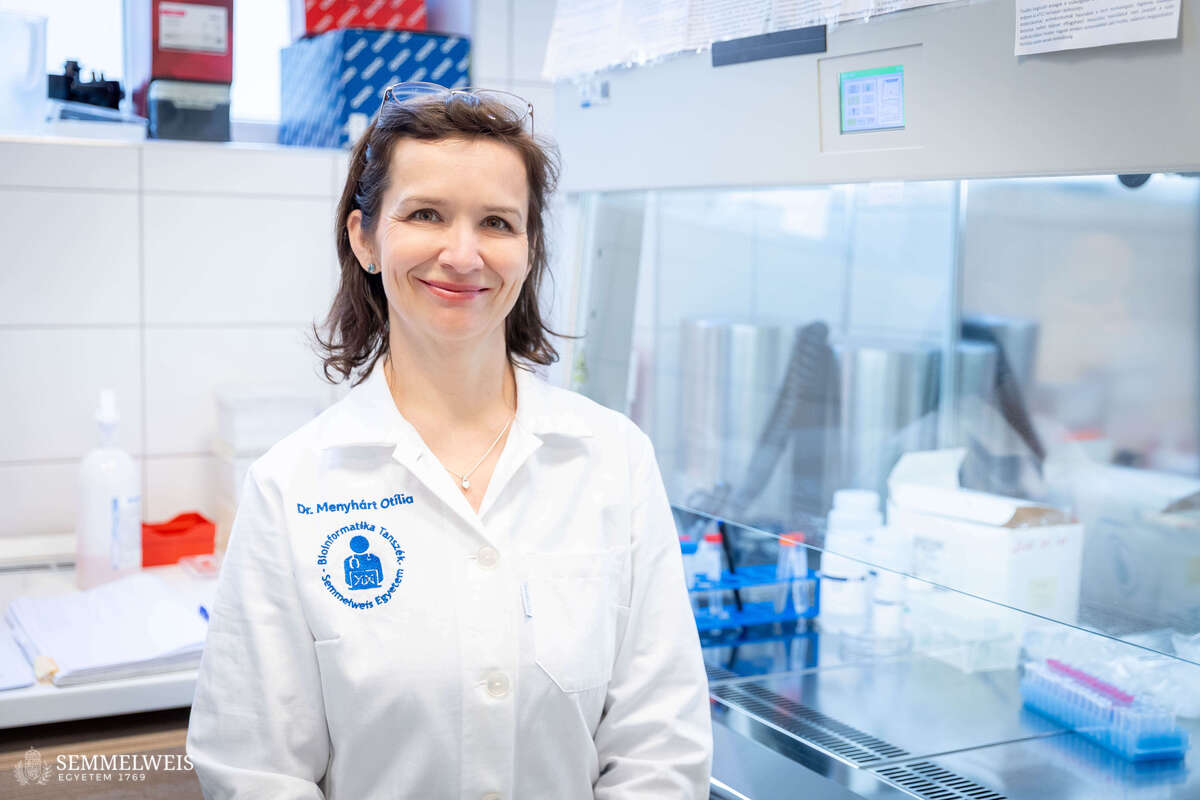 Another of their web applications (MultipleTesting.com) helps researchers distinguish between random coincidences resulting from a large number of statistical tests and actual correlations. Using this system, researchers can perform a so-called p-value correction, which indicates the threshold value above which the results for the hypotheses associated with a given study can be considered significant. When examining multiple hypotheses simultaneously, this helps eliminate misleading results, which can be of essential help in the methodological reasoning of scholarly articles.
Dr. Otília Menyhart grew up in Dunajská Streda (Dunaszerdahely) as a Hungarian from Slovakia and completed her vocational secondary school and higher education in Hungary. After earning a degree in zoology from the University of Veterinary Medicine Budapest, she received a PhD research fellowship to study at Cornell University in the United States, where she conducted research on the social context of birdsong in the field of behavioral biology.
Rather than viewing the problem in isolation, I prefer to see how the parts are connected and interrelated with the whole. Systems-level thinking motivates and propels me forward.
“My research on birds focused on the role of social cohesion and interactions within the entire population,” she notes. She observed that chicks learn to sing in a similar way to how human babies learn to speak through babbling: “What they have in common is that their development requires social interaction and parental feedback,” she says, sharing insights from her years-long research, which was inspired by her experiences with her own children. She studied the “daily lives” of 20 zebra finch families, each with 2–5 chicks per pair, and tracked them over time. “When we slowed down the footage, we could see subtle and frequent interactions and movements that are invisible to the naked eye. When we slowed down their singing, we could hear many details that we hadn’t noticed before. After all, a mammal like us has a completely different rhythm of life, different movements, and a different capacity for perception. It was only when I got a glimpse into a completely different dimension that I realized just how rich their behavior is,” she points out, explaining the background of her PhD research.
 “In the field of cancer research, I am currently focused on single-cell RNA sequencing – that is, the technology that allows us to determine which cell a particular gene expression pattern originates from. Previously, RNA was primarily extracted from tumor masses, but thanks to single-cell sequencing, we can now precisely determine whether the information comes from a macrophage, a fibroblast, or the tumor cell itself. Together with two of my PhD students, we are investigating where and on which types of cells drug targets are expressed in this tumor microenvironment. Are drug targets actually located on cancer cells, in what proportion, and how might this help in designing future therapies?” she shares her research focus.
As she points out, what first sparked her interest in cancer was just how complex a system it is. “We used to believe that when a mutation occurs, the mutant cell begins to multiply. It has since become clear, however, that a mutation alone is often not enough; it must be accompanied by an environmental factor, which frequently induces changes not at the genetic level, but at the epigenomic level. This could be a lifestyle factor; it may be related to how much we sleep, how stressed we are, how much we exercise, and what we eat.” She shares that she would like to engage in comprehensive research in the future that examines the relationship between cancer outcomes and the therapeutic use of regular physical activity, comparing it with drug treatment. In her opinion, exercise itself is the best form of prevention: It produces numerous anti-inflammatory substances and has a positive effect on the brain, helping us maintain our cognitive sharpness.
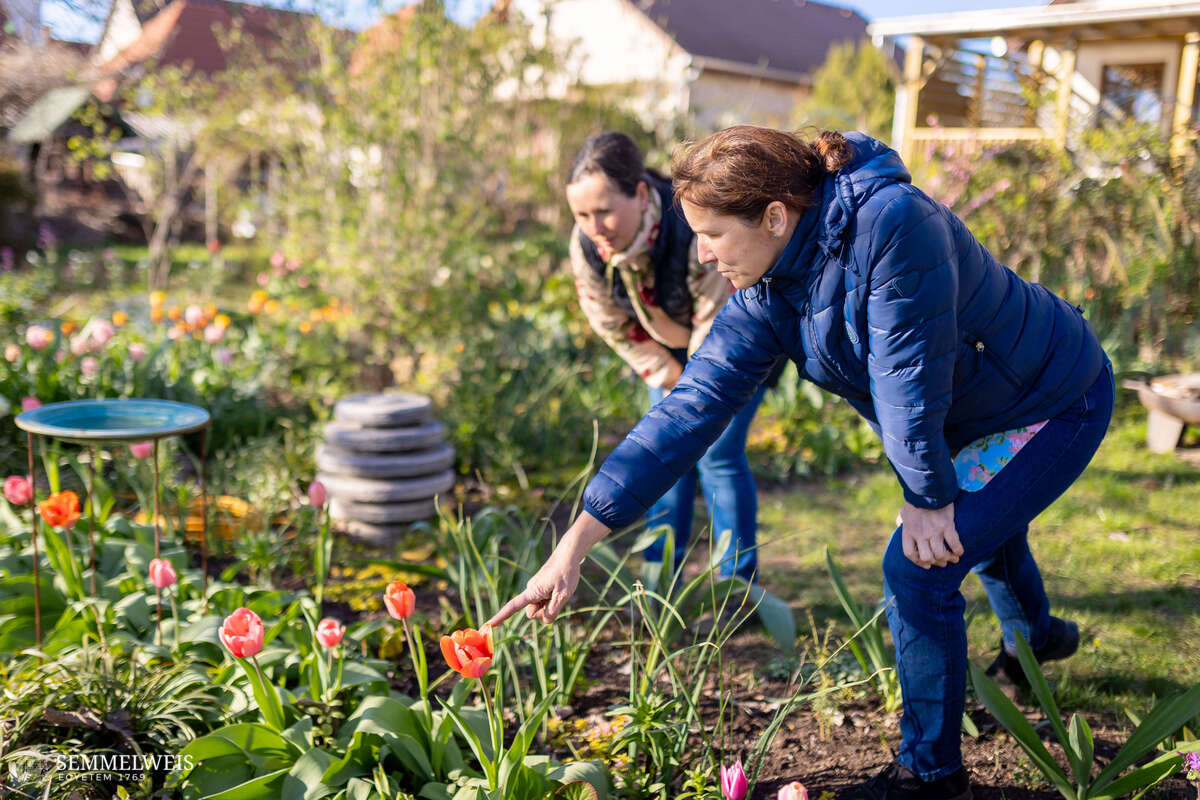
As Dr. Otilia Menyhárt highlights, her love of nature is manifested in many ways: She has been tending her family’s garden for six years now. When they moved in, the only vegetation there was native grass and a few trees. “During the COVID lockdown, I took an online flower-growing course offered by a well-known American flower nursery. I started to use what I learned to garden and grow cut flowers. Over time, I got to know some local farmers, with whom I was able to share my experiences and from whom I received a lot of valuable gardening advice. I’ve also obtained my small-scale farmer’s license, so I can sell my produce at the market,” she explains. Climbing roses, globe-thistles, plantain lilies, Solomon’s seal, and hydrangeas are spread out across the sunny, partially shaded, and shaded areas of the garden. “I propagated the vast majority of the plants here myself,” she explains.
In gardening, too, she is constantly experimenting with new approaches to watering and nutrient supply. “I’ve made so many mistakes over the years, but they’ve all been learning experiences: My garden is a testimony to these lessons, and I share them with fellow gardeners on various platforms,” she notes, adding that every group of plants in her garden has its own story.
In addition to her home garden, she also tends a 1,500-square-meter commercial garden where she grows cut flowers for the market. “There are 4,000 tulips here, 1,500 daffodils, 500 peonies, and 80 to 100 rose bushes. Every year, I plant about 10,000 annual herbaceous plants, plus 600 dahlia plants,” she says, illustrating the scale of the gardening work. From time to time, volunteers who are eager to learn also join in the work, helping to build a kind of self-development community. “This is my ‘natural habitat,’ the environment I grew up in thanks to my parents, grandparents, and godparents, several of whom are horticultural engineers,” she notes.
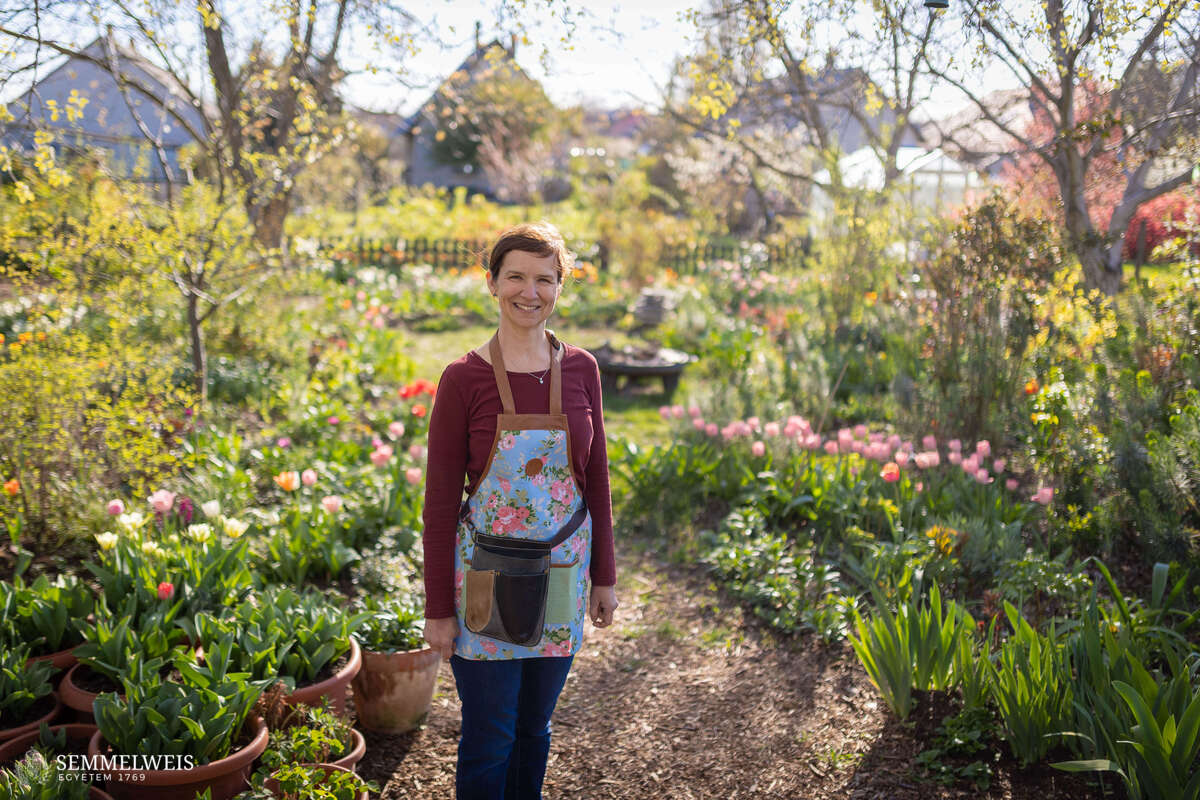
“If we can get the younger generations involved, then the art of gardening will certainly not be lost, because the vast body of knowledge our grandparents left us could disappear in less than two generations if it isn’t kept alive through practice. “Since then, our environment and climate have changed, and we have to adapt to that, and every garden is different, but the best thing about gardening is that you can constantly learn and experiment. As a researcher, that’s exactly what motivates me,” Dr. Otília Menyhart adds.
2026 Hungarian L’Oréal–UNESCO For Women in Science Fellowship
Dr. Otília Menyhart was awarded the fellowship in 2026, along with two other researchers. According to the rationale, she uses bioinformatics methods to analyze gene expression data from thousands of cancer patients in order to identify molecular patterns that may be associated with response to therapy. Her aim is to provide guidance to drug developers, helping them create more effective, personalized cancer therapies. The L’Oréal–UNESCO For Women in Science Fellowship supports young Hungarian women in pursuing careers in science and research and encourages them to achieve scientific results that can be applied in practice. The program is intended for postdoctoral fellows and physicians engaged in research. A five-member expert panel decides on grant recipients. The program has been operating in Hungary for 24 years, and during that time, 66 female researchers have received this distinction.
Róbert Tasnádi
Translation: Judit Dőtsch
Photos by Boglárka Zellei – Semmelweis University