“We must constantly adapt to the new challenges posed by a world undergoing rapid transformation; one need only think of the coronavirus pandemic,” noted Dr. Béla Merkely, Rector of Semmelweis University, in his opening remarks at the symposium organized by the university’s Tropical Medicine and Global Health Working Group. He added that tropical medicine and global health were disciplines we were only just beginning to explore. In his words, as the region’s leading university for medical and health sciences, which welcomes students from some 130 countries, the institution has a responsibility to provide answers to newly emerging questions and problems, whether they concern epidemiology, travel medicine, public health, vaccinology, sociology, cultural anthropology, or even veterinary medicine. The working group formed last year is expected to play a significant role in all of these.
Starting next academic year, Tropical Medicine and International Health will be offered as a two-credit compulsory elective course at the Faculty of Medicine (ÁOK). – Dr. Béla Merkely
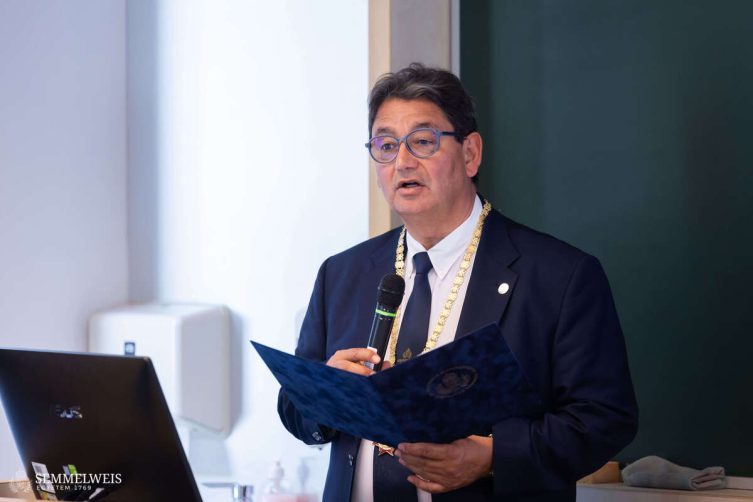 The course, to be offered in English and Hungarian, will provide future healthcare professionals – both from and outside Hungary – with essential knowledge regarding the prevention, diagnosis, and treatment of potentially imported diseases. Members of the working group have already authored several significant publications in the past year, participate in numerous international research collaborations, and are also contributing to the domestic migration health research project named Admire Hungary, which began in 2025. The rector also noted that the university had more than 200 bilateral agreements with international higher education institutions, which, in addition to enabling student exchanges, also provided opportunities to launch new collaborations in the field of tropical disease research.
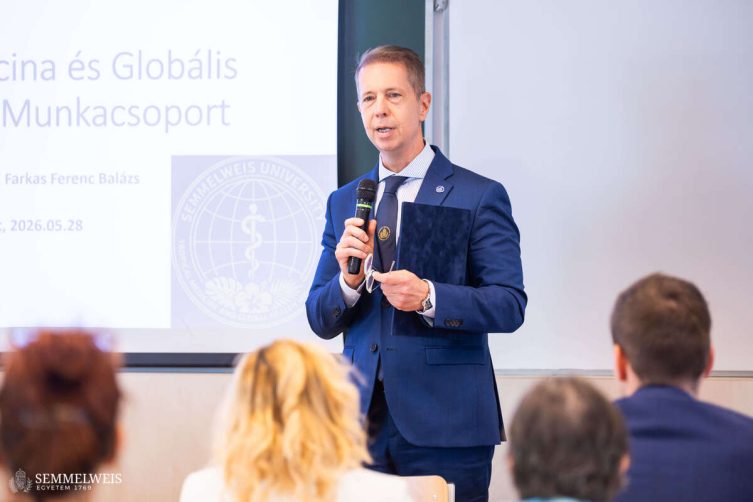 “I am very proud that the Faculty of Medicine is one of the most international faculties in Europe, welcoming students from 131 countries, a place where cultures and religions intermingle, and everyone must accept one another,” emphasized Dr. Péter Nyirády, Dean of ÁOK. He also said that he would like to broaden students’ perspectives further by introducing community service activities here at home, similarly to what he saw at Asklepios Campus Hamburg (ACH) in Germany.
The first working group of the discipline in the region
Semmelweis University’s Tropical Medicine and Global Health Working Group was established at the initiative of Dr. Botond Lakatos, Associate Professor in the Division of Infectology, and Dr. Ferenc Balázs Farkas, resident at the Pediatric Center. Its creation was motivated by the complex social, climatic, and geopolitical changes of recent decades and the need to find responses to their impact on global health processes, as well as by the growing international student interest in global health issues. In recent years, several universities in the United States and Western Europe have responded by launching similar courses and specialized programs, but this trend is still rarely seen in the Central European region. Tropical medicine and international health are interdisciplinary fields focused on health challenges that transcend national borders and the solutions offered to address them. The working group’s goal is to foster an international perspective among students so that they can understand and address the global health concerns of the 21st century, wherever in the world they may start working. Researchers interested in the working group’s activities can obtain further information at tropmed@semmelweis.hu.
 “The university’s mission is to ensure that knowledge sharing, joint research, and international training programs directly contribute to the advancement of patient care,” stressed Dr. Tamás Hegedüs, Director of International Relations and Alumni Affairs (NKAI) at Semmelweis University, in his presentation. He also noted that the list of countries sending international students had shifted in recent years, and while most students still came from Germany, there was growing interest in the university’s programs from China, Iran, South Korea, and other Asian countries. In addition, he pointed out that the directorate coordinated various mobility and scholarship programs, which also contributed to the international exchange of experiences and the development of research collaborations.
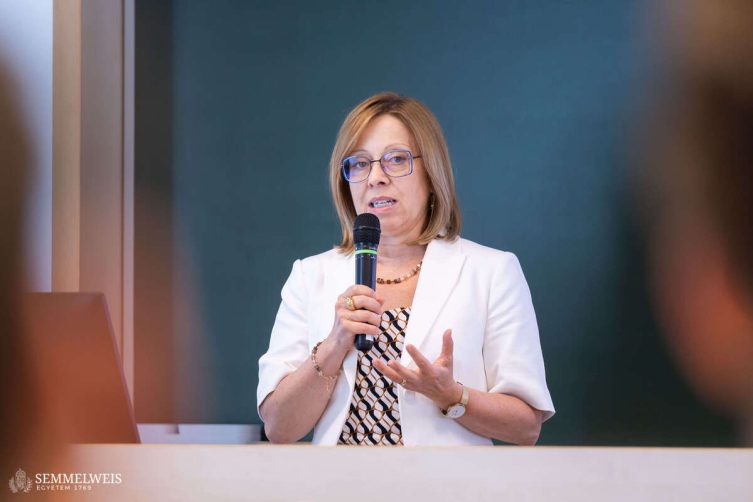 “When we speak of modern medicine, we most often think of new surgical procedures, infrastructure, and medications, while we often forget that a given country’s structural inequalities related to public health and healthcare sometimes overshadow the achievements made through these advancements,” highlighted Dr. Beatrix Oroszi, Director of the Center for Epidemiology and Surveillance at Semmelweis University. In her presentation, she demonstrated the impact of these factors on the general health status, life expectancy, mortality rates, and prevalence of certain chronic diseases among the Hungarian population.
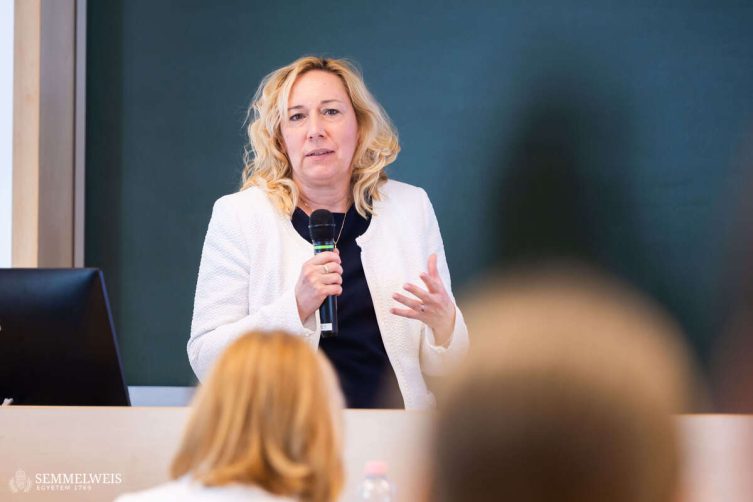 In her talk, Dr. Dóra Szabó, Director of Semmelweis University’s Institute of Medical Microbiology, spoke about the global significance of the spread of antibiotic-resistant bacteria and possible preventive measures. She outlined which multidrug-resistant bacteria pose the greatest problems in specific regions, as well as how the age groups most affected by mortality caused by resistant pathogens have changed over the past three decades.
Dr. István Szilárd, Professor at the University of Pécs, provided an overview of the challenges and tasks facing migration health, while Dr. András Késmárky-Kodak, Director of the Disaster Medicine and Charity Coordination Center at the University of Debrecen, presented the coordination center that supports the volunteer charitable activities of university students and staff.
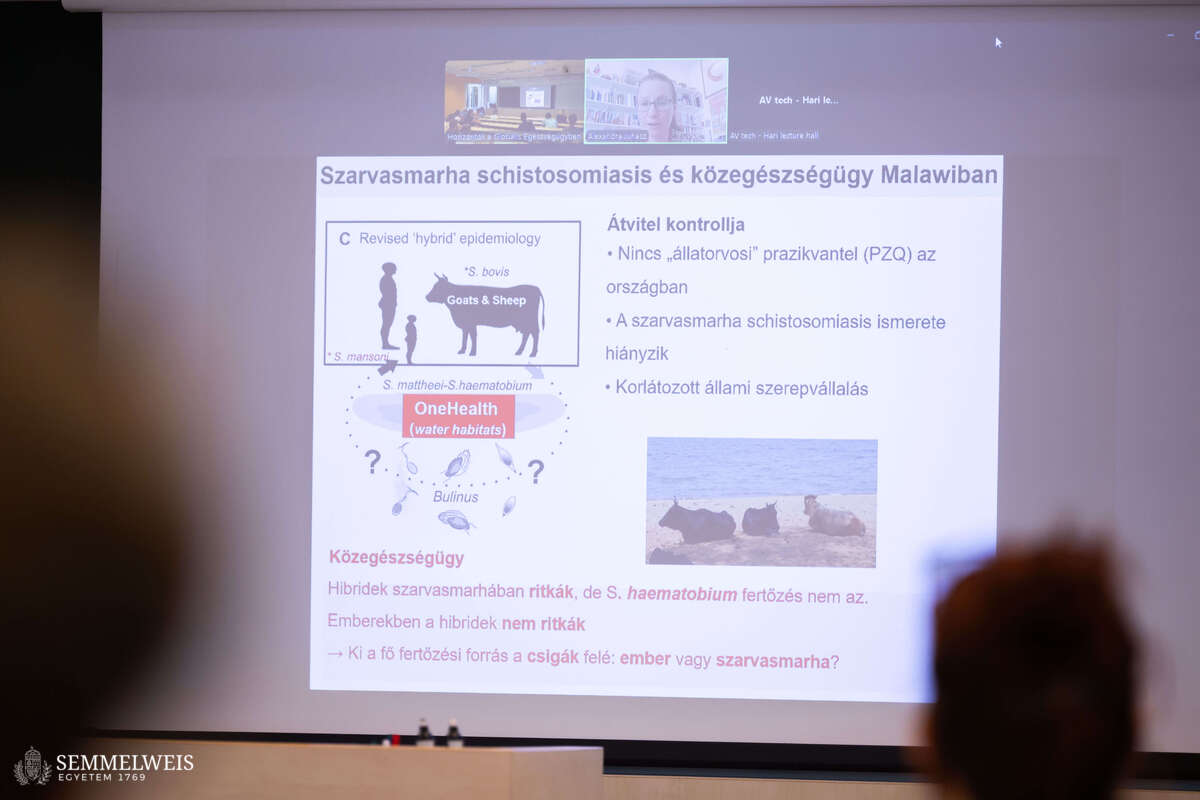
Symposium participants also heard a presentation on how the One Health approach works in practice. Dr. Alexandra Juhász, a former staff member of the Institute of Medical Microbiology and currently an MSc instructor at the Liverpool School of Tropical Medicine, used a practical example from research conducted in Malawi to illustrate how the spread of zoonotic parasites – or reinfection caused by specimens released into the environment – can be detected and, in some cases, prevented.
“Although we are talking about tropical medicine and global health, these issues also have an impact on our own immediate environment and lives,” emphasized Dr. Ferenc Balázs Farkas. In his talk, he reviewed the outbreak of new and re-emerging diseases, citing last year’s whooping cough epidemic as an example of the latter.
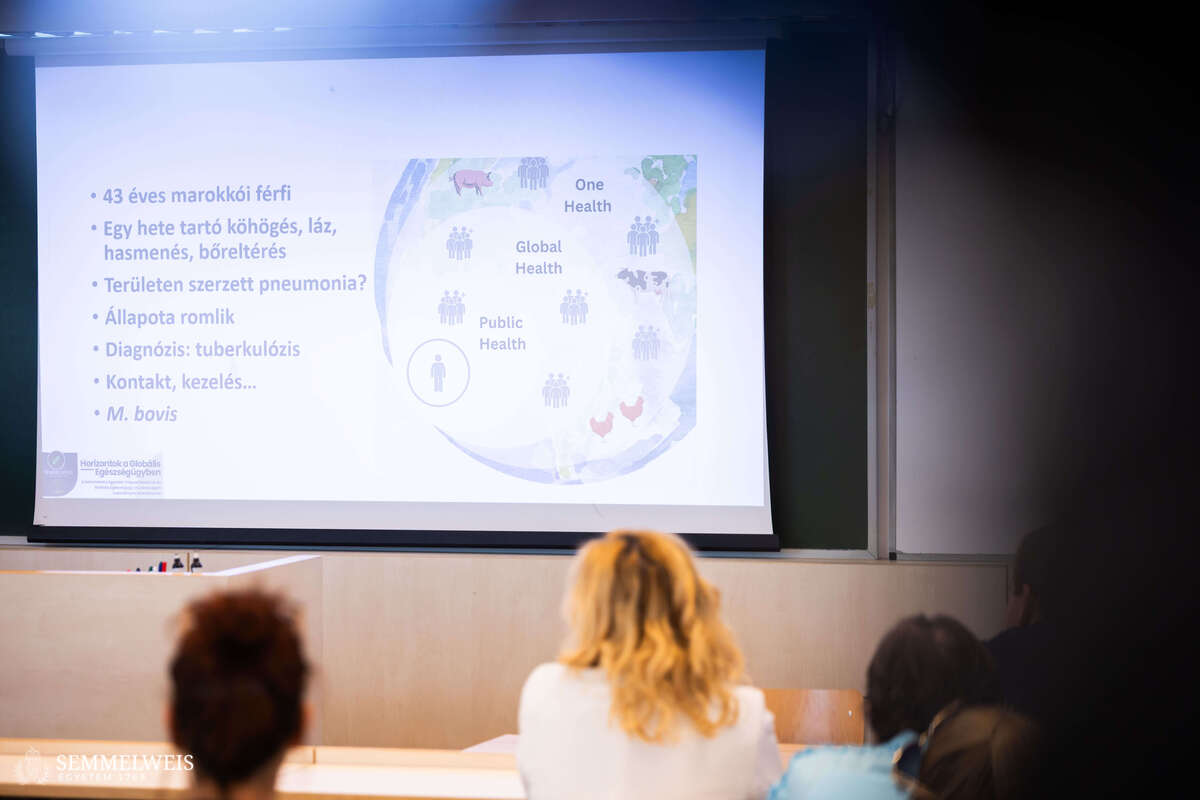
Dr. Botond Lakatos provided an overview of the risks, opportunities, and research conducted in Hungary related to imported infections. He discussed the risks posed by tropical diseases that have received little scientific attention, as well as exotic bacteria and pathogens inadvertently introduced through tourism. He also addressed malaria cases, whose numbers have been rising steadily despite the tools and opportunities available, as well as the public health risks posed by the increasing incidence of tuberculosis in Central and Eastern Europe.
Gallery

Melinda Katalin Kiss
Translation: Dr. Balázs Csizmadia
Photos by Bálint Barta – Semmelweis University