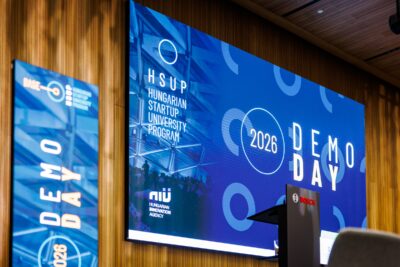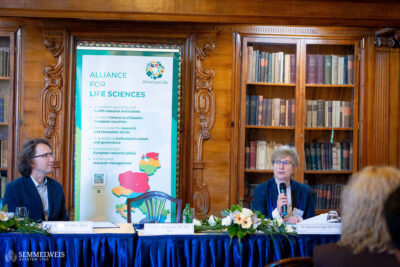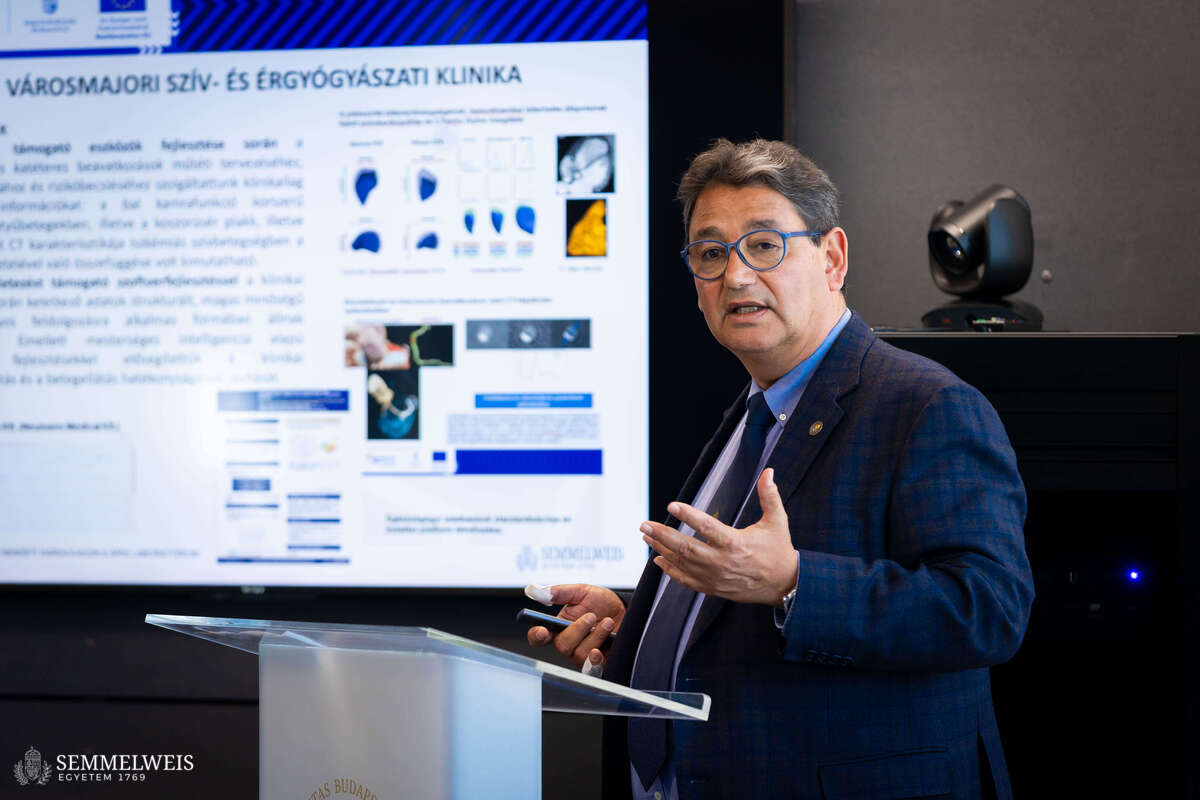
“Our National Cardiovascular Laboratory project has concluded successfully with tangible results, proving at the same time that great achievements can only be attained through collaboration, the sharing of knowledge, and cooperation among scientific disciplines,” stated Dr. Béla Merkely, Rector of Semmelweis University, at the closing ceremony of the project that was implemented with HUF 5.6 billion in funding, co-financed by the European Union. He also emphasized that during the four-year program the consortium led by Semmelweis University – which included the University of Szeged, 3DHISTECH Ltd., InterSynk Solutions Ltd., and PHARMAHUNGARY 2000 Ltd. – had undertaken a revolutionary new approach to researching the pathophysiological mechanisms that play a role in the development of age-related cardiovascular diseases.
The main goal of the program was to build on the research findings to develop and implement new, innovative preventive, diagnostic, and therapeutic procedures in order to reduce the number of cardiovascular diseases – which are the leading cause of death in Hungary as well as worldwide – and increase the population’s healthy life expectancy. – Dr. Béla Merkely
He also stressed that the project’s scientific results, as well as the establishment of the National Cardiovascular Laboratory’s complex research infrastructure – including the creation of the research infrastructure at the George Berci Surgical Training and Research Laboratory in Herceghalom – contributed to improving the care of cardiovascular patients in the region and laid the groundwork for future research directions and results.
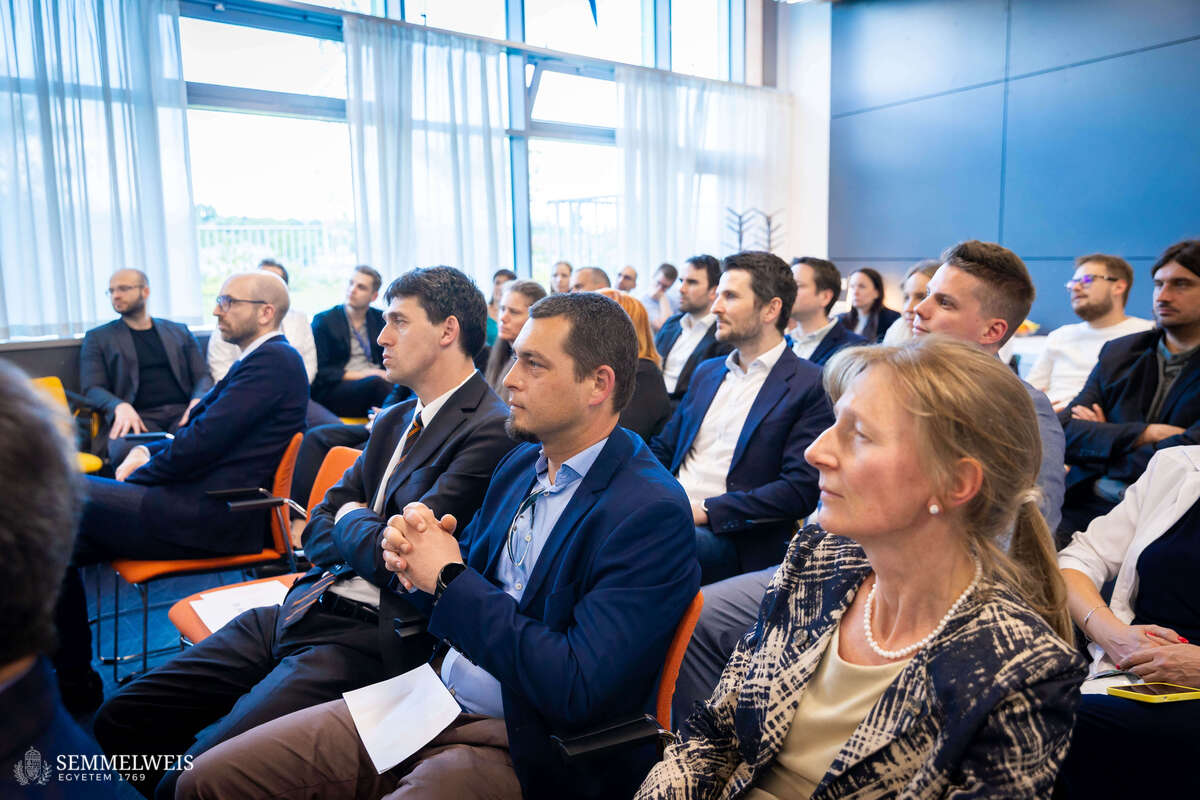
Following this, Dr. Béla Merkely presented the results of the research conducted by the Városmajor Heart and Vascular Center over the four years of the project. He discussed the new device-based and pharmacological treatment options developed within the framework of the program. He also detailed the results of their studies on device development supporting heart transplantation, as well as their research on device development supporting cardiac surgery. He mentioned that, with the collaboration of InterSynk Solutions Ltd., data generated during patient care at the Városmajor Heart and Vascular Center was now available in a structured, high-quality format suitable for scientific analysis; furthermore, biobanks linked to clinical databases and a multi-omic data platform have been established, enabling the joint analysis of various biological data. Significant progress has also been made in the development of artificial intelligence-based predictive and decision-support systems, which can be utilized in patient care in the future.
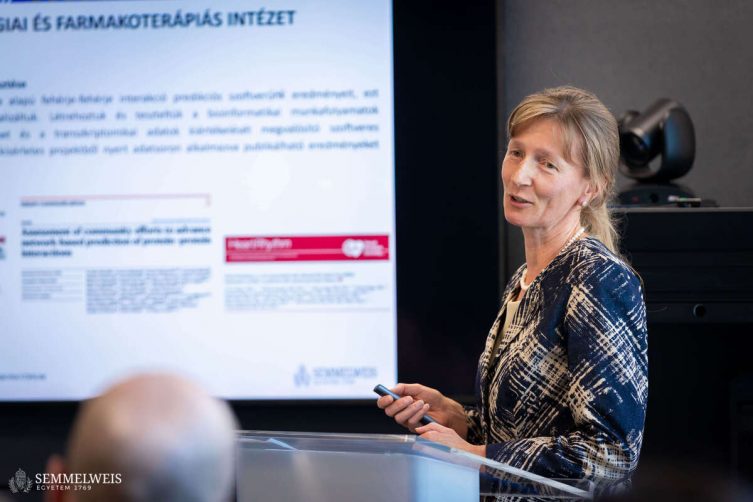 In her presentation, Dr. Anikó Görbe, Deputy Director of Operations at the Department of Pharmacology and Pharmacotherapy, discussed the progress achieved with the project’s support in the development of bioinformatics software at the institute based on the use of artificial intelligence, and the promising cardioprotective molecular candidates identified in microRNA-based pharmacotherapy research.
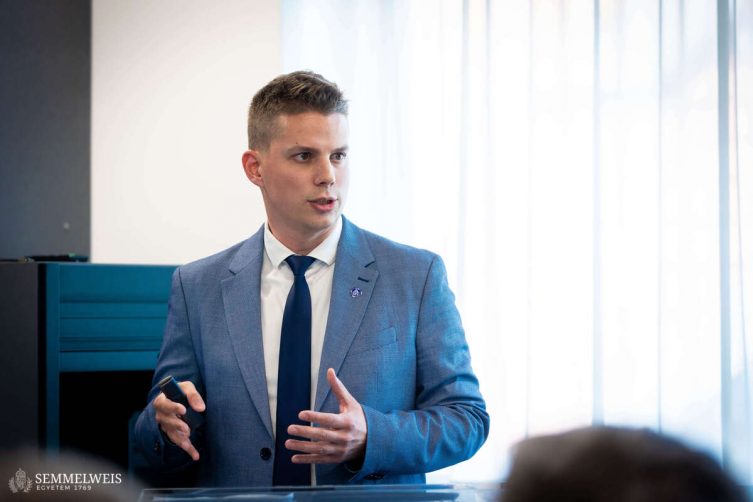 Dr. Tamás Csípő, Assistant Lecturer at the Institute of Preventive Medicine and Public Health, presented the institute’s research on interventions to help prevent age-related cardiovascular and cerebrovascular diseases, along with their results. Among other things, he discussed the institute’s research on identifying risk factors for accelerated cardiovascular aging, as well as the development of biomarkers that enable the early detection of vascular aging.
As Dr. Béla Molnár, Research Professor and Chief Executive Officer at 3DHISTECH Ltd., one of the consortium partners, noted:
At the Department of Internal Medicine and Oncology, we investigated whether the biological age of human cells – and thus of organs – could be reduced. We were able to confirm this by administering a high dose of 15 milligrams of folic acid: A study conducted six months later showed that we had succeeded in reversing biological age by 7 years at both the cellular and organ levels.
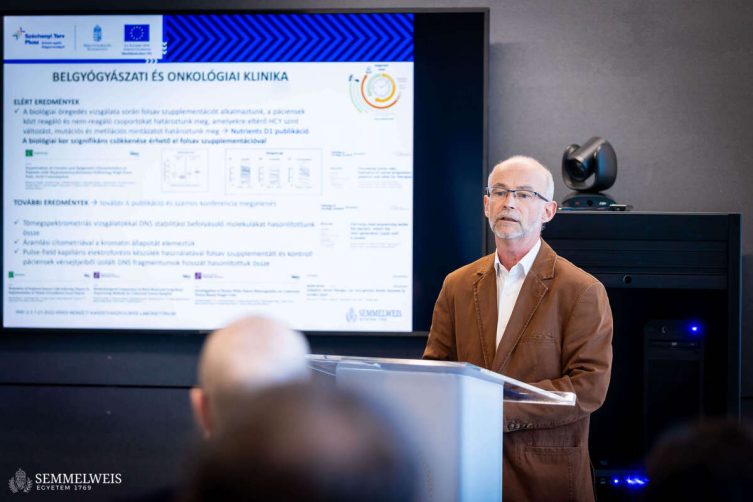 3DHISTECH Ltd. was founded 25 years ago with university support and has since become one of the world’s leading microscope manufacturers. As part of the NKL program, the company has succeeded in developing a non-destructive fluorescence microscope that can examine living cells in real time using carbon dioxide incubation without causing DNA damage. “This is a unique development in the world, and it is already attracting significant international interest from researchers,” added Dr. Béla Molnár.
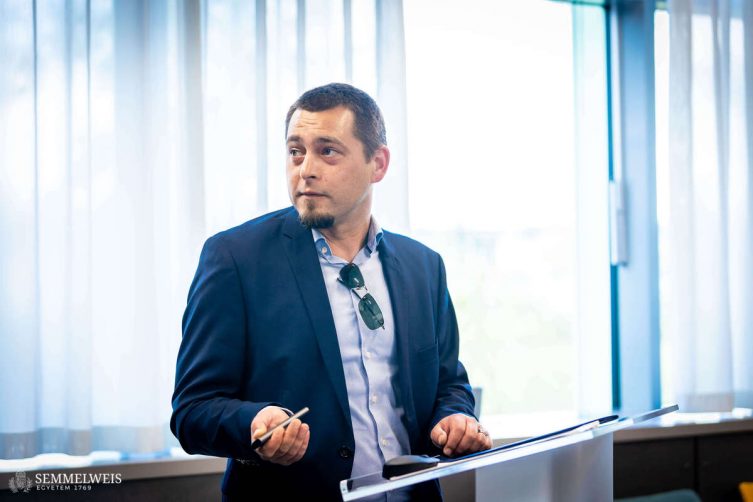 András Nógrádi, Business Development Director at PHARMAHUNGARY 2000 Ltd., highlighted in his presentation that thanks to the program, not only had the company’s bioinformatics software development activity advanced significantly, but so had the AI-based automated myocardial infarction assessment software that significantly streamlines patient care. Among the results, he mentioned that over the course of four years, they had contributed to approximately 15 high-quality international publications and filed five domestic and international patent applications in collaboration with Semmelweis University.
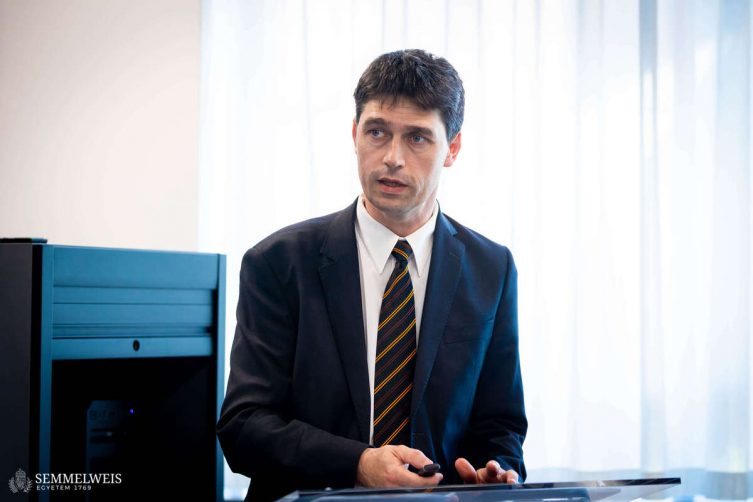 In his talk, Dr. Péter Bencsik, Associate Professor at the Department of Pharmacology and Pharmacotherapy of the University of Szeged (SZTE), pointed out that two research groups from his organizational unit, as well as the invasive cardiology unit at the Cardiology Center of the SZTE Department of Internal Medicine had participated in the program. Their research focused primarily on uncovering the hidden cardiotoxicity of certain drugs and on transcatheter interventions related to invasive cardiology. They also jointly filed a patent application with Semmelweis University for a new antiarrhythmic drug compound.
Melinda Katalin Kiss
Translation: Dr. Balázs Csizmadia
Photos by Boglárka Zellei – Semmelweis University