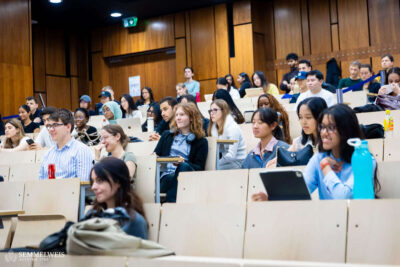
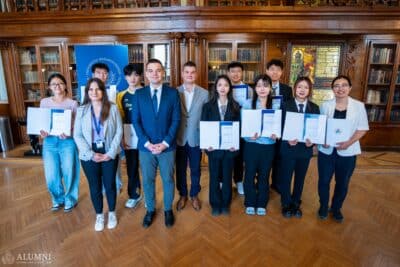
Times Higher Education (THE) has unveiled its latest ranking of higher education institutions, the World University Rankings (WUR) 2027, which assesses the top 2,200 universities from among more than 20,000 higher education institutions worldwide. Semmelweis University has made significant progress: While it was ranked in the top 300 last year (in 272nd place), it is now considered one of the world’s top 250 universities, ranking 247th.
THE World University Rankings
The UK-based Times Higher Education is one of the world’s oldest and most respected global university rankings. It assesses the world’s universities by analyzing indicators across five areas: Teaching (e.g., Teaching reputation), Research Environment (e.g., Research reputation, Research income, and Research productivity), Research Quality (e.g., Citation impact), Industry (e.g., university citations in patents), and International Outlook (e.g., International students, International co-authorship). The list ranks more than 2,200 universities in 118 countries.
Semmelweis has advanced considerably in two of the five indicators, improving its score in a third while maintaining its position. This year, it ranks highest in terms of Research Quality (as measured by the number of citations in the relevant field); in this indicator, it is ranked 166th globally. It achieved its second-best result in the Teaching indicator group, where it was ranked 242nd. On the whole, the university was placed in the top 25 percent for each group of indicators.
This outstanding achievement is primarily due to the synergy that characterizes Semmelweis University. We are a medical and health sciences university surrounded by a clinical structure that is also a significant player in the scientific community. Our three core activities – education, healthcare, and science and innovation – reinforce one another, and each is centered on ensuring that our patients receive the best possible care. To this end, we have revised our curriculum to place even greater emphasis on practice-oriented education. Thanks to this, we are able to conduct a steady stream of significant observations, which leads to outstanding scientific achievements year after year. – Dr. Béla Merkely
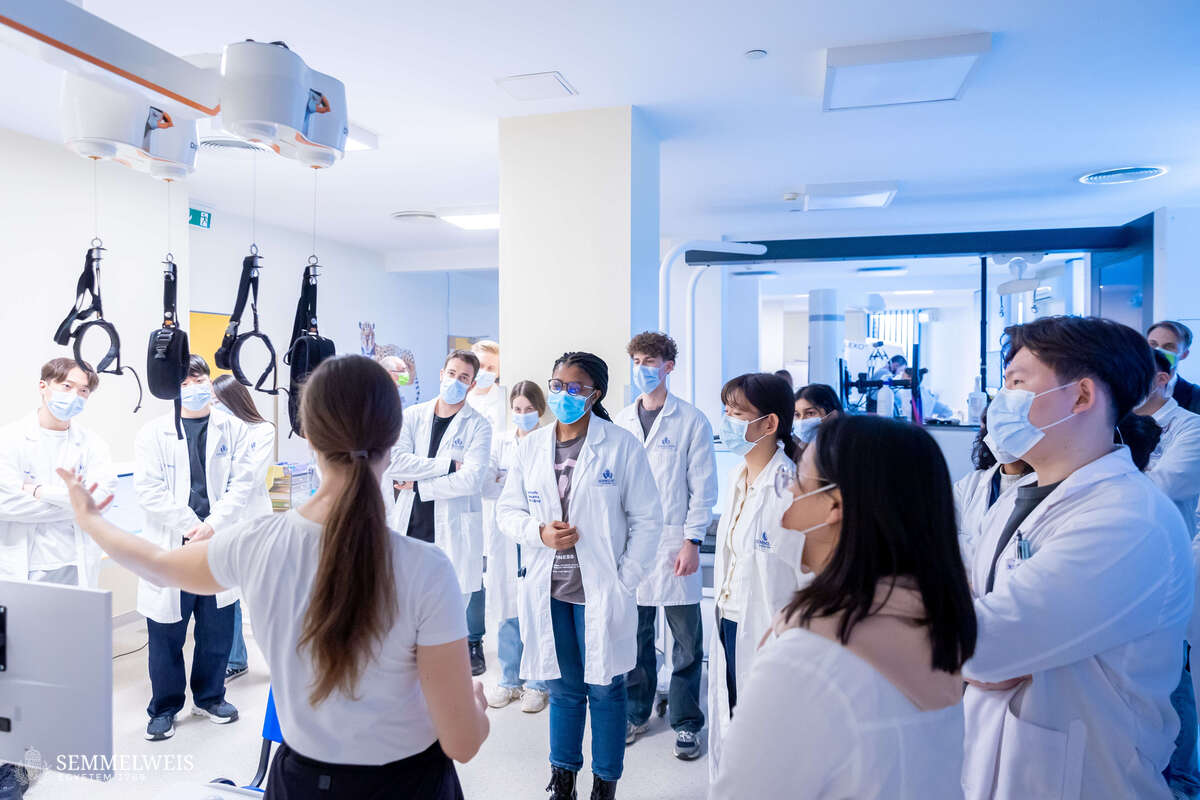
Commenting on the results for our website, the rector of Semmelweis University pointed out that this progress was, in his view, due to further improvements in academic performance, as well as the university’s strong international presence. Semmelweis is one of the most internationally diverse universities in the world. More than a third of its nearly 16,000 students come from outside Hungary, representing almost 130 countries. The number of international students is steadily rising. This year, nearly 40 percent more students applied to English-language programs than in previous years. This means that the general medical program is approximately three times oversubscribed. Semmelweis University has established partnerships with world-class institutions such as the Karolinska Institute, the Mayo Clinic, the Universities of Oxford and Heidelberg, the National University of Singapore, as well as Harvard University, with which it has now launched a postgraduate program for the fourth time.
According to Dr. Péter Ferdinandy, Vice-Rector for Science and Innovations at Semmelweis University, the university’s progress in international rankings is an undeniable achievement. In Times Higher Education’s 2026 World University Rankings by Subject, released at the beginning of the year, Semmelweis is already listed among the top 200 in its own discipline, medicine and health sciences, while in ShanghaiRanking’s latest Global Ranking of Academic Subjects, it is in the world’s top 50 band in Pharmacy & Pharmaceutical Sciences and among the top 200 in Clinical Medicine, Dentistry & Oral Sciences, and Medical Technology.
“A structure has been established at Semmelweis University that can be considered unique even on the international level, and thanks to this, the university has been able to make significant progress in higher education rankings. The clinic achieves this level of performance based on theoretical and translational research. The primary goal remains to ensure that research findings are put to use directly at the patient’s bedside as soon as possible,” emphasized Dr. Péter Ferdinandy. The vice-rector believes that improving the university’s ranking position will ultimately ensure that Semmelweis University trains doctors and healthcare professionals of an even higher quality who can care for patients more effectively.
In the Central and Eastern European region, Semmelweis University is the highest-ranked institution; the University of Tartu in Estonia ranks 301–350; Charles University in the Czech Republic ranks 401–500; and Wrocław Medical University and Jagiellonian University in Poland are listed in the 501–600 range.
The top three spots in this year’s WUR were taken by the University of Oxford, the Massachusetts Institute of Technology (MIT), and – tied for third place – Princeton University and Stanford University.
About university rankings
There are many different international rankings that seek to compare the world’s higher education institutions based on various criteria. As we discussed in our previous article on the subject, the ranking of higher education institutions dates back more than 150 years, but global rankings did not emerge until the early 2000s. Times Higher Education, based in the United Kingdom, is a publisher of one of the most established and well-known global university rankings. It was launched in 2004 in collaboration with Quacquarelli Symonds (QS), but the two organizations have since gone their separate ways. A key feature of THE is that it also uses size-independent indicators: Among other things, it examines the student-to-faculty ratio, revenue per faculty member, and the citation impact of research, ensuring that larger universities are not given an advantage over smaller institutions simply because of their size.
Rankings have faced criticism in recent years, as they attempt to compare institutions with completely different profiles based on varying criteria that are, in some cases, difficult to compare. At the same time, globally recognized rankings such as THE continue to serve as important points of reference not only domestically but also internationally: They can help students navigate among thousands of institutions, and they also contribute to universities’ international visibility and reputation, which can have significant implications for potential institutional and research collaborations. In addition to the specific ranking position of the institution, the individual indicators on the lists provide insight into certain areas of the institution’s educational and research activities through quantifiable and comparable metrics.
Ádám Szabó
Translation: Judit Dőtsch
Illustration by Boglárka Zellei – Semmelweis University