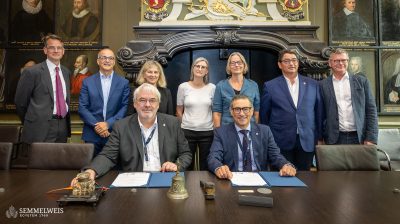
 Semmelweis University was represented by Dr. Miklós Kellermayer, Director of the Department of Biophysics and Radiation Biology and EUniWell Board Member; Dr. Tamás Hegedüs, Director of International Relations and Alumni Affairs, EUniWell Project Lead and Board Member; Dr. Barbara Marshall, Assistant Professor and Semmelweis representative in WP5; Fanni Matyasovszki, EUniWell Institutional Coordinator; and Virág Gaál, EUniWell Communications Officer. Student representation was provided by Dr. Márk Havasi, Research Fellow and Member of the EUniWell Student Executive Team, as well as Ace Pagkaliwangan, EUniWell Student Representative.
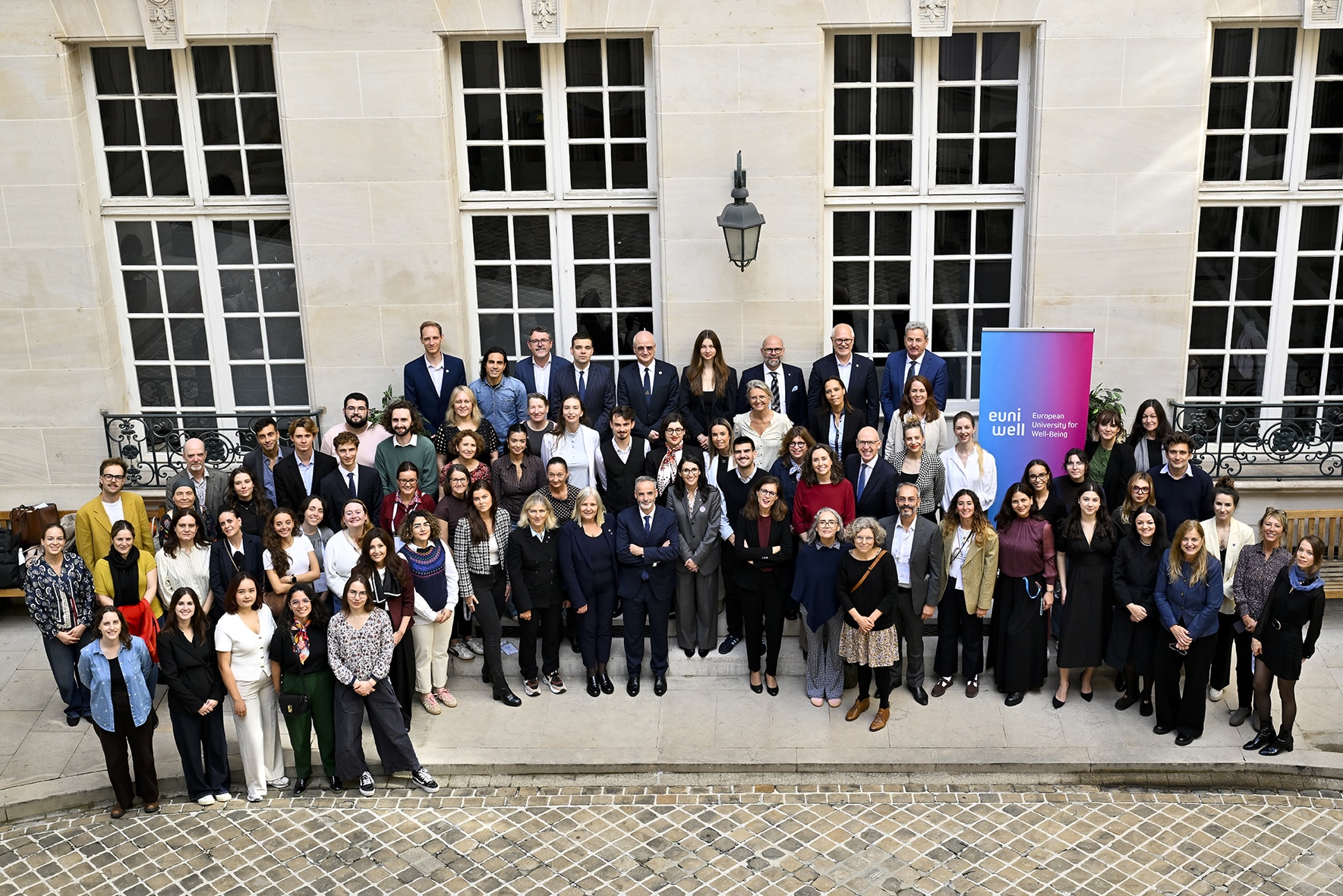
The two-day professional program included Board and Institutional Coordinator meetings, work package sessions, a joint Board-IC meeting, as well as closed and open sessions of the Rectors’ Assembly.
One of the key topics of the meeting was the preparation of the additional two-year funding period planned for 2028-2029, following the current EUniWell project phase. The decision-makers discussed how this next stage should be structured, which areas of the Alliance’s operation should be further developed, what changes can be expected in the higher education environment and how EUniWell can adapt to these developments as effectively as possible.
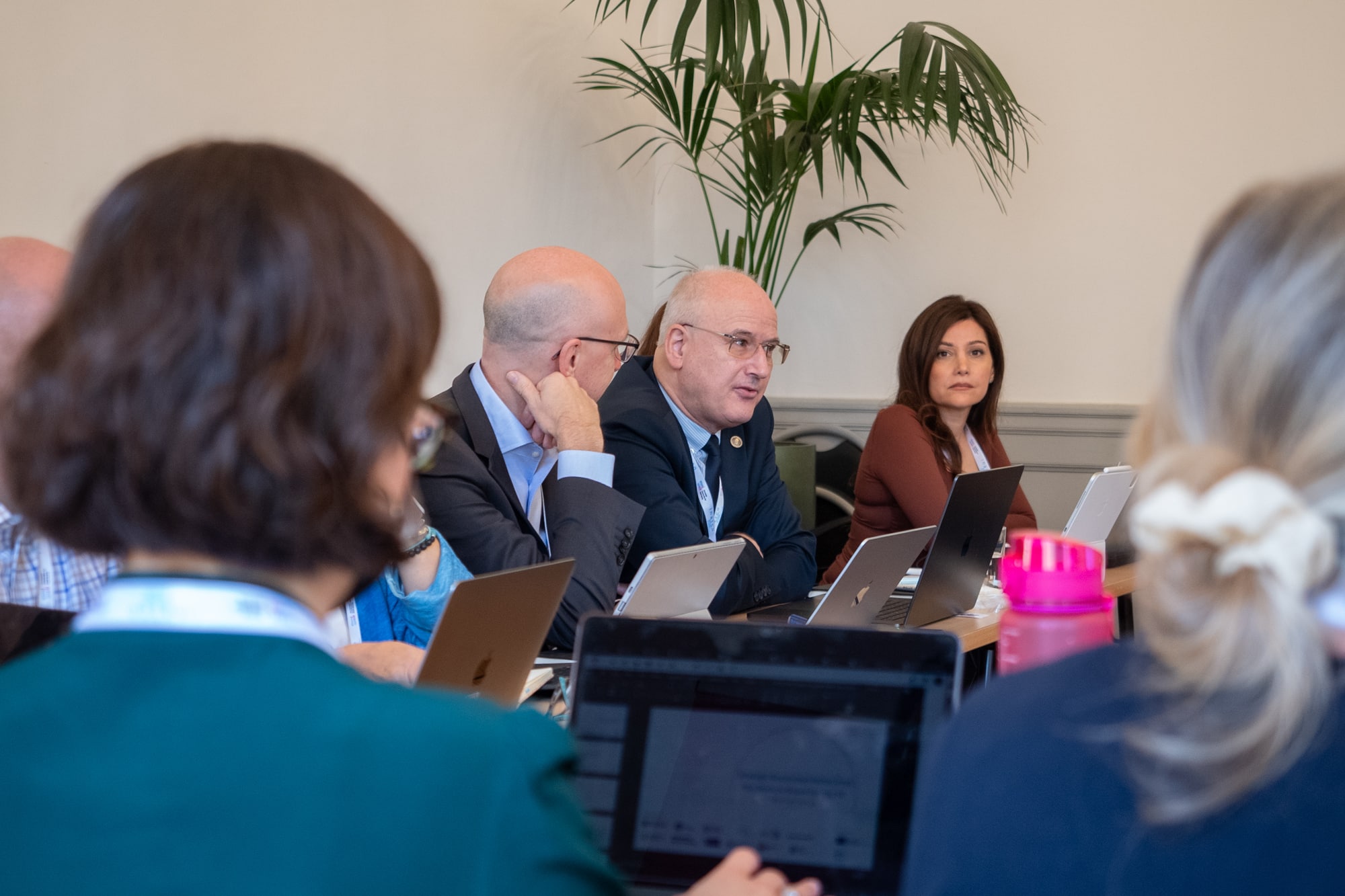
Semmelweis University also made a specific, practical contribution to this strategic work. During the Board meeting, Dr. Miklós Kellermayer gave a presentation on the emerging Shared Infrastructure initiative. As part of this work, a proposal is being prepared that could be incorporated into the next two-year project period and would support more effective sharing of research infrastructure, resources and professional capacities among partner institutions.
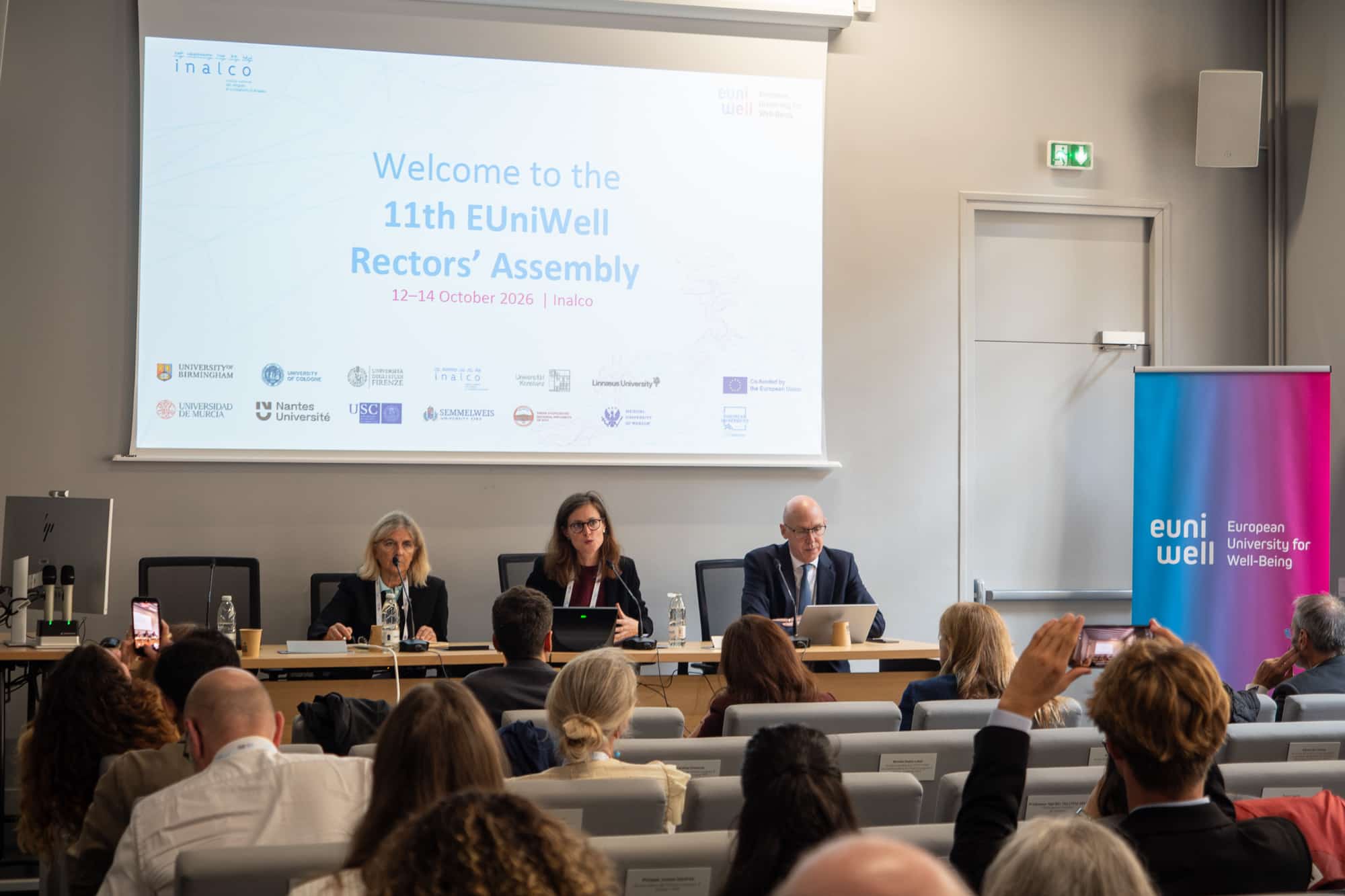 Another major topic was AI readiness, referring to universities’ preparedness for the growing role of artificial intelligence. Participants acknowledged that AI has become an integral part of students’ everyday lives and learning environments, meaning that higher education institutions also need to respond to this development in a conscious and strategic way. Discussions focused on how institutional and educational frameworks can be designed to support the appropriate and responsible use of AI while also preparing students for its increasingly widespread application.
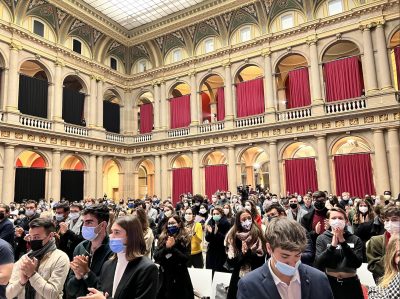
Due to student demonstrations taking place in Paris, the original program had to be reorganized in the days leading up to the event. However, the INALCO organizing team adapted quickly and flexibly to the situation, consolidating the professional program at the Maison de la Recherche. Consequently, the changes had no significant impact on the participants’ experience or the implementation of the Rectors’ Assembly.The Paris meeting provided an opportunity not only to review EUniWell’s current activities, but also to look clearly ahead to the Alliance’s next phase. Strategic discussions focused on how EUniWell can continue to evolve, respond to the rapidly changing higher education environment, and further strengthen cooperation between its partner institutions through new joint initiatives.
Semmelweis University’s involvement in the EUniWell program is supported by the National Research, Development and Innovation Fund (NKFIH).
The EUniWell project is co-funded by the Erasmus+ Programme of the European Union.
Disclaimer: Views and opinions expressed are those of the author(s) only and do not necessarily reflect those of the European Union or the European Education and Culture Executive Agency (EACEA). Neither the European Union nor EACEA can be held responsible for them.
Image and text: Directorate of International Relations and Alumni Affairs; T. Chapotot