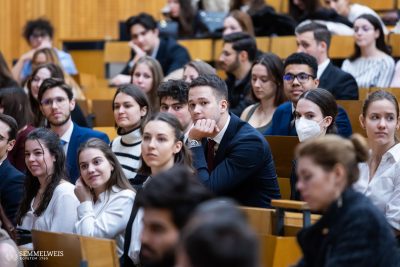
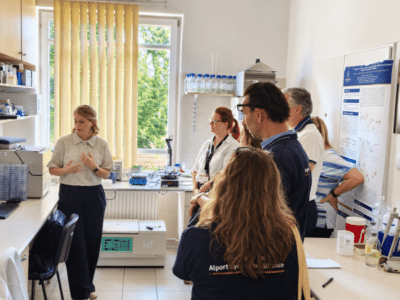
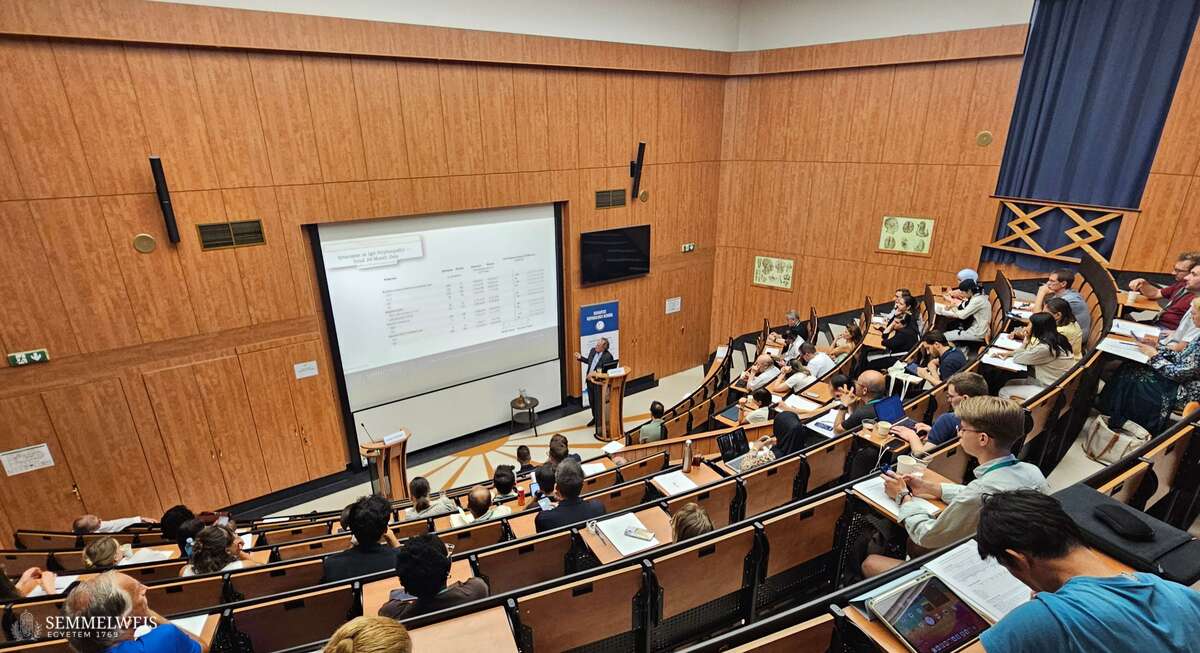
 The summer school, which has been held since 1993, is now regarded as one of Europe’s leading nephrology training courses. The program is recognized and supported by both the European Renal Association (ERA) and the International Society of Nephrology (ISN). Over the past three decades, the Budapest Nephrology School has welcomed physicians and researchers from 70 countries. This year’s participants included specialists from Australia, Bulgaria, Croatia, Japan, Mozambique, Singapore, and the United Kingdom.
The five-day scientific program spanned laboratory research and clinical practice in nephrology. Among other topics, the lectures examined how salt and potassium intake affect kidney function, how kidney diseases linked to immune system dysfunction can be identified and treated, and mechanisms that may help kidney tissue regenerate. Speakers also discussed the connection between kidney disease and cognitive decline, new drug therapies, the early detection of chronic kidney disease and the difficult-to-treat high blood pressure associated with it.
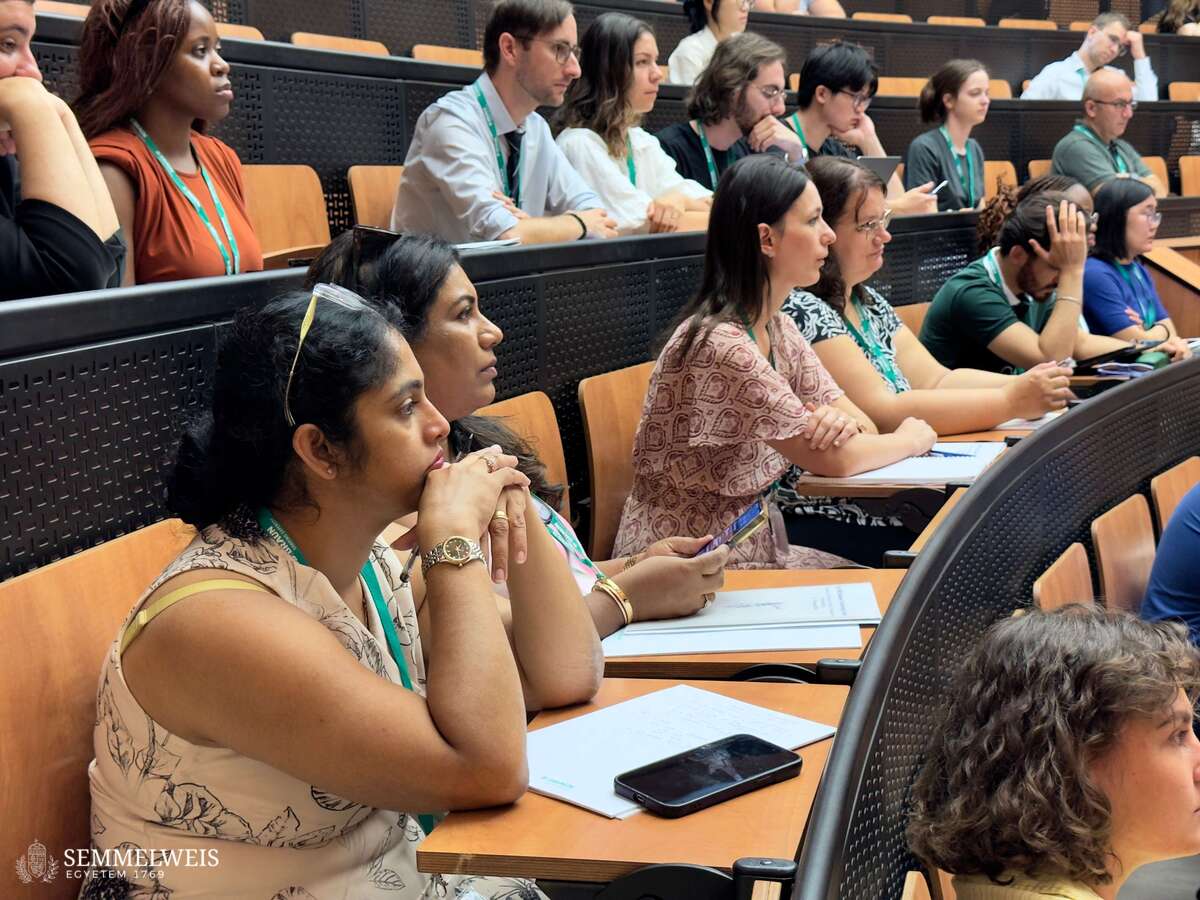 Transplantation topics included the diagnosis and treatment of BK virus infection (a viral infection that poses a particular risk to people with weakened immune systems, especially kidney transplant recipients) as well as the risks of transplanting kidneys from donors affected by viral infections. The program also covered pregnancy and contraception after kidney transplantation, new ways of matching donor kidneys with recipients, and the use of SGLT2 inhibitors in advanced chronic kidney disease and patients receiving dialysis.
A session held in the Grand Hall of the Hungarian Academy of Sciences featured a public lecture by János Peti-Peterdi, a research professor based in Los Angeles, who highlighted the prevalence of kidney disease and the importance of prevention. The event, which was also open to high school students, aimed to spark young people’s interest in nephrology and careers in research.
Dr. Orsolya Cseprekál, Assistant Professor at the Department of Surgery, Transplantation and Gastroenterology, and Dr. Nóra Ledó, Assistant Professor at the Department of Internal Medicine and Oncology, were key members of the organizing team. In keeping with tradition, students and staff at Semmelweis University were able to register for the course free of charge, helping young people engage with the national and international nephrology community.
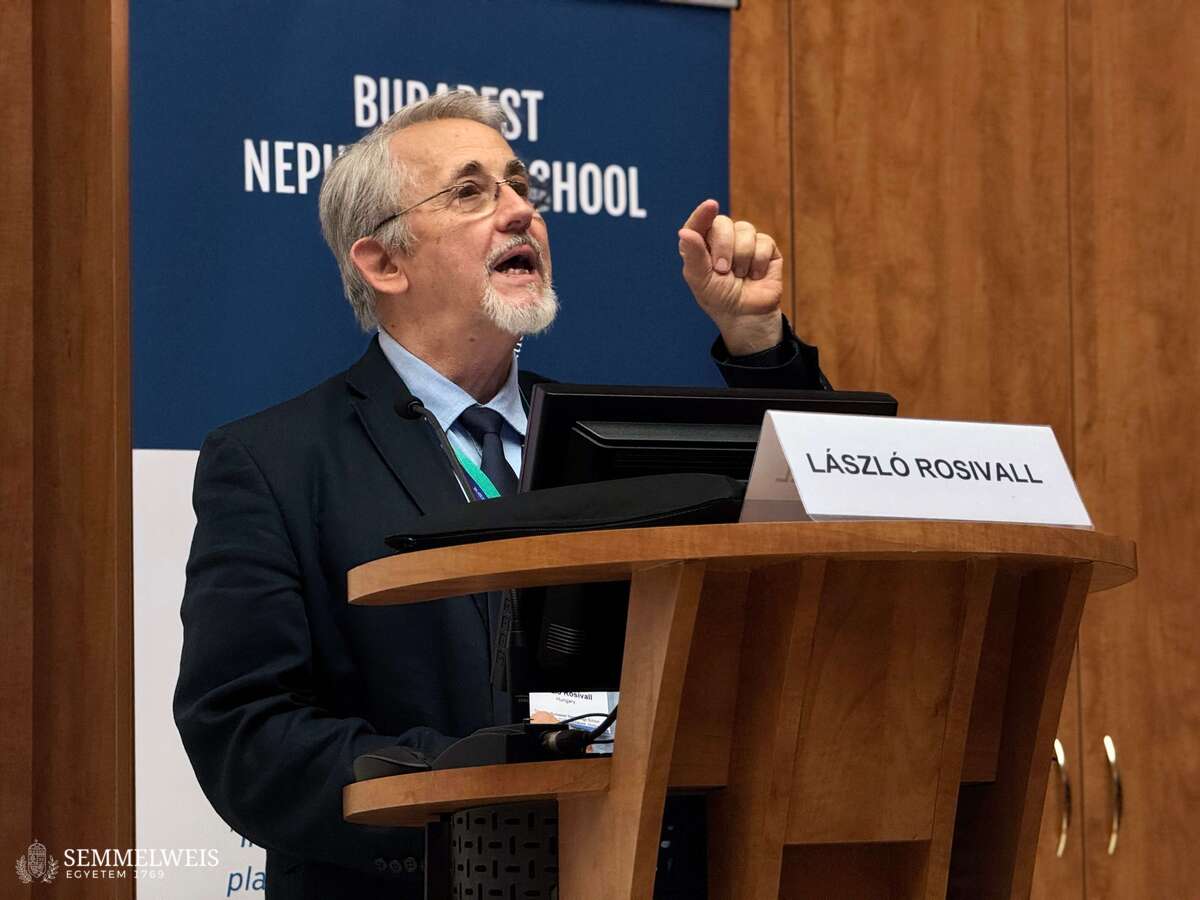 The event was given added significance by the announcement that its founder and President, Dr. László Rosivall, the Hungarian state Széchenyi Prize- and the Iranian KIA Prize-winning Professor Emeritus at the Institute of Clinical Pathophysiology, had been honored with the International Society of Nephrology’s Roscoe R. Robinson Award. As the founder of the Hungarian Kidney Foundation and the Budapest Nephrology School, Dr László Rosivall has played a defining role in educating several generations of nephrologists and has supervised and mentored 32 PhD students during his career.
His internationally recognized research has focused primarily on renal circulation, the renin–angiotensin system (a hormonal system involved in regulating blood pressure and the body’s fluid balance), and renal fibrosis. His findings have shed new light on the structure and function of a group of kidney cells that plays an important role in regulating blood pressure and fluid balance. Dr. László Rosivall will receive the prestigious award for excellence in nephrology education at the World Congress of Nephrology in Kuala Lumpur in April 2027.
Speakers at the 30th Budapest Nephrology School
Vilmos Bilicki (Hungary), Annette Bruchfeld (Sweden), Orsolya Cseprekál (Hungary), Martin Havrda (Czech Republic), J. Harold Helderman (USA), Eva Honsova (Czech Republic), Francesco Emma (Italy), Simin Goral (USA), Georgina Gyarmati (USA), Csaba P. Kövesdy (USA), Nóra Ledó (Hungary), Miklós Z. Molnar (USA), Alberto Ortiz (Spain), Janos Peti-Peterdi (USA), Zoltán Prohászka (Hungary), György Reusz (Hungary), László Rosivall (Hungary), Ivan Rychlík (Czech Republic), Miklós Szócska (Hungary), András Tislér (Hungary), Jens M. Titze (Singapore), and Andrzej Wiecek (Poland).
Orsolya Jancsó
Image credit: Dr. Nóra Ledó