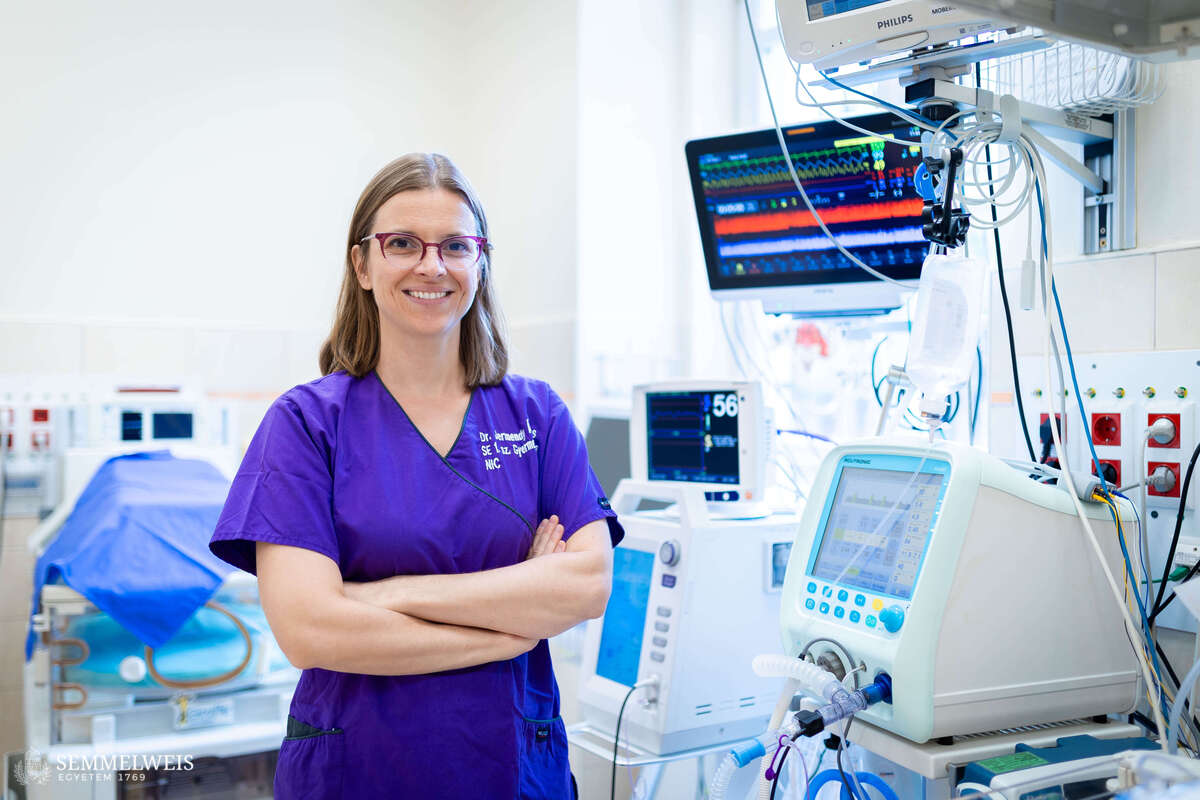
Since 2016, a research group led by Dr. Ágnes Jermendy and based at the Bókay Street Department of Semmelweis University’s Pediatric Center has been working to improve the treatment of newborn babies requiring intensive care. Their research focuses on newborns who experience oxygen deprivation around the time of birth. The center treats these patients in its capacity as a so-called therapeutic hypothermia center and continues to monitor them following their discharge from the intensive care unit until they are at least two years of age.
“Our research focuses primarily on improving the treatment of newborns requiring intensive care and positively influencing outcomes,” said Dr. Ágnes Jermendy. As she explained, although one of the greatest advances in recent years had been the introduction of therapeutic cooling, this alone did not provide a complete solution. Therapeutic hypothermia reduces the severity of brain injury and improves long-term neurological outcomes in newborns who have experienced oxygen deprivation. Despite this, nearly half of the affected children suffer permanent neurological damage, and about 10 percent of the affected newborns do not survive the first few days. One of the most important questions in this research is therefore how to identify more accurately, even in the first few days of life, what kind of care each infant needs. “The biggest problem is that early prognosis is highly uncertain. We are trying to identify physiological patterns that will allow us to make more accurate risk assessments and, accordingly, provide more personalized care,” noted the researcher.
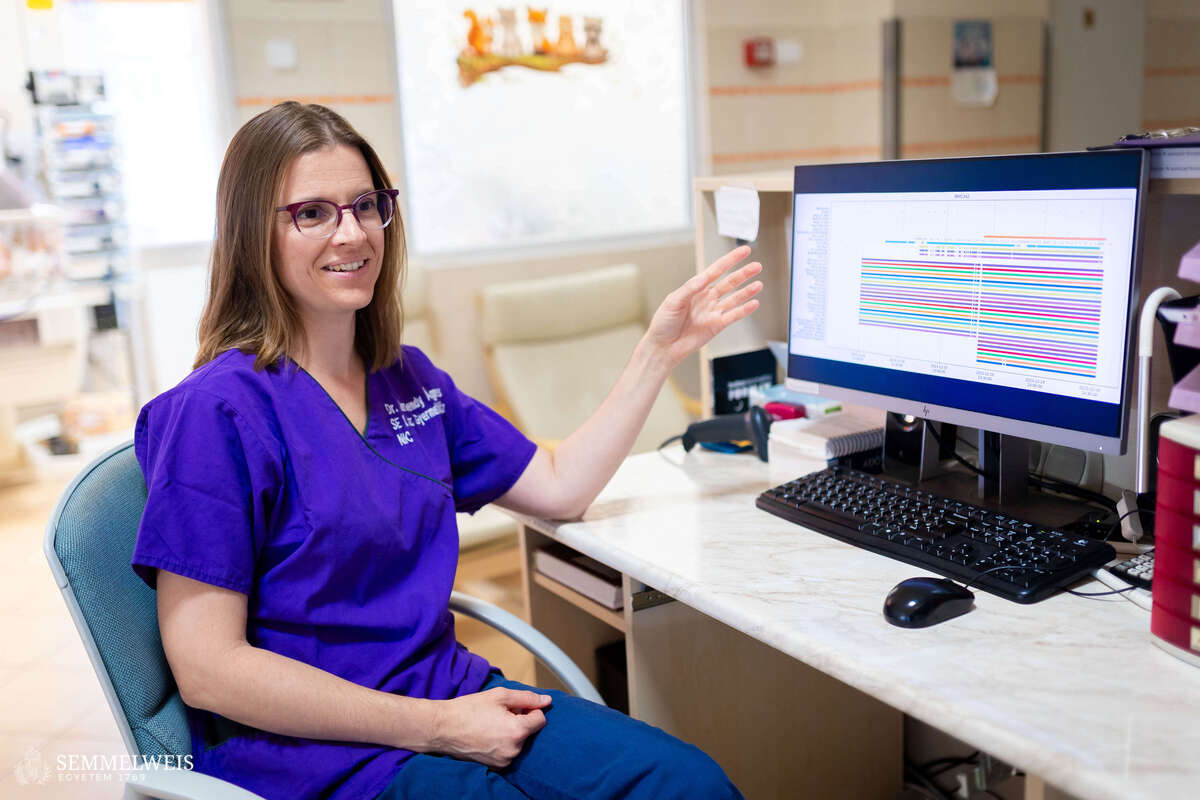
As part of the project, researchers are comparing standardized MRI scans with real-time data on electrical activity in the brain, its oxygen supply, circulation, and respiration in newborn babies. Through integrated data analysis, they aim to identify patient-specific physiological patterns that will enable more accurate risk assessment at an early stage.
The research is not merely intended to refine the diagnosis. The goal is also to ensure that children receive personalized neurointensive care tailored to their specific condition from the very first days of life, which can later be supplemented by specialized developmental support during follow-up care.
“At present, aside from therapeutic cooling, there is no drug treatment that has been proven to improve outcomes. The most important task is therefore to optimize intensive care during the first days of life and offer treatment tailored to each patient’s specific condition,” emphasized Dr. Ágnes Jermendy. She added that more accurate prognoses would also benefit families by providing a more realistic picture of their child’s expected development.
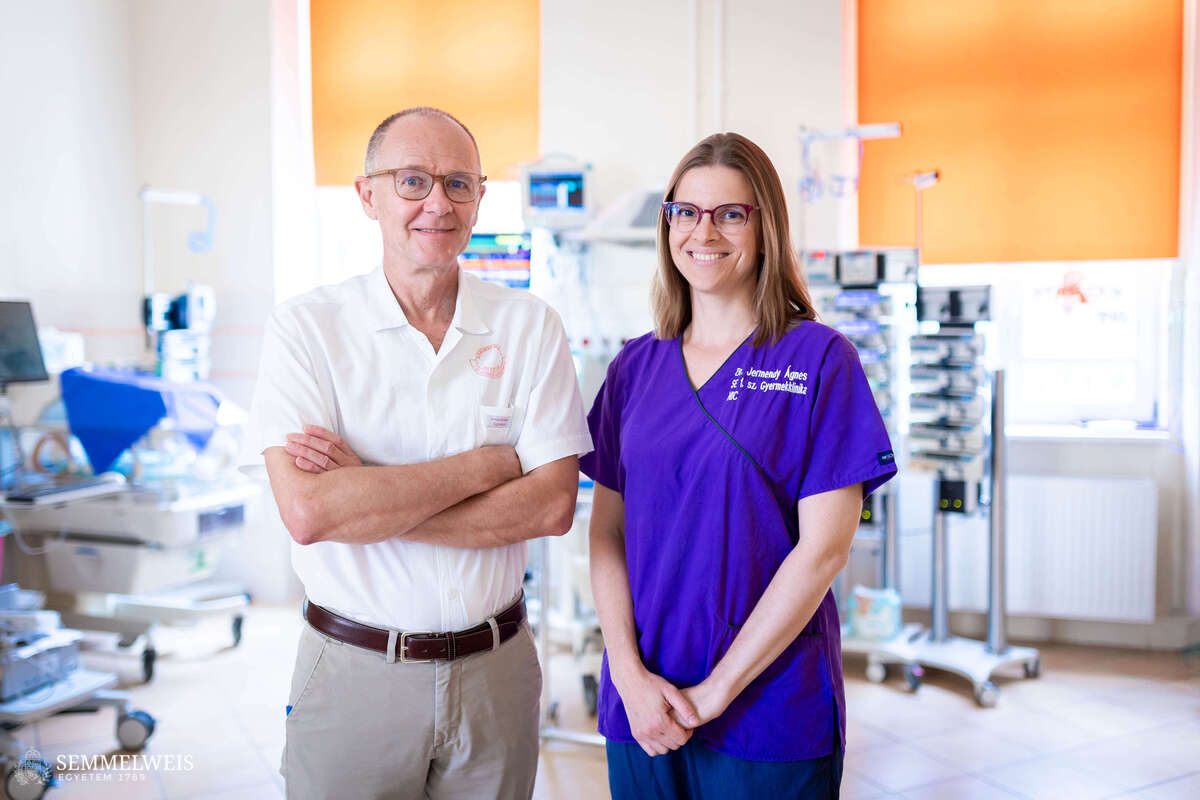
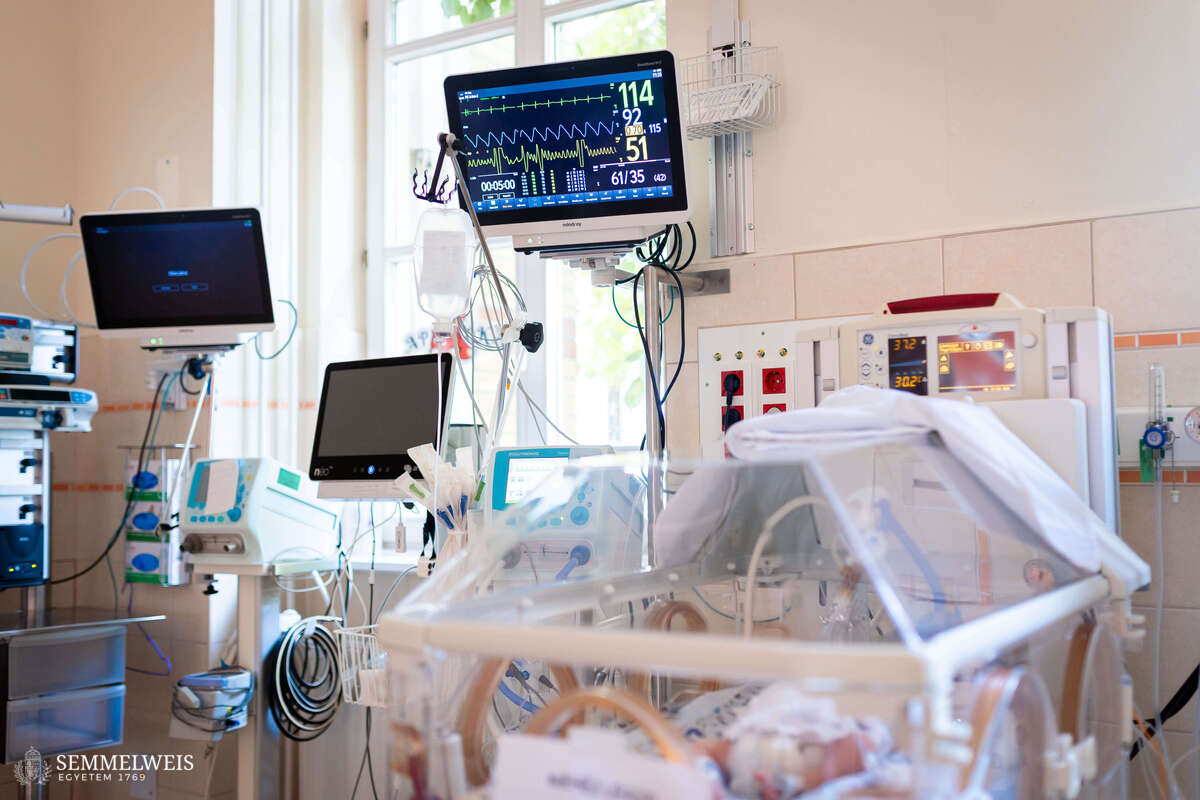
On average, one or two out of every 1,000 newborns in developed countries suffer from perinatal asphyxia, and half of them require therapeutic cooling. In Hungary, approximately 200–300 children are affected each year. Semmelweis University’s center treats about fifty newborns with this condition each year. An estimated 30 to 35 of these newborns are expected to be included in the study.
The research group’s work is supported by the MTA Momentum Programme, which fosters the careers of exceptionally talented young independent researchers and strengthens their research groups across all scientific disciplines. In this year’s call for proposals, 14 research groups were awarded a total of HUF 3.9 billion; this year, this is the one project from Semmelweis University to be selected.
Winning a Momentum grant is a significant personal milestone for Dr. Ágnes Jermendy. As she explained, she had much less time to devote to research as a clinical researcher because of her responsibilities in patient care and teaching. This is why she considered it a great honor that their project was ranked among the most promising domestic research initiatives. She believes that her experiences abroad have contributed to this as well. The clinical epidemiology and research methodology approach acquired during her master’s program at the Harvard T.H. Chan School of Public Health continues to influence her work today. “This is a tremendous external endorsement and a landmark moment in the life of our research group,” she said. As she explained, basic research projects have traditionally dominated the Momentum Programme. This is why she considers it a significant achievement that they secured the grant as a clinical research group.
According to Dr. Ágnes Jermendy, the significance of the project extends beyond neonatal intensive care units. Early diagnosis and personalized care can not only improve the quality of life for the families affected but are also of paramount importance from a societal perspective in the long term. As she put it, the resources invested in improving perinatal care are particularly well spent: If a child starts out with better chances for development, the positive effects will be felt throughout their entire life.
Eszter Keresztes
Translation: Judit Dőtsch
Photos by Boglárka Zellei – Semmelweis University