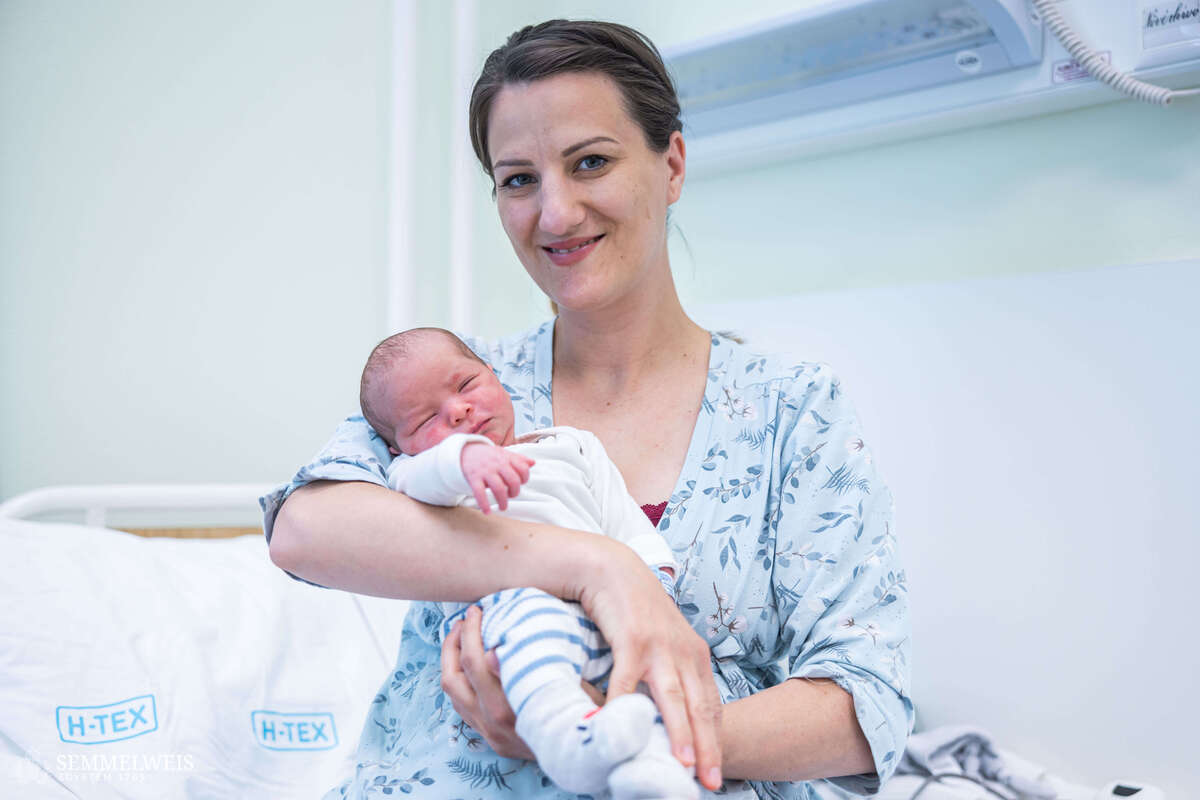
 “Our firstborn son, who had been conceived naturally, was diagnosed with SMA at six months of age. That’s when we found out that both my husband and I carry a genetic mutation that, when combined, can cause SMA. As a result, there is a 25 percent chance that our future child would also be affected, so we decided to undergo IVF and seek genetic counseling,” says Klaudia Cserti-Csapóné Nogli, who recently gave birth to a healthy baby at Semmelweis University.
The fertilized egg underwent preimplantation genetic testing, meaning that the pre-embryos were screened before implantation; this procedure successfully prevented the transmission of SMA, a rare neuromuscular disorder that results in the loss of motor neurons and progressive muscle wasting. You can read about this innovative procedure in detail in this article. Among other things, this procedure can help detect serious conditions such as cystic fibrosis, SMA, Huntington’s disease, Turner syndrome, or congenital iris agenesis. Semmelweis University was the first medical school in Hungary to make this state-of-the-art diagnostic method available last year to couples participating in the in vitro fertilization program. And this is the first case in Hungary where a mother has given birth to a healthy child using this procedure, conducted entirely within the public healthcare system.
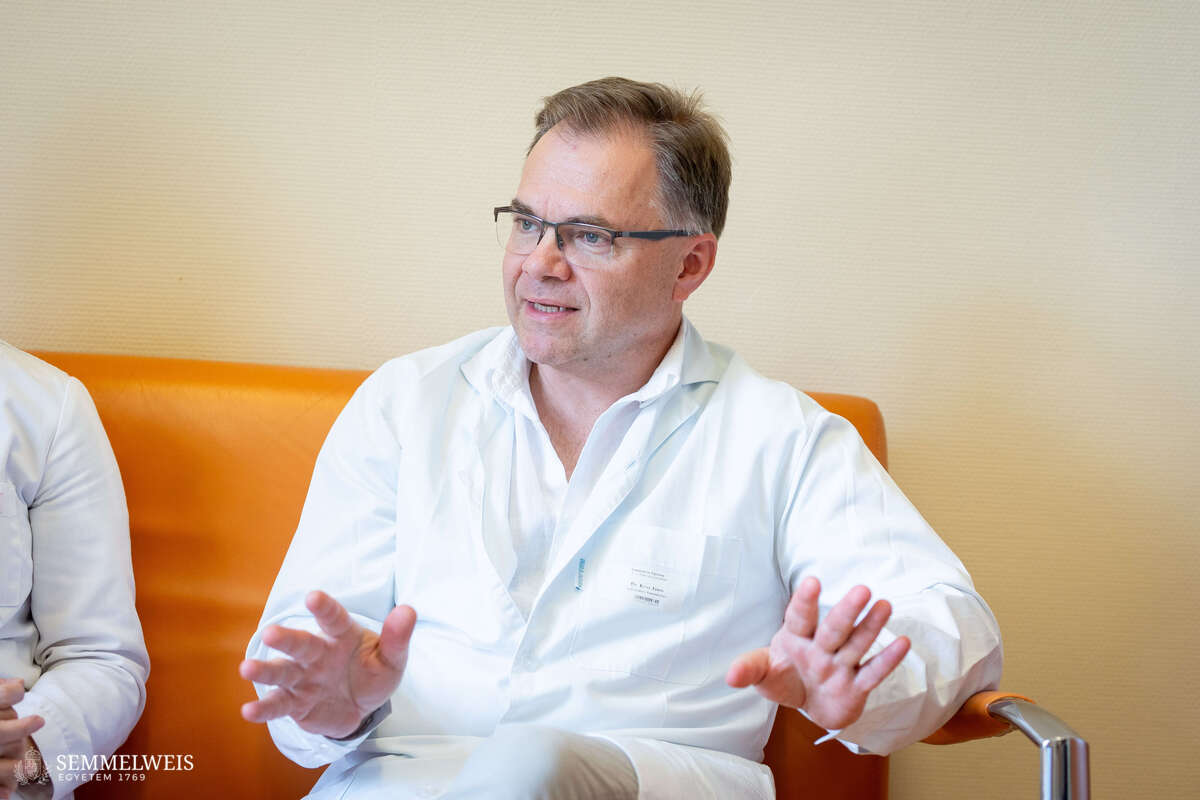 “The goal of this method is to identify severe hereditary genetic conditions similar to SMA. By screening for these disorders, we can give prospective parents the chance to have a healthy child. As early as five days after fertilization, pre-embryos can be subjected to DNA testing to determine whether they are affected by a particular disease,” explains Dr. János Kósa, a biologist and senior research fellow at the Molecular Diagnostics Laboratory of the Department of Internal Medicine and Oncology at Semmelweis University, who oversaw the preimplantation genetic testing.
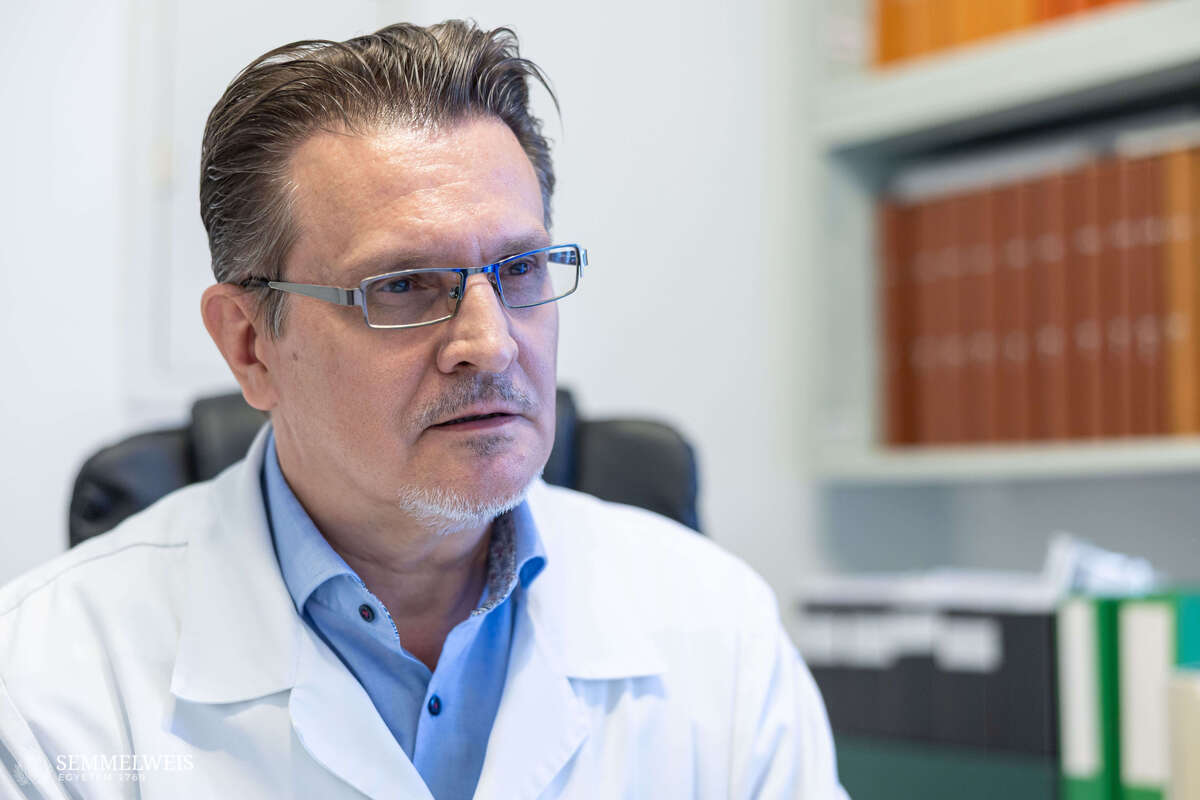 “During the IVF program, only embryos that have not inherited serious genetic defects are selected for transfer, thereby increasing the chances of a healthy birth,” says Dr. Artúr Beke, the attending physician who also serves as a specialist in molecular diagnostics and a clinical geneticist at the Department of Obstetrics and Gynecology. “With the help of diagnostic testing, serious disorders that can significantly impair quality of life can be identified even before the embryo is implanted,” he added.
The Prenatal and Preimplantation Genetics Working Group at Semmelweis University was formed in 2024 through a collaboration between the Molecular Diagnostics Laboratory of the Department of Internal Medicine and Oncology, the Department of Obstetrics and Gynecology, and the Assisted Reproduction Center (ARC) led by Dr. Miklós Sipos. Details about their work can be found here.
Csongor and his mother are doing well, they were discharged from the Semmelweis University clinic a week ago.
Eszter Csatári-Földváry, Eszter Kovács
Translation: Judit Dőtsch
Photos by Boglárka Zellei, Bálint Barta – Semmelweis University