“Today we are bringing into use three state-of-the-art instruments that will give our students first-hand experience of how modern medical imaging works and how it is used across three important and complementary areas,” said Dr, Béla Merkely in his opening remarks at the unveiling at the Department of Biophysics and Radiation Biology.
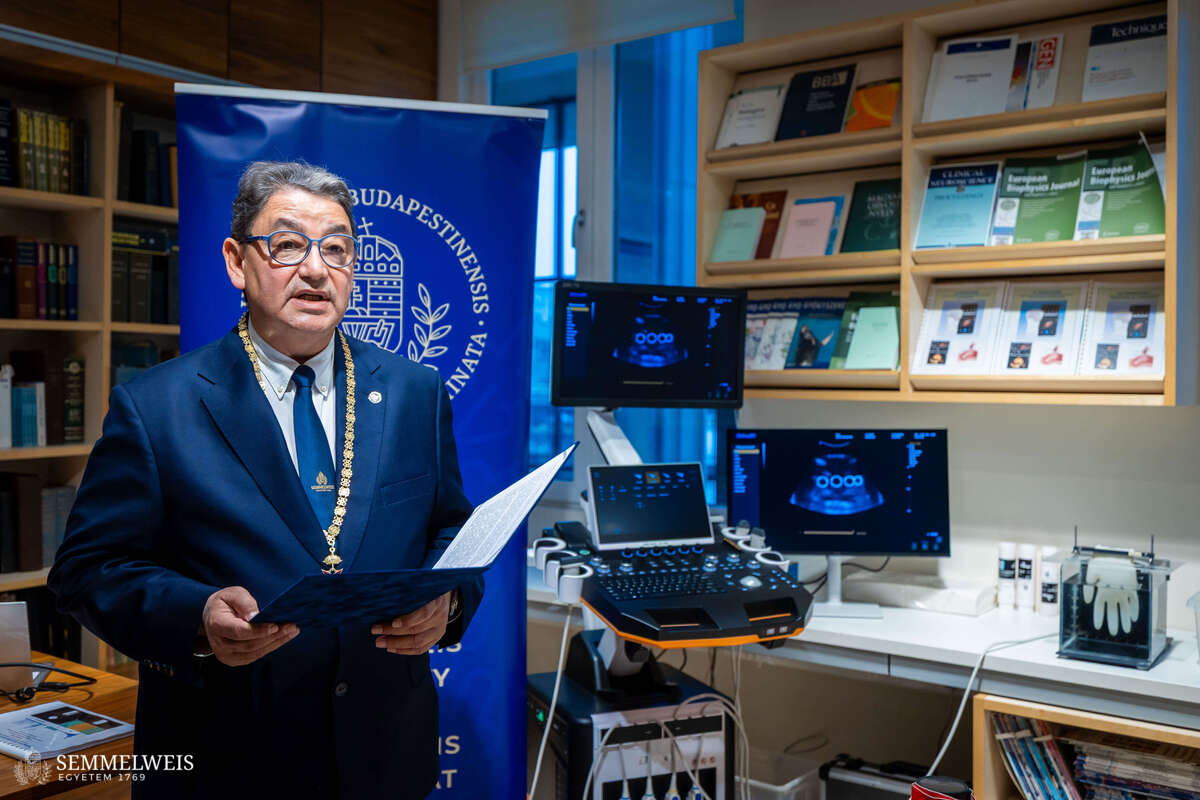 The rector added that the new equipment, comprising a portable MRI teaching system, a color Doppler ultrasound scanner and an advanced gamma camera fitted with a cadmium telluride detector, would enable students to train more effectively. The upgrade would improve teaching and help ensure that these modern technologies were used to the greatest possible benefit of patients.
One of Semmelweis University’s most important missions is to train professionals who understand scientific findings and can apply them in practice. We want them to put patients first, to see the person as well as the disease, to be capable of independent critical thinking and to keep learning throughout their careers.
– Dr. Béla Merkely
The rector added that medical imaging was a particularly good example of how much these qualities matter in modern medicine.
New equipment enhances Hungarian and international programs
Dr. Béla Merkely said the new equipment reinforced an approach to teaching in which first-hand experience, experimentation, and direct observation are central to learning. He pointed out that the upgrade would improve the quality of medical, dental and pharmacy education across the university’s Hungarian-, English- and German-language programs. It would help students enter their professions with up-to-date knowledge that meets international standards, while opening up new opportunities for student research within the Students’ Scientific Association (TDK) and further research collaboration.
The rector highlighted the Department of Biophysics and Radiation Biology’s sustained investment in its teaching and research facilities. Over recent years, the department has acquired several instruments that stand out in Hungary, some of which are unique in the country.
An upgrade of national and international significance is an investment in future patient care
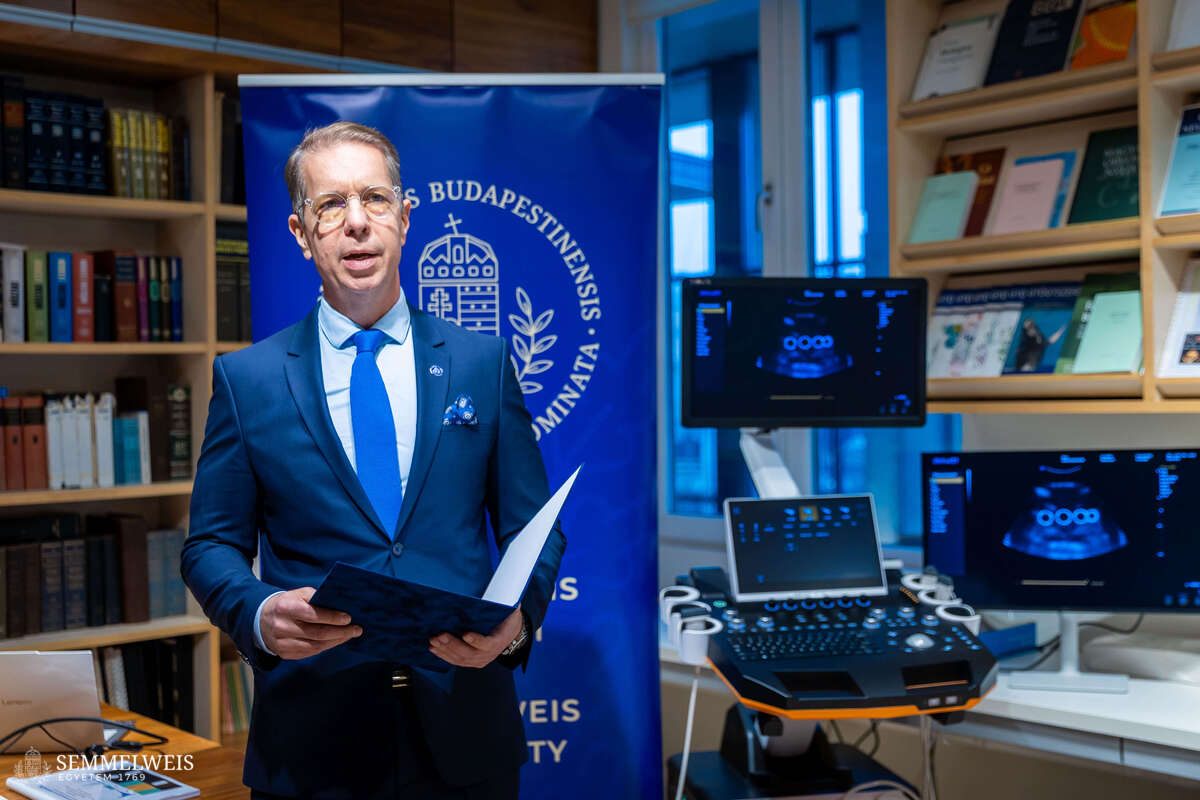 Dr Péter Nyirády, Dean of the Faculty of Medicine, said the new equipment was a significant addition for both the department and the university. The imaging equipment would support the faculty’s efforts to help students develop practical skills.
“The rapid advances in medical science require all of us to keep adapting. Reading about the technology in textbooks or seeing it on a screen is no longer enough. Patient care in the 21st century requires tomorrow’s doctors to graduate with the confidence to put their practical skills to use,” Dr. Péter Nyirády said in his opening remarks.
This state-of-the-art equipment is an investment in the future of patient care and in the next generation of doctors.
– Dr. Péter Nyirády
The dean said that Semmelweis University had been training doctors from Hungary and abroad for more than 250 years. The new equipment, he added, showed that the university could build on its traditions while continuing to adapt, develop and respond to the demands of the 21st century.
Teaching notes guide students in using the ultrasound scanner, MRI, system and gamma camera
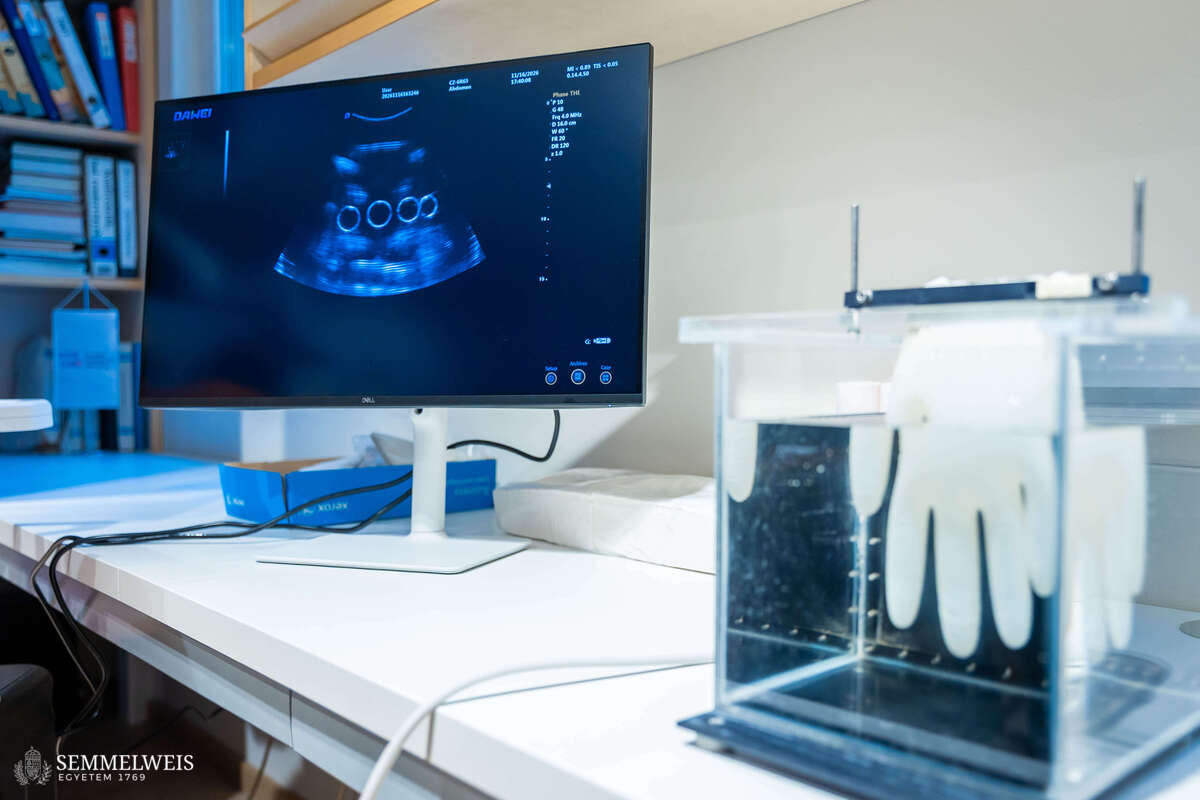
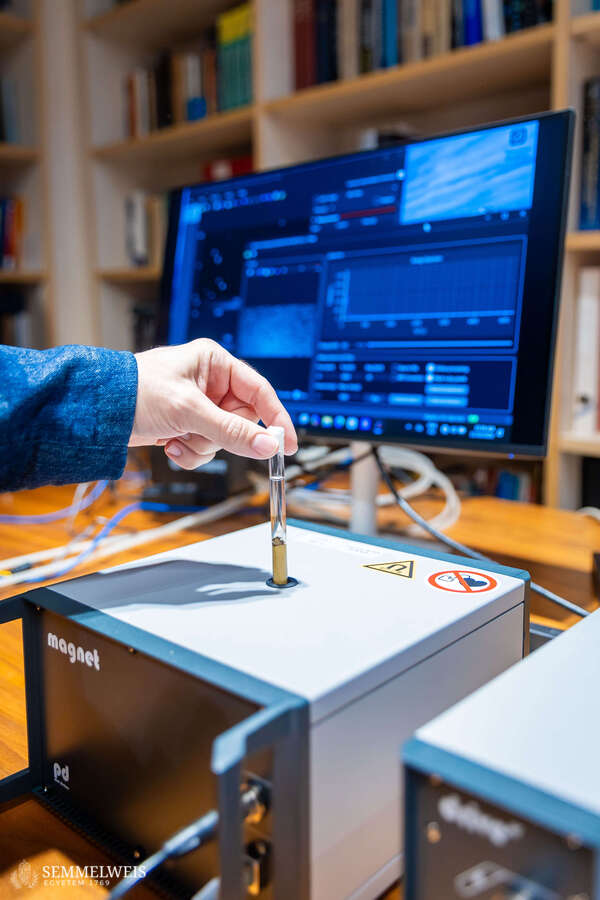
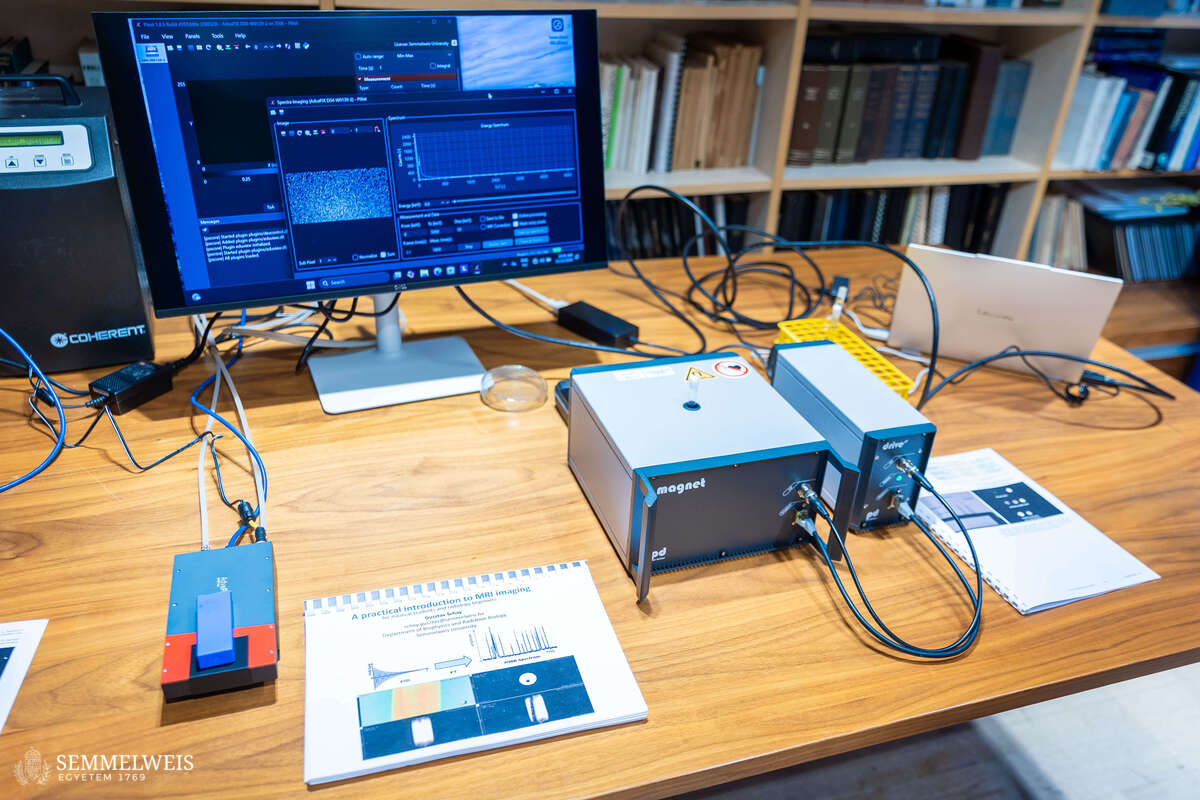
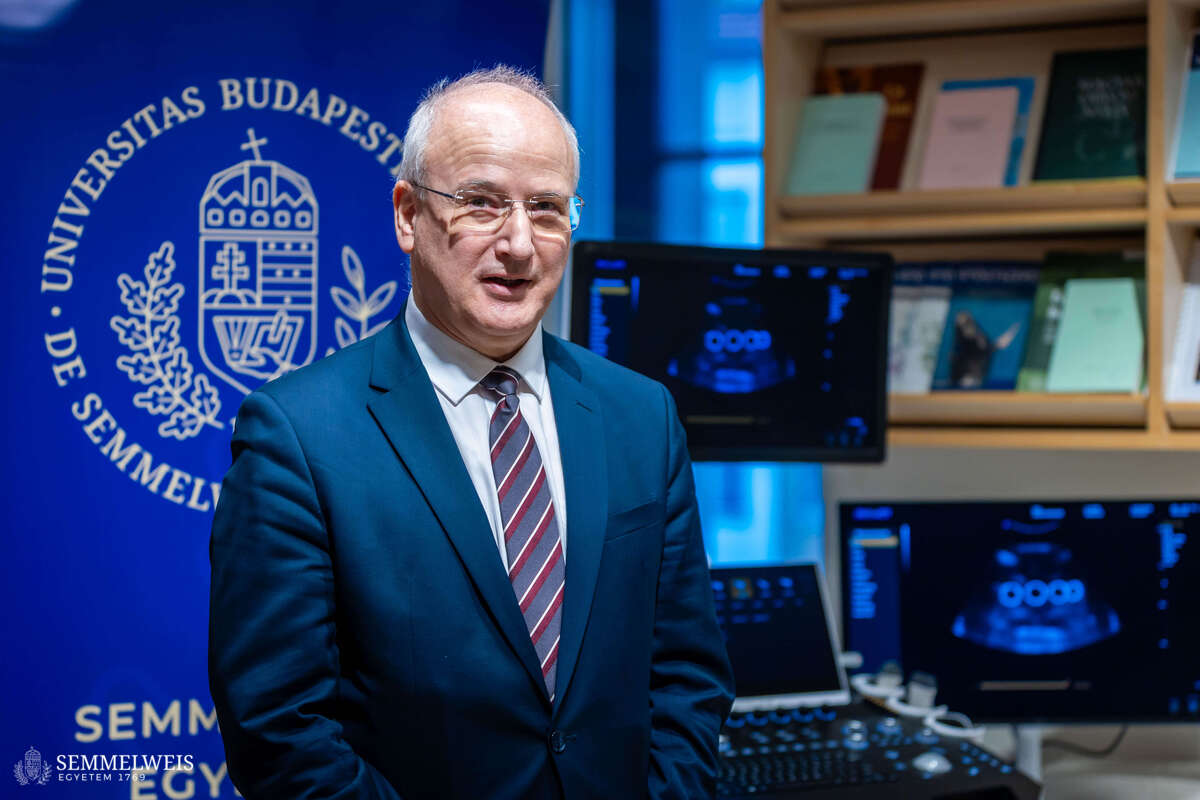 Dr. Miklós Kellermayer, Director of the Department of Biophysics and Radiation Biology, spoke about the importance of teaching and of giving students direct experience of the phenomena they study. He then introduced the new equipment. The high-specification ultrasound scanner comes with several interchangeable probes for cardiovascular and other imaging applications. The MRI system was designed for teaching, can be used in laboratory conditions and can produce images. The gamma camera uses a high-resolution detector developed in collaboration with colleagues at CERN. It allows students to explore the principles behind gamma cameras and see how they work.
The imaging equipment is integral to the work of the Department of Biophysics and Radiation Biology and will play an important role in both undergraduate teaching and credit-bearing courses.
– Dr. Miklós Kellermayer.
“Colleagues in the department have also prepared teaching notes to help students learn how to use the equipment,” Dr. Miklós Kellermayer added. In closing, he thanked the faculty and university leadership for supporting the upgrade, which cost more than HUF 40 million.
Gallery
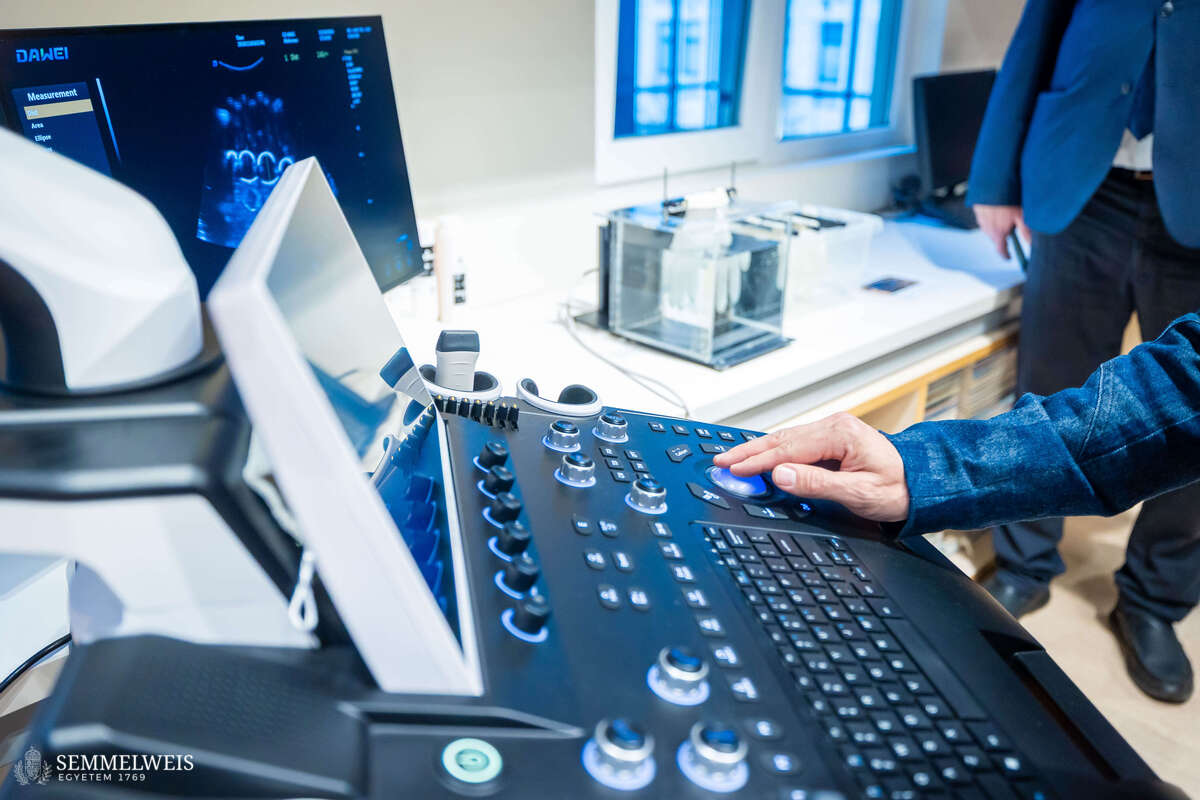
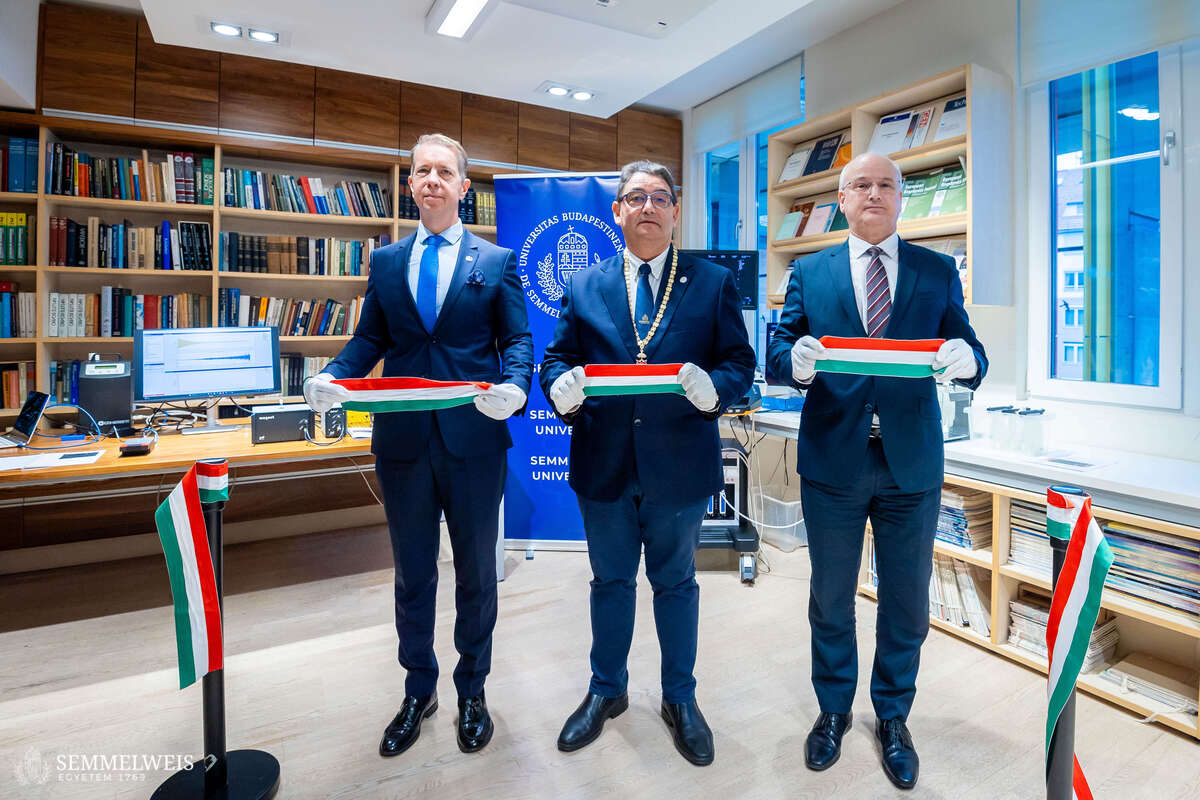
After the opening remarks, Dr. Béla Merkely, Dr. Péter Nyirády and Dr. Miklós Kellermayer cut the ribbon to officially unveil the new equipment.
Anita Szepesi
Photo: Boglárka Zellei – Semmelweis University