1. Talking about your loss and receiving support from your community can help you a lot in the grieving process.
In Hungary and much of Europe, talking about death is traditionally considered inappropriate. “Wherever we look, we are surrounded by the illusion of happiness and youth. In reality and on social media alike, everyone wants to show their best, most attractive side. A sad, grieving person simply does not fit into this idealized image,” explains Dr. Katalin Hegedűs. We live in an individualistic society where communal rituals have either disappeared or lost their meaning. For example, wakes and mourners are no longer customary, even though their purpose was to help people find closure and cope with their loss by providing them with a sense of community. Dr. Katalin Hegedűs says it’s important to share your feelings with others and talk about what you’re going through. You can open up to relatives, family members, friends, coworkers, a priest, pastor, or mental health professional. “If there are any customs or communal traditions related to death or mourning that have been preserved, try to keep them alive. For example, on All Souls’ Day, the whole family might visit the cemetery together to pay their respects at the graves of deceased relatives,” the associate professor points out.
When should you seek help from a professional?
“Most people do not need professional help to work through their grief,” emphasizes Dr. Katalin Hegedűs. In her view, although many people who have experienced a loss consult a therapist, most people who are grieving undergo the same process on their own as they would in therapy. “At the same time, sometimes the grieving process is complicated. For example, when someone discovers a loved one who has taken their own life. This experience can lead to a state of mind that the person is unable to process on their own. However, two-thirds of those who are grieving do not need professional help; it is enough for them to turn to a close friend or family member. Many people do not have that kind of support though,” notes Dr. Katalin Hegedűs, adding that anyone who feels they need help coping with grief should not hesitate to see a therapist.
2. Let’s accept that grief is personal – and so is the way you cope with it. Let’s not medicalize grief because it is not an illness.
According to Dr. Katalin Hegedűs, everyone copes with loss differently; no two people are alike. Some emotions are common to everyone, but their frequency or intensity may vary from person to person. At first, every mourner feels remorse; thoughts run through their mind that they didn’t do everything they could, didn’t take the deceased to one more doctor, or didn’t kiss them one last time. A feeling of loneliness upon waking in the morning is also common. For most people, their emotional state after a loss is very volatile; it can fluctuate several times even within a single day: Sometimes they feel better, other times worse, explains the associate professor. There is no cure for these emotions, and, as Dr. Katalin Hegedűs points out, most clichéd advice, such as “the deceased is in a better place” or “they are no longer suffering,” doesn’t help either. “You must let the feeling of loss work its way through you. According to one theory, grief never disappears, but life grows around it,” says Dr. Katalin Hegedűs.
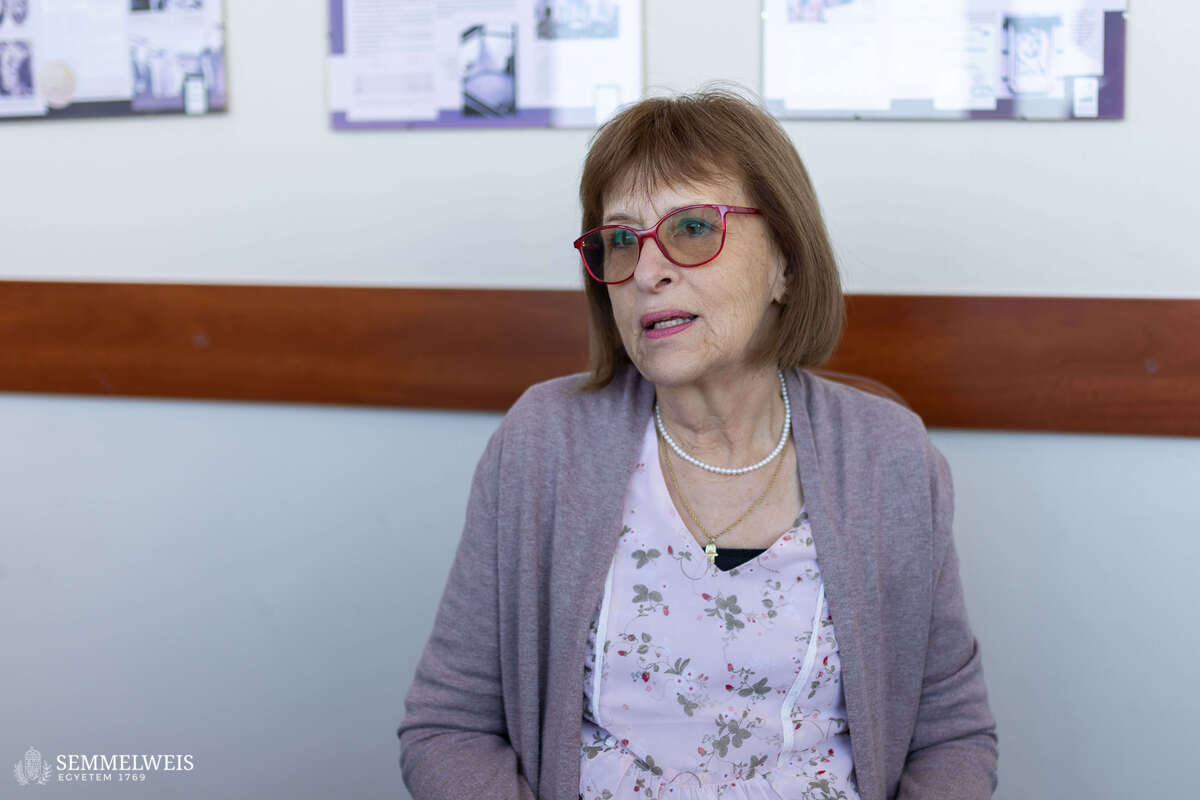
Family doctors often prescribe sedatives to people who are grieving, but Dr. Katalin Hegedűs believes that this is usually unnecessary. “Grief is a natural human process. It is not an illness and does not require medication. These medications only numb the emotions one needs to experience during this time,” she adds.
Models of coping with grief
When it comes to the grieving process, most people are familiar with – or have at least heard of – the model named after the Swiss-American psychiatrist Elisabeth Kübler-Ross, which was published in 1969 and outlines the five stages of grief and change: denial, anger, bargaining, depression, and acceptance. According to Dr. Katalin Hegedűs, this model was originally developed in relation to the dying, and today a different approach is generally used. In this model, the first stage is shock: Everyone who has lost someone close to them experiences this, whether the person died suddenly and unexpectedly or passed away at an advanced age, perhaps after a long illness. As the initial shock wears off, people who have lost a close relative usually enter a period of organization. They arrange the funeral, make preparations, and contact other family members. Once the ceremony is over, the hardest period begins: The hustle and bustle subsides, and people come to terms with their loss – this is when most people seek professional help. This is a fluctuating state that can last up to half a year or even longer. It’s typical during this time that someone spends time with friends and laughs, only to suddenly feel ashamed and slip back into a sad mood. The grieving process can take up to a year: During that time, every holiday, anniversary, and special occasion will occur once – and the second Christmas spent without the loved one will be less emotionally overwhelming. Dr. Katalin Hegedűs draws attention to the fact that some people live in a state of chronic grief; even years later, they leave the deceased person’s belongings and clothes untouched, or visit the grave at the cemetery every day. The associate professor usually advises her clients to return to work after a few weeks, if possible, even if they find it difficult to concentrate on their work at first.
3. Accept the individual ways of grieving as well, even those that are less common in society.
Dr. Katalin Hegedűs highlights that “it’s not fashionable to grieve” nowadays, and society expects most people to get over it quickly, put their grief behind them, and move on, simply because we don’t know how to deal with someone who is grieving. However, there are some forms of grief that most of society does not even acknowledge: the loss of a pet, for example. “Anyone who has lived with a dog or cat for 15 years truly feels, after the animal’s death, as if they have lost a family member,” the associate professor explains.
At what age should you start talking to children about death?
As Dr. Katalin Hegedűs has observed, many parents do not take their children to a funeral even when they have lost a close relative. The expert believes that if a child is old and mature enough to sit through a ceremony, it may be worthwhile to involve them in the funeral. “If they don’t want to go, you shouldn’t force them, but let the child decide whether they’d like to participate in the event. Talk to them and explain what’s happening. Just as on All Souls’ Day, it’s a good idea to tell them not only whose grave you’re visiting, but also why you are doing so. This way, children also come to understand that death is a natural part of life – the end of it – and, moreover, going through the loss as a shared community experience helps them a great deal in coming to terms with it,” the expert points out. According to Dr. Katalin Hegedűs, for example, if a family has a pet, children can care for a dog or a guinea pig throughout their entire lives, thereby learning that eventually they will have to say goodbye to their pets, preparing themselves for this, and burying them. The expert stresses that starting around age ten, it’s a good idea to talk to your children about loss and explain to them, in their own words and at their own level, what death means. Children may experience loss even at a younger age; in such cases, it is advisable to discuss the topic with them in a way that is appropriate for their age, addressing their specific questions.
Examples of less socially accepted forms of grief include losing a child as a fetus or grieving the death of a lover or a same-sex partner. In addition to the sense of loss, these mourners often have to cope with not being able to talk openly about their loss. For them, seeking help from a therapist can be a great source of support.
4. Don’t be shy to approach someone who is grieving! Offering support is important to them – let’s not be impatient with them, and encourage them to be patient with themselves.
“My sincere condolences!” or “I’m sorry for your loss.” These are some of the phrases you usually say when someone has lost a loved one. According to Dr. Katalin Hegedűs, it’s good to assure the bereaved of your sympathy, and there’s no better way to express it. However, it’s important to do more than just offer words of comfort.
Many people say at times like this, ‘Let me know if there’s anything I can do to help.’ This seems well-meaning, but in most cases, someone who is grieving won’t ask for help. It is better if you reach out and offer specific kinds of support: ring their doorbell with a bowl of chicken soup or invite them to go for a long walk.
Dr. Katalin Hegedűs has been teaching the Thanatology course at Semmelweis University for 24 years; she often asks her students what they do when a classmate loses a loved one. “Most people say they don’t dare approach them because they’re afraid the person wouldn’t be happy about it, or because they think the person surely wants to be left alone. Obviously, no one wants intrusive attention, but a few kind words, a friendly touch, or perhaps a hug are sure to be comforting to anyone who has experienced a loss. It’s also important to be patient with the bereaved person; don’t question them – even after a few months – about why they haven’t moved on yet. Give them time, and encourage them to be patient with themselves,” emphasizes the associate professor.
5. Grief can be a form of personal development or post-traumatic growth.
If you were truly present at the death of your loved one, if you held their hand even in their final moments and told them you loved them, that can become something valuable as you move forward in the grieving process. It offers a sense of peace that can also lead to growth in your life, emphasizes Dr. Katalin Hegedűs. As she explains, one of her students experienced their father’s death in such a way that, during the last three days, the entire family gathered around the hospital bed: Everyone had a kind word for him, and the dying man was able to speak with everyone one last time. It was such a positive experience that the whole family still looks back on it with a sense of peace. Dr. Katalin Hegedűs stresses that it is not advisable to send a dying person to the hospital when there is nothing more that can be done to help them. “This is both unnecessary and undignified. If at all possible, our loved ones should be given the opportunity to pass away in the comfort of their own homes. Many people don’t want to be by their side at a time like this because they don’t want to remember them that way – as someone who has passed away,” the associate professor notes. However, the dying person needs support and someone to be by their side, and it also helps the bereaved come to terms with their loss if they were there in those final moments. Some movies, books, or other experiences have left many people fearing that death is some kind of horrific, drawn-out scene filled with gruesome grimaces. In reality, however, the vast majority of people simply fall asleep: One moment they’re still breathing, and the next, they’re not. That’s what a peaceful death looks like.
Ádám Szabó
Translation: Judit Dőtsch
Photo by Bálint Barta – Semmelweis University