Exercise more, eat healthier, go for screenings, avoid stress, and get a good night’s sleep – these are the well-known ways to prevent disease today.
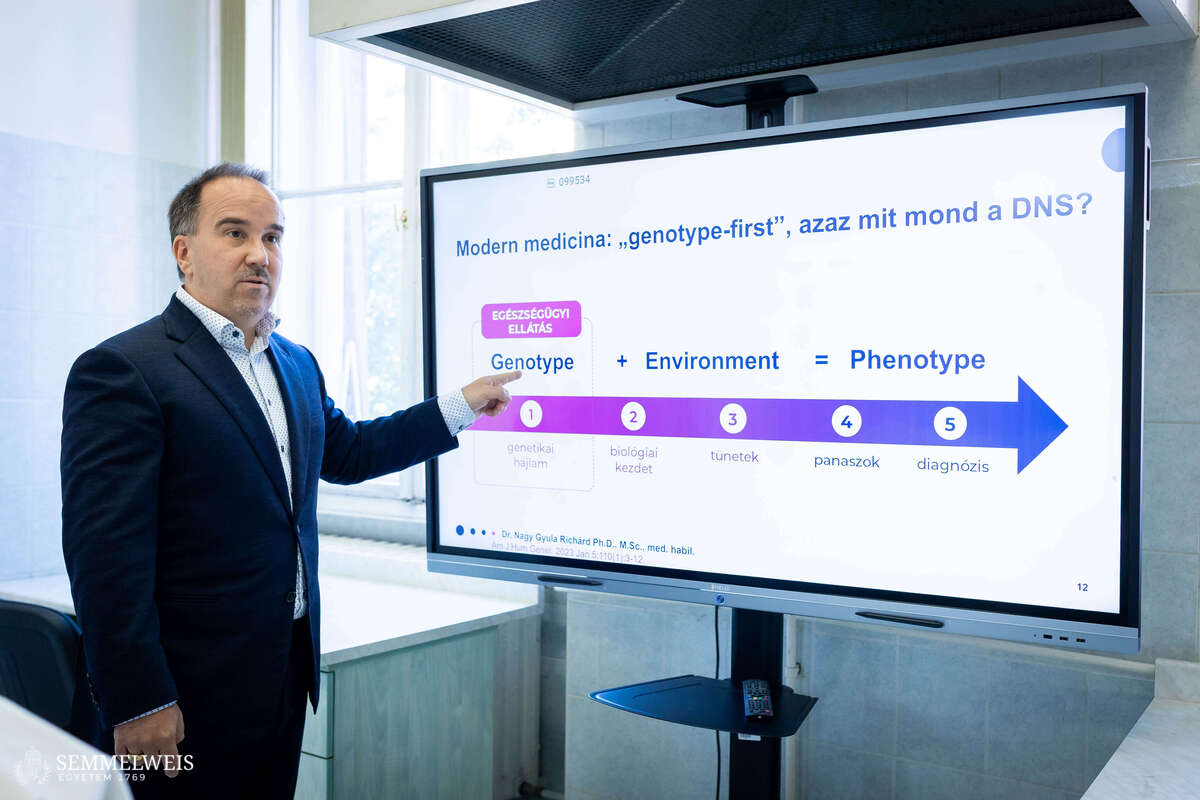
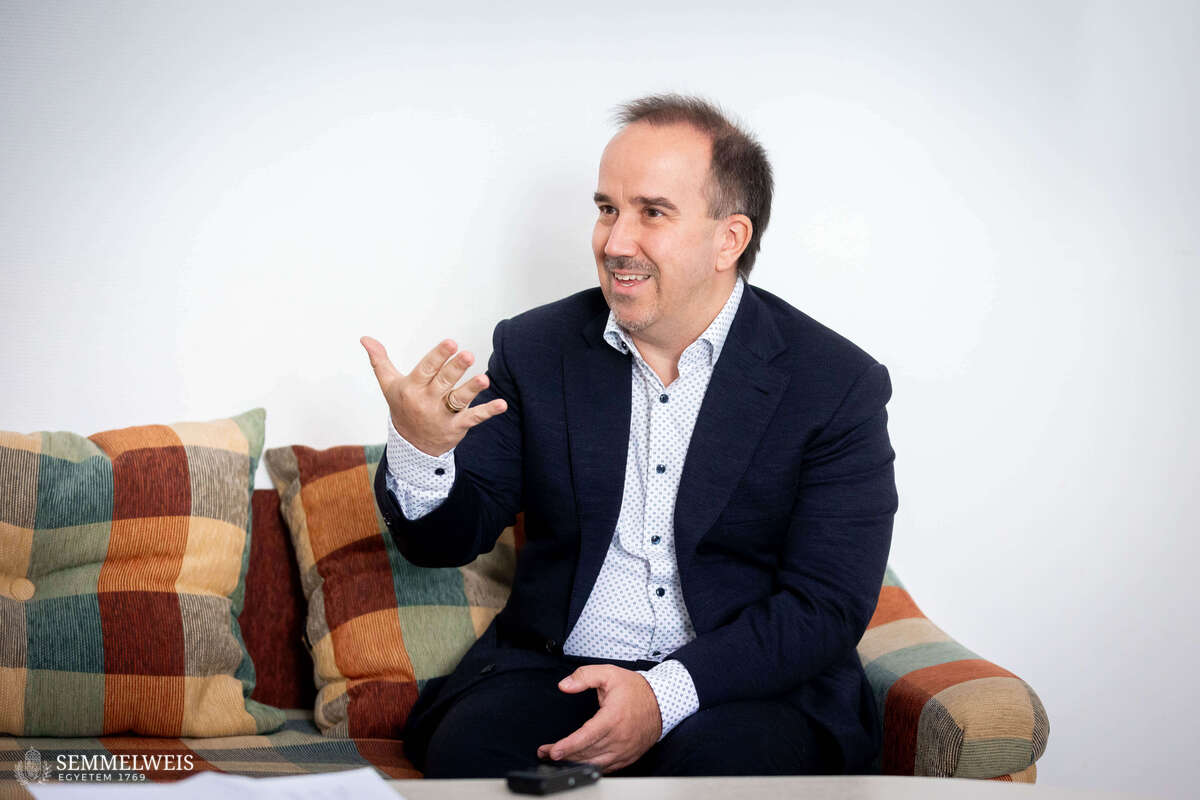 Dr. Gyula Richárd Nagy, a clinical geneticist and associate professor in the Department of Obstetrics and Gynecology at Semmelweis University, says that population-wide whole-genome sequencing could launch a new era of personalized preventive and predictive medicine. With this tool, anyone can receive their “personalized guide” to identify the risk of certain diseases and their predisposition to them well before symptoms appear and thus explore personalized prevention options. In his view, all of this is not even a distant future, even though it is a relatively new field of science.
What does whole-genome sequencing mean?
Whole-genome sequencing means reading the nearly complete “text” of a person’s genetic information: more than six billion DNA letters, including some 40,000 genes and the regions that regulate their function. “If we were to put all of these side by side, they would fill about 4,000 books of 500 pages each,” explaines Dr. Gyula Richárd Nagy. The international Human Genome Project, which aimed to fully map the human genome, began in 1990. While the first draft of the human genome was completed in 2001, it wasn’t until 2022 that a substantially complete, gap-free genome was assembled for the first time.
However, when conducting whole-genome testing to predict susceptibility to diseases, a key question is what serves as the reference – that is, what the variations in the genetic makeup that predispose individuals to diseases are compared to. Currently, the so-called GRCh38 is the reference sequence for the human genome that is widely used and accepted internationally. Researchers at Semmelweis University point out the limitations of the old reference model: “When analyzing the entire genome, it is necessary to examine and compare a massive amount of data. This is done by automated software all over the world. However, if the system encounters a healthy genetic variant in a patient that is listed in the reference as an exceptionally rare gene variant (a minor allele), it may trigger a false alarm,” adds Dr. Gyula Richárd Nagy, the corresponding author of the article, summarizing one of the findings from the paper published in the renowned US-based, D1-rated journal GeroScience. In other words, if the map does not provide a comprehensive picture of human genetic diversity, then without expert oversight – and relying solely on certain automated data – we could easily mistake healthy genetic traits for defects. This is precisely what the study conducted by the university’s researchers has shown.
 “The whole genomes of twenty healthy Hungarians were compared with the GRCh38 reference genome. In all 20 cases, the automated analysis identified the same severe genetic variant, which was later found to be erroneous following expert curation based on additional, representative regions. In other words, none of them had a true medically relevant variant. “The study thus demonstrates an important bioinformatics vulnerability,” highlights Dr. Balázs Győrffy, Head of the Department of Bioinformatics at Semmelweis University and the other lead author of the paper.
This does not pose a problem in current practice, since the discrepancies identified by the software are also reviewed and analyzed manually by experts using other population databases. However, this correction would create an unsustainable bottleneck in the event of a larger number of screenings and thus could be one of the obstacles to the future expansion of population-wide preventive screenings, warns Dr. Gyula Richárd Nagy.
The root of the problem is that GRCh38, which is currently widely used as a reference, is not an “average” human genome that perfectly applies to every person. It is based on a single, linear reference coordinate system. Although it contains genetic data from multiple individuals, 70 per cent of the data is based on the genome of a male from Buffalo in the United States. The researchers point out that, in the future, a global solution would be a graph-based pan-genome. This would use a much richer genetic mapping system that would cover human diversity more comprehensively and eliminate the potential for error outlined above “by design.” In other words, instead of comparing every person’s genome to a single reference sequence, a sort of genetic map network would be constructed from the data of multiple, genetically diverse individuals, which would provide a much better picture of human genetic diversity.
The pan-genome graph already exists. This means that a computational reference has been created which depicts the common and divergent segments of multiple human genomes in a branching structure, rather than describing the DNA sequence of a single person as a single sequence. However, its routine clinical application in daily practice has yet to be realized. “The key question for the future is to what extent information technology will be able to keep pace with advances in medicine. Current everyday IT systems simply cannot support the daily use of such massive databases,” notes Dr. Balázs Győrffy.
Dr. Gyula Richárd Nagy explains that it is extremely important to actively explore the limits of technology so that this branch of preventive medicine could provide the highest level of safety, without compromises.
The present and future of genetic testing
Genetic testing is already being used in medicine today. For certain types of cancer, for example, a sample taken from a tumor is analyzed to identify genetic abnormalities that can help determine which targeted therapy is likely to be effective. Genetic testing plays an important role in the diagnosis and treatment of rare conditions, as well as in the detection of hereditary diseases. Genetic testing can be used to assess the risk of hereditary diseases in affected family members. This can enable early detection and preventive interventions, such as cardiogenetics. However, the fundamental approach of future preventive and predictive medicine, based on whole-genome sequencing, goes beyond this. The researchers point out that it is founded on the idea that we will not only know how to treat a disease once it has developed, but we will also be aware of the risk even before symptoms appear and know who needs timely attention and for what. They add that whole-genome sequencing for this purpose is not currently part of publicly funded routine care and is only available through private funding.
Pálma Dobozi
Translation: Judit Dőtsch
Photos: iStock – Natali_Mis; Boglárka Zellei – Semmelweis University