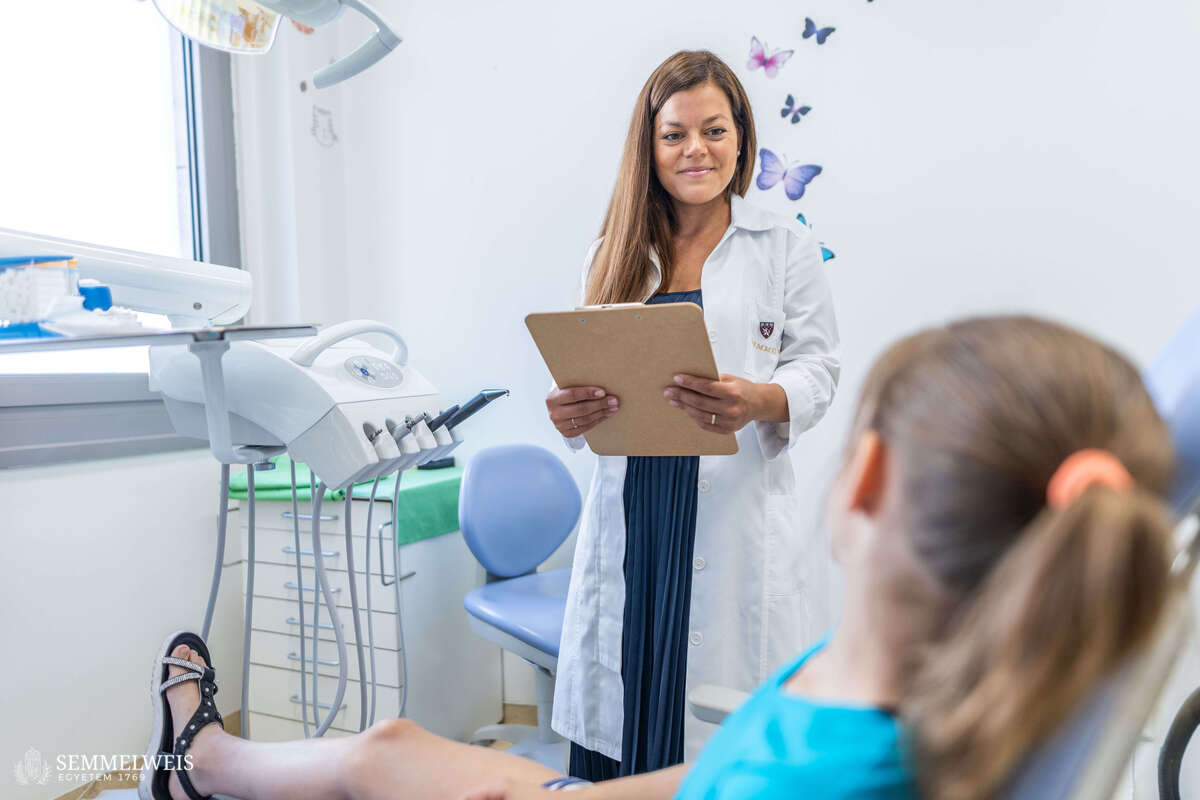
 Dr. Réka Bagdy-Bálint is a pediatric dentist and orthodontist with more than a decade of clinical practice and teaching experience. She has followed the family philosophy that, in addition to professional knowledge, the foundation of healing lies in the attention and time devoted to the patient. This also inspired her when choosing her PhD research topic. She aimed to create a process-optimized system that would reduce doctors’ workload through structured data collection and artificial intelligence, giving them more time for their patients.
The assistant lecturer from the Department of Pediatric Dentistry and Orthodontics said that their department treats 200 child patients per day. The faculty as a whole provides care for up to 500,000 patients per year. This is a significant patient volume even by international standards, which places a serious burden on the staff working here; at the same time, the data and experience generated during dental diagnostics also represent a significant research opportunity for the faculty, the expert pointed out.
During her Ph.D. research, she quickly realized that a lack of structured, easily analyzable data was one of the biggest obstacles to dental research. “On average, teeth straightening treatments can take 2–3 years. During that time, data from various examinations is often recorded in a fragmented manner in different systems or free-text documentation. This makes large-scale clinical trials significantly more difficult. The real challenge is not the volume of data, but rather linking it in a structured way. That’s what led me to create an integrated system that automatically builds a structured clinical registry during routine patient care. This registry serves as the foundation for research and future automated decision-support systems,” the researcher emphasized.
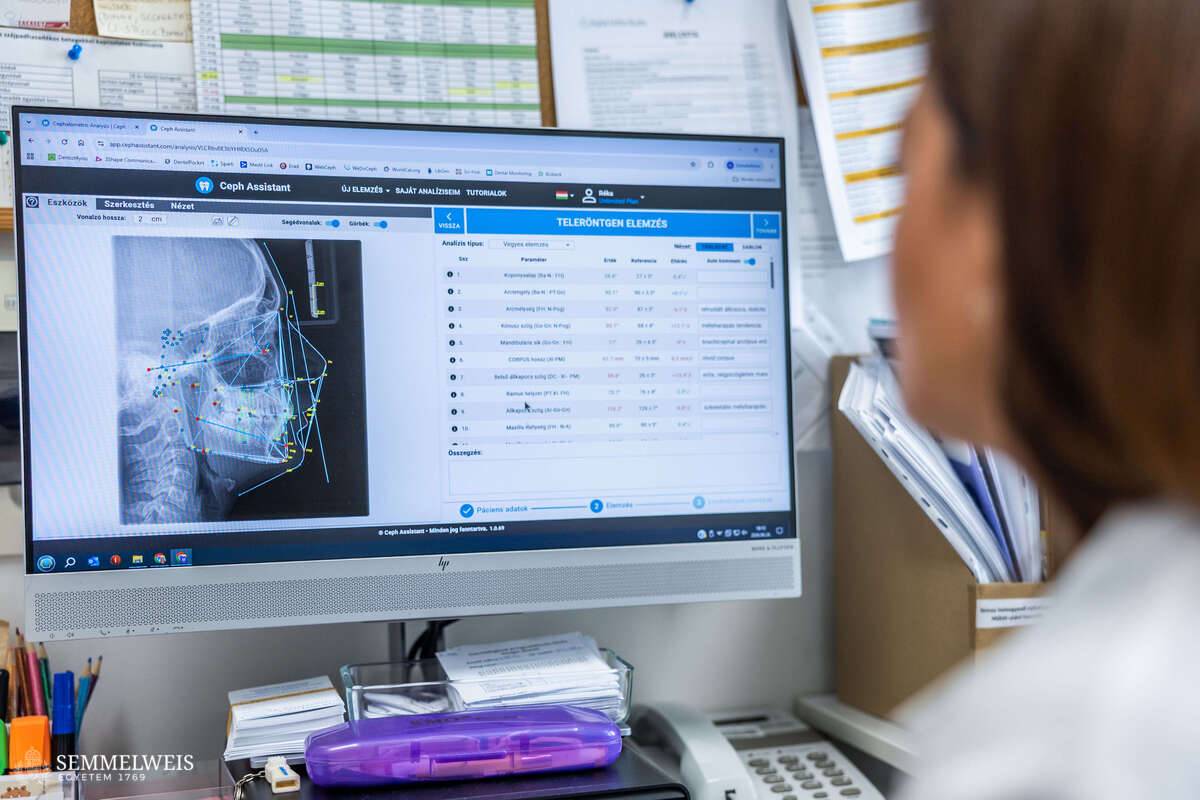
Her doctoral dissertation also focused on what is known as cephalometric analysis – that is, the precise and rapid AI-assisted evaluation of the relative positions of the head, jawbones, and teeth. Cephalometric analysis is one of the fundamental diagnostic tests in orthodontics, which facilitates the development of a treatment plan through measurements taken from a lateral cephalometric X-ray. “Previously, we would place the X-ray film on a desktop X-ray viewer, secure tracing paper to it, and then mark the anatomical reference points with a pencil. We took the measurements using a ruler and a protractor and calculated the results with a calculator. For an experienced professional, this took half an hour. Later, we were able to complete it in about six minutes using software. Based on the approximately 1,400 X-rays we annotated, the model – trained in collaboration with computer scientists – performs the evaluations in a software program designed specifically for this purpose in a fraction of that time, which is a huge help to us,” she said, highlighting the benefits of digitization and AI.
In my research, I assessed international trends in structured data entry and electronic health record systems; building on these, I developed a set of orthodontic questionnaires, and at the same time, we implemented AI-based cephalometric X-ray analysis software in a clinical setting. By comparing the AI’s accuracy with expert evaluation, I found that the AI delivered more consistent performance for most measurement points, while the evaluation time was reduced to less than half a second.
The registry, which collects data generated during measurements and patient care, was integrated into the biobank network established by the Institute for Clinical Data Provision at Semmelweis University. The researcher then expanded the system to include several dental specialties, resulting in a comprehensive clinical dental science registry. “We collect the data generated during patient care and AI analyses in this constantly expanding database, which could also serve as the foundation for future AI-based developments,” noted Dr. Réka Bagdy-Bálint.
AI-based cephalometric analysis software is also used elsewhere in the world. However, the researcher is not aware of a complex registry that integrates AI-based evaluations of 2D and 3D imaging studies and the results of other dental data with a structured database, such as a biobank network, and serves multiple dental specialties simultaneously.
“AI-based decision-support systems do not replace doctors in terms of decision-making. Rather, they assist them in their work. Doctors continue to make decisions and bear responsibility, but these systems provide significant assistance. For example, they help doctors immediately grasp a patient’s full medical history, even if it spans several decades, to make informed decisions,” she emphasized.
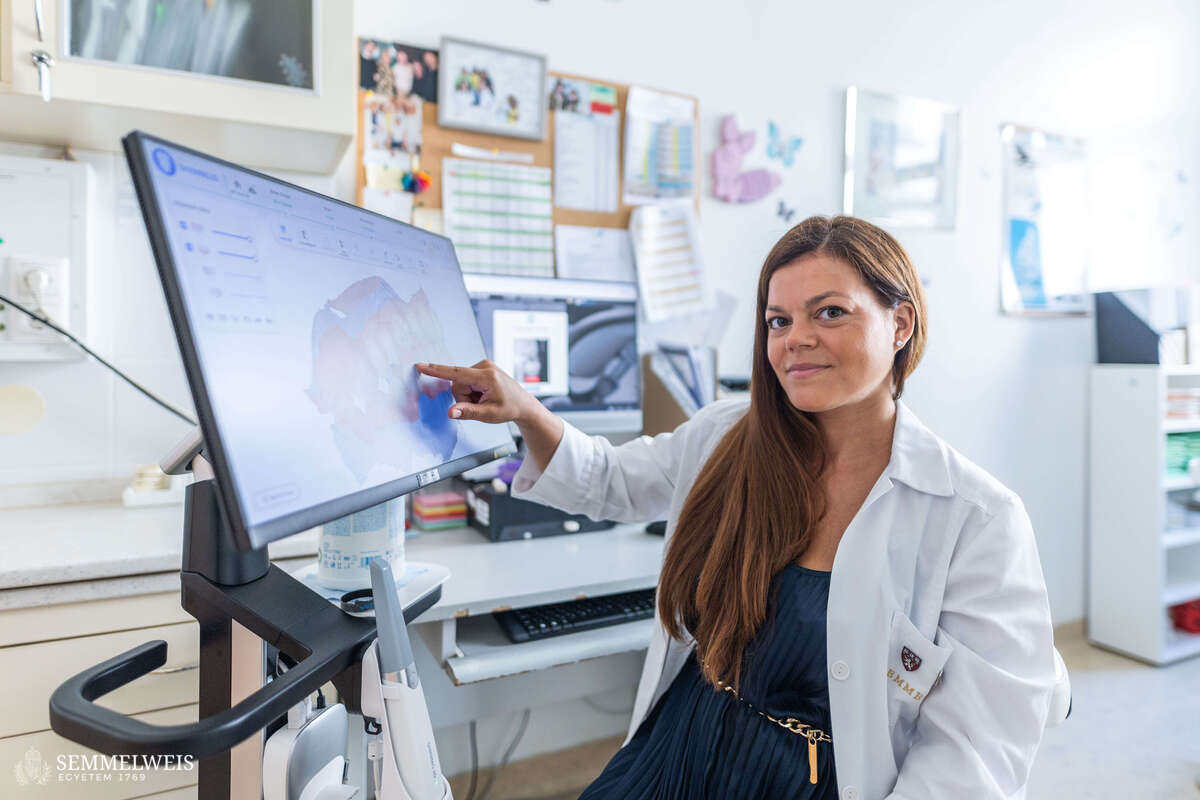
Speaking about future plans, she said that a database containing at least five years of data would allow users to retrieve, with just a few clicks, numerous relevant correlations that could assist them in treatment and even in prevention. Examples include the effects of diseases or smoking on tooth movement and the correlations between medications and dental interventions. These can only be identified through a lengthy, tedious review of paper-based records. This size database could also serve as the foundation for developing future AI-based predictive and risk assessment models.
“These systems allow us to continuously monitor care, including how efficiently we’re working, where the shortcomings lie, where we need to allocate more resources, and the results of preventive care in pediatric dentistry,” summarized Dr. Réka Bagdy-Bálint, listing the benefits. According to the researcher, such a data-driven approach could strengthen Semmelweis University’s international scientific standing in dental research and innovation.
Bio
Dr. Réka Bagdy-Bálint graduated from the Faculty of Dentistry (FOK) at Semmelweis University in 2014. She spent her final year of study at the Medical University of Graz (Medizinische Universität Graz) on an Erasmus scholarship. Since graduating, she has been working as a clinician and has passed her board exams in orthodontics and pediatric dentistry. She teaches dental students in the German, English, and Hungarian-language programs. She defended her PhD dissertation in November 2025. She has successfully completed Harvard Medical School’s Clinical Science Scholars program at Semmelweis University, which focuses on the methodology of clinical research. She has been admitted to the master’s program in Data Science in Health at the Health Services Management Training Center, Faculty of Health and Public Administration (EKK).
Róbert Tasnádi
Translation: Judit Dőtsch
Photos by Bálint Barta – Semmelweis University