A young woman arrived for treatment at Semmelweis University in Budapest with a body mass index below 13.5, a level of malnutrition that can require hospitalization. She did not want to be admitted. Dr. Szilárd Hamvas, a psychiatrist at the university’s Department of Psychiatry and Psychotherapy, gave her one week to begin gaining weight. If she could not, inpatient care would be the only safe option.

The woman had been depriving herself of food in response to a painful family situation. After a week, she had gained about half a kilogram. Within six months, she had returned to a healthy weight range and completed her university degree.
Dr. Szilárd Hamvas describes her recovery as one of the clinic’s success stories. Many cases, he cautions, do not end as positively.
An estimated 600 to 2,300 new cases of anorexia occur in Hungary each year, according to a 2017 national study. Yet specialists believe only about 30 percent of people with eating disorders enter the healthcare system. Among those with bulimia nervosa, the proportion seeking medical help may be even lower. For people with anorexia, more than two years can pass before they ask for help.
Against that backdrop, Semmelweis University launched Hungary’s first nationwide eating-disorder day hospital in April 2026. The six-week intensive program is designed for adults with anorexia nervosa and other conditions involving dangerously low body weight.
The service fills a significant gap in Hungarian mental healthcare. The country has no inpatient facility dedicated exclusively to eating disorders. At Semmelweis, a 24-bed psychiatric ward can accommodate only four to six eating-disorder patients at a time, leaving limited capacity for intensive, specialized psychotherapy.
Modeled on programs used in Britain and other English-speaking countries, the new day hospital offers a middle ground between occasional outpatient appointments and round-the-clock admission.
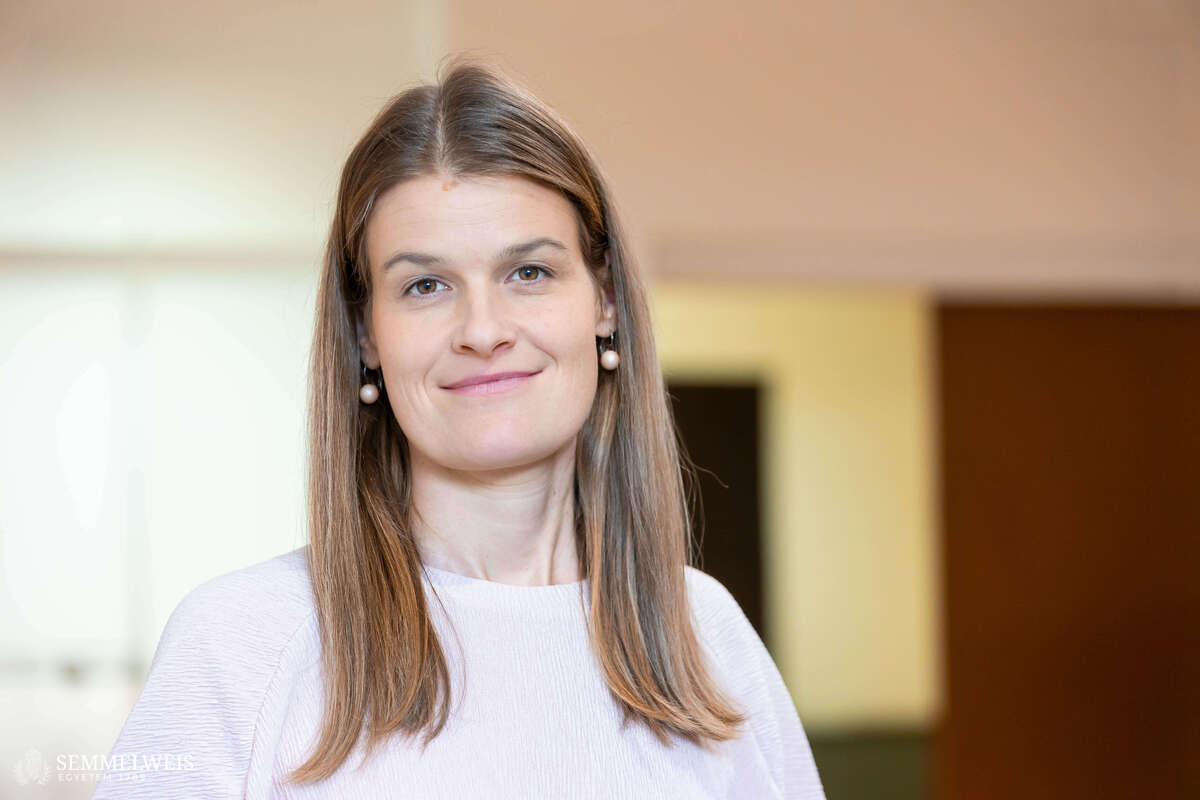 “The day hospital creates a transition between the protected environment of an inpatient ward and life at home,” said Dr. Anna Báthory, a psychiatrist at the clinic. “Participants receive intensive psychotherapy tailored to their needs, then return to their own environment in the afternoon and can immediately try to apply what they have learned.”
If a patient’s condition deteriorates or serious physical complications develop, inpatient treatment remains necessary.
Reliable, up-to-date data on eating disorders in Hungary remains scarce. Dr. Szilárd Hamvas said the country is probably close to the European average, but that new research is needed to establish the true scale of the problem.
Primary-care data from Western Europe suggests that the prevalence of anorexia has leveled off in several countries over the past decade. Rates have risen, however, in societies where Western ideals of thinness have spread rapidly.
Clinicians fear that broader social pressures may be increasing the risks. Economic uncertainty and the less predictable life paths facing young people in the 21st century can deepen feelings of powerlessness. Restricting food may then provide a false sense of control.
At the same time, a notably thinner body ideal has re-emerged among Hollywood celebrities and pop stars. Social media carries those images directly to young people in Hungary, sometimes alongside content that romanticizes anorexia or presents the illness as aspirational.
Diagnosis of anorexia nervosa may involve the intentional restriction of food, excessive exercise or purging, a distorted perception of the body, and an overwhelming tendency to base self-worth on weight or shape. The illness can also be fatal. About 8 percent of those affected may die within 10 years, while mortality among people with anorexia has been estimated at 5.9 times the expected rate for otherwise comparable young people.
Why BMI matters
Body mass index, or BMI, is calculated by dividing a person’s weight in kilograms by the square of their height in meters. A BMI between 18.5 and 24.9 is generally classified as being within the healthy range. Semmelweis’s day hospital may accept patients with a BMI as low as 13.5 after individual assessment. Many psychotherapy services will not treat people below a BMI of 16, arguing that severe malnutrition makes meaningful engagement in therapy impossible.
The Semmelweis team takes a more nuanced view. Clinicians say some patients who have lived at a very low weight for years have adapted cognitively to their condition and may still be able to participate in treatment. Even so, the physical risks are substantial. At a height of 165 cm, a BMI below 13 corresponds to a weight of roughly 35 kilos.
BMI alone does not determine whether day treatment is safe. Doctors also look for a dangerously slow heart rate, low body temperature, abnormal blood pressure, metabolic problems, muscle weakness, and concerning laboratory or electrocardiogram results. Such warning signs may make hospitalization essential.
The day hospital is open to adults from anywhere in Hungary. Treatment is free for people aged 18 and older who have a valid national health insurance card. Its primary focus is anorexia nervosa, avoidant/restrictive food intake disorder, known as ARFID, and other specified or unspecified eating disorders associated with abnormally low weight. Bulimia nervosa and binge-eating disorder, when not accompanied by such conditions, are not part of the program’s main remit.
Participants attend the clinic every weekday from 8:45 a.m. to 2 p.m. during a six-week course. The program may be repeated once, extending treatment to 12 weeks. Each day includes two structured therapeutic sessions. The program combines nutritional education, assertive communication training, autogenic relaxation, radically open dialectical behavior therapy, creative workshops, and psychodynamic movement and dance therapy.
Patients may later continue in outpatient groups focused on mentalization, guided imagery, psychodrama, movement and dance, and longer-term rehabilitation.
One of the most powerful elements, Dr. Anna Báthory said, is the realization that patients are not alone.
“Several participants said at the end of the course that they had recognized other people experiencing the same symptoms of the same illness,” she pointed out. “The presence of volunteers who have recovered from anorexia is especially meaningful. They are close in age to the participants and can credibly show them that recovery is possible.”
Each treatment day ends with a one-hour communal lunch. A member of staff joins the patients at the table, and phones are not allowed. The aim is to shift attention away from calories and toward conversation, relationships, and the social aspect of eating. For some participants, it is an unfamiliar experience. Clinicians say shared meals have disappeared from many households, leaving eating increasingly solitary and disconnected from family life.
Restoring weight is an essential part of treatment, but clinicians stress that it is not the same as recovery.
 “We do not consider someone recovered simply because the scale shows a normal number again,” dt. Szilárd Hamvas said. “Physical stabilization is indispensable, but the body often becomes a message board for an unconscious conflict. Recovery also requires us to uncover and work through that psychological background.”
The six- or 12-week program is therefore intended as an intensive beginning rather than a complete cure. For many patients, recovery involves a process of therapy and self-understanding that can continue for years.
Patients do not need a referral from a primary-care physician. They may contact the clinic directly, although a physician, psychiatrist, or psychologist can also recommend the programThe clinic then sends a structured questionnaire and arranges an in-person assessment. Applicants are asked to bring laboratory results no more than one month old. The assessment determines whether the most appropriate option is the day hospital, a 12-week outpatient group program, or inpatient treatment.
The day hospital currently has room for up to 10 participants, while its outpatient groups can accommodate three groups of eight. Following encouraging pilot programs, staff hope more patients will be able to make use of the service.
Their longer-term ambition is to establish a multidisciplinary eating-disorder center, including several inpatient beds reserved for people with anorexia. For now, the day hospital offers a crucial new point of contact in a system where most patients may never reach specialist care, and where the delay in asking for help can itself become part of the danger.
Orsolya Jancsó
Photo: Boglárka Zellei – Semmelweis University; Cover photo/illustration: iStock/undrey