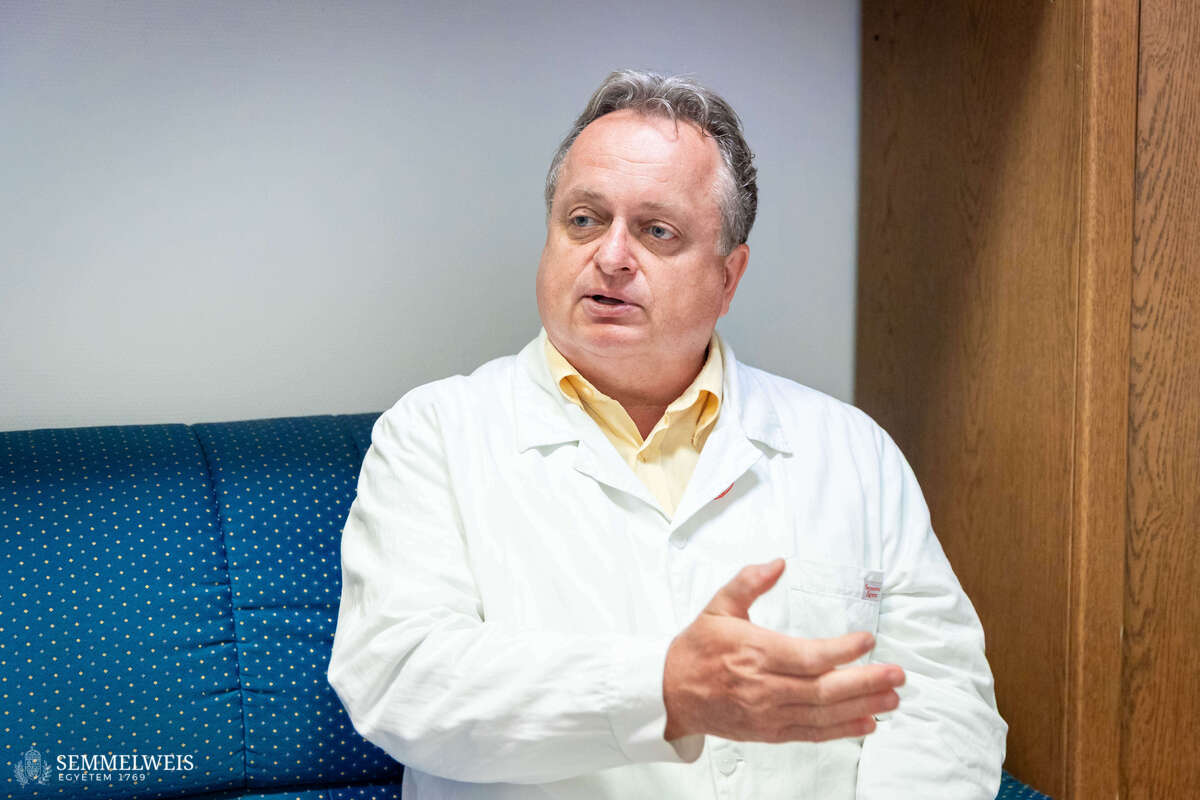
Dr. Tibor Kovács was born in Eger and attended a high school in Szeged that specialized in biology. He then went on to study at the University of Szeged, obtaining his doctorate in 1992. By the time he graduated, he had already spent three years teaching neuroanatomy as a teaching assistant, in both Hungarian and English. In November 1994, two years later, he became a resident at the Department of Neurology at Semmelweis University. Apart from a few short breaks due to scholarships abroad, he has been working at the Department of Neurology ever since – that is, for 32 years.
“Anatomy, neurology, and neuroscience have always been amongst my favorite subjects; I began conducting basic research on Alzheimer’s disease while still in Szeged,” said Dr. Tibor Kovács, recalling the early days of his career.
“When I started at this department, I began working with Professor Mátyás Papp, an internationally renowned neurologist and neuropathologist. He described the inclusions that form the basis of the histological diagnosis of multiple system atrophy, which have since been named Papp-Lantos bodies, and whose discovery is perhaps one of the most significant Hungarian contributions to clinical neuroscience,” he recalled. As Dr. Tibor Kovács explained, it was Mátyás Papp who introduced him to Peter Lantos, Head of the Department of Neuropathology at the Institute of Psychiatry at King’s College London. Thanks to Dr. Peter Lantos, Dr. Tibor Kovács was able to conduct research at the London institute as a fellow for several years, in periods of three to six months. He also completed his training in neuropathology and pathology in London. He passed his board certification exam in neurology in 1997 and his board certification exam in neuropathology in 2005, and he earned his PhD from the university in 2001.
He spent a great deal of time in the clinic’s sub-intensive care and neuro-intensive care units before being entrusted with the management of the general ward and unit. “Even back then, my clinical interest was already focused on dementia and degenerative neurological diseases, which were playing an increasingly important role in both outpatient and inpatient care at the time, along with the care of patients with dystonia,” he explained, noting that the Department of Neurology is one of the centers with the highest caseload for treating patients with dementia and dystonia.
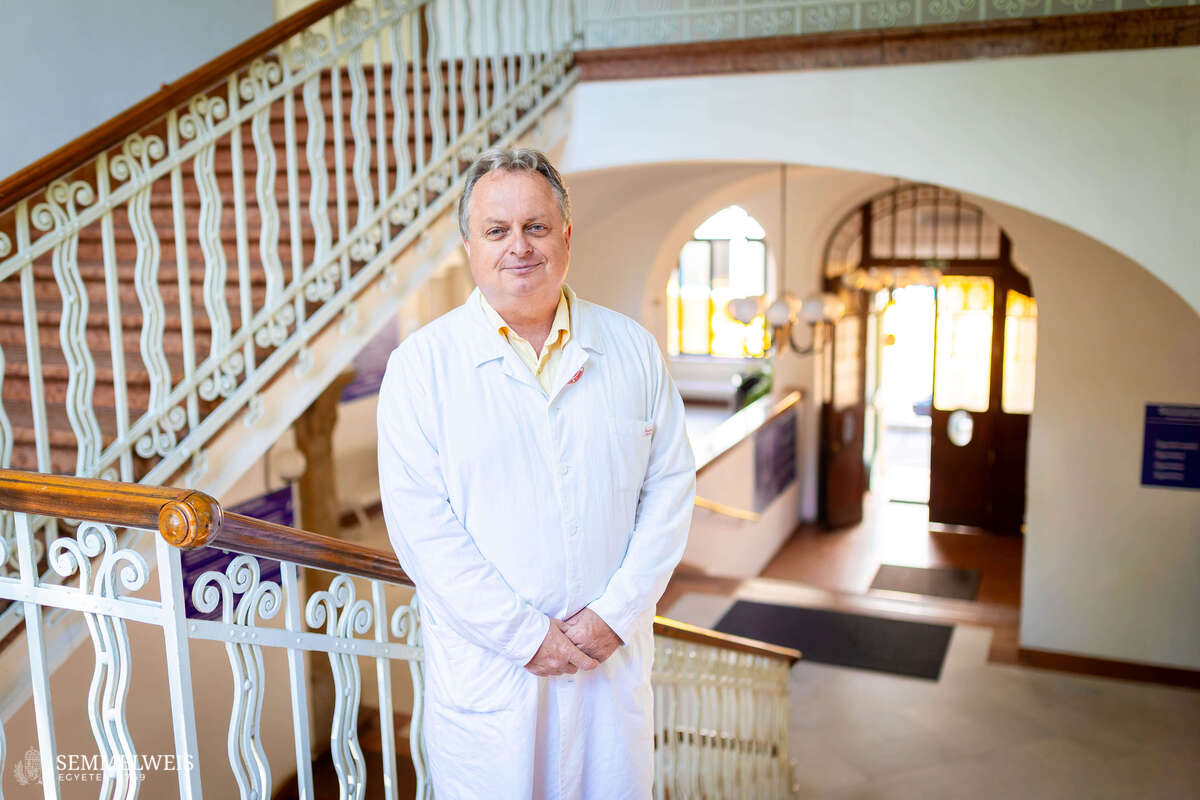
Having been involved in the clinic’s operations as a deputy director for twenty years, he does not expect his appointment to bring about any major changes.
I’ll be doing the same thing I’ve been doing in the “second division” so far, with the exception that this marks the beginning of the era of independent competition.
He believes the department is moving in the right direction, even though they are working under heavy pressure with a relatively small staff of 40 doctors in total. They educate approximately 1,500 students annually in the Faculties of Medicine (ÁOK), Dentistry (FOK), and Health Sciences (ETK), and also participate in specialist, PhD, and other professional training programs, the director added. Speaking about patient care, he noted that in inpatient care, the volume of services provided consistently remains within the limits set by the service volume cap and the prescription cap; in outpatient care, however, the number of cases has doubled over the past 10–15 years, amounting to 45,000–48,000 outpatient visits per year.
“We have introduced new interventions and are also working to implement new therapeutic methods in outpatient care. Among other things, we are in the process of introducing biological therapies approved by the European Union in 2025 for the treatment of Alzheimer’s disease,” explained Dr. Tibor Kovács, adding that once issues regarding funding, prescribing guidelines, and accessibility are clarified, the department will be ready for launching the service. They are already familiar with this procedure – which requires interdisciplinary collaboration and is quite time- and resource-intensive – from drug trials, and, in Tibor Kovács’s words, their experience in this area was unique. This is the only clinical trial center in Hungary whose researchers have experience with this disease and class of drugs. This procedure, which is resource-intensive both from a diagnostic standpoint and in terms of follow-up, requires numerous MRI scans, as well as laboratory testing, genetic testing, and neuropsychological testing, among other things. In addition, screening patients is a complex task, as it involves a very small patient population; theoretically, only about 15–20 percent of those affected can be treated with this method.
Biological therapies are also gaining prominence in the treatment of neuroimmunological diseases,” the director noted, referring to other developments in outpatient care and highlighting the exponentially growing number of patients and the limitations on the use of intravenous immunoglobulin in this patient group. Several conditions require long-term treatment in outpatient care due to recurring patients. The therapeutic use of biologic agents available for the outpatient care of patients with multiple sclerosis requires dedicated outpatient infusion capacity, just as it does for the care of patients with dementia and Alzheimer’s disease. Moreover, demand is increasing for both groups of conditions.
Touching on degenerative diseases, Dr. Tibor Kovács highlighted the rising number of Parkinson’s patients entering the late stages of the disease, the importance of treating its advanced stages, and the difficulties inherent in such treatment. Biological therapy for headaches is also a significant part of outpatient care, as the department is a national center for this treatment. Inpatient care is primarily focused on stroke treatment, followed by treatment of numerous degenerative and neurological disease cases.
“Neurology is a nursing-intensive specialty, with many patients who have limited mobility and require assistance even with basic self-care,” explained Dr. Tibor Kovács, adding that, as director, he considers the shrinking nursing staff to be a serious challenge. They work with a well-established team, but there are only a few new hires, so with retirements and illnesses, the workforce is shrinking even without people leaving the profession, he explained. He sees no cause for concern regarding the number of specialists; he believes that the goal might simply be to increase the pace of work and expand capacity in certain areas.
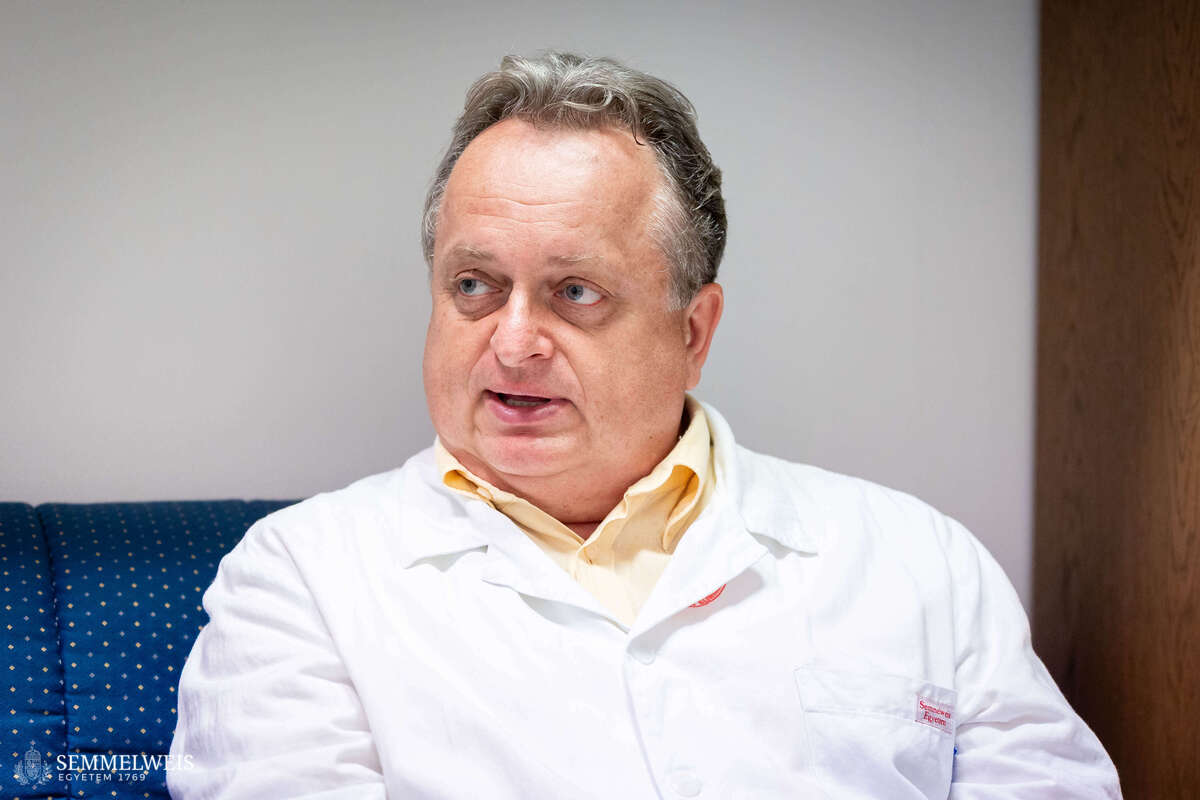
His appointment as director took effect on July 1, Semmelweis Day. In practice, he assumed the position on July 2. According to him, this simply meant moving to a different office. As far as his colleagues were concerned, the only noticeable change was that the morning rounds were no longer led by Dr. Dániel Bereczki. “This is a well-established team. I know the department, and the department knows me. So, we don’t have to worry about many unknowns,” said Dr. Tibor Kovács. However, the balance of his daily work is shifting. “Until now, I’ve mainly worked as a clinician, managing a very large caseload, and obviously I’ll have to hand some of that over to my colleagues. I’ll be less involved in caring for new patients, since management and administrative duties will take up more of my time,” the director noted. Among his management-related tasks, delegating responsibilities and outsourcing certain tasks still pose a challenge for him.
As a clinician, his research has been guided by his interest in morphology; he is most interested in the neuropathological aspects of anatomy, which he would like to continue focusing on at least one day a week. As the head of the Reference Center for Neuropathology and Prion Diseases, he works alongside Dr. Krisztina Danics to examine, among other things, microscopic brain tissue samples from individuals who have died of suspected prion diseases in order to establish a definitive diagnosis. Dr. Tibor Kovács is one of the few specialists in Hungary who holds a board certification in neuropathology. Among his hobbies, he mentions gastronomy, military technology, and combat aviation, as well as his hobby garden, where he grows everything from melons to parsnips – all pesticide-free. His family is also involved in gardening. His wife and two adult children are part of the Semmelweis community. His wife is a neurologist in the department; his daughter is a second-year student, while his son is a third-year student at the Faculty of Medicine.
Bio
Dr. Tibor Kovács was born in Eger in 1968. In 1992, he graduated summa cum laude from the Albert Szent-Györgyi Medical School at the University of Szeged. He passed his board certification exams in neurology in 1997, in neuropathology in 2005, and in clinical pharmacology in 2010. In 2001, he earned his PhD from the Doctoral College’s Neurosciences Division at Semmelweis University with his research titled “The Neuropathology of the Olfactory System in Patients with Alzheimer’s Disease and During Aging.” He earned his habilitation in 2005 with a thesis titled “Correlations in Degenerative Neurological Diseases.” He worked as a clinical physician at the Department of Neurology from 1994 to 1998, after which he was an assistant lecturer until 2001. He then taught as an assistant professor until 2006, after which he became an associate professor.
Anita Szepesi
Translation: Judit Dőtsch
Photos by Boglárka Zellei – Semmelweis University