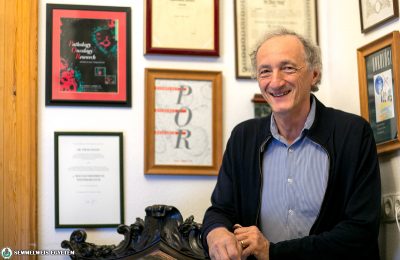
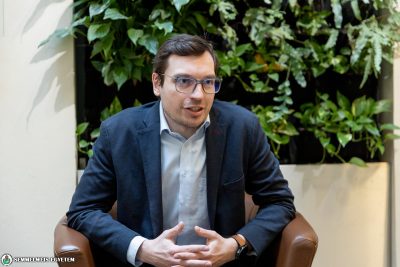
 In an interview with our website, Dr. Zoltán Zsolt Nagy explained that he considered ophthalmology a special profession because the results of a doctor’s work were almost immediately evident. As an example, he mentioned that following a successful cataract surgery, a patient may experience significant improvement as early as the following day, while after refractive surgery – commonly known as laser vision correction – they may be able to get rid of their glasses entirely.
Over the past few decades, there have been almost revolutionary changes in ophthalmology. Dr. Zoltán Zsolt Nagy has not only witnessed these changes but has also actively contributed to them. Back when he started his career, surgeries typically involved large incisions and longer recovery times; today, on the other hand, procedures involving incisions of just a few millimeters, combined with state-of-the-art intraocular lenses and laser technology, can result in near-perfect vision. He played a key role in the clinical introduction of femtosecond laser-assisted cataract surgery (FLACS): In 2008, the world’s first such procedure was performed in Budapest. Technological advances have continued ever since, and laser treatments now offer new possibilities for the treatment of glaucoma.
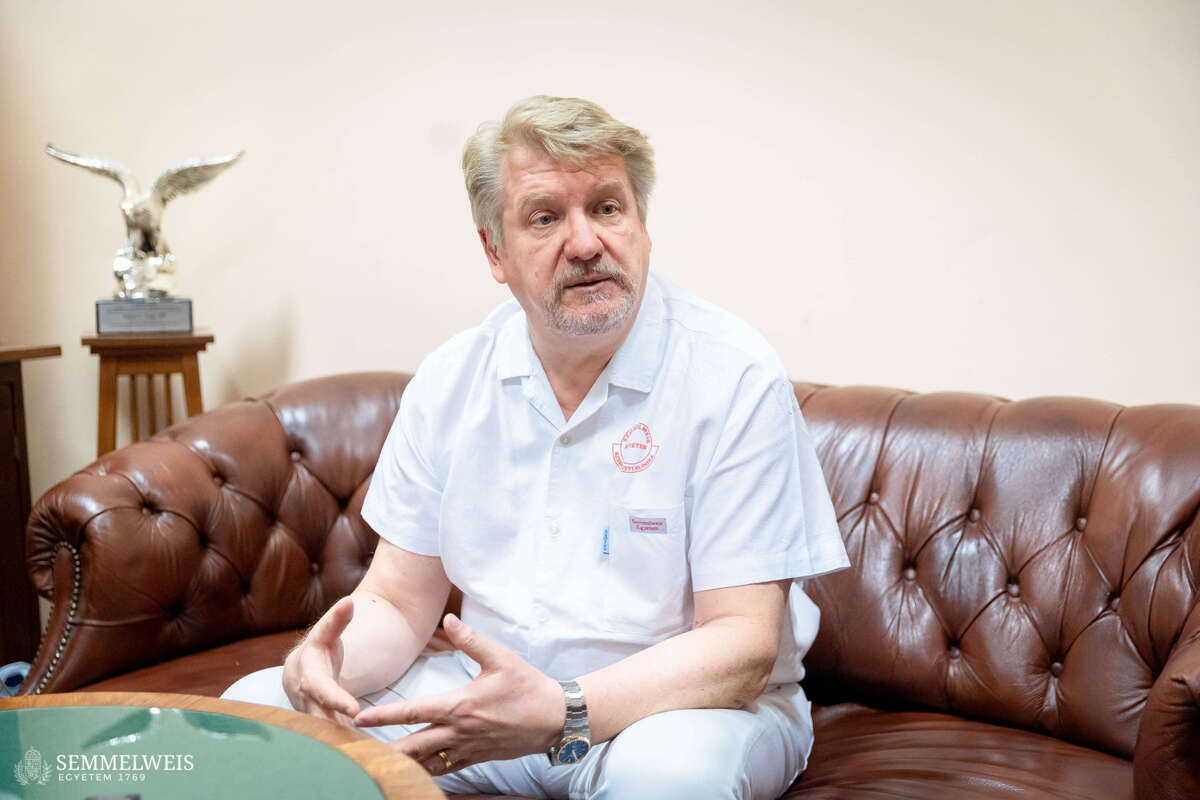
His interest in research became apparent at the very beginning of his career. During a German research scholarship in Erlangen, he studied corneal wound healing, and his findings contributed to the current global recommendation for UV protection following refractive surgery. Since then, his research focus has increasingly shifted toward retinal diseases and state-of-the-art gene therapy techniques. His collaboration with international researchers, including neurobiologist Dr. Botond Roska, Director of the Institute of Molecular and Clinical Ophthalmology Basel (IOB), has opened up areas of research that could eventually lead to the restoration of vision at the genetic level. “With the support of Rector Dr. Béla Merkely, a genetic surgery department has already been established at Semmelweis University, which means these procedures can now be incorporated into domestic patient care,” explained Dr. Zoltán Zsolt Nagy.
One of the most remarkable fields in recent years has been medical research related to space exploration. As part of the HUNOR Hungarian Astronaut Program, Semmelweis University conducted comprehensive medical examinations of the astronaut candidates, including an assessment of their eye health. This is because zero gravity causes specific physiological changes: Bodily fluids flow toward the head, which can lead to edema in both the brain and the eyes. This phenomenon – which occurs during long-duration space flights – can lead to impaired vision, particularly in terms of visual acuity.
To address this problem, an innovative approach was developed in collaboration with Dr. György Tibor Balogh, Director of the Department of Pharmaceutical Chemistry. A tiny ophthalmic insert based on nanofiber technology that, when placed under the eyelid, is capable of gradually releasing the active ingredient. This is essential because traditional eye drops cannot be used properly in microgravity environments. The new method has been adopted by international organizations and has already been tested in space experiments. The results of the research are currently being analyzed, but this development is already a promising step toward improving safety on long-duration space missions.
Dr. Zoltán Zsolt Nagy said that, as director of the Department of Ophthalmology, he had strived over the past 12 years to ensure that the full range of ophthalmological services was available under one roof. Today, the department covers every specialty, from pediatric ophthalmology through tumor surgery and corneal transplantation to retinal and gene surgery.
Thousands of surgeries are performed at the facility each year, and it handles a significant patient load, which also poses serious workflow challenges. Despite all this, the guiding principle remains to provide care for the patients who turn to them, as in many cases they arrive with conditions that require rapid diagnosis and intervention, the director emphasized.
In his specialty, he considers prevention and screening to be of paramount importance. For example, the eye complications of diabetes represent a significant problem in Hungary as well, often without patients even being aware of their condition. In his view, establishing a nationwide screening network – equipped with modern imaging devices and supported by artificial intelligence – could significantly improve early detection and treatment outcomes in the long term.
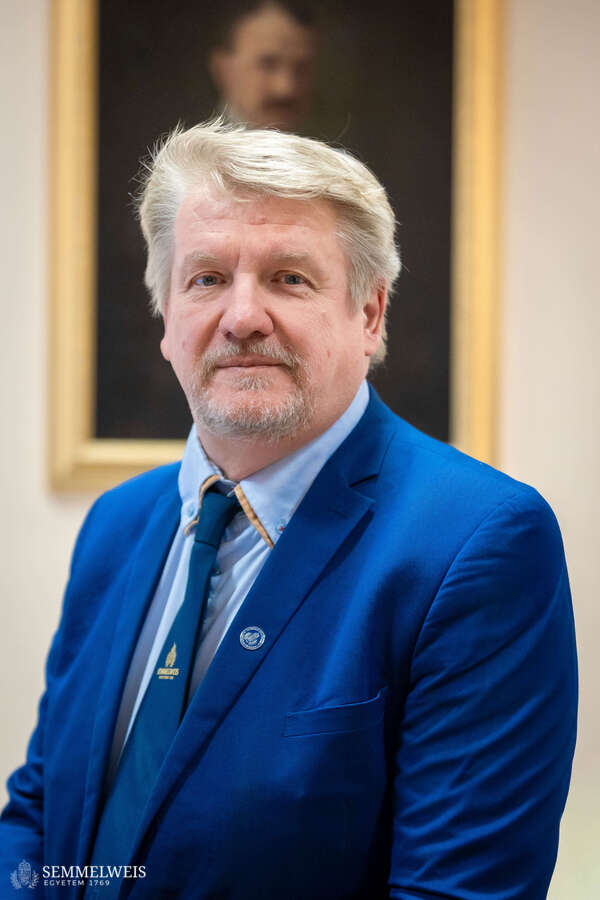 In addition to patient care and research, teaching has always been an integral part of his work. Among his achievements as the former dean of the Faculty of Health Sciences (ETK), he highlighted the renewal and strengthening of optometry training, which serves as a bridge between opticians and ophthalmologists. As part of this effort, the faculty has also successfully launched an English-language optometry program, which has been steadily growing ever since and attracting an increasing number of international students. He is also credited with launching the doctoral program in health sciences and establishing the English-language academic journal Developments in Health Sciences (DHS), which provides a platform for early-career researchers to publish their work.
During his tenure as dean, infrastructural developments were also implemented at ETK: the construction of the state-of-the-art, high-capacity educational building named after Zsuzsanna Kossuth made it possible to organize high-quality training even as student enrollment grew. This was particularly important, as the number of students at ETK has risen significantly over the years, while teaching conditions also had to be continuously improved.
He remains actively involved in medical education today: He gives weekly lectures in Hungarian and English, primarily on the topic of corneal diseases, to students at the Faculty of Medicine. In block-style practical training, he considers it particularly important for students to acquire knowledge in a focused manner, over a shorter period of time but with intense attendance. During clinical training, students work in small groups of three or four, which allows them to interact directly with patients, participate in examinations, and observe surgeries. This hands-on experience not only helps deepen their professional knowledge but also plays a decisive role in their career choices.
Dr. Zoltán Zsolt Nagy considers it particularly important for students to become involved in clinical work while they are still in training. Many of them take on assistant duties in the outpatient clinic, even during on-call shifts, which gives them a realistic picture of the day-to-day work in the profession. In many cases, this experience influences them ultimately to choose ophthalmology as their career.
Specialized training is also an integral part of the educational program: The department organizes numerous postgraduate courses each year in various specialties. New examination methods have also been introduced into the curriculum, such as the so-called OSCE-style practical exam, which assesses students’ preparedness by simulating real-life clinical situations. In his experience, this approach not only allows for a more objective assessment but is also very well received by the students.
In this way, education is notmerely an obligation, but a means of shaping the future of the profession: Ensuring that future generations enter the field of ophthalmology with the appropriate knowledge, practical experience, and dedication.
Dr. Zoltán Zsolt Nagy was surprised to receive the Széchenyi Prize, but he also sees it as a sign of recognition. He believes this honor shows that his consistent, high-quality work in the fields of medicine, research, and education has paid off. He would like to continue this work in the future, although finding a balance between his professional responsibilities and his personal life is becoming increasingly important to him. Architectural challenges often arise as well, and he closely monitored every phase of construction throughout both the renovation of the Department of Ophthalmology on Mária Street and the construction of Phase III of the Faculty of Health Sciences (the Zsuzsa Kossuth building).
In his free time, he enjoys photography and traveling, but these days, spending time with his grandchild is one of his greatest joys.
Eszter Keresztes
Translation: Judit Dőtsch
Photos by Boglárka Zellei – Semmelweis University