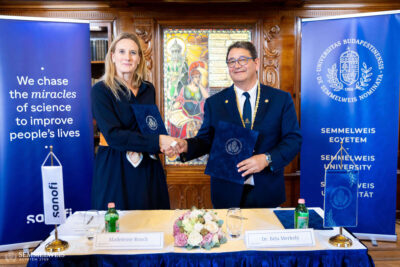
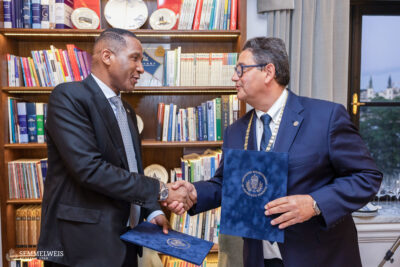
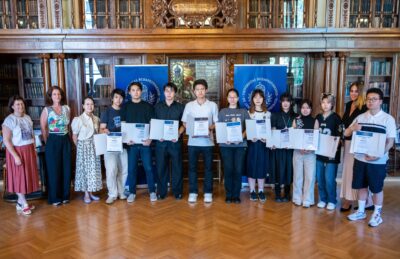
Prior to the official opening of the symposium, Dr. Bálint Barta, a clinician at Semmelweis University, became the first person in the university’s history to earn a doctoral degree through the joint PhD program by Semmelweis University and the University of Freiburg. This multi-year research project was carried out under the supervision of Dr. Tamás Radovits and Dr. Oliver Schilling. The program, co-supervised with the German partner institution, offers a new opportunity for students at Semmelweis University, and is supported by the Jellinek Harry Scholarship program. In his presentation, Dr. Bálint Barta shared the results of his research, which examined the different ways in which the female and male hearts adapt to various types of myocardial damage and prolonged physical exertion. His animal model and proteomic studies have demonstrated that the hearts of the two sexes respond differently to stress at both the molecular and functional levels, which may contribute to a better understanding of the differences in their regenerative capacity.
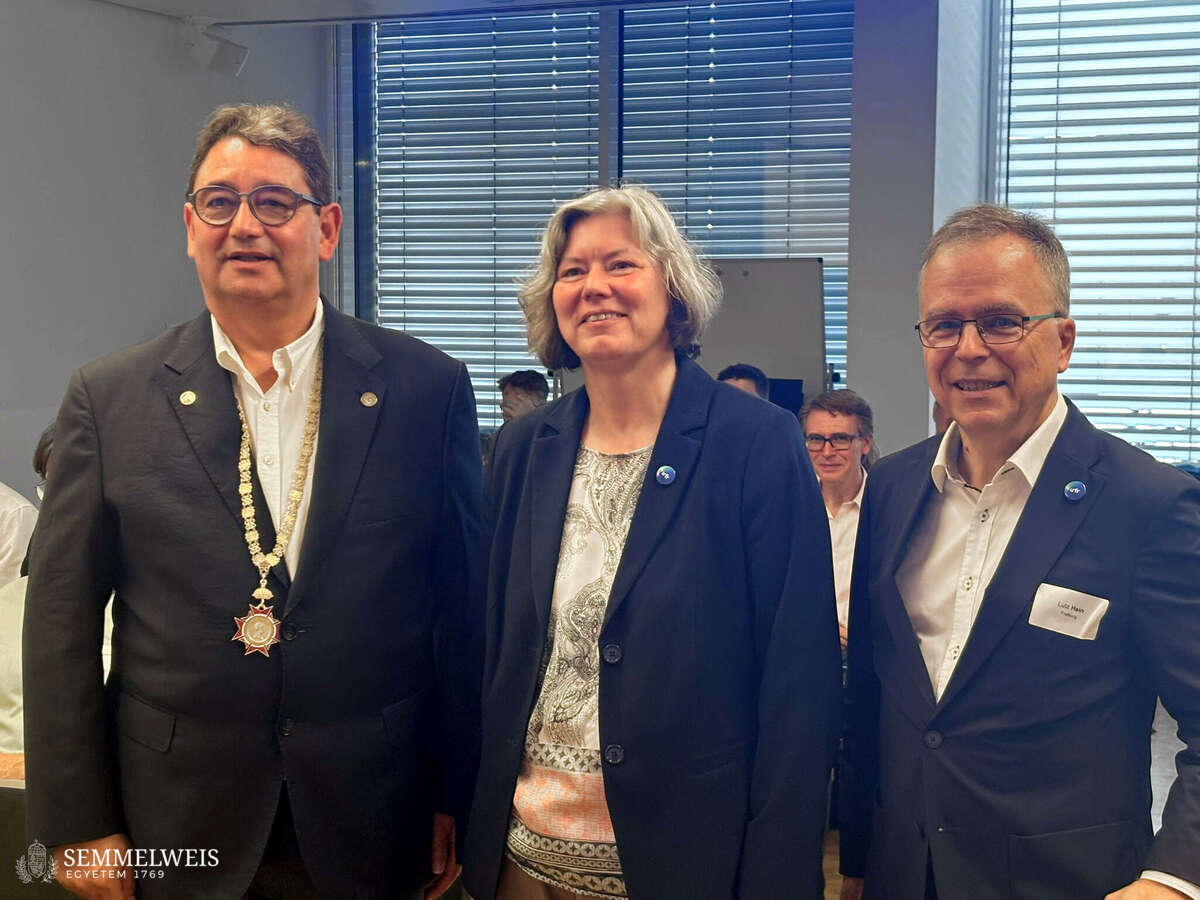 The symposium was opened by Dr. Kerstin Krieglstein, Rector of the host University of Freiburg, and Dr. Lutz Hein, Dean of its Faculty of Medicine. The rector acknowledged the role of the former dean, Dr. Norbert Südkamp, in the long-standing collaboration, as well as the positive experiences gained at the Trilateral Symposium held in Budapest in 2017, in which she had participated as the then-dean in Freiburg. Next, Dr. Béla Merkely, Rector of Semmelweis University, delivered a welcome address. He highlighted the significance of the collaboration between the three universities, which began in 1983; in addition to the biennial symposia, the joint research conducted by Jellinek Harry Scholarship recipients during their 10-month stays in Heidelberg and Freiburg – in which more than 150 students had participated over the past 40-plus years – had also contributed significantly.
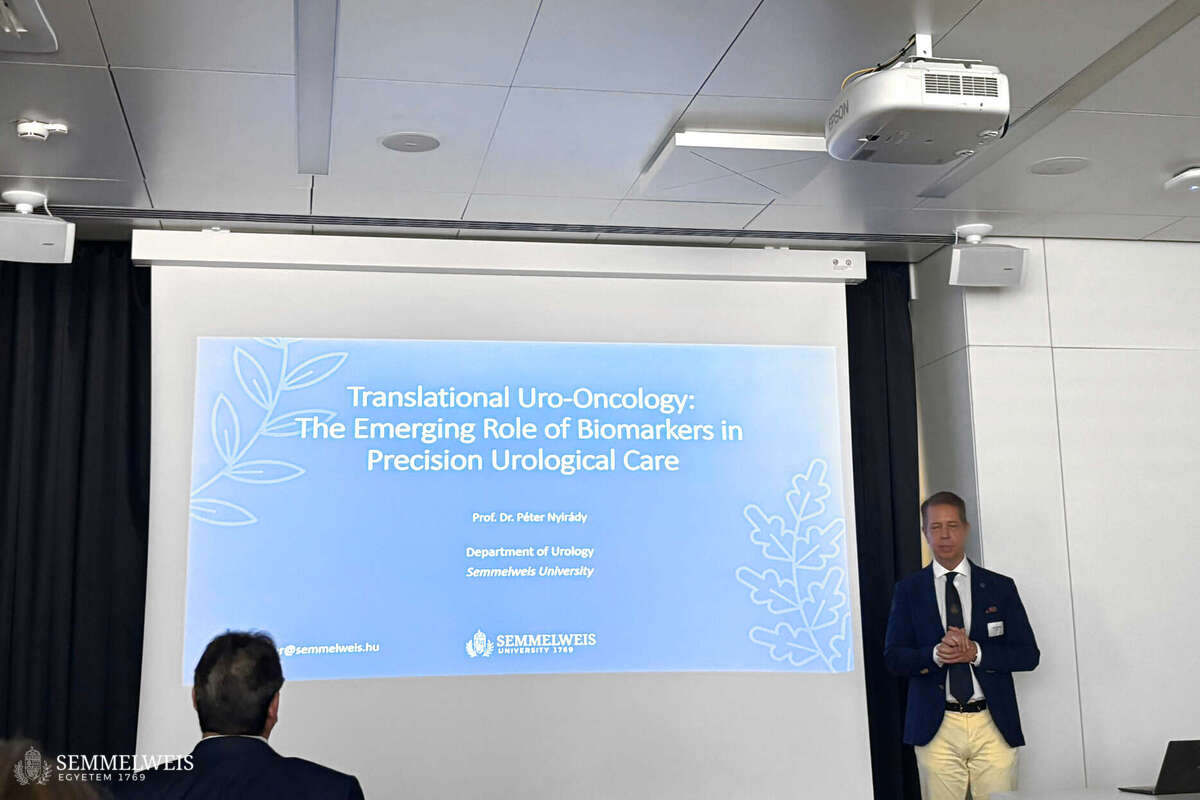 During the academic program following the opening remarks, early-career and experienced researchers from the three universities presented their scientific findings in various academic sessions. In the cardiology and imaging section, Dr. Béla Merkely reported on the successes of resynchronization therapy – which was developed and applied in the treatment of heart failure – in the international BUD-CRT study organized under the leadership of the Városmajor Heart and Vascular Center. Dr. Martin Czerny’s presentation focused on the role of biomarkers in personalized medicine in the field of urological oncology. The presentations continued as part of the urology section with talks by Dr. Péter Nyirády, Dean of Semmelweis University’s Faculty of Medicine (ÁOK) and Dr. Christian Gratzke, followed by presentations by the Jellinek Harry Scholarship recipients and young professionals from the three institutions, featuring Dr. Katalin Maricza, Kristóf Kárpáti, Dr. Bálint Barta, Hunor László, and, representing Heidelberg University, Dr. Bettina Budai. The first day of the symposium concluded with the highly anticipated presentations in the “Precision Medicine across Disciplines” section, which, as with the previous sections, was followed by a question-and-answer session with the audience.
On the second day of the symposium, Dr. Béla Merkely presented the over 250-year history of Semmelweis University and its outstanding achievements over the past period. One of the most significant events of recent times was the inauguration of the Anatomy & Innovation Center for Education and Research (AICER), which has the potential to greatly contribute to strengthening collaboration among universities and expanding continuing education opportunities for professionals.
 The presentation was followed by specialized sectssions. In the “State of the Field” section, Dr. Péter Ferdinandy spoke about the role of complex analysis of gene expression profiles, with a particular focus on the study of microRNA expression patterns and the therapeutic possibilities patented on that basis. In the “Translational Oncology from Pathology and to Surgery” sectssion, Dr. Gábor Lotz gave a presentation on the methods for detecting microsatellite instability and on the sensitivity and specificity of these molecular pathology techniques. He was followed by Peter Bronsert and Andreas Weber-Steinhilber from the University of Freiburg, and Ihor Arkhipov from the University of Heidelberg, who spoke about the continued joint use and opportunities for collaborative development of an application by Semmelweis University and the University of Heidelberg. This digital pathology application, suitable for colorectal cancer screening, was developed by the Department of Pathology, Forensic and Insurance Medicine (PIBOI).
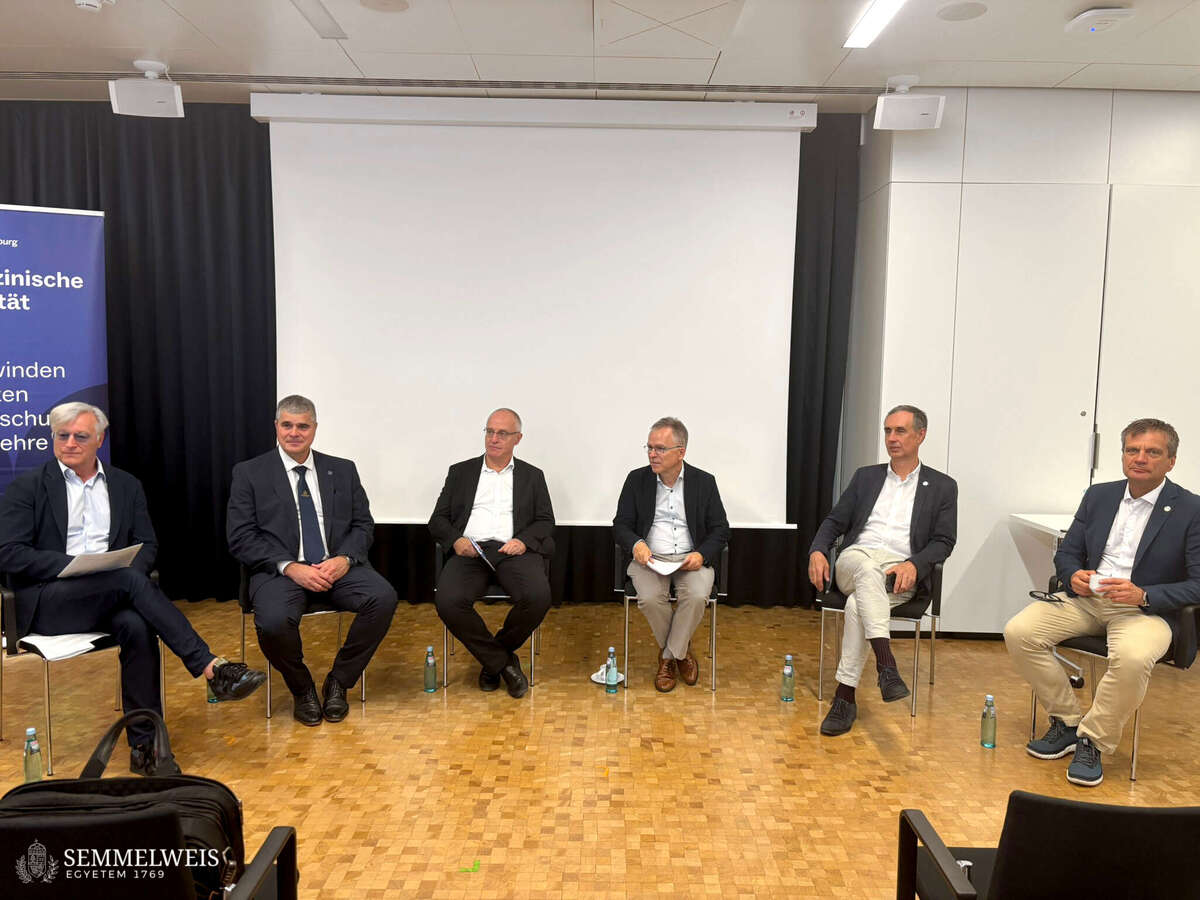
The trilateral symposium concluded with a joint discussion and consultation among the leaders of the three institutions on the future directions of cooperation, their shared goals, and the expansion of areas of collaboration. In addition to the partnerships, educational collaborations, and joint university courses at AICER, discussions covered topics such as Multiorgan AI-Development – a collaboration in the field of image processing involving all three universities that is set to begin soon. Rector’s Commissioner Dr. András Kiss outlined AICER’s objectives: providing undergraduate education for university students; developing practical skills in resident training; innovating medical technology tailored to 21st-century challenges; and drilling the practical application of these innovations. The latter primarily involves continuing professional development for specialists in surgery and interventional medicine, to be applied in patient care.
“The future is shaped by the younger generations,” said Dr. Péter Nyirády. The trilateral partnership between universities provides the framework and a basis for collaboration among research groups, and its success spans more than 40 years.
The meeting provided an opportunity to ensure that the cooperation established so far can continue with the same intensity in the coming years. Representatives of the three universities will meet in Budapest in two years.
Image and text: Judit Szlovák – Directorate of International Relations and Alumni Affairs
Translation: Judit Dőtsch