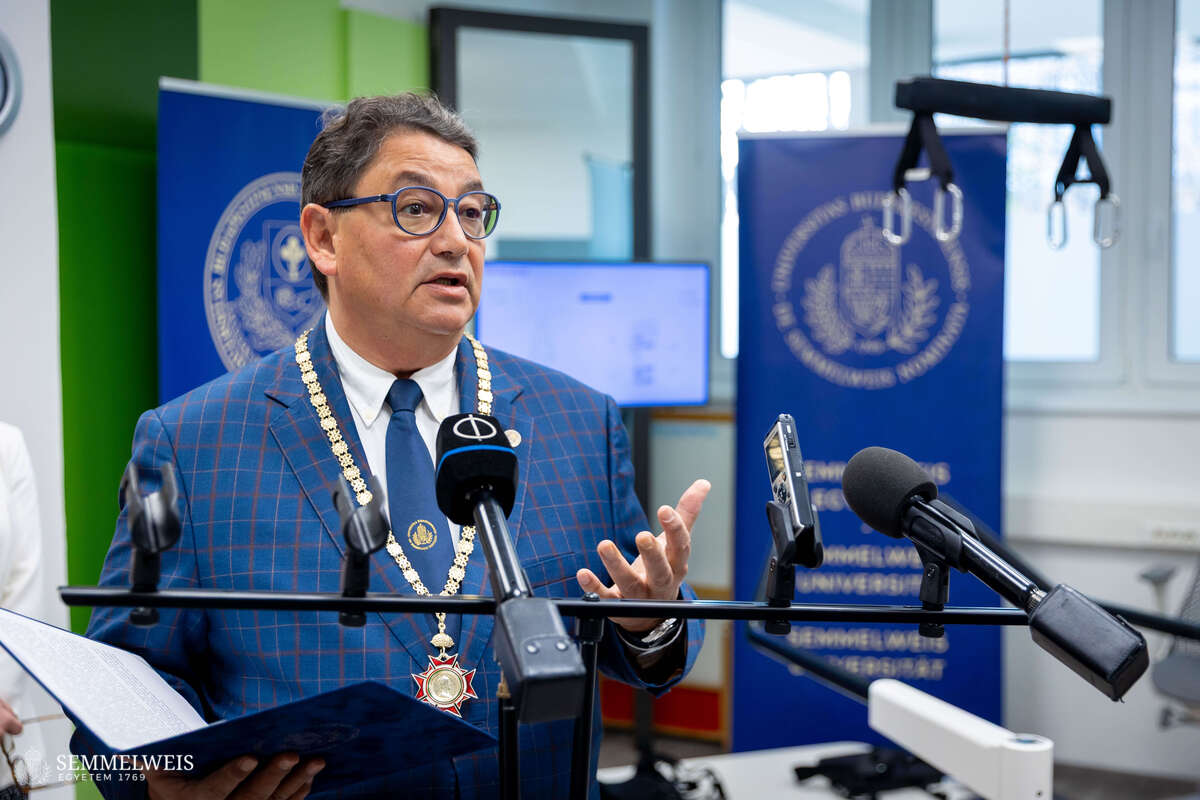
 At the inauguration ceremony, Rector Dr. Béla Merkely noted that every single investment was an important milestone in the life of PAK, which joined Semmelweis University in 2017. He praised the dedicated work of the faculty’s staff, as well as the Pető method of conductive education, which is known worldwide and was officially added to the Collection of Hungarikums (uniquely Hungarian values worthy of distinction) last year. As he put it, this comprehensive developmental approach has been proven to aid the rehabilitation of children born with central nervous system impairment, helping them lead as full a life as possible and integrate more easily into society. The rector pointed out that the newly unveiled robotic equipment further enhanced the effectiveness of the developmental techniques and opened up new opportunities for children in the areas of motor development and rehabilitation.
The investment was financed from 300 million HUF in university resources, but it is also important that the equipment is accessible to all those in need through publicly funded care, Dr. Béla Merkely explained.
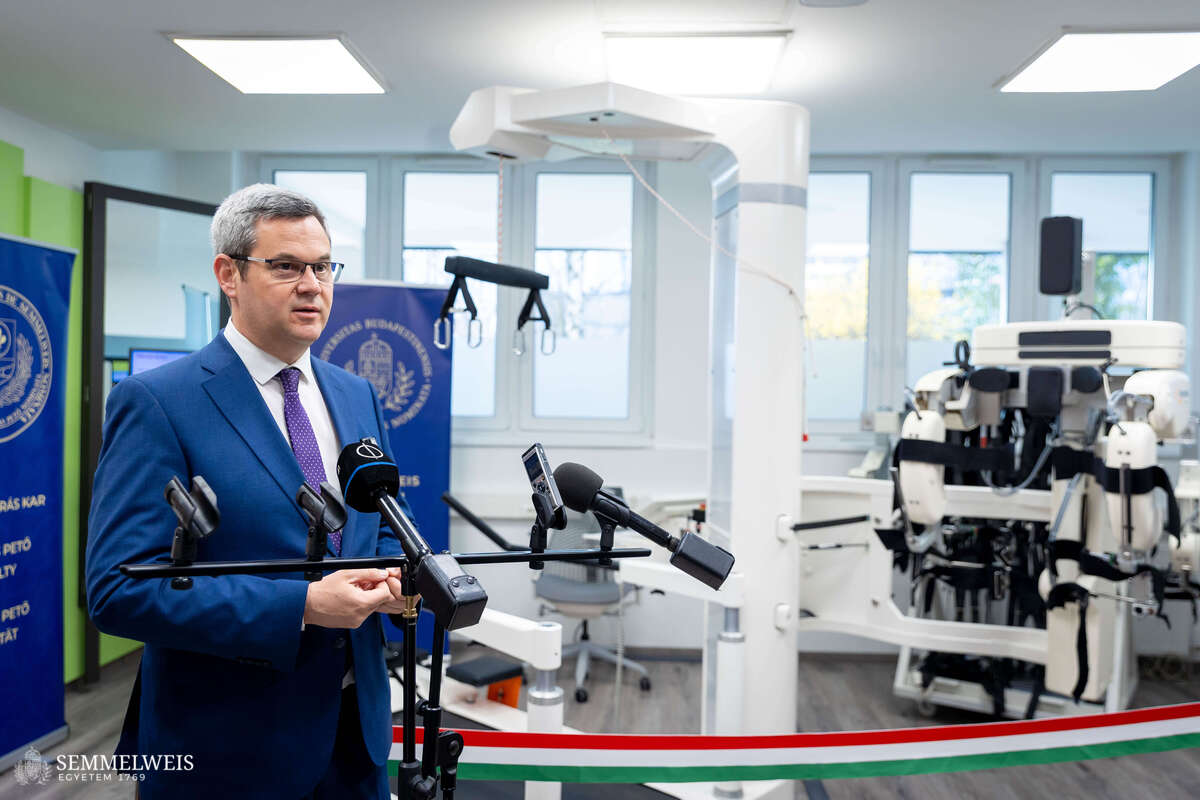 Dr. Péter Takács, State Secretary for Health, emphasized that Semmelweis University served as a flagship institution in several areas and set an example of how new solutions could be introduced quickly and effectively into the public healthcare system. He specifically underlined that, thanks to NEAK funding, modern robotic therapeutic technology was now widely available in pediatric care with state support.
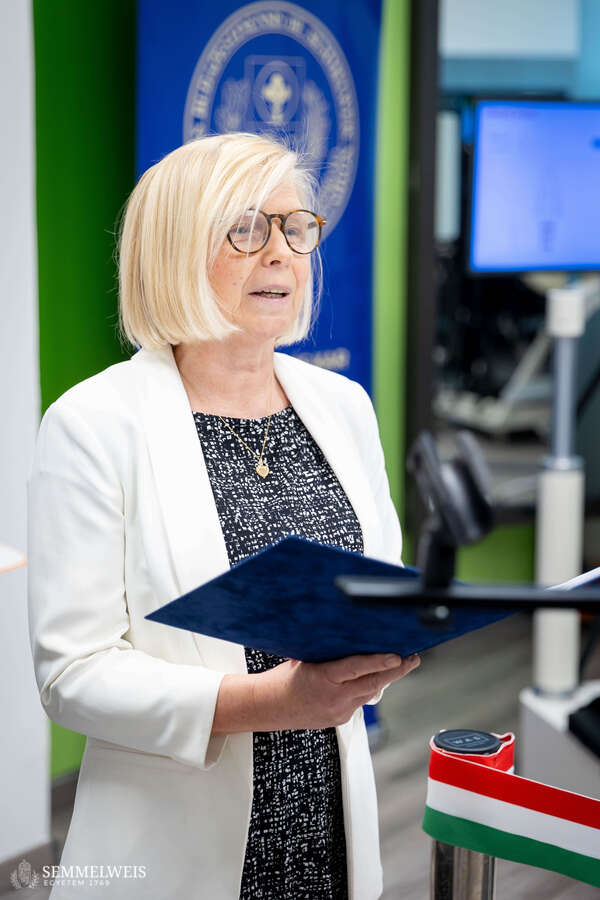 Dr. Éva Feketéné Szabó, Vice-Rector for Strategy and Development and Director of the Center for Conductive Education, remarked that this development had been implemented as a result of extensive preparatory work, and she expressed her gratitude to everyone who had participated in laying the groundwork for the project, as well as in executing and providing professional support for it. The healthcare service launched on March 1, 2026, at the András Pető Faculty’s Center for Conductive Education, with the involvement of two new, experienced physiotherapists, and the positive impact of the program on the children’s development became evident within a short time, as the director explained. “Every innovation is driven by the goal of improving children’s development and quality of life. Robotic therapy is not used as a standalone solution, but rather fits into the coordinated work of specialists, conductors, and physiotherapists, in accordance with the principles of conductive education. This integrated approach opens up new possibilities in the areas of motor development, self-sufficiency, and a sense of achievement,” said Dr. Éva Feketéné Szabó.
“The new robotic equipment not only enhances the practical effectiveness of conductive education but also contributes to further deepening training and research activities, while providing support for children’s development on a daily basis, as well as helping to strengthen their self-sufficiency and improve their quality of life,” the vice-rector added.
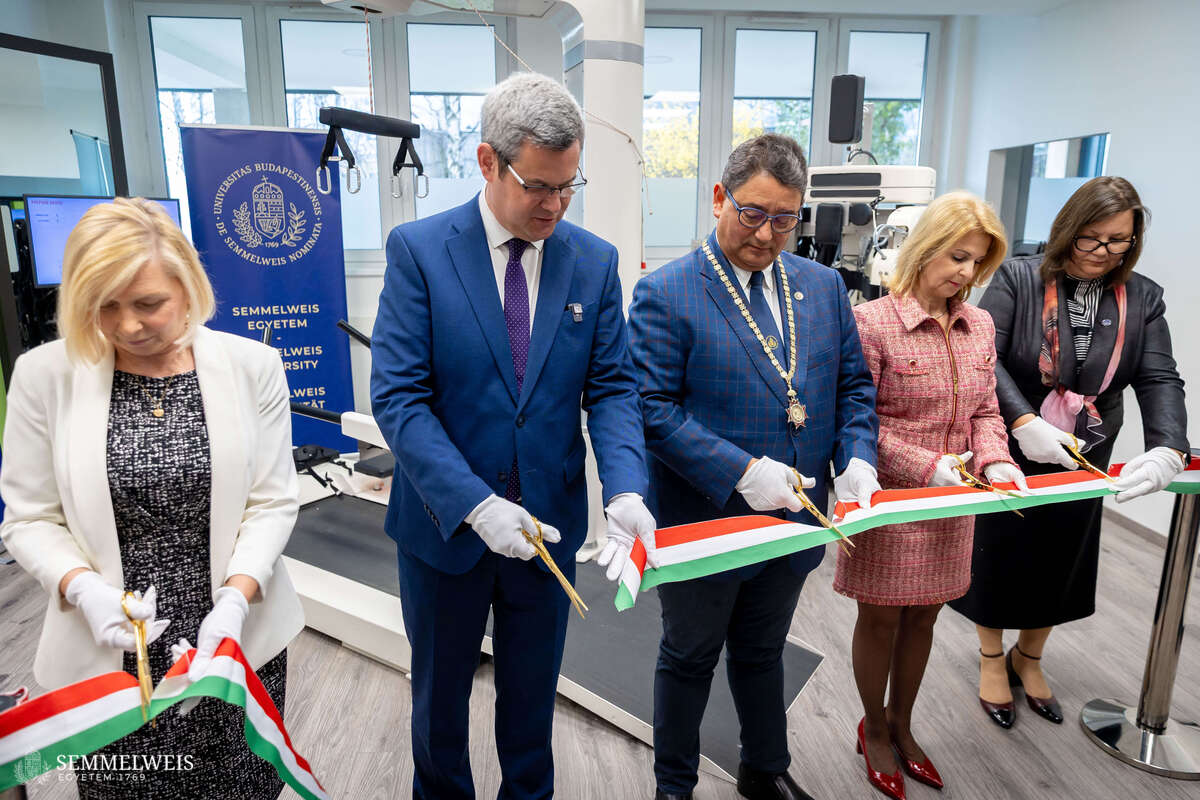
Following the speeches, Dr. Péter Takács, Dr. Béla Merkely, Chancellor Dr. Lívia Pavlik, Dr. Éva Feketéné Szabó, and Dr. Andrea Zsebe Miklósné Tenk, Dean of PAK, officially inaugurated the equipment with a ribbon-cutting ceremony.
Gallery
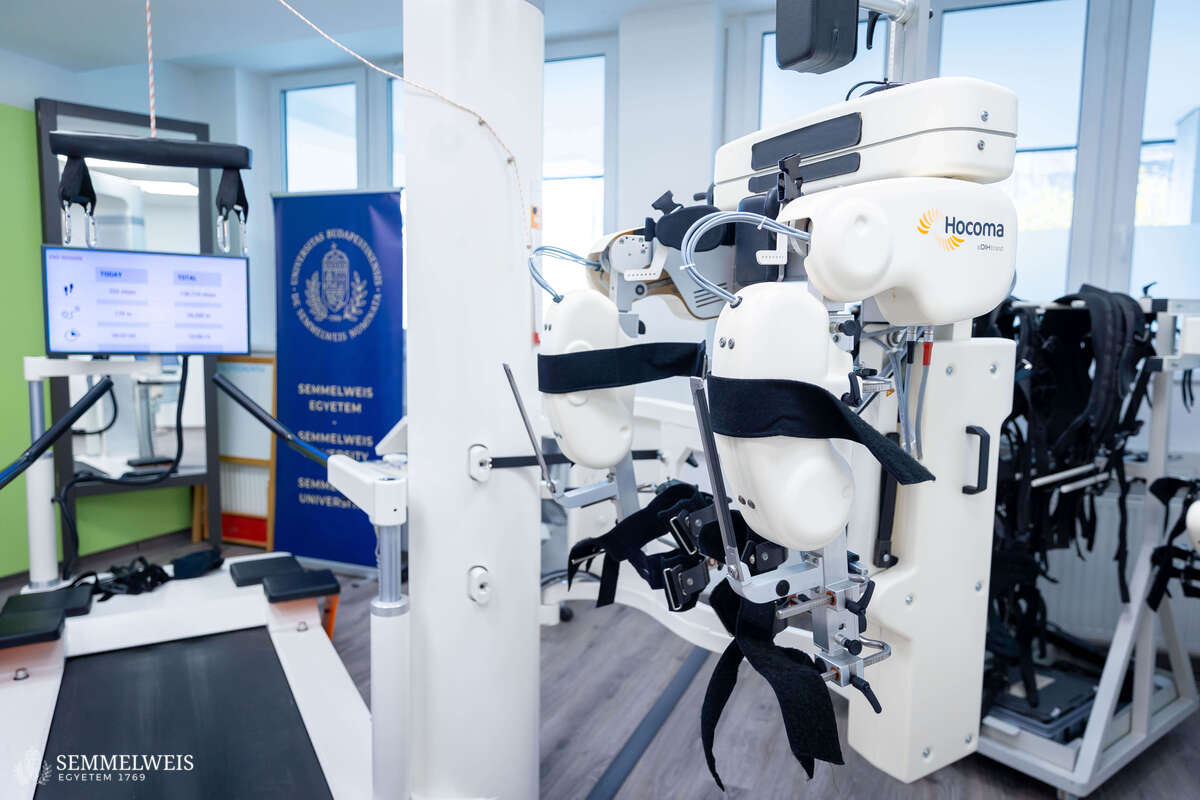
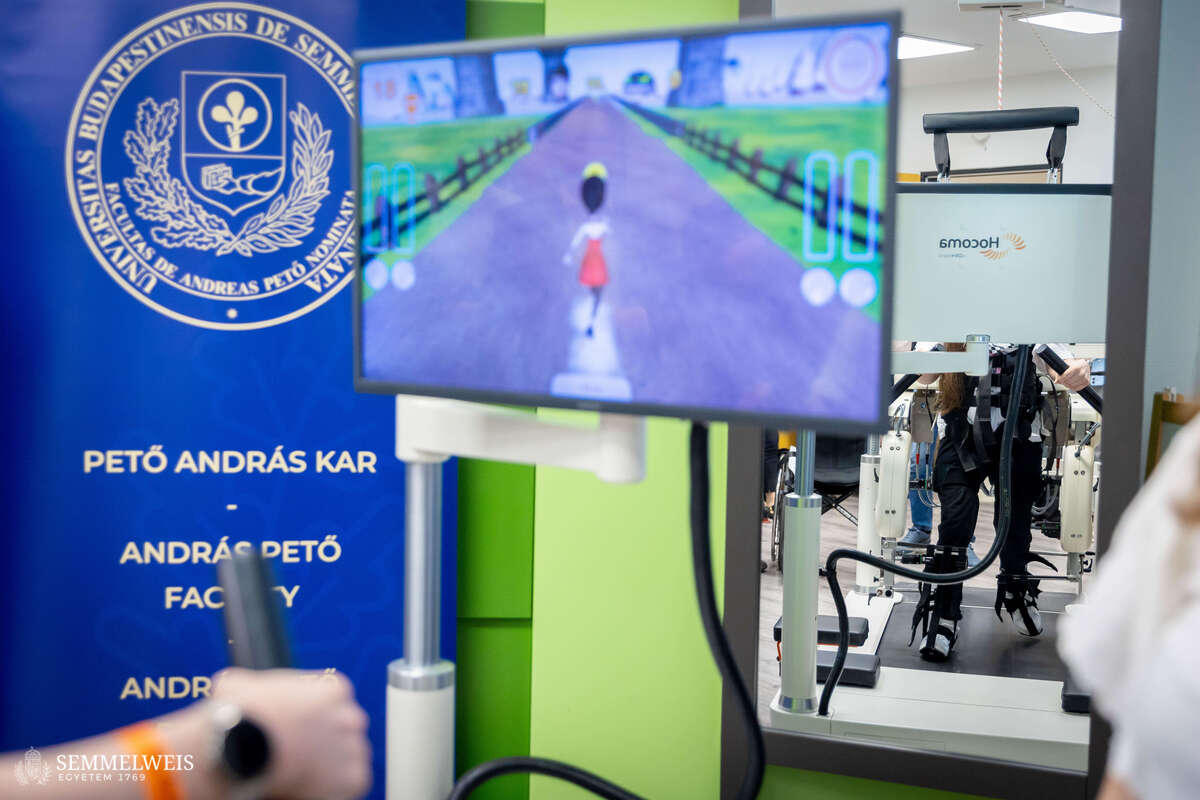
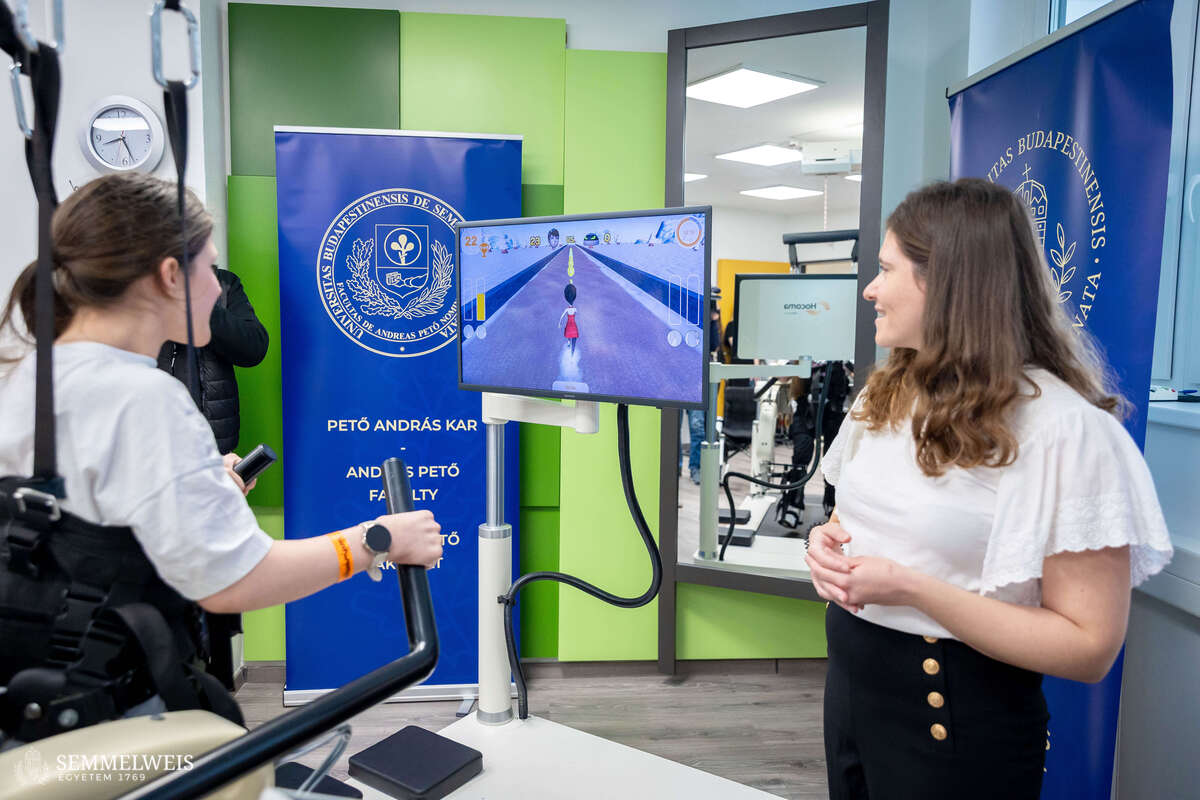
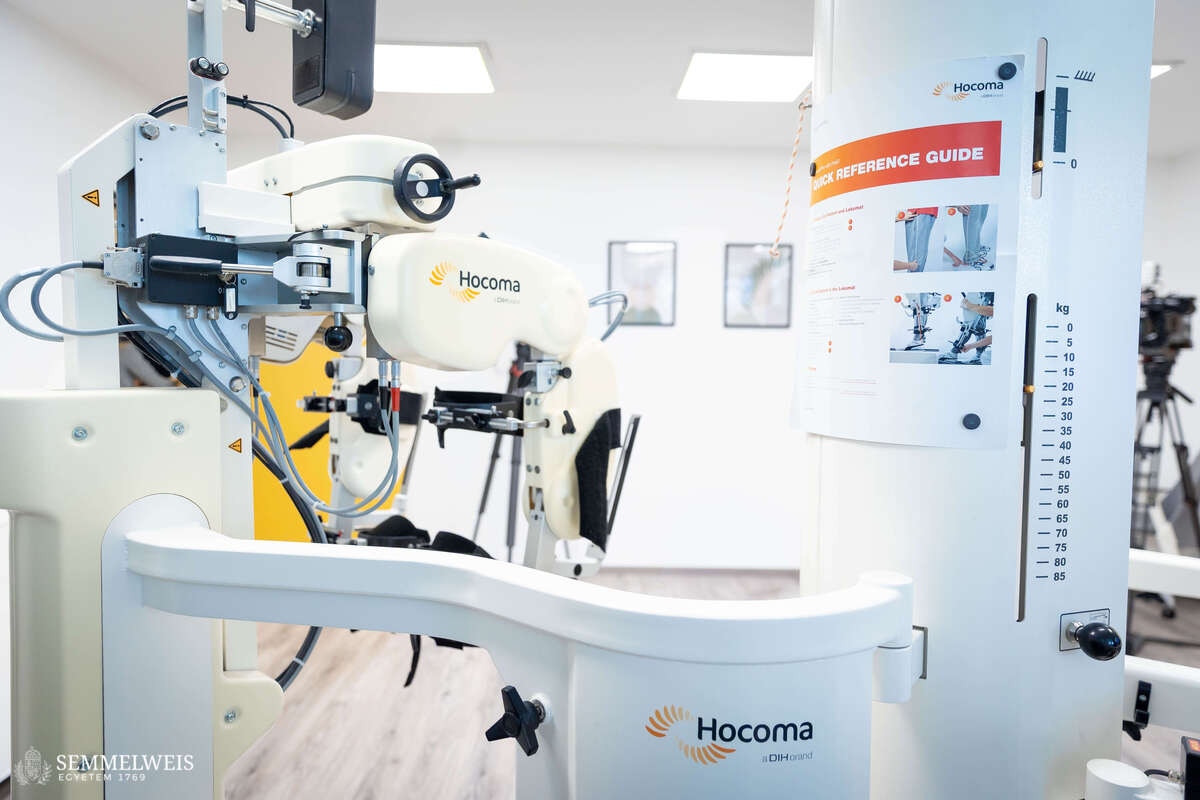
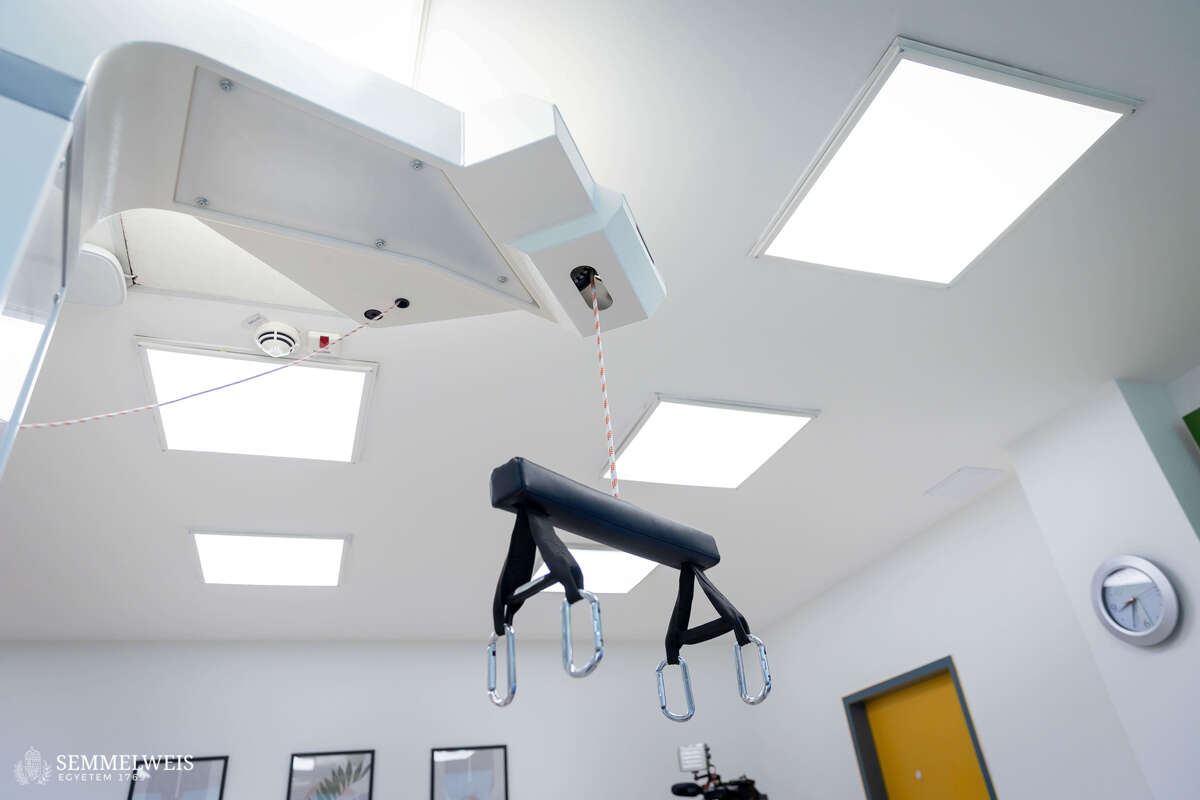
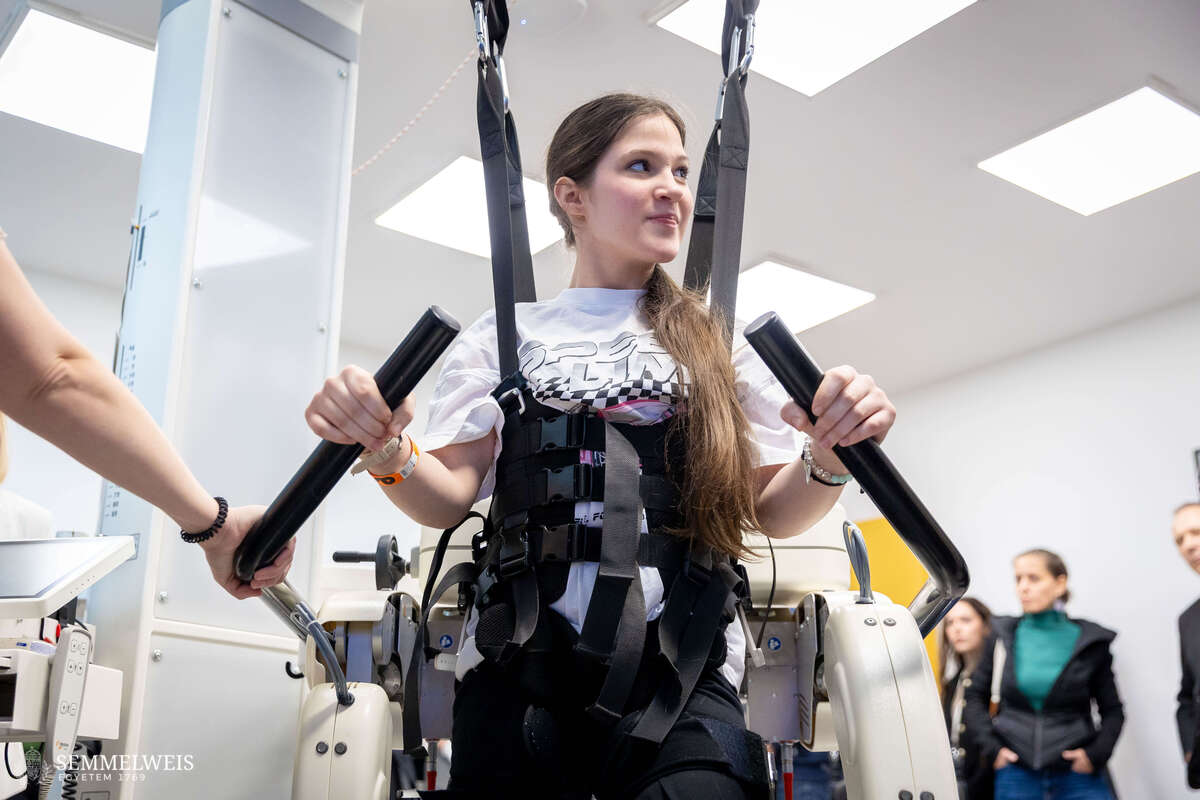
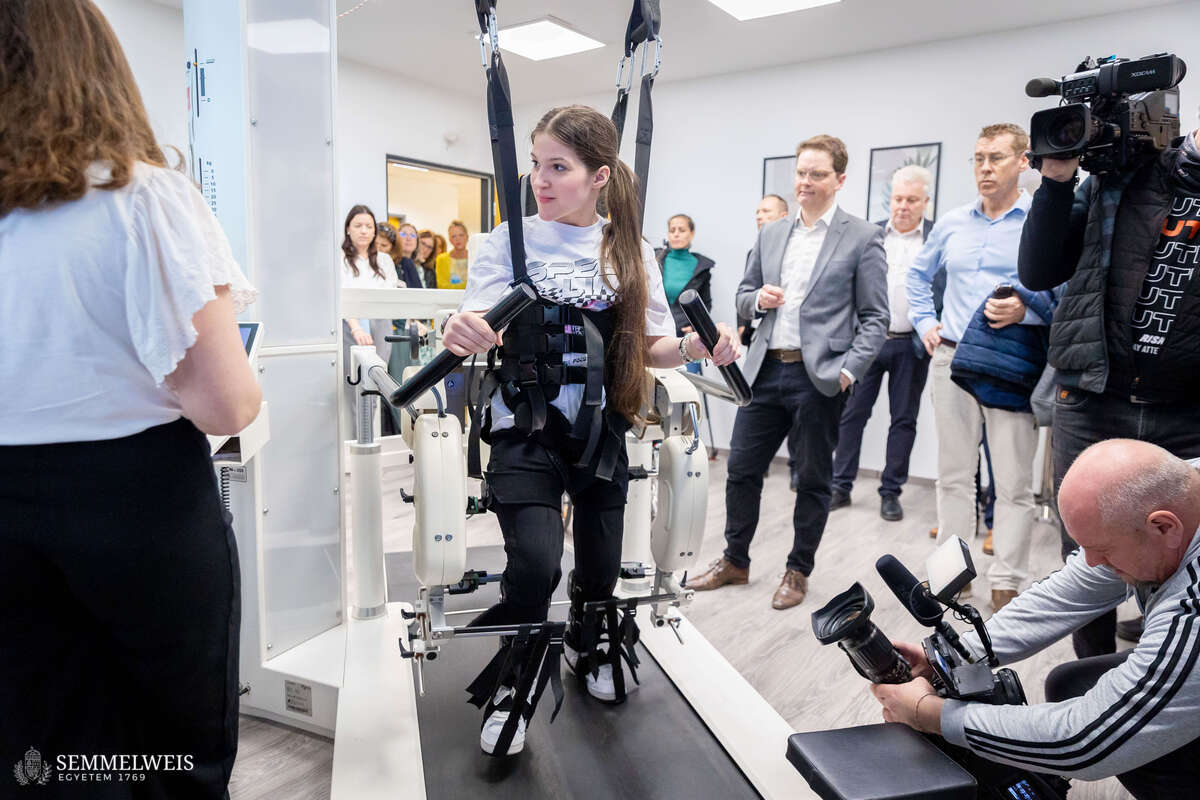
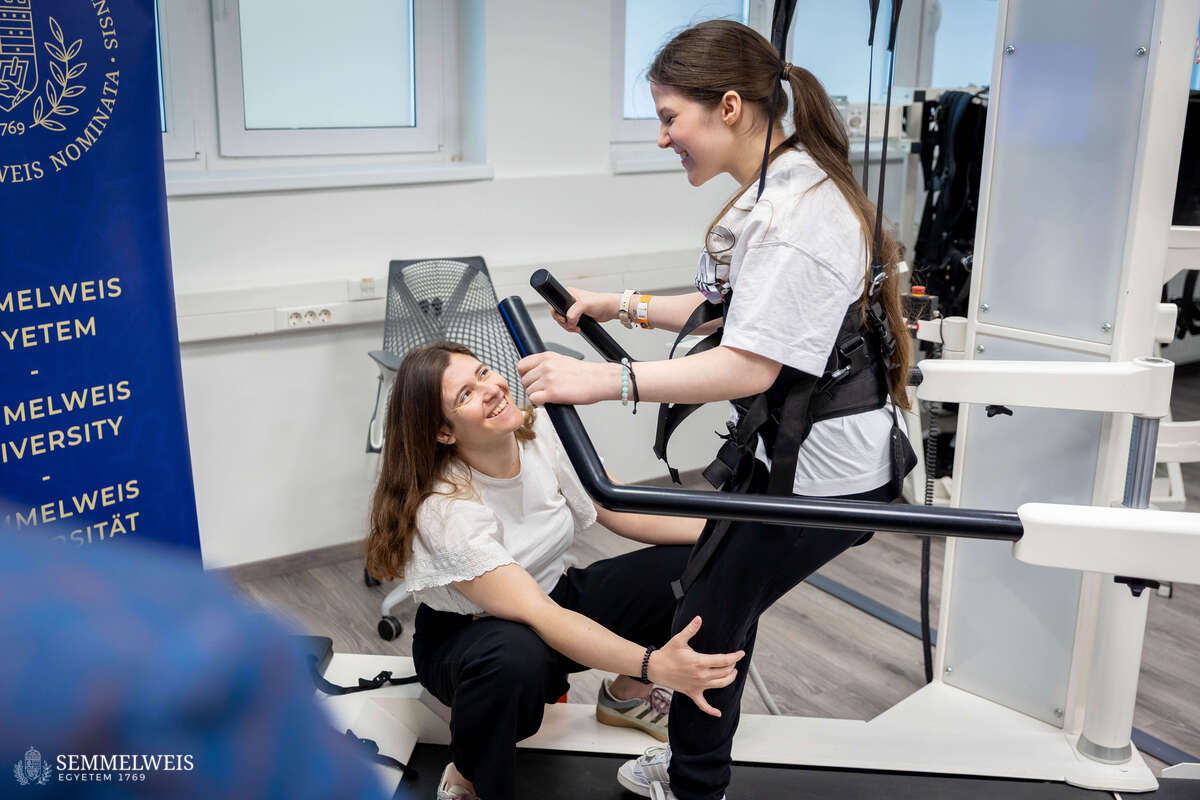
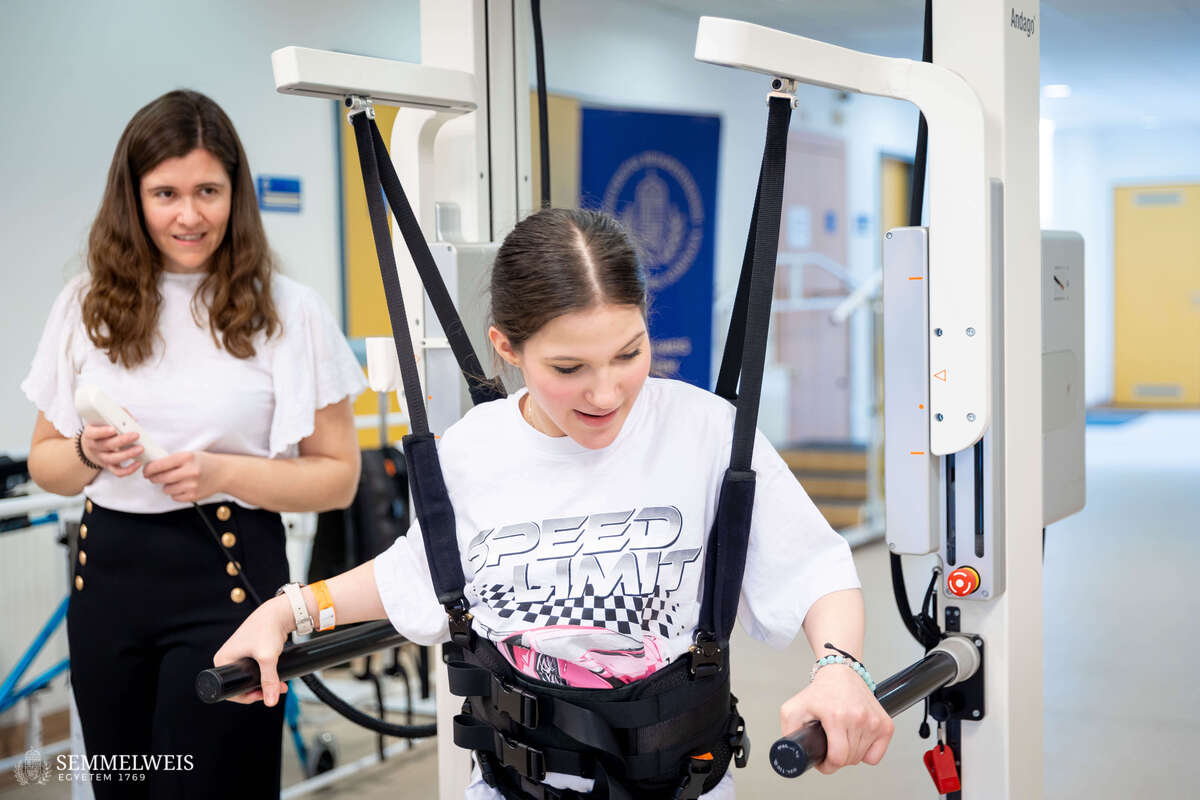
The equipment consists of several types of complementary robotic rehabilitation devices that target different motor functions and can be combined in a personalized manner for therapy. The devices cover the full range of movement, from fine motor control of the hands to walking; they develop, among other things, motor coordination, muscle strength, and mobility. With their help, children can more easily practice physiological movement patterns and their performance becomes measurable, which contributes to their sense of achievement and allows conductors to track their progress even more efficiently. The goal is to improve motor skills, strengthen neural adaptation (neuroplasticity), and help children lead more independent and fulfilling lives.
Eszter Keresztes
Translation: Dr. Balázs Csizmadia
Photos by Boglárka Zellei – Semmelweis University