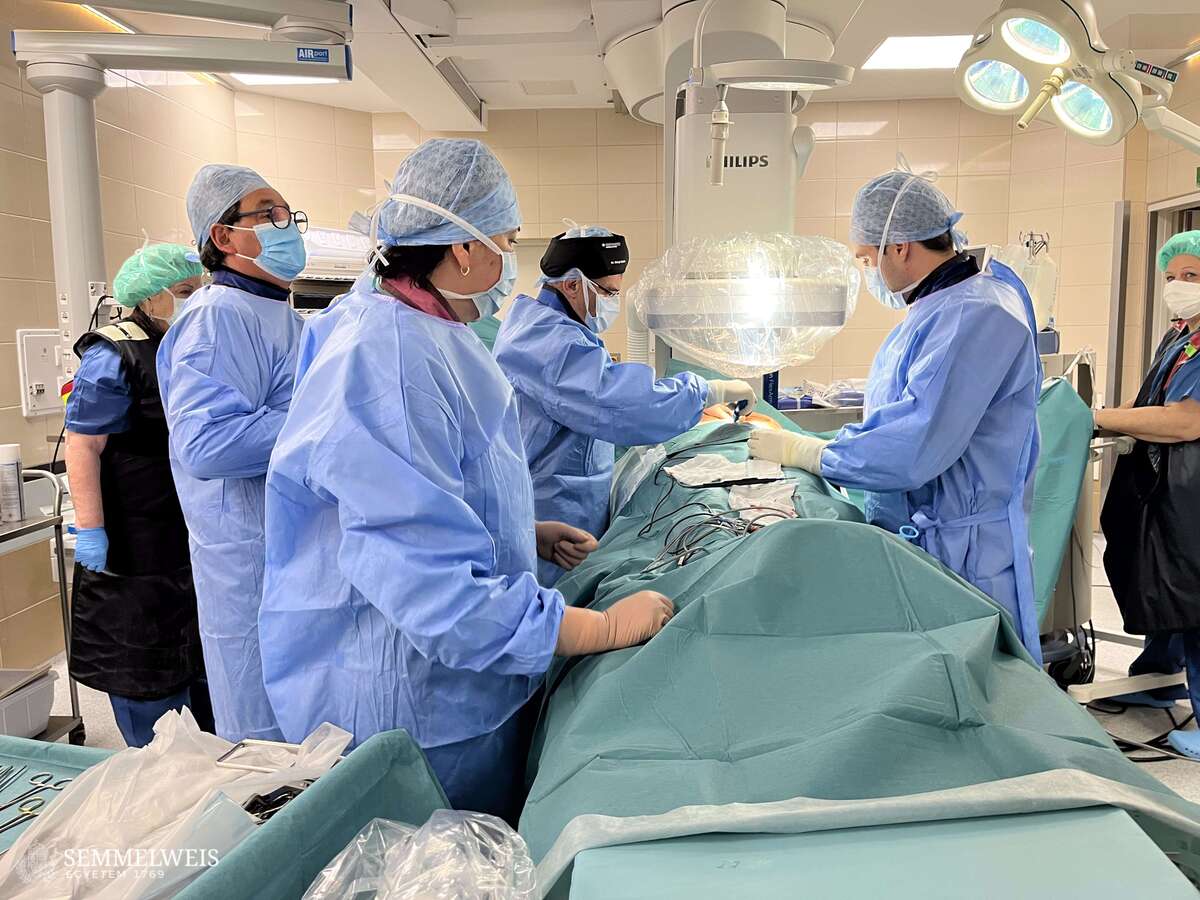
The first implantation of a new type of extravascular cardioverter defibrillator (EV-ICD) placed between the sternum and the heart was performed in October 2023 at Semmelweis University’s Városmajor Heart and Vascular Center. At that time, this was considered a pioneering procedure not only at the national and regional level, but also throughout the entire CEMA region (Central and Eastern Europe, Middle East, and Africa). The Városmajor Heart and Vascular Center, as well as its Director Dr. Béla Merkely, Rector of Semmelweis University, played a significant role in the development of the new type of implantable defibrillator and the related international clinical trials. The method offers a new option for patients suffering from severe cardiac arrhythmia, in addition to existing therapies.
Semmelweis University’s Városmajor Heart and Vascular Center is one of the three centers in the world with the most experience in innovative EV-ICD therapy. It is our important mission to share the knowledge we have gained so far and to establish this procedure in all major cardiac surgery, cardiology, and pacemaker centers in Hungary so that it is available to patients in need throughout the country. – Dr. Béla Merkely
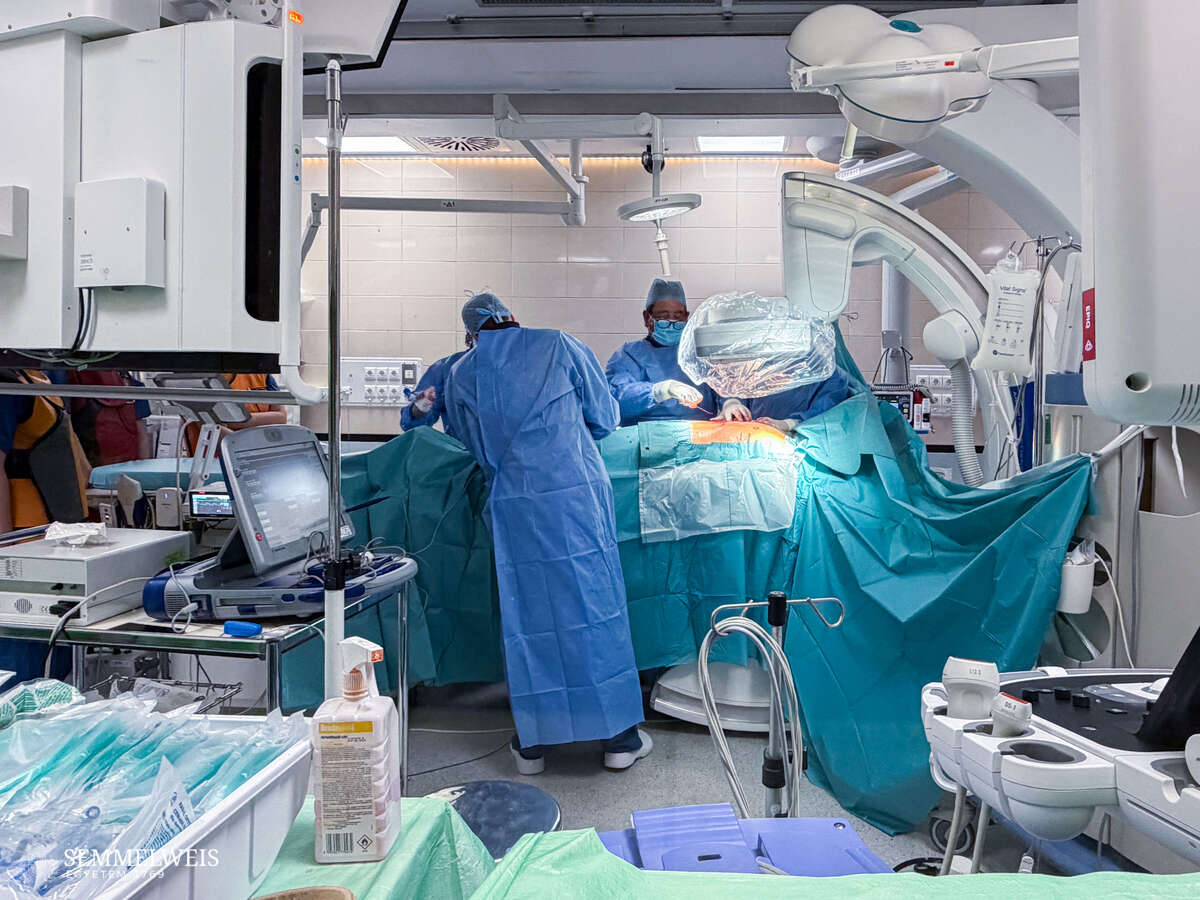
As part of this process, under the professional guidance of Dr. Béla Merkely, the first two EV-ICD implantations were successfully performed in Pécs on a 62-year-old and a 63-year-old patient, observed by numerous interested local students, residents, and consultant surgeons.
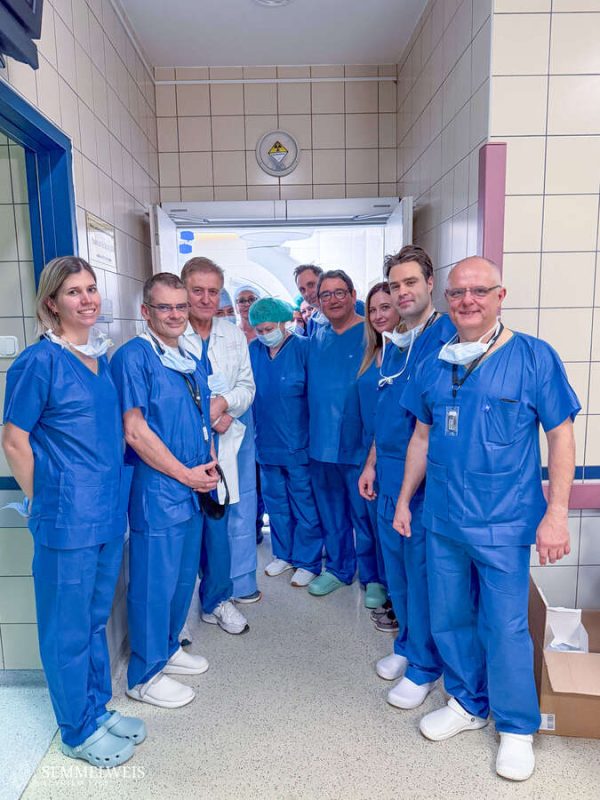 Dr. Attila Kónyi, Associate Professor at the Heart Institute of the University of Pécs, emphasized that as head of the pacemaker working group, he considered it a priority to make the best and most modern therapies available to their patients, so he was very pleased that pacemaker care had been complemented with this innovative method. “It is an honor that Dr. Béla Merkely, who introduced this procedure in Hungary, personally shared his expertise and was present during the first procedures,” he said. “A major advantage of the new technique is that the device can eliminate arrhythmias without causing pain to the patient, who is hardly even aware of the rapid stimulation,” he added.
The EV-ICD is a special implantable defibrillator whose sensors and shock-delivering electrodes are not located in the usual place, the heart, but between the heart and the sternum. “From an interventional point of view, the surgery ‘makes your heart throb’ because it requires very clear anatomical knowledge and extremely precise placement,” explained Dr. Béla Merkely.
The device is designed to detect cardiac malfunction and, if necessary, deliver an electric shock with an average energy of 30 joules to eliminate the arrhythmia.
“It is important that all patients receive the most appropriate of the (with the new solution) three technologies currently available, the one that can be implanted with the fewest complications and the greatest efficiency, providing the most long-term solution,” pointed out Dr. Béla Merkely.
The EV-ICD is the best option for those to whom a traditional ICD implanted in the heart may pose a risk due to infection. The new device requires less energy to eliminate life-threatening arrhythmia, and if it needs to be replaced at a later date, this is easier to do than with a defibrillator implanted in the heart.
What types of implantable resuscitation devices are available for patients with cardiac arrhythmia?
In Hungary, thousands of resuscitation devices, or implantable cardioverter defibrillators (ICDs), are implanted every year. They are life-saving devices that help maintain heart function in the event of serious cardiac arrhythmia. The three types of ICDs are:
Traditional, transvenous ICD: The electrodes of the device reach the heart directly through the veins. It is suitable for continuous monitoring and defibrillation, and it also has a pacemaker function, i.e. it corrects heart rhythm, if necessary.
Subcutaneous ICD: This is a cardioverter defibrillator that can be implanted under the skin, placed under the chest skin without touching the heart, with a defibrillation function but without a pacemaker function.
EV-ICD: It combines the advantages of the other two devices. It is an extravascular implantable cardioverter defibrillator that, in addition to its defibrillation function, is capable of steering abnormal cardiac activity toward a normal rhythm in the event of cardiac arrhythmia with a series of small electrical impulses, similarly to conventional ICDs.
Dr. Attila Cziráki, Director of the Heart Institute at the University of Pécs, highlighted the importance of innovation in university clinics.
“The two most important things about a new life-saving device are that it is used on the right patients and in the right way. It is a great honor for us to have learned this new method first-hand from one of the three best institutes in the world in this field; we owe our thanks to Professor Béla Merkely for this,” the director noted.
“EV-ICD therapy can now be used not only in patient care but also in university education in Pécs as well,” he added.
Pálma Dobozi
Translation: Dr. Balázs Csizmadia
Photos by the Directorate General of Marketing and Communication, Semmelweis University