The researchers compared data on out-of-hospital cardiac arrests that occurred between November 2018 and December 2023 with daily meteorological indicators, including temperature, wind speed, atmospheric pressure, humidity and air quality.
Why predicting cardiac arrest cases matters
Out-of-hospital cardiac arrest (OHCA) is one of the leading causes of death in developed countries. In Europe, there are an estimated 67–170 cases per 100,000 people each year, while survival remains below 10%. Identifying factors that can predict an expected rise in case numbers could therefore help emergency medical services prepare, raise public awareness of the importance of rapid intervention and resuscitation, and, in the longer term, contribute to improving survival rates.
The analysis found that falling temperatures were among the most important weather-related risk factors for cardiac arrest: every 1°C decrease in average temperature was associated with a 1.4% increase in the daily number of out-of-hospital cardiac arrests. A seasonal comparison also showed that nearly 18% more such events occurred in winter than in summer. The findings therefore suggest that it is not only sudden drops in temperature that may pose a risk, but lower temperatures in general. Rapid changes may nevertheless be particularly important: a daily temperature drop of more than 5°C could serve as a warning signal in an early warning system.
One of the study’s key findings was that the effects of weather changes may not be immediate: the number of out-of-hospital cardiac arrests may rise up to three days later. This could make it possible to develop early warning systems capable of predicting increased demand on healthcare services several days in advance.
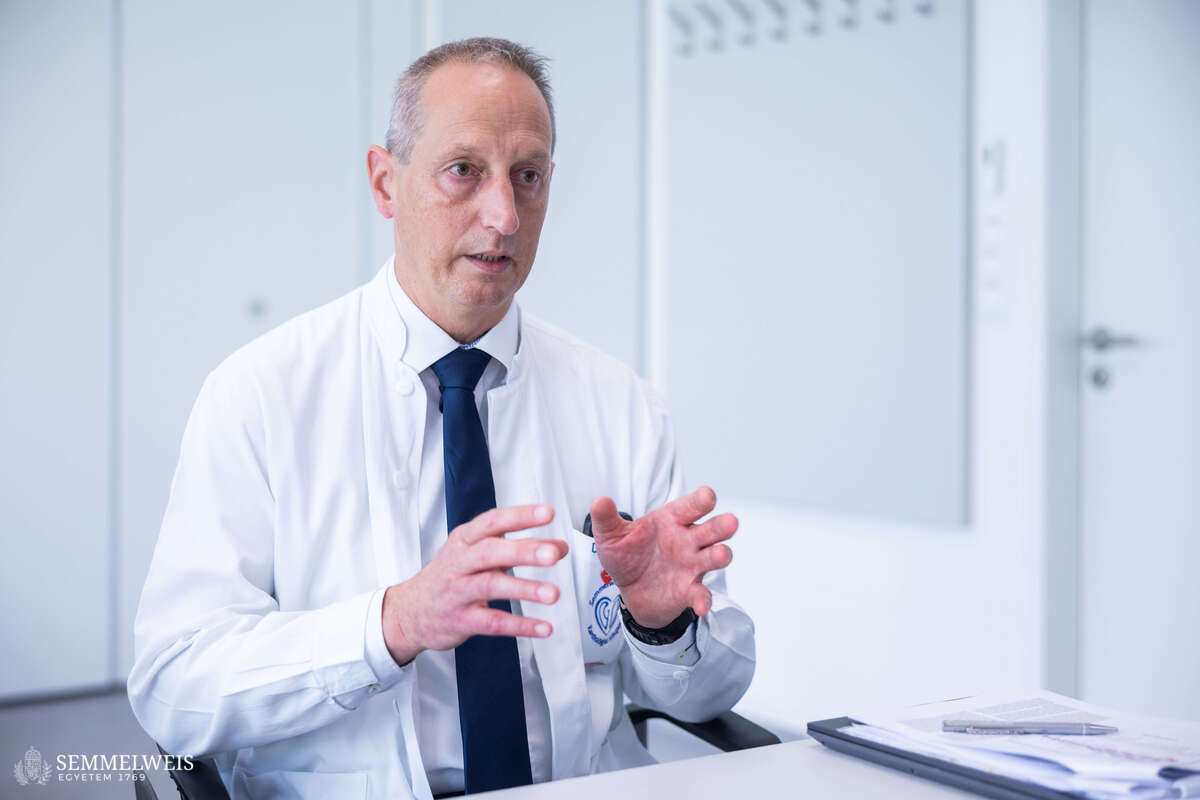 “In a previous study, we examined how extreme cold and heat affect the incidence of out-of-hospital cardiac arrest. This time, we went one step further and investigated whether weather patterns could be used to predict when higher-than-average numbers of cases are likely to occur. If this proves feasible, ambulance services and hospitals could prepare for increased demand several days in advance,” said Dr. Endre Zima, Professor at the Heart and Vascular Center of Semmelweis University and lead researcher of the study.
The researchers developed a predictive model that used meteorological data to estimate the expected daily number of out-of-hospital cardiac arrests.
 “By combining meteorological and ambulance service data, the model could predict one to three days in advance when the number of out-of-hospital cardiac arrests is likely to rise above average. It does not estimate an individual’s risk, but rather the number of cases expected nationwide,” said Dr. Ádám Pál-Jakab, resident physician and PhD student at the Heart and Vascular Center of Semmelweis University and first author of the study.
The researchers not only had to determine which atmospheric parameters had the greatest influence on the number of cardiac arrests, but also how to use them to build a reliable predictive model.
 “One of the biggest challenges in developing the model was determining which days could genuinely be considered outliers and then examining whether these were associated with weather-related factors. Based on this, we were able to build a model that uses previous data to estimate expected case numbers,” added Dr. Brigitta Szilágyi, Associate Professor at the Budapest University of Technology and Economics and Corvinus University of Budapest, and co-author of the study.
The next step could be to develop an early warning system that uses weather forecasts to help ambulance services and hospitals plan capacity and manage expected increases in demand. In the future, such a system could also alert people with cardiovascular disease and their families to higher-risk periods, helping them pay closer attention to warning symptoms and seek medical attention sooner when necessary.
*This study was conducted as part of the National Multidisciplinary Laboratory for Climate Change. The University of Pannonia is the consortium leader.
Robert Cseszregi
Photo: Bálint Barta – Semmelweis University and Corvinus University of Budapest
Cover: iStock by Getty Images/Nuttawan Jayawan