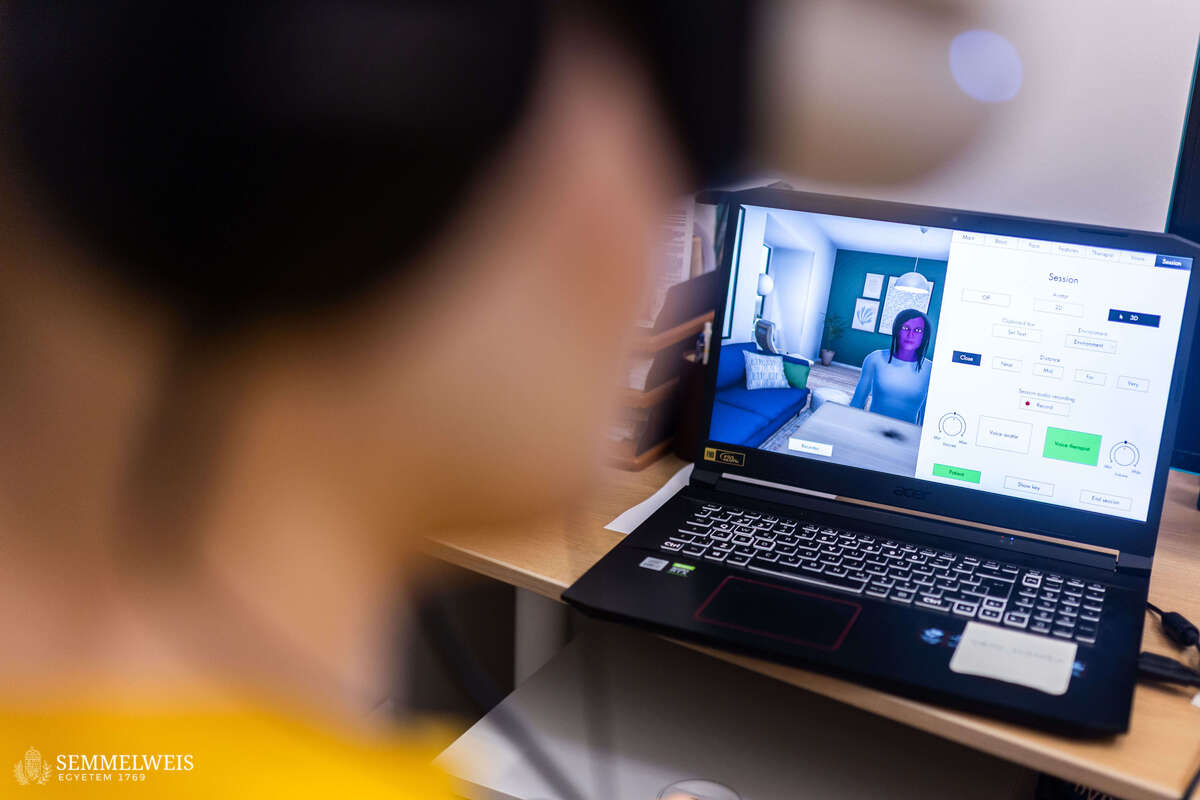
 Researchers at Semmelweis University conducted the study between January 2024 and June 2025 with 30 patients who had experienced persistent auditory hallucinations for at least three months despite medication. At the beginning of treatment, the patient and therapist jointly created a virtual representation of the voice the patient heard most often or found most distressing. They customized the avatar’s appearance, voice and tone, as well as the phrases it would use. During the VR sessions, the therapist voiced the avatar, while the system altered the therapist’s voice to closely match the patient’s hallucinatory voice. If the experience became too distressing, the therapist could switch back to their own voice to reassure and support the patient.
 “The encounter can feel very real, so we prepare patients in advance for every situation: nothing happens unexpectedly, and the process can be stopped at any time. The aim is not necessarily to make the voice disappear completely, but to reduce the anxiety and distress it causes,” said Dr. Luca Egervári, Assistant Lecturer and psychiatrist at the Department of Psychiatry and Psychotherapy, Semmelweis University, and first author of the study.
Patients first continued their usual medication for 12 weeks, followed by seven Avatar therapy sessions over another 12 weeks while continuing their usual medication. This allowed the researchers to compare changes during the 12-week treatment period with those observed during the preceding 12-week waiting period.
Of the 30 participants, 13, or 43.3%, showed meaningful improvement. In two patients, the voices had completely disappeared by the end of treatment, while four others experienced a reduction of at least 50% in symptom severity. The study also found significant reductions in both the frequency of the voices and the distress they caused. An exploratory analysis found an improvement in trait anxiety, although the researchers caution that this finding needs to be interpreted carefully.
Older age was associated with greater improvement or symptom stabilization in the current study. According to the researchers, this may reflect the fact that older patients typically have more experience coping with the illness and navigating different treatment options, which may increase their engagement in therapy. The published analysis found no significant differences between the response groups in baseline hallucination severity, illness duration, antipsychotic dose, or beliefs about the voices. However, separate earlier and subsequent analyses by the research team suggest that a longer history of illness, more severe symptoms at baseline, and more active attempts to resist or cope with the voices may also be linked to a better treatment response. Because these findings come from small samples and different analyses, the researchers stress that they need to be confirmed in larger studies.
 “Avatar therapy itself is not new, but it has not previously been studied in Central and Eastern Europe. The version used in this study combines virtual reality with psychotherapeutic techniques that can help patients change the way they relate to the voices they hear. The next step is to identify which patients are most likely to benefit from this add-on therapy,” said Dr. Edit Haluska-Vass, Assistant Professor at the Department of Psychiatry and Psychotherapy, Semmelweis University, and senior author of the study.
The Hungarian study is part of a larger international research project involving partners in Hungary, Poland, Denmark and Spain. The approach may offer a new option particularly for patients whose auditory hallucinations persist despite medication and continue to cause significant anxiety and distress. Further results may help determine under what conditions VR-Avatar therapy could eventually become part of routine clinical care.
Robert Cseszregi
Photo: Bálint Barta – Semmelweis University