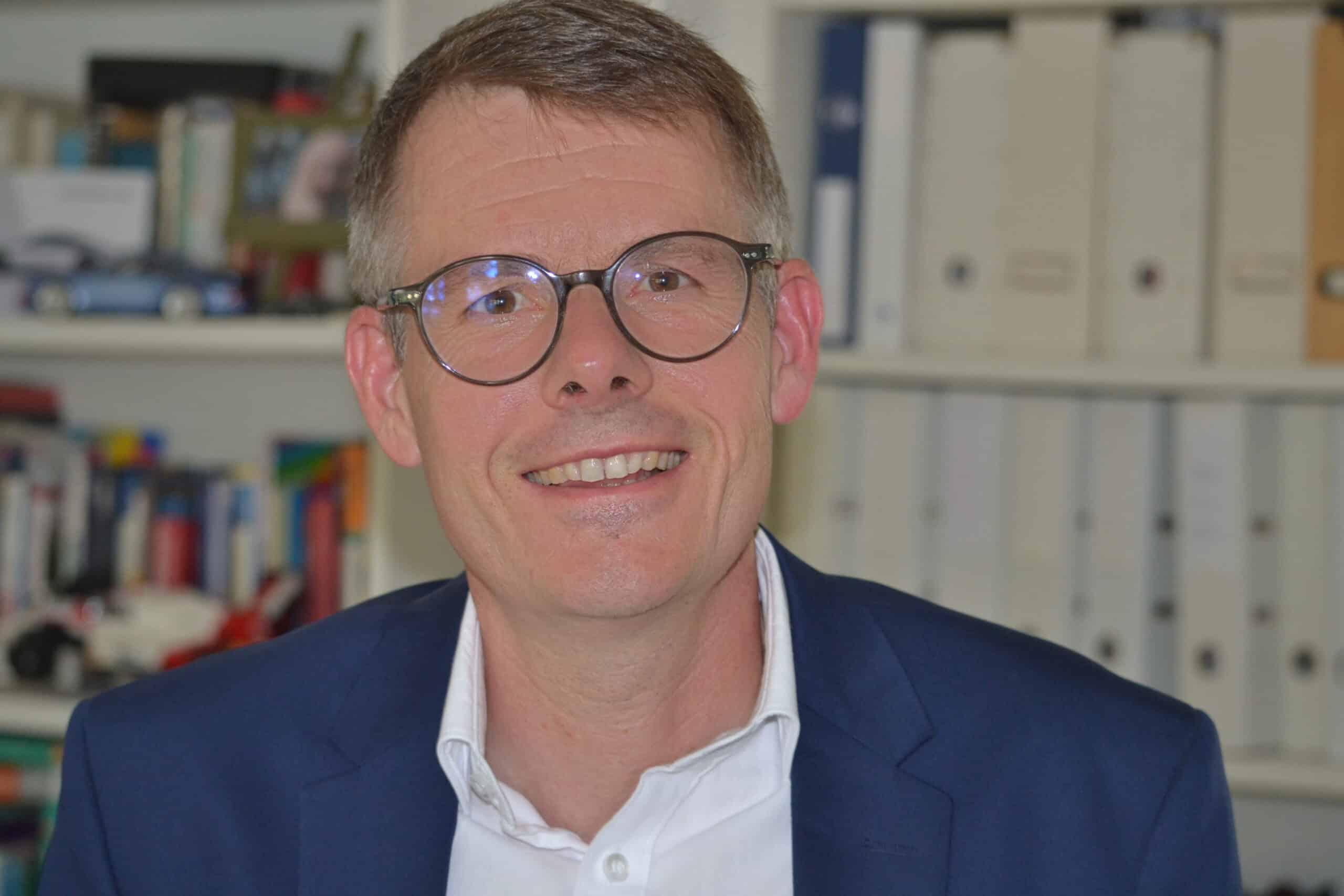
What made you decide to begin your medical studies at Semmelweis University?
Budapest was my first choice, although my path was a bit unconventional. I grew up in the former German Democratic Republic (GDR), and this was only a few years after reunification. I still remember calling several well-established universities in West Germany and often being asked: “Why don’t you stay in the East?”
Budapest was different. What mattered was whether I could meet the academic requirements, which felt remarkably meritocratic. I came from a medical family, so the structure of the early curriculum felt familiar to me, as it was similar to the tradition of medical education that was being reformed back home.
I found Budapest fascinating. After 1989, Hungary underwent a fundamental political transformation. Unfortunately, my Hungarian was never good enough for all the conversations I would have liked to have had, but I still felt a connection to people whose biographies had been rewritten by history in ways that were familiar to someone who had grown up in the GDR.
The educational culture at Semmelweis was demanding. The amount of material was enormous, and Budapest taught me perhaps one of the most important skills: how to learn. I have mastered how to turn an intimidating amount of knowledge into something manageable.
When I later continued my studies at LMU Munich, particularly when oral examinations became central again in the final state examination, I encountered something that felt very familiar from my time in Budapest: standing in front of examiners, having to organize what I know, make connections, and explain my reasoning. I realized then that the demonstrations, colloquia and rigorosa at Semmelweis had trained me in more than just factual knowledge.
I would not romanticize all the pressure we experienced. During my two years in Budapest, I once had salmonellosis and still had to navigate my examinations. But Semmelweis taught me discipline, self-organization, and the confidence that very complex problems can be broken down and mastered.
Do you remember any particular professors or mentors from Semmelweis who had a lasting influence on you?
Professor Ágoston Szél immediately comes to mind. He taught anatomy in our seminar group and later became head of Anatomy and rector of Semmelweis University. Despite his academic achievements, he did not consider undergraduate teaching to be less important as his scientific career advanced. Today, when I supervise or teach students, I try to follow his example. Dr. Ágoston Szél demonstrated that an ambitious academic career and a personal commitment to students are not mutually exclusive.
There is a much more personal reason why Semmelweis has remained important to me. My future wife, Ana, was in my seminar group, and we have been walking alongside each other on our personal and professional journeys ever since.
I have also noticed how far-reaching the Semmelweis community is. I have met colleagues around the world and discovered that they had also studied in Budapest. Almost three decades later, I still encounter pieces of Budapest in places I would never have expected.
Was there a particular moment or experience from your medical training that made you decide to pursue a career in psychiatry?
 The signs were there from the beginning. I still have my old “leckekönyv,” the small black transcript in which our courses and grades were recorded. I’ve noticed that Medical Psychology and Sociology were among the subjects in which I received my best marks at Semmelweis. They were minor subjects in the curriculum, but I found them fascinating and received a great deal of encouragement from the teachers.
Later, during my clinical training, I realized that I enjoyed learning about patients’ history and understanding more than their symptoms, including where someone came from, what had happened in their life, and how all of this might relate to their disorder. Psychiatry eventually allowed me to better explore these questions.
During my first night shift as a resident at the University Hospital of Psychiatry Zurich, I suddenly found myself in charge of a 300-bed hospital. At some point during that night, I thought back to Budapest. Semmelweis had taught me early on that even a situation which initially seems overwhelming could be approached systematically.
Many young doctors hesitate to specialize in very narrow fields. What convinced you that forensic psychiatry was the right path for you?
I was fascinated by the intersection of medicine, psychiatry, and law in forensic psychiatry. Even when someone commits a serious offense, the psychiatrist’s task is not to decide whether that person is “evil.” We ask different questions: Is there a mental disorder? Did it affect the person’s behavior, and what can we reasonably say about future risks? Can treatment change that? Where are the limits of our ability to predict what another human being will do?
I have always enjoyed this translation between disciplines. My path included social and forensic psychiatry in Switzerland, psychiatric assessment and a period as a visiting researcher at Columbia University in New York, before becoming professor and head of the Department of Forensic Psychiatry at the University of Bern. This interdisciplinarity has guided my academic work into artificial intelligence, digital mental health, geopsychiatry, and, most recently, sports psychiatry.
Working with elite-level athletes and organizations, including the Union Cycliste Internationale and Swiss Cycling, has sparked my interest in transition periods, such as injury, recovery, and retirement. Exceptional physical performance does not protect anyone from mental illness. To provide effective psychiatric care, it is crucial to understand the unique challenges and realities of elite sports. Instead of merely adapting standard clinical models to this setting, it is essential to tailor the approach to the specific needs of these athletes.
You have been involved in the emerging field of geopsychiatry. Could you explain this concept and why it matters today?
In medicine we need to consider genetics, neurobiology, individual psychology, and a person’s social environment. However, environments extend beyond the family, workplace, and neighborhood. War, migration, economic inequality, climate change, and access to resources can ultimately affect anyone’s mental health. Geopsychiatry applies the biopsychosocial model to this macro level.
My earlier work in social psychiatry with people struggling with addiction and dual diagnoses, and later my experience in forensic psychiatry and with migrants in detention, made me increasingly interested in these contextual factors. I find it fascinating that psychiatrists in Buenos Aires, Cairo, New Delhi, Shanghai or Bern may discuss the same disorders, even though the contexts in which these disorders develop and where care takes place may be fundamentally different.
This eventually contributed to the establishment of the International Institute of Geopsychiatry. Emerging from work at the University of Bern, the institute now connects colleagues and collaborative centers around the world.
Looking back on your career so far, which achievements or contributions are you most proud of?
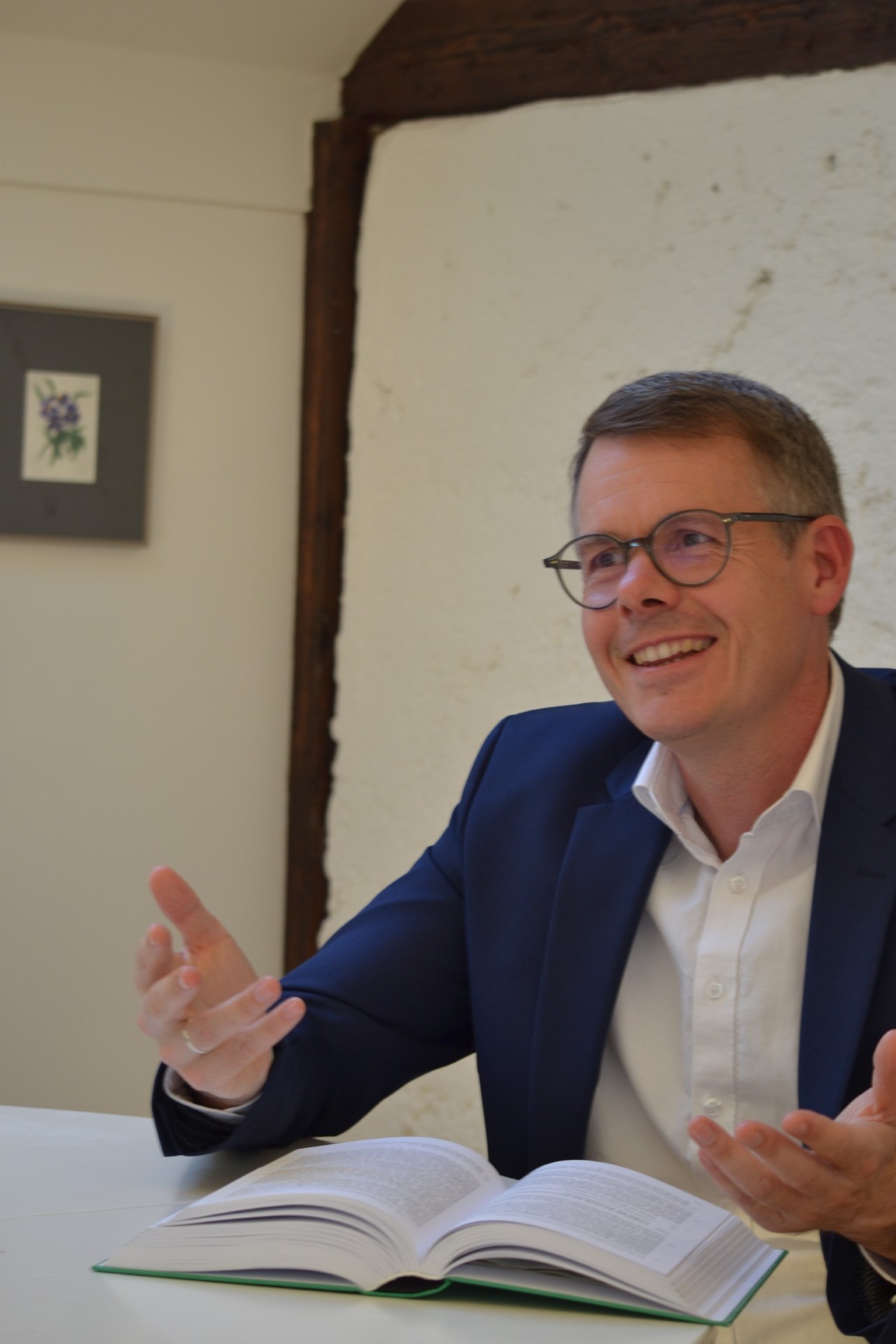 From the outside, an academic career is relatively easy to measure. I became a senior physician at age 30 and a professor at 36. However, I am most proud of seeing the people whom I have had the privilege to supervise succeed on their own, becoming independent researchers and being appointed professors themselves. That, to me, is one of the most meaningful forms of academic impact: knowledge and ideas continuing through people.
I am proud of my other achievements because they demonstrate that academic work can extend beyond the university setting. For instance, our research on substance use disorders contributed to fundamental changes in Swiss Federal Court jurisprudence in 2019. For many years, people with addiction disorders had been treated differently than patients with other psychiatric disorders in disability assessments. Some of the papers that ultimately mattered most were not published in high-impact international medical journals, but in Swiss legal journals, reaching the audience that could change the existing practice.
More recently, in my capacity as president of the Swiss Federal Commission for Quality Assurance in Medical Assessment, I have seen a similar process at the institutional level, where questions about the quality of medical assessments eventually reached the Swiss Parliament.
Another valuable thread is the willingness to explore early developments, from doctoral research on repeated ketamine treatment for treatment-resistant depression in 2007 to being among the first medical groups to discuss generative AI chatbots and their implications in early 2023.
Anna Zs. Tóth – Directorate of International Relations and Alumni Affairs
Photos by Michael Liebrenz