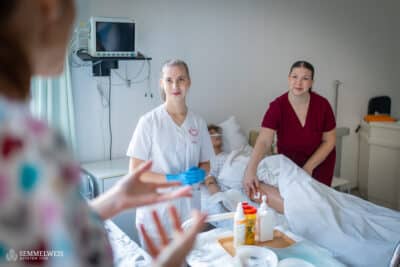
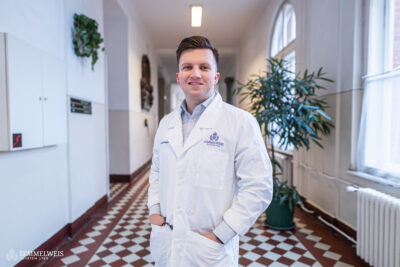
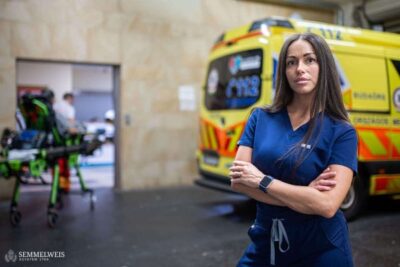
Csongor Galkó, a fifth-year student at the Faculty of Medicine (ÁOK), has been performing clinical work as an operating room assistant at the Department of Traumatology since February 2025, as part of one of the allied health professional positions available. His choice is deliberate: He wants to become a traumatologist and sees his future at the department. In the operating room, he is not merely an observer: He prepares instruments, operates imaging equipment, and learns first-hand from experienced surgeons. As part of our “One day” series, we now offer a glimpse into the daily life of a student preparing for a career in traumatology.
Click on the pictures to read our photo report.
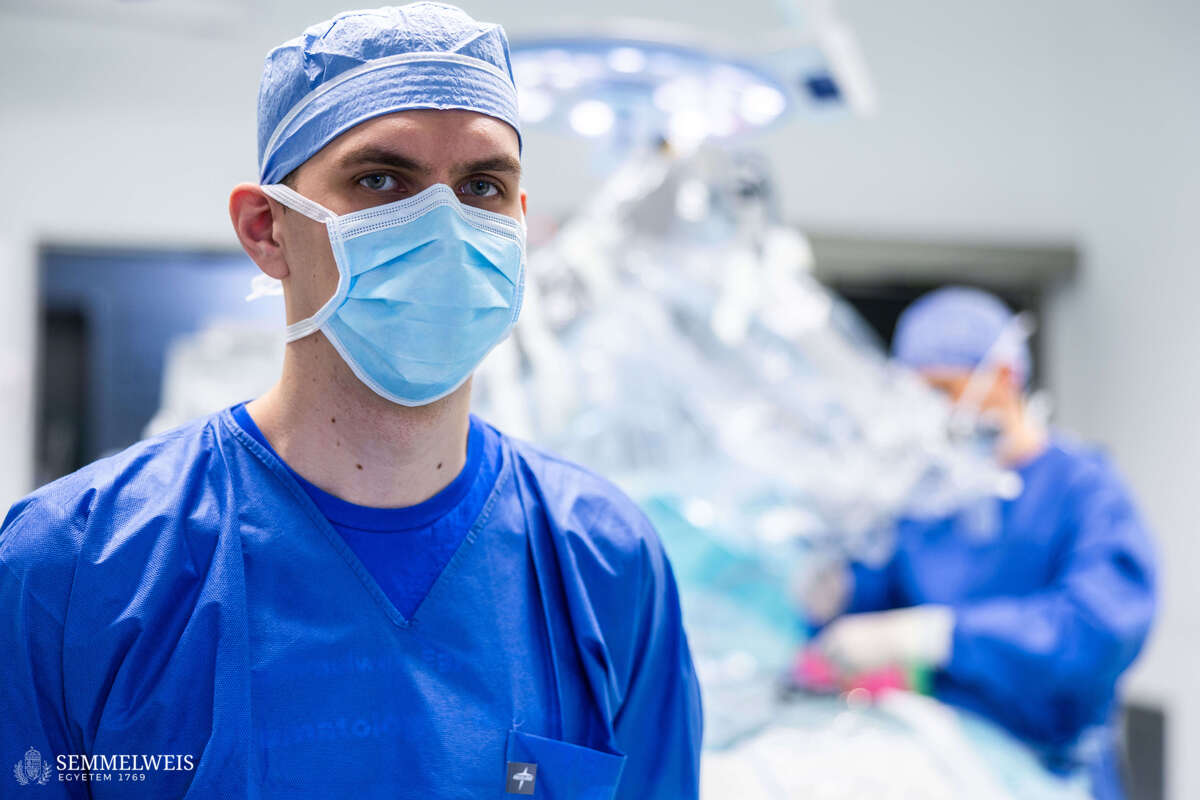
Csongor Galkó has been coming regularly to the Department of Traumatology for about a year as part of his “Clinical Work” training course. During this time, he has gained considerable experience; his role as an allied health professional in the operating room and the experience he has acquired there serve as a form of preparation for the future, as he is training to become a board-certified traumatologist.
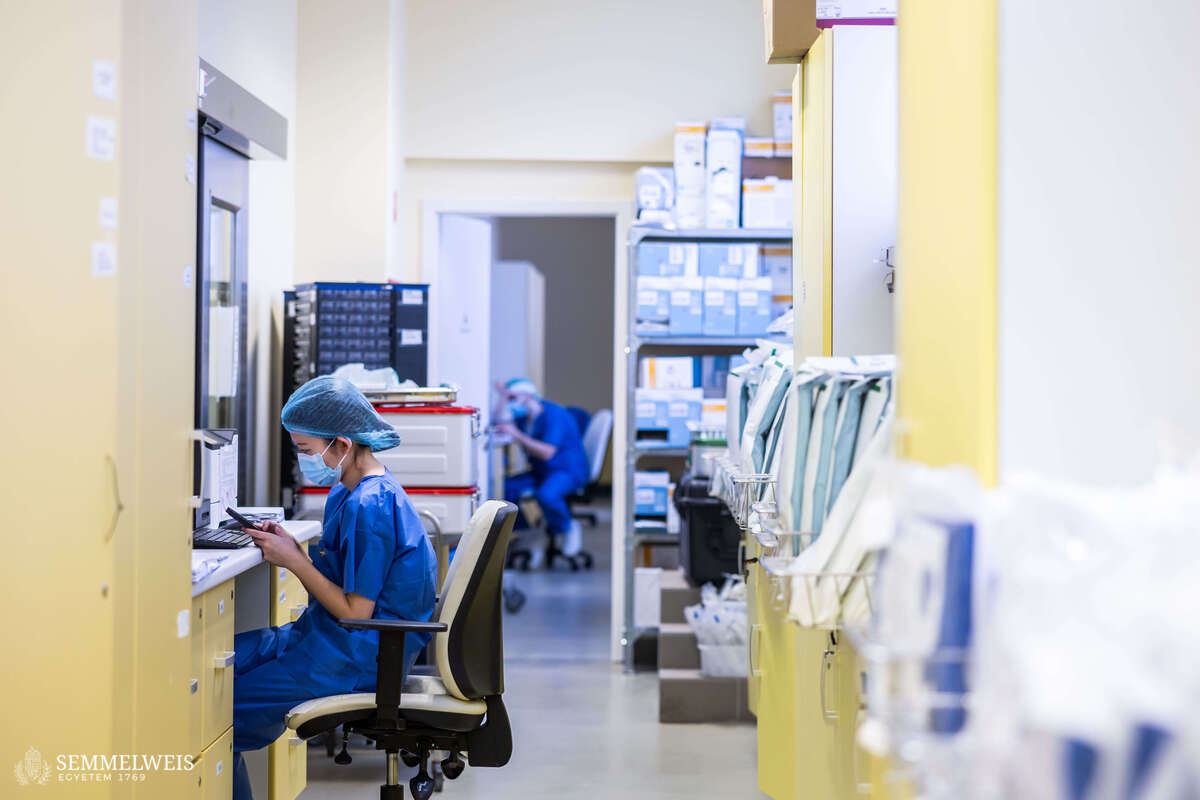
At Semmelweis University, third-year or higher-year medical students at ÁOK can apply for four types of allied health professional positions as part of the “Clinical Work” course. This gives students the opportunity to take on part-time clinical work as assistant nurses, operating room assistants, patient escorters, and – in the Institute of Laboratory Medicine and the pathology institutes – as medical assistants, all under a healthcare service contract.
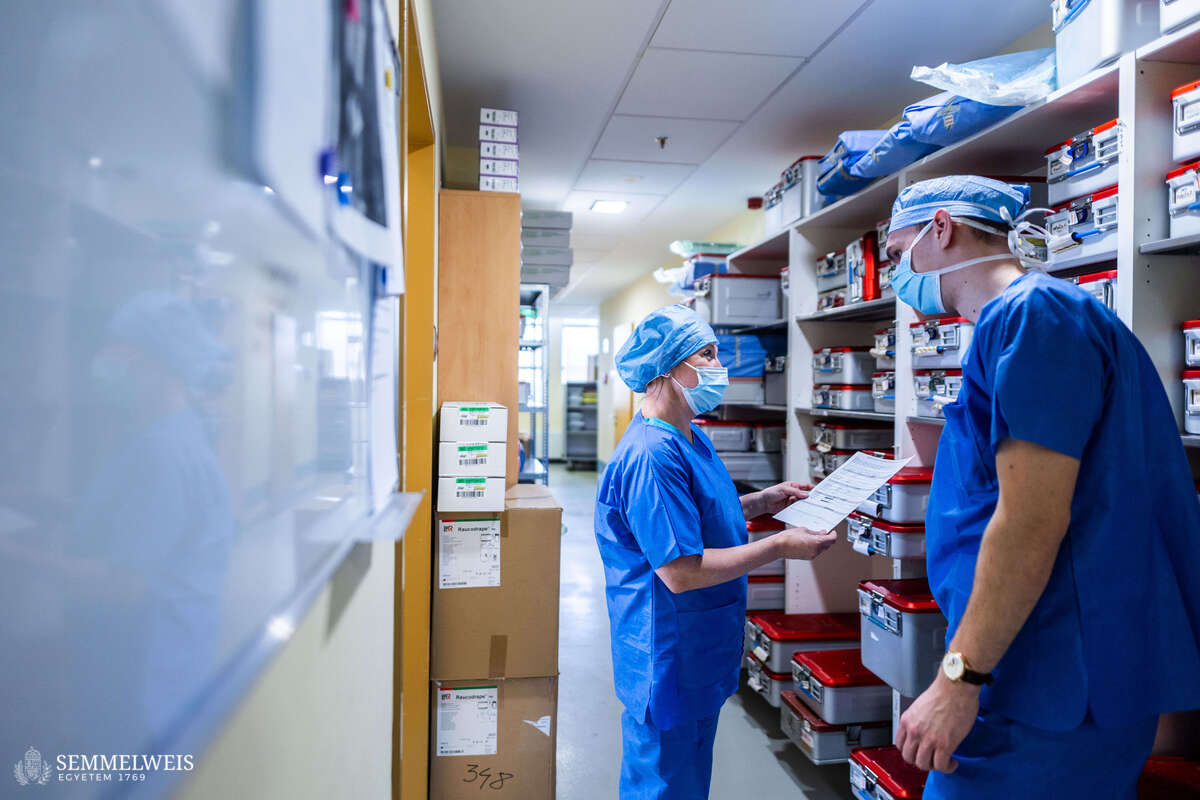
At the Department of Traumatology, Csongor and his fellow students start their day with a briefing, during which they discuss the day’s surgical schedule and related tasks with the head surgical assistant. The department has three operating rooms, which are specially equipped surgical suites where injuries such as bone fractures and joint injuries are treated.
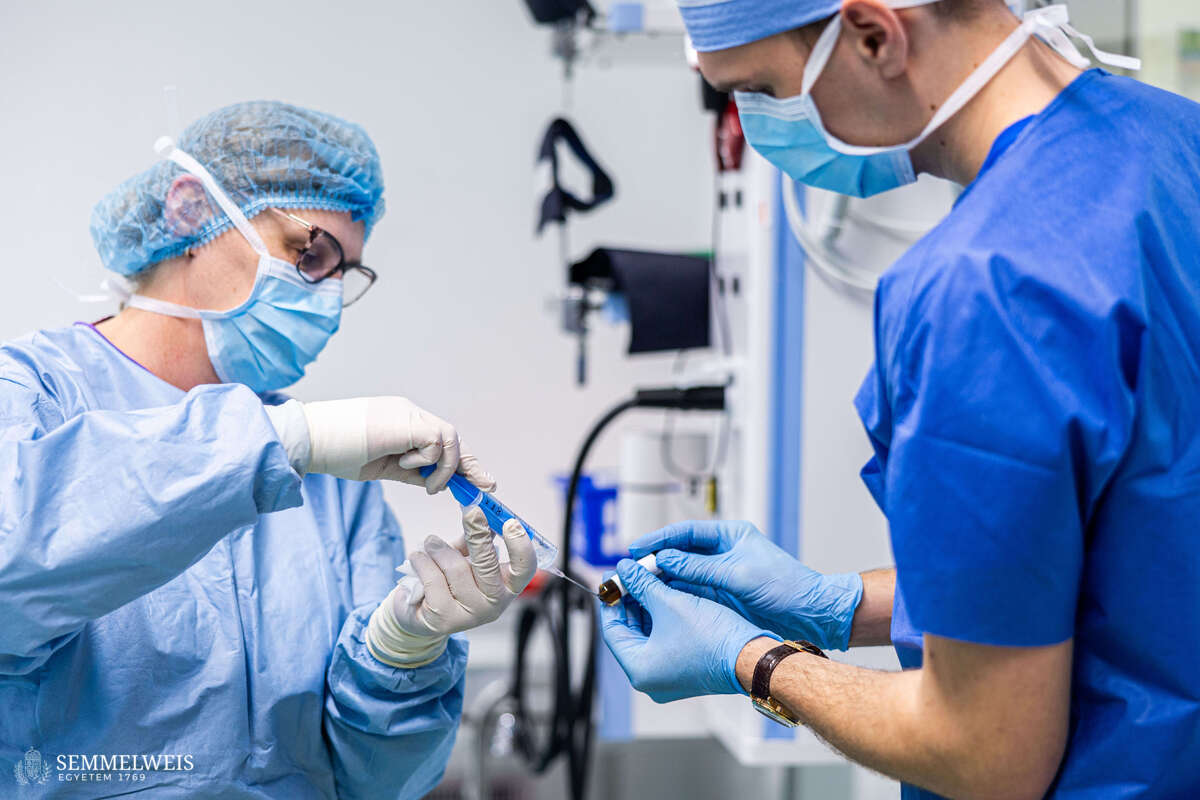
In the operating room, the surgical nurse, the attending specialist, and the trained operating room assistant assign various tasks to the students.
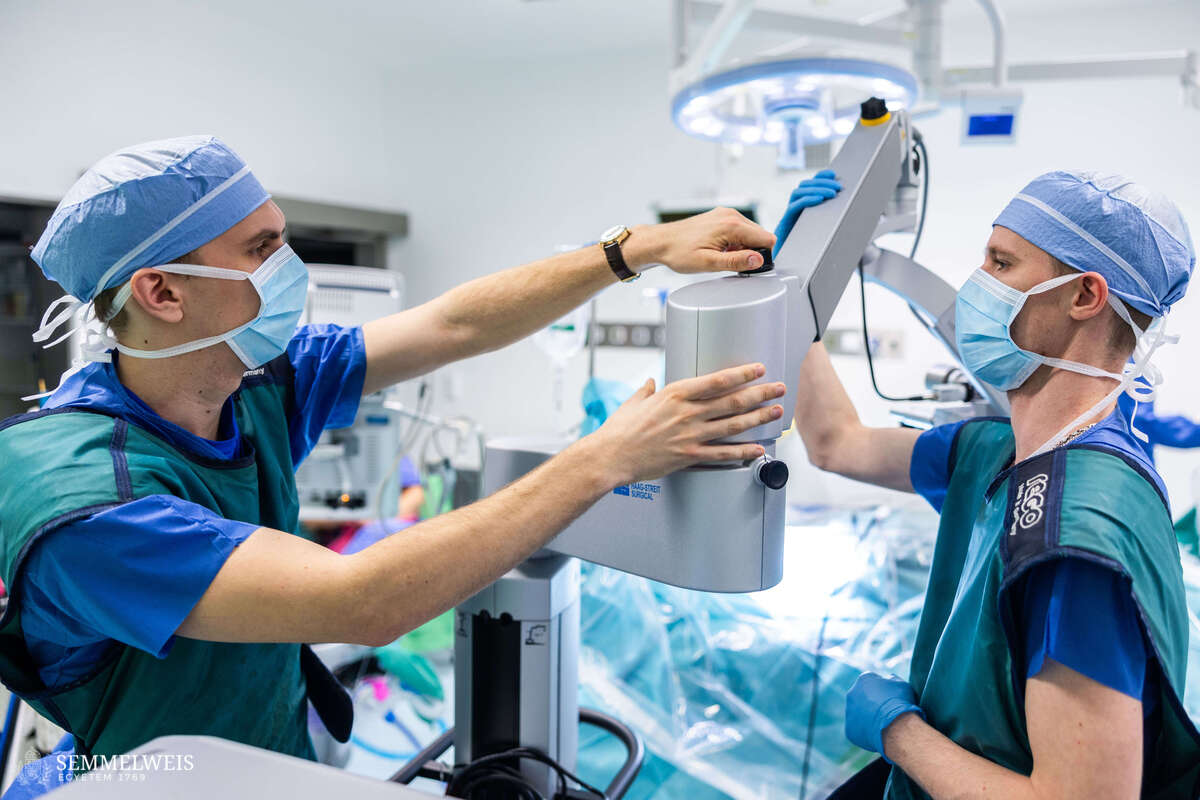
In Csongor’s experience, clinical work offers quite different benefits compared to practical training. In the operating room, students become active members of the team: For example, they participate in preparing the instruments and operating the X-ray machine, and they can also directly observe the surgical procedures.
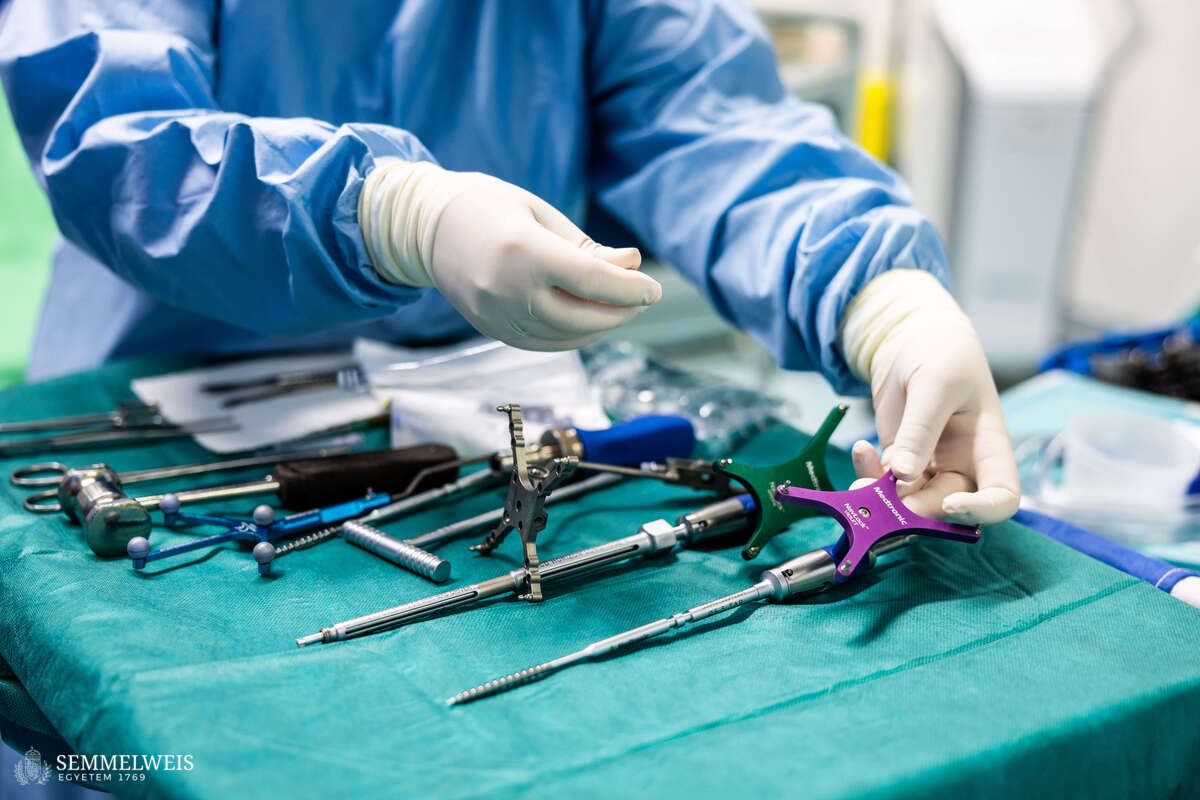
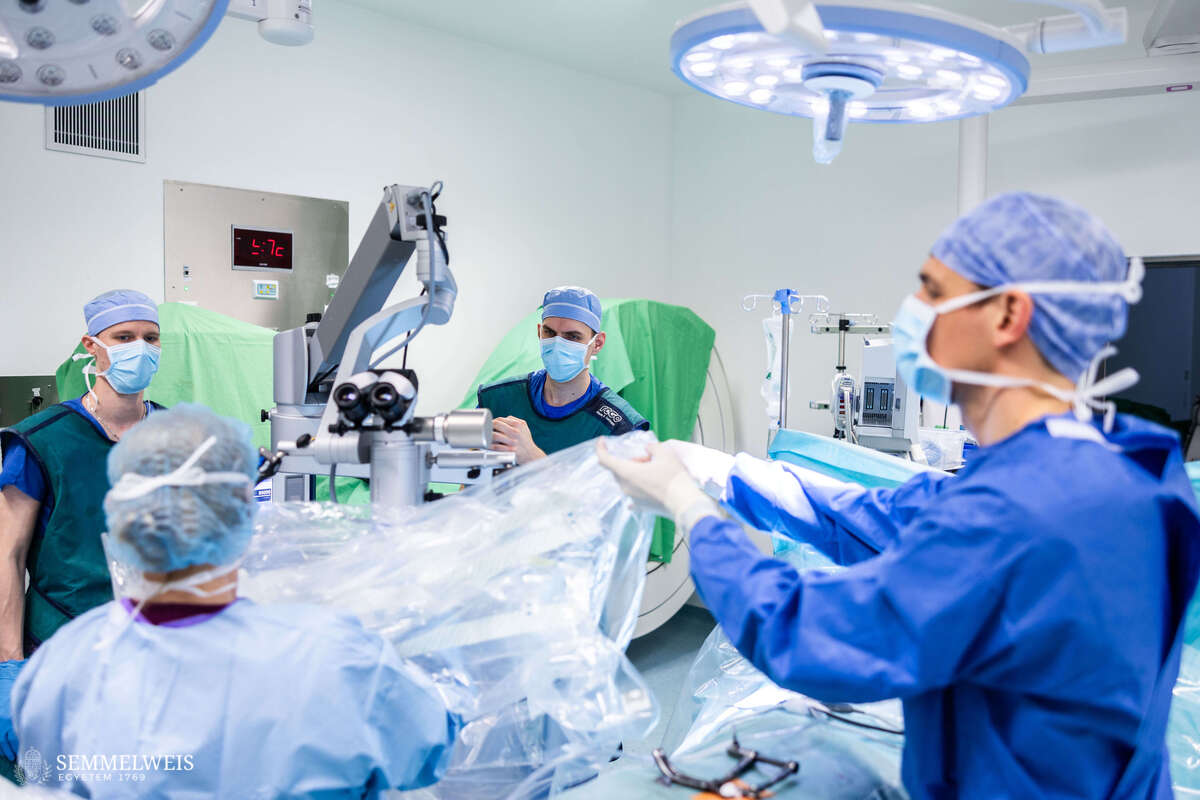
In this photo, operating room assistants are setting up a special instrument for microscopic spinal surgery that provides the surgeon with a magnified view of the surgical site.
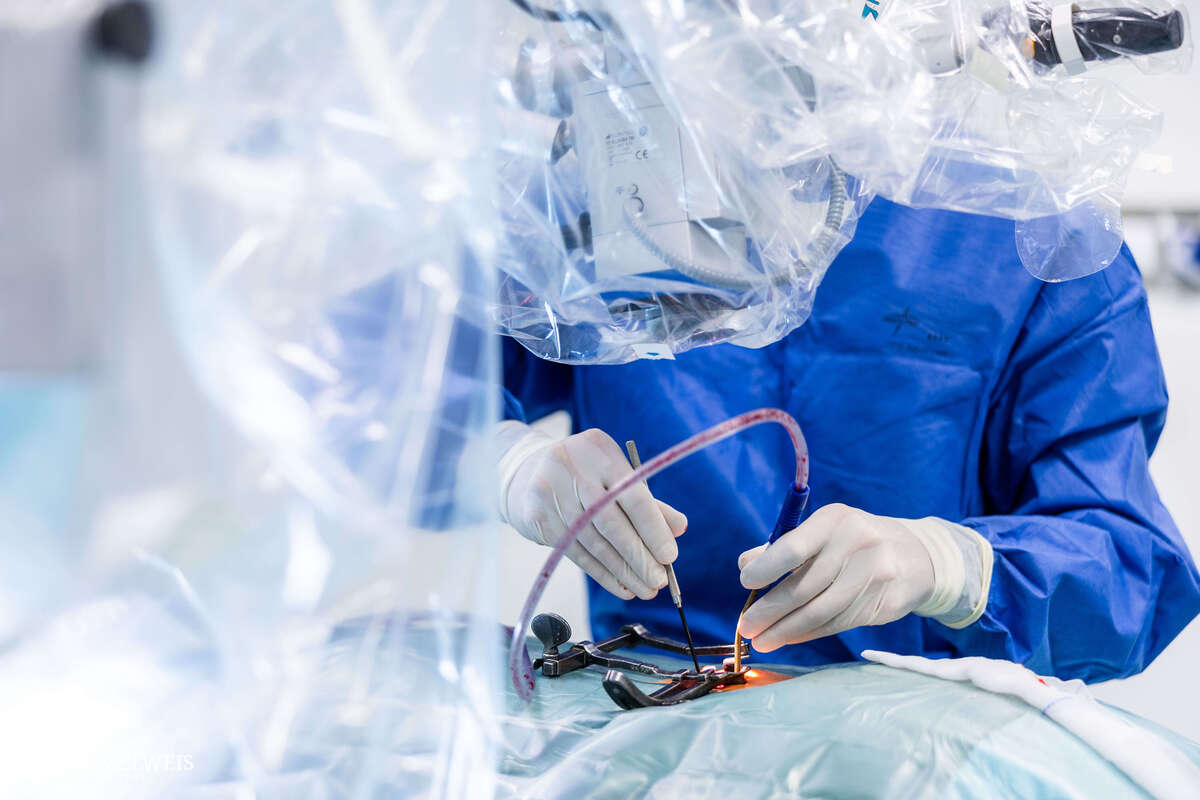
Csongor finds it particularly valuable that surgeons explain procedures as they work, answer questions, and share their own technical ‘tricks’ developed over the years.
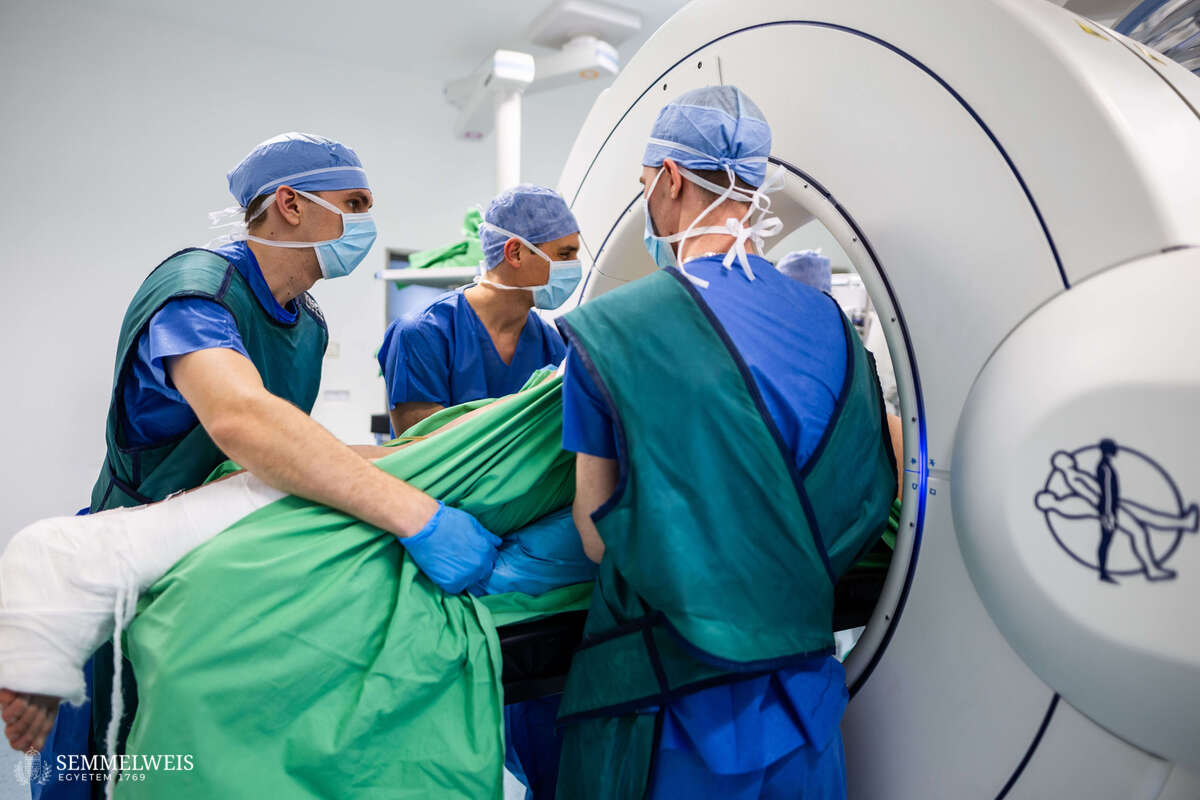
His current research as a student is also affiliated with the department. He began his earlier Students’ Scientific Association (TDK) work at the Department of Pulmonology, and he has recently written an essay in the Rector’s Awards competition on it. At the Department of Traumatology, he is currently researching the use of intraoperative CT. This modern imaging technology allows surgeons to place implants with greater precision using 3D navigation, while also reducing the surgical team’s radiation exposure.
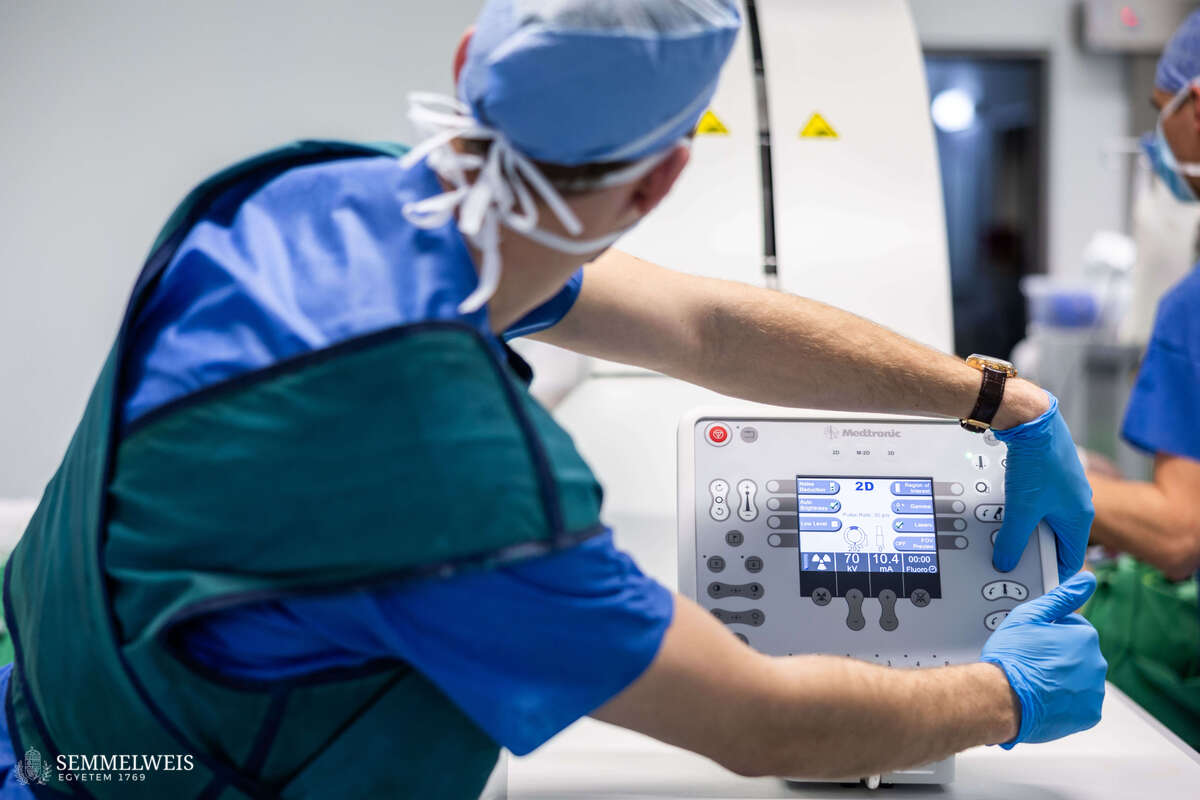
Csongor participates as an operating room assistant in positioning the intraoperative CT (O-arm) to capture a 3D image of the patient suitable for navigation. The O-arm system used at the Department of Traumatology is one of the key technologies in modern, navigation-assisted surgery. Intraoperative CT provides real-time imaging that forms the basis of surgical navigation, which can improve the accuracy of procedures and reduce the need for postoperative corrections. The use of this method is becoming increasingly widespread in spinal surgery and complex trauma care.
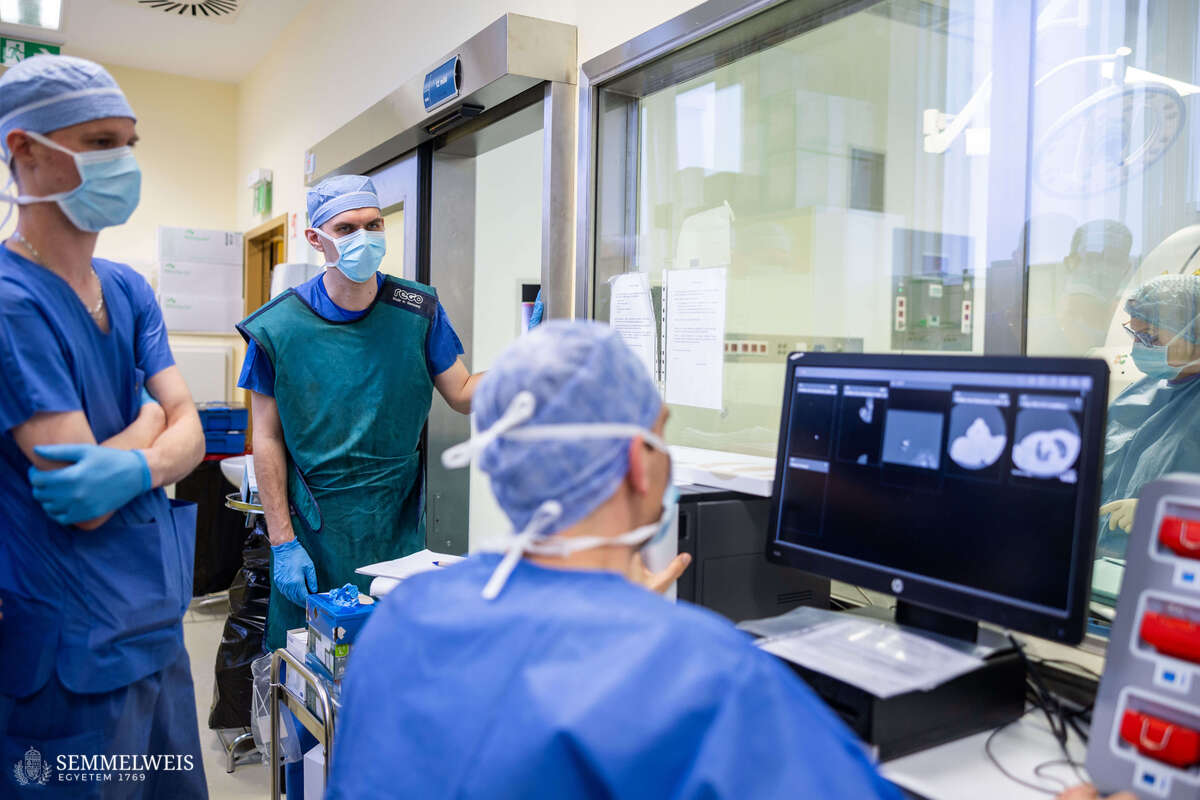
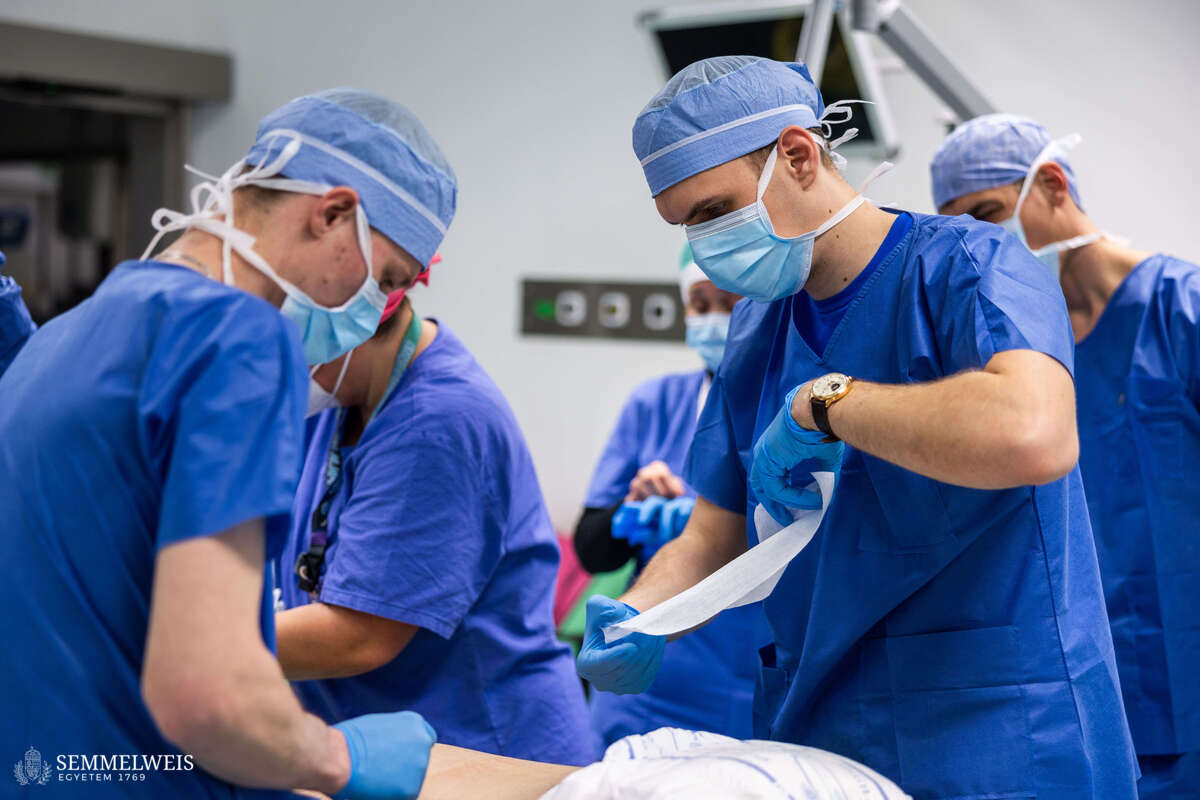
According to Csongor, clinical work not only provides professional experience but also a sense of direction and reassurance on a consciously built medical career path. In his view, the department forms a welcoming, supportive community where he was able to fit in quickly and where he can continue to develop through genuine teamwork.
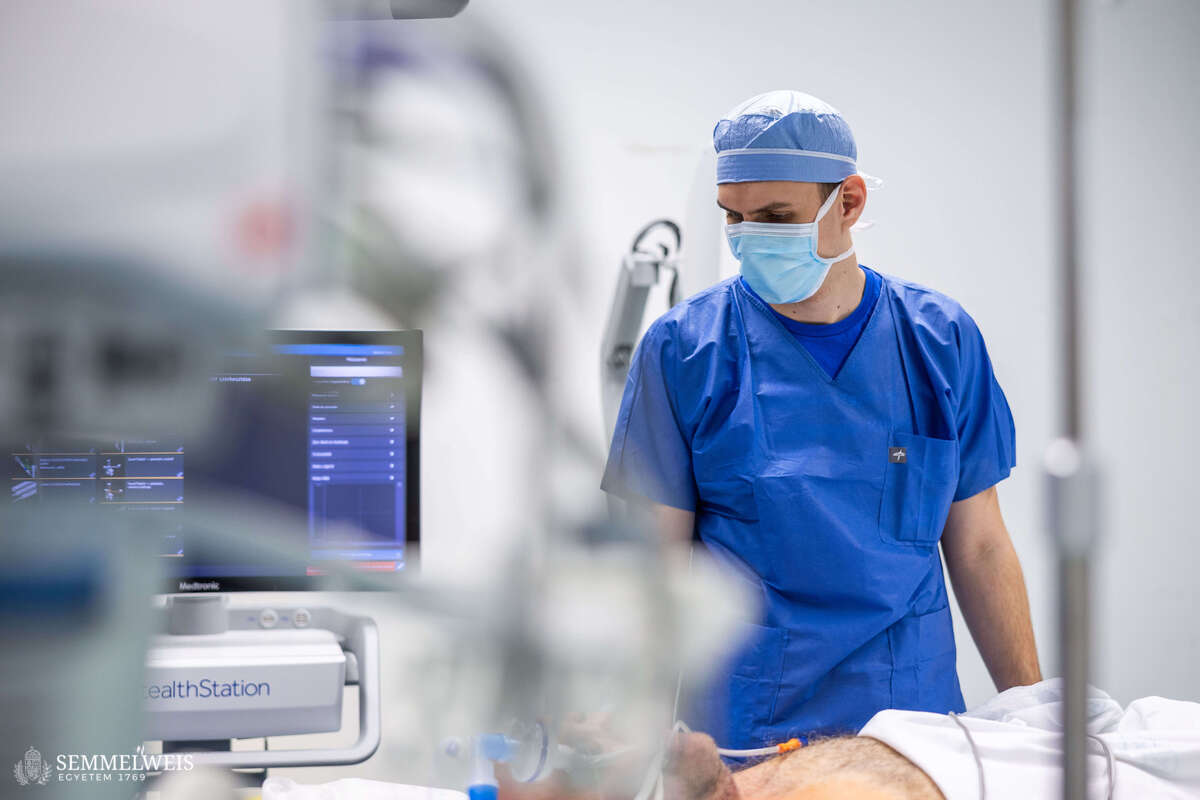
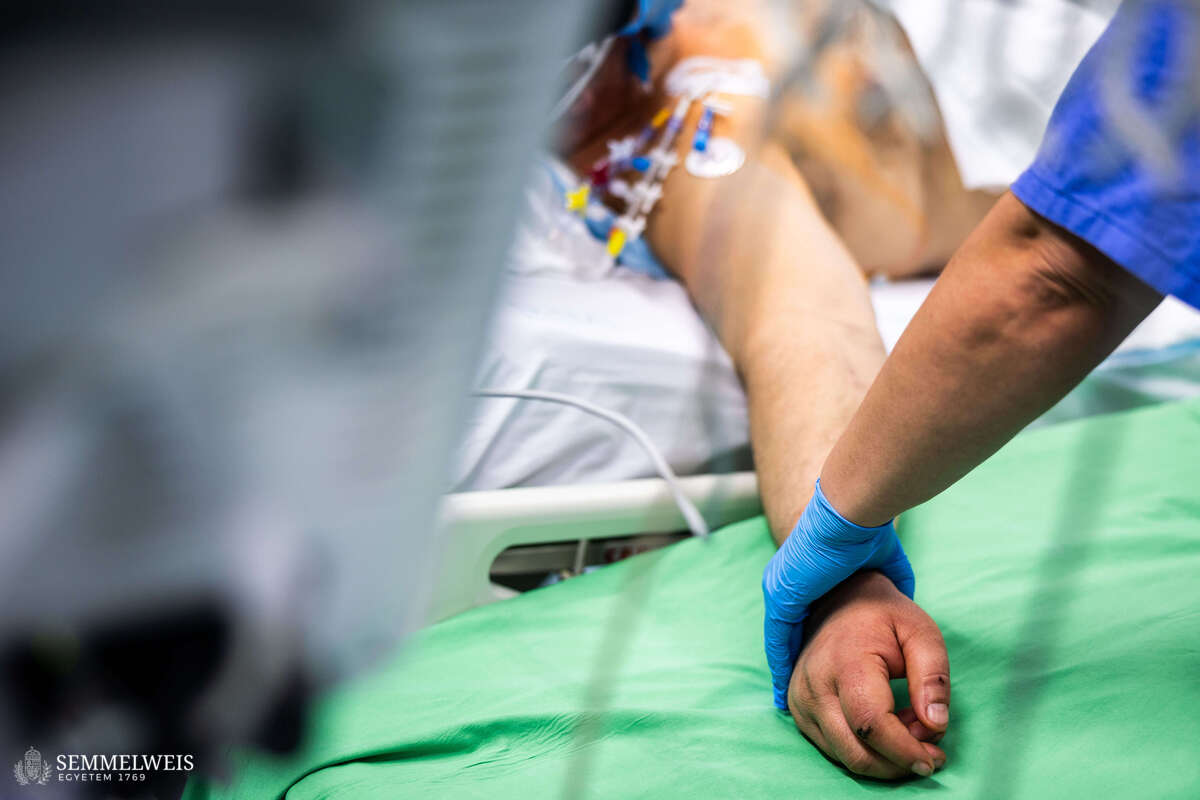
Moving patients between the operating room and the pre-operative holding area is also the responsibility of operating room assistants, so they get a taste of communicating with patients, who often need reassuring words before surgery, Csongor explains.
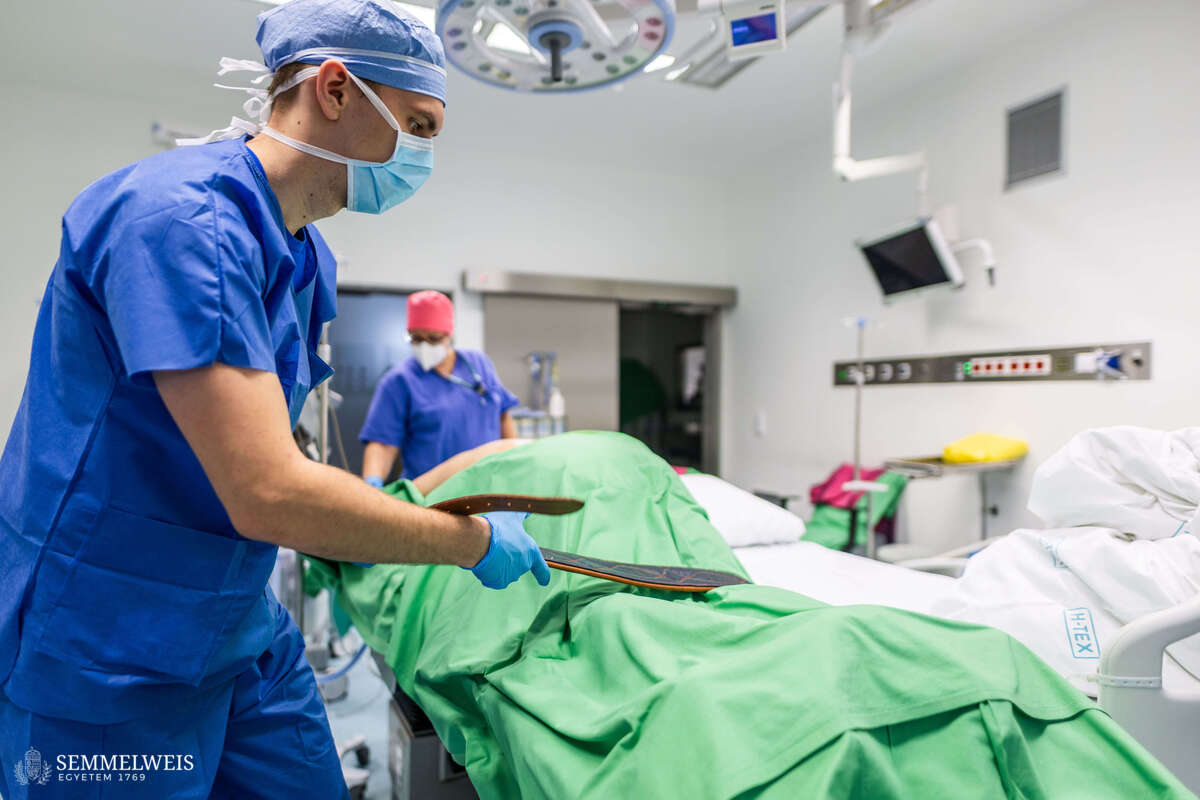
Csongor emphasizes that clinical work is easily compatible with pursuing your studies. When planning work schedules, the student’s academic obligations are taken into account. Work is performed in 12-hour shifts, totaling 24, 48, or 72 hours per month. The hours worked can be credited toward certain practical training courses and count toward future healthcare service employment.

“In trauma care, staff members face very serious cases day after day, so it’s important to have opportunities for relaxation,” Csongor adds. In his free time, he regularly plays tennis and goes jogging, but he also enjoys reading and cooking.

Eszter Keresztes
Translation: Dr. Balázs Csizmadia
Photos by Bálint Barta – Semmelweis University