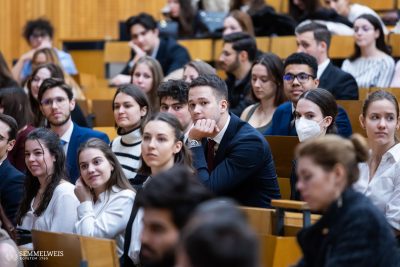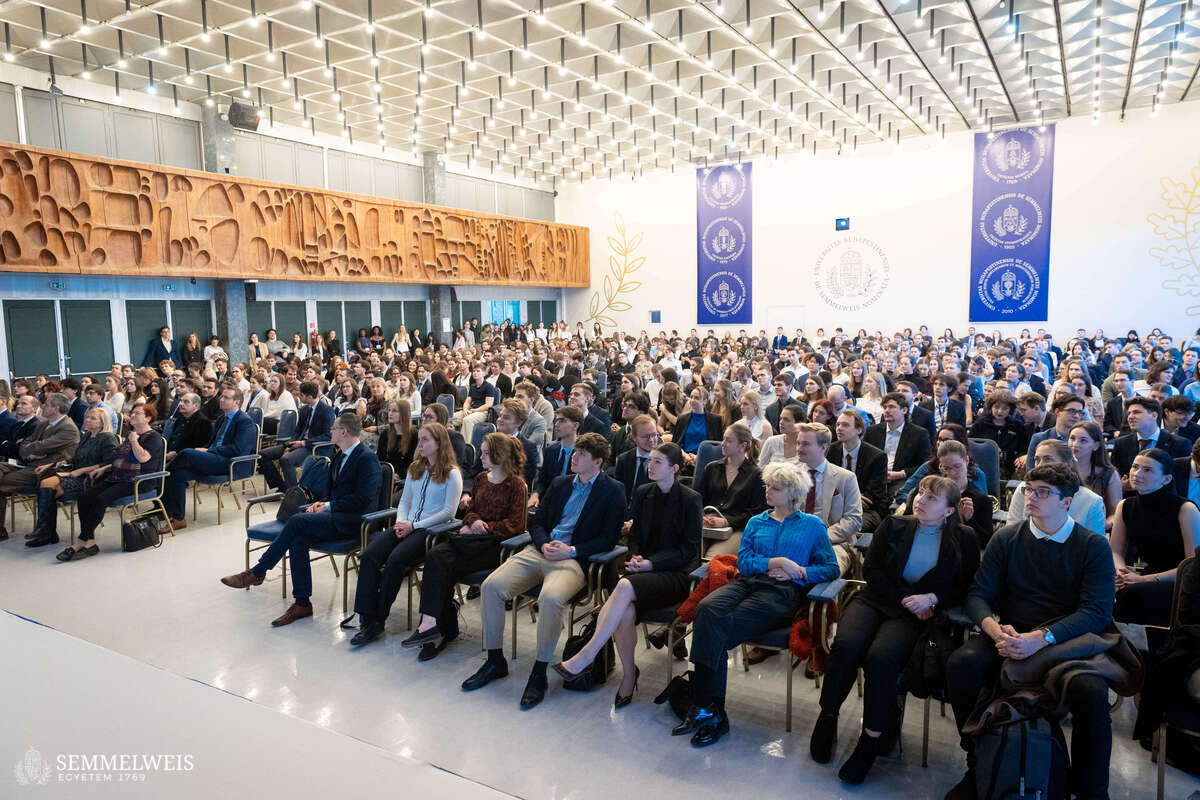
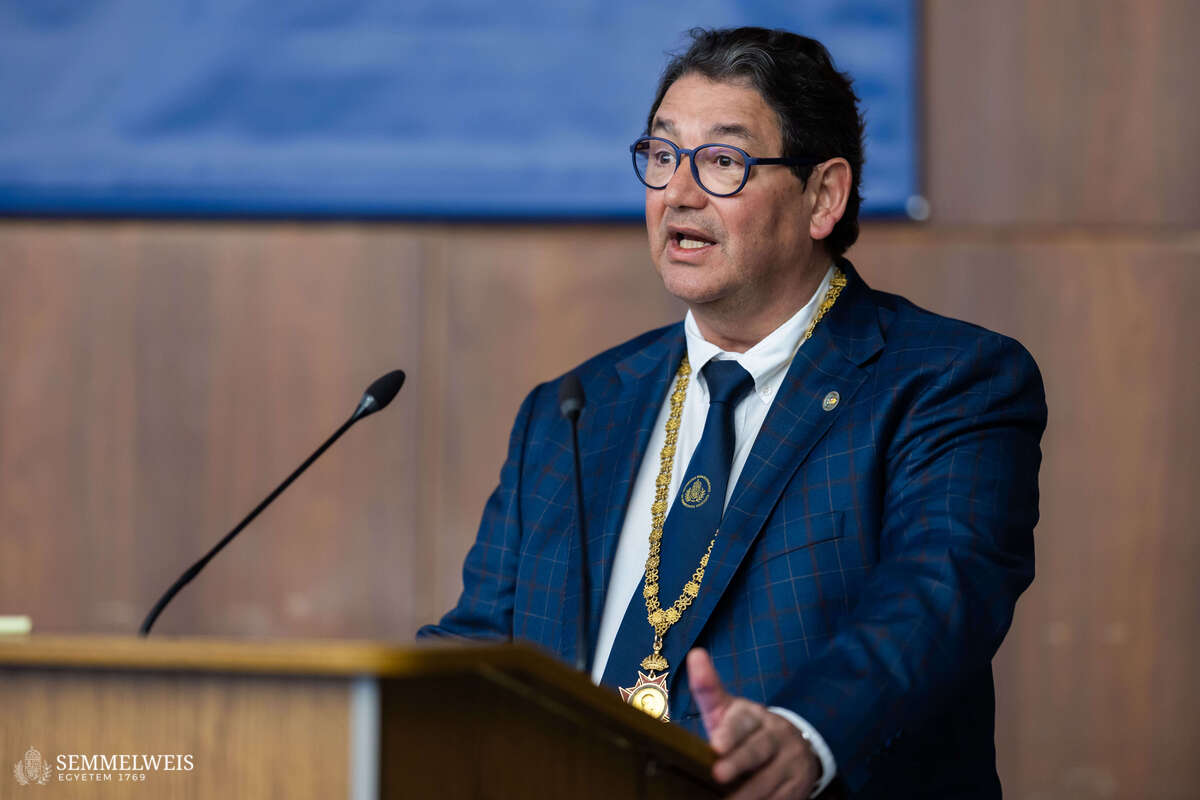
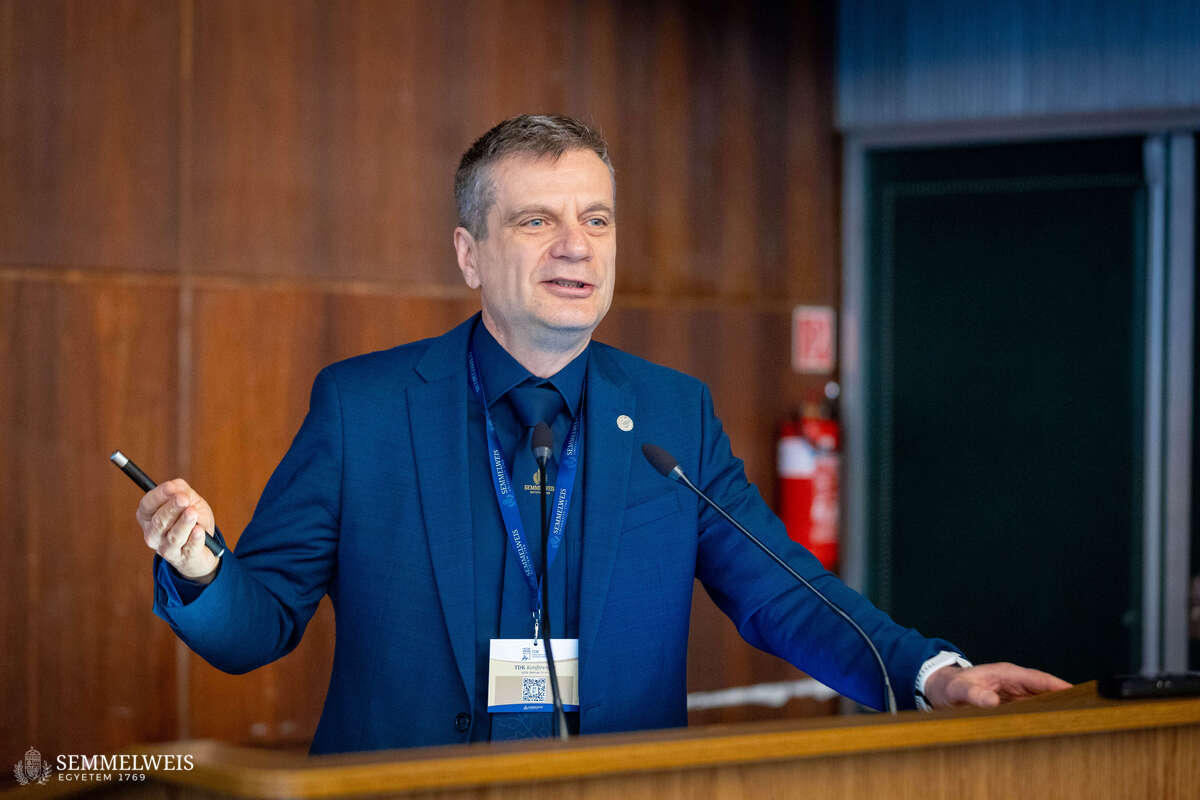
“The Students’ Scientific Conference is a true celebration, acknowledging outstanding students and mentors who attract talented young people like magnets to build workshops. It is a source of pride and joy that the popularity of TDK is growing, and this year our students from the entire Semmelweis Community have submitted more presentations than ever before,” said Rector Dr. Béla Merkely in his opening remarks. He emphasized that supporting talented individuals had been one of the noblest traditions at Semmelweis University throughout its over 250-year history. He added that talent management also contributed significantly to enhancing the institution’s excellence, as reflected in its position in higher education rankings.
As rector, clinic director, and vice-chair of the standing committee on talent development at the Hungarian Rectors’ Conference, I am committed to ensuring that young people are given every opportunity to grow and develop, and that Semmelweis University serves as a true incubator for talent at every level. – Dr. Béla Merkely
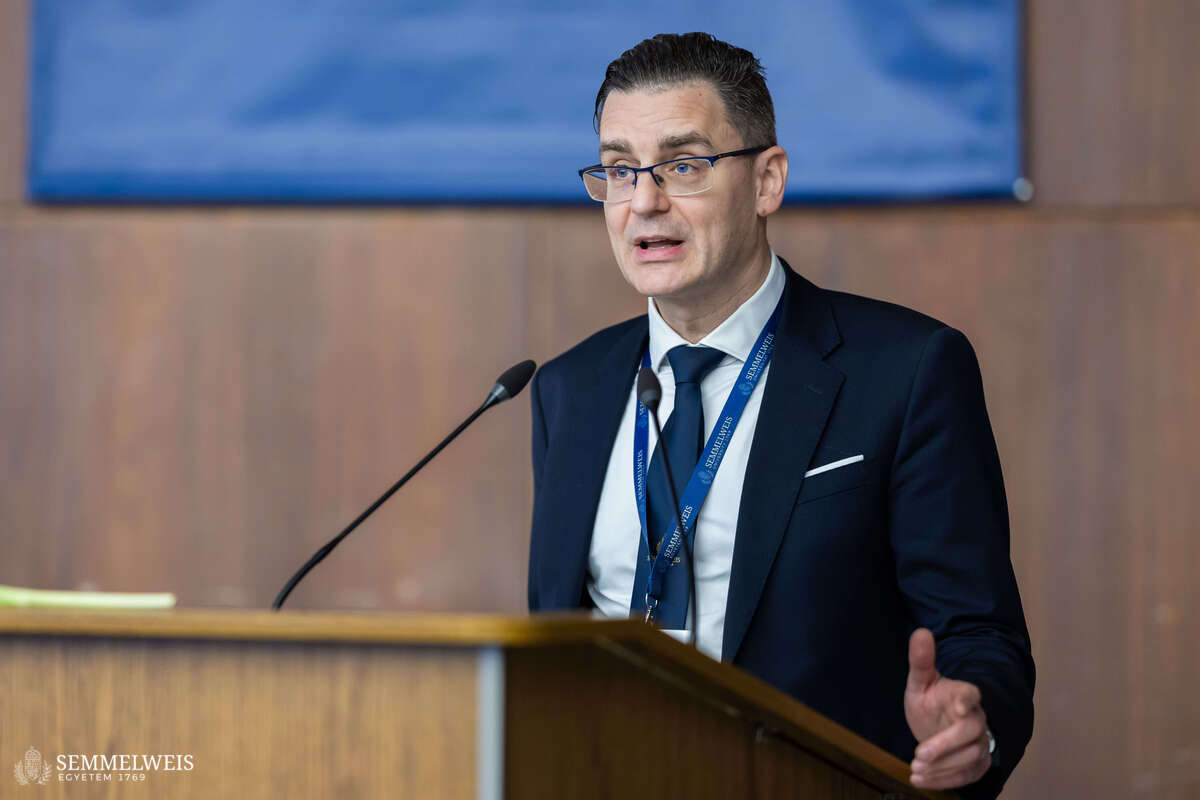
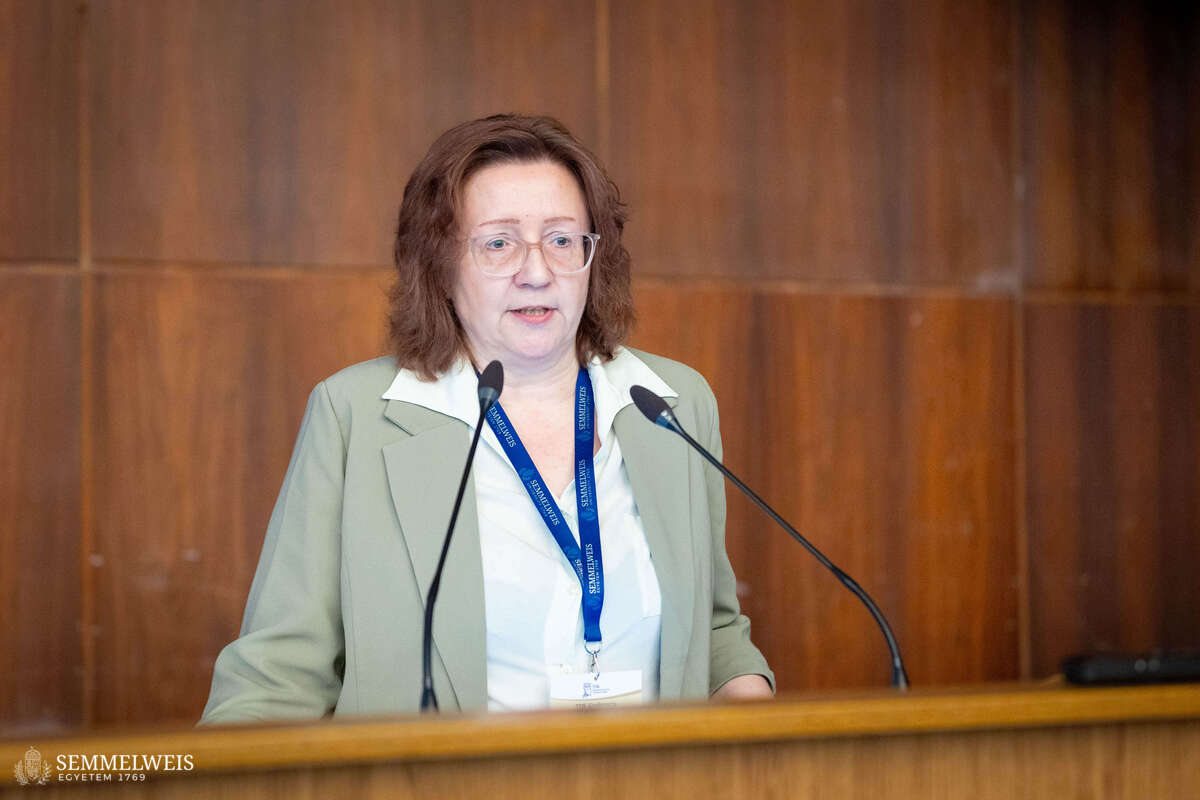
“This conference is not just a series of lectures, but an intellectual workshop, a platform where data is interpreted and transformed into knowledge, and where the future of science is built. I am confident that TDK is one of the most important forums and cradles of higher education,” emphasized Dr. Attila Szijártó, President of the Students’ Scientific Association (TDT) at Semmelweis University, in his welcome speech. He highlighted that a record number of 670 presentations had been submitted to the conference, which had been evaluated by some 70 committees – meaning that the conference rivaled the scale of a smaller European international congress. In his words, the relationship between mentor and mentee was not just hierarchical, it was also based on shared thinking and a joint search for the way forward. During this process, professional rigor, intellectual humility, and ethical responsibility were passed on.
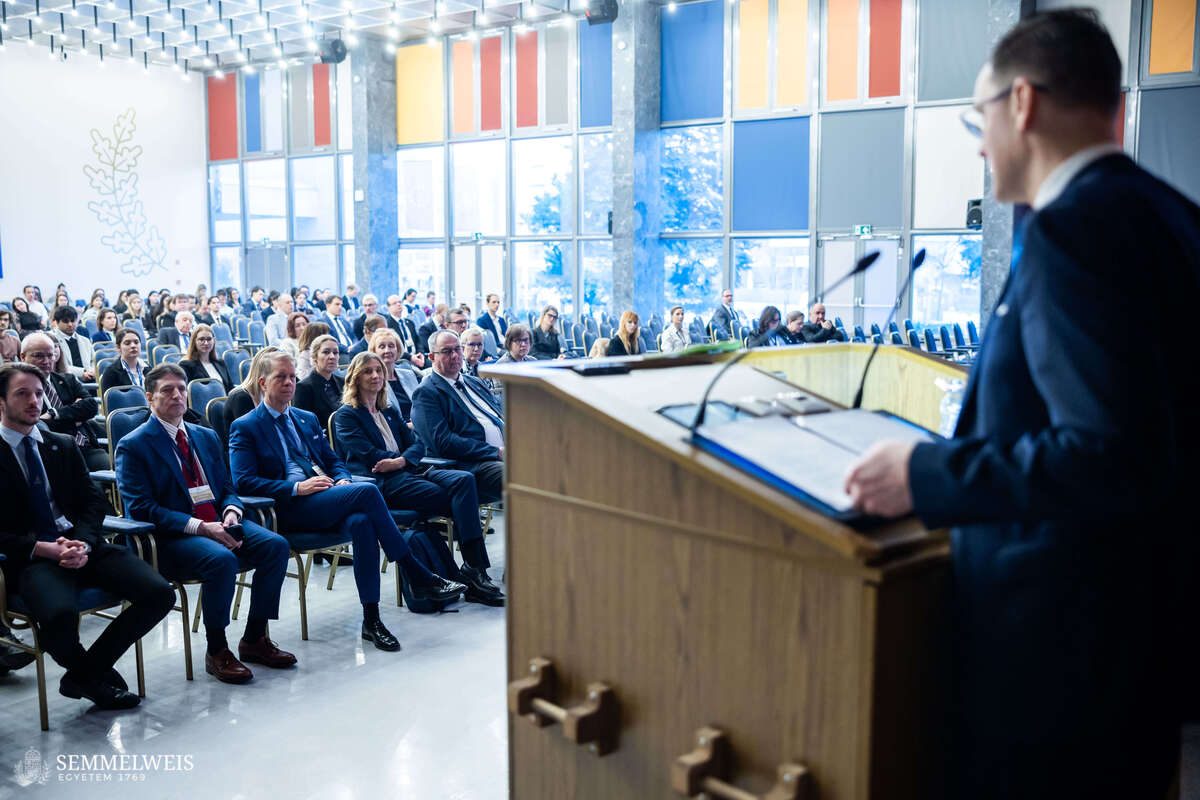
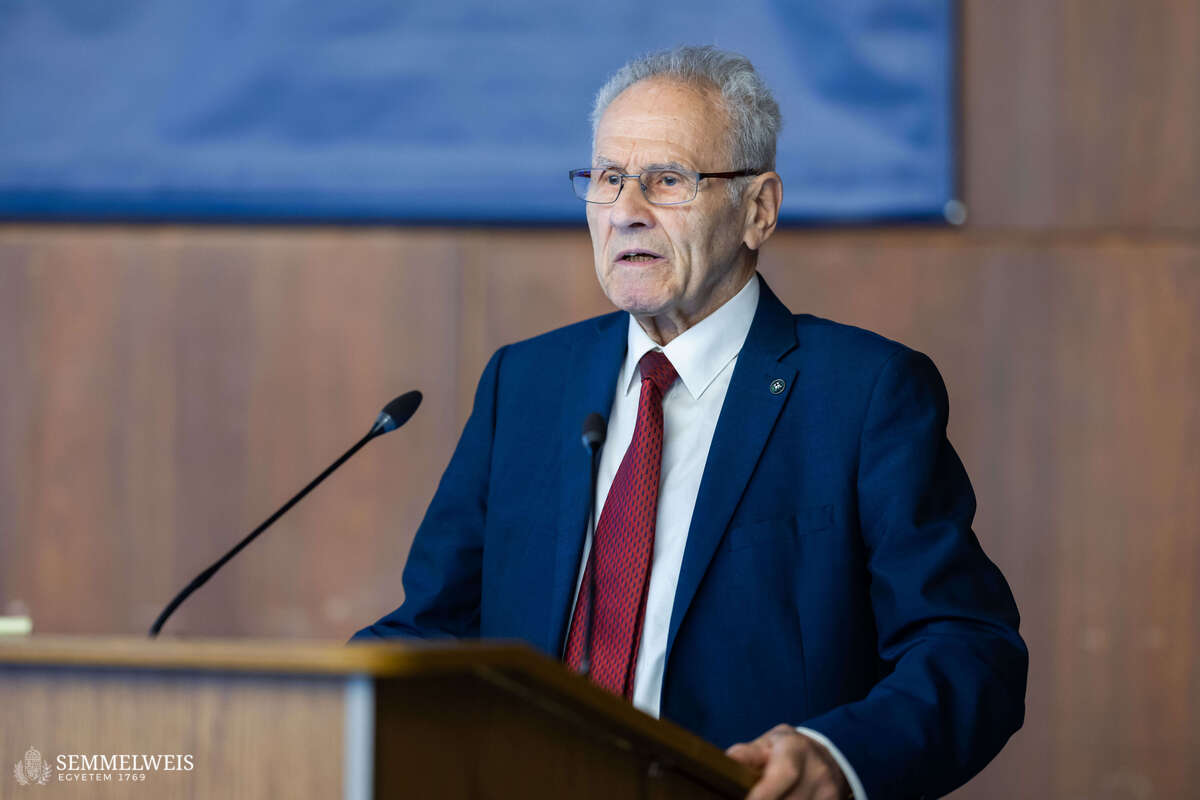
Dr. László Mátyus, President of the National Association for Student Research (OTDT), said that it was a particular pleasure to have more than 100 international students presenting at this year’s conference. He encouraged students and their mentors to aim for even higher numbers of presentations at next year’s TDK conference.
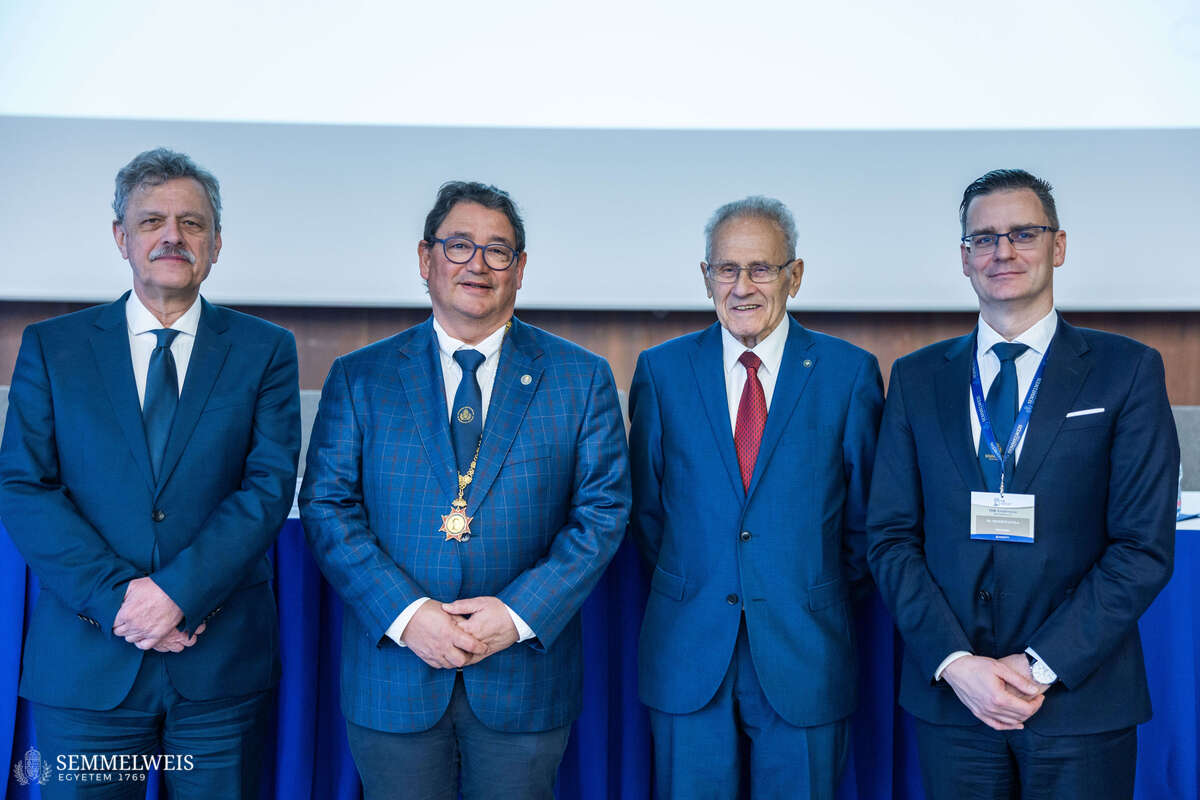
“If I should name a person in Hungary who has been exemplary in their TDK activities, first as a student and then as a mentor to students, it would be Dr. Béla Merkely,” said Dr. László Mátyus, as he presented the rector of Semmelweis University with the OTDT’s most prestigious award, the Honoris Causa Pro Scientia Gold Medal. This award is bestowed on outstanding professors, researchers, and public figures who have set an example in supporting student research in Hungarian higher education institutions and who have done much to promote the public image and professional recognition of students as well as the teachers and researchers supporting and collaborating with them.
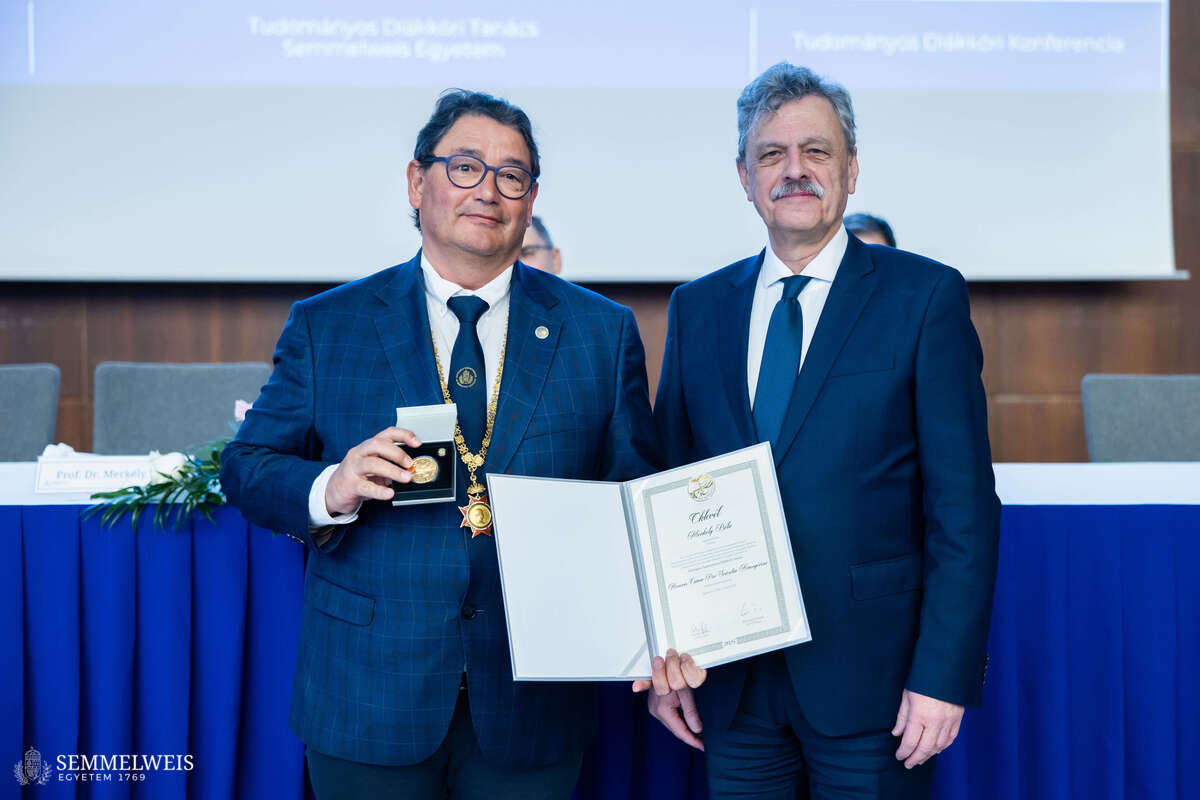 In the laudatory speech, Dr. László Mátyus emphasized that Dr. Béla Merkely had won four first prizes as a TDK student and then had supervised more than 50 TDK projects in the following decades. In 2007, he was awarded the Pro Scientia Master Tutor Gold Medal. He served as the secretary of the OTDT for three years, and subsequently supported talent development for around 10 years as the president of the TDT at Semmelweis University. He was vice-chairman of the OTDT Committee for Medical and Health Sciences for 10 years, during which time, on his initiative, the quota for submissions to the OTDK in this field was doubled. During his career, he has won every award that the OTDT has to offer.
This year marked the 15th edition of the Semmelweis International Students’ Conference online event, which was opened by Dr. Alán Alpár, Vice-Rector for International Studies. Speakers from Semmelweis University, as well as universities on the continent and overseas, gave 33 presentations in five sections on a wide range of topics in basic and clinical sciences. Click HERE for the abstracts of the presentations and HERE for the list of awardees.
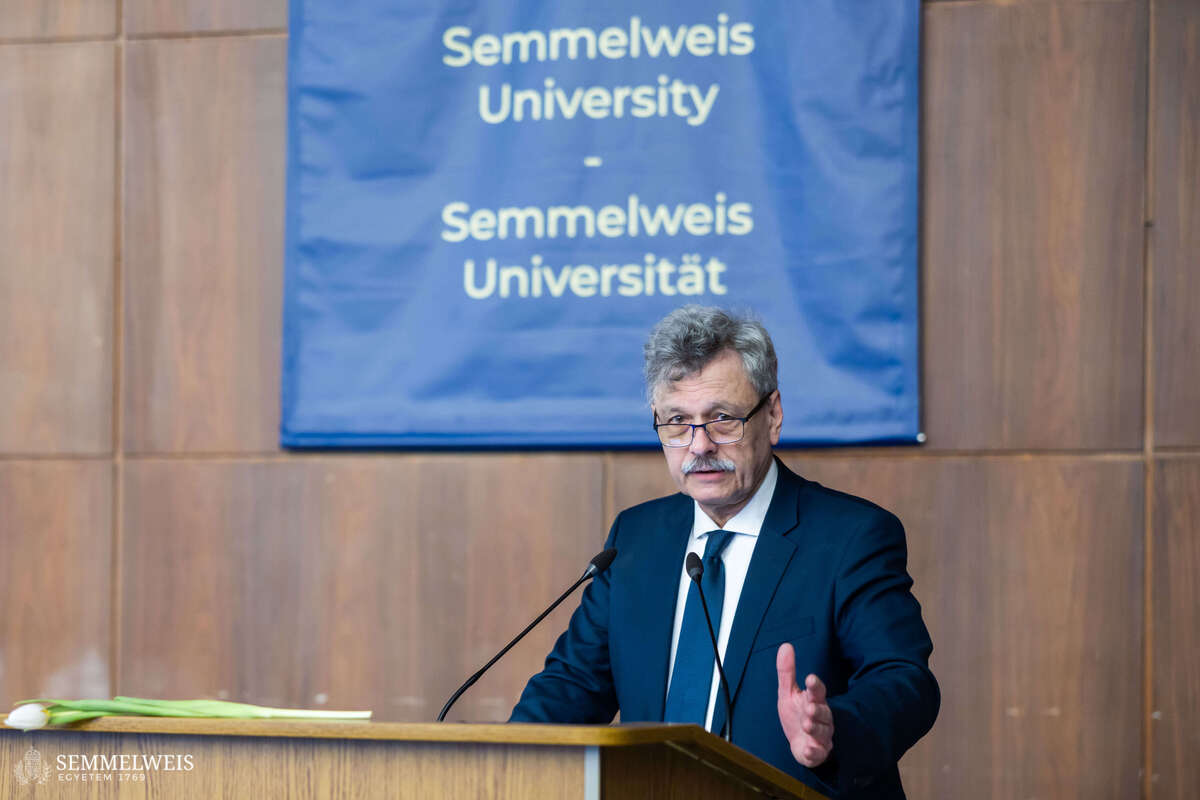
In his welcome address, Dr. Péter Szendrő, President Emeritus of OTDT, emphasized that the most beautiful aspect of the relationship between mentor and student was that they both learned and benefited from their collaboration. He explained that the mentor gained youthful energy and the student gained wisdom.
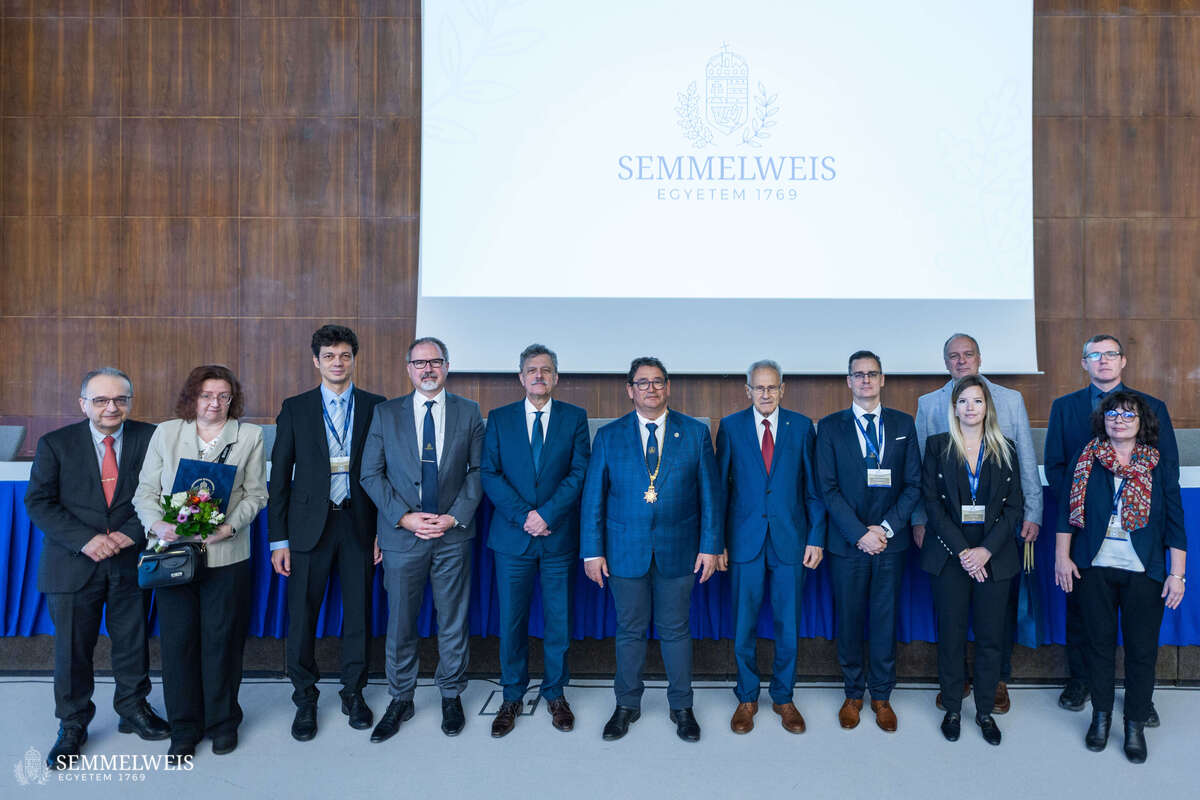
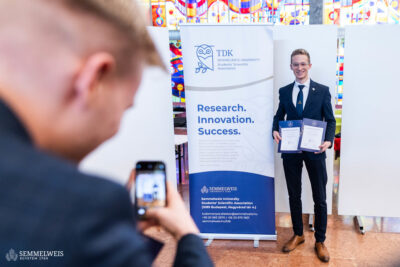
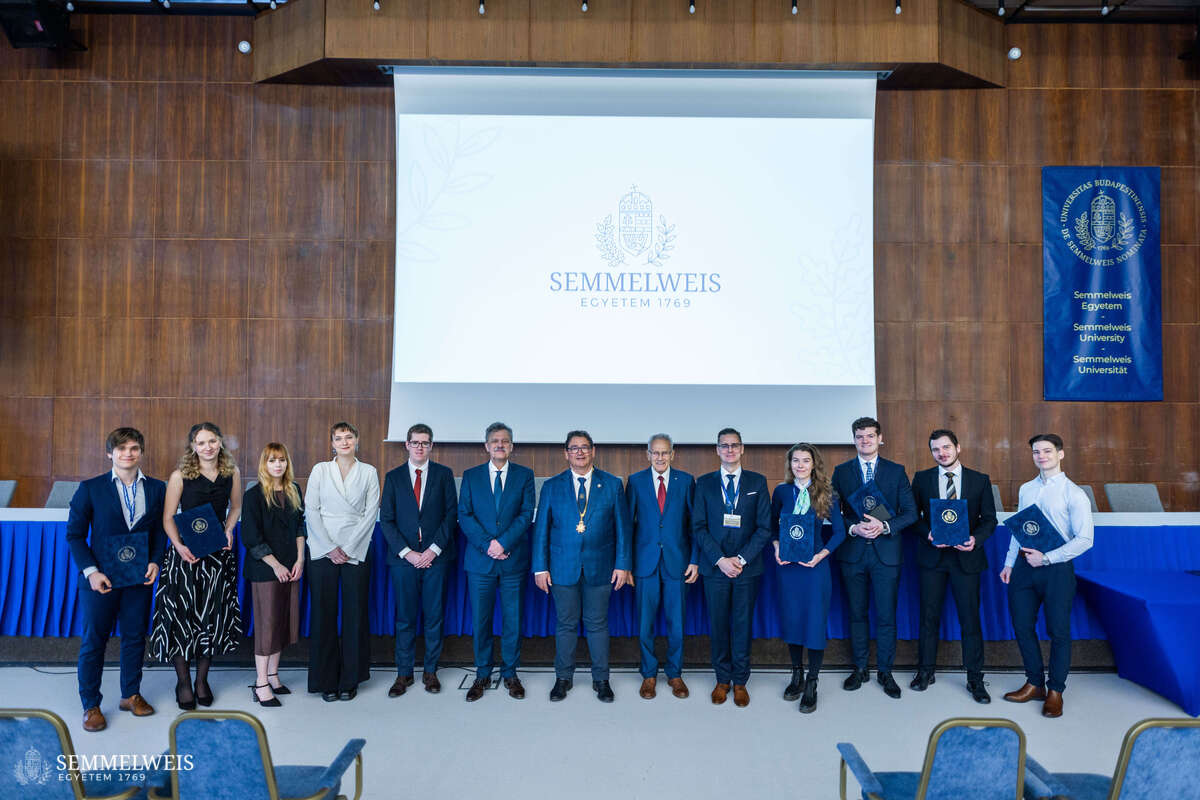
In keeping with tradition, the opening ceremony continued with acknowledgements. Rector Dr. Béla Merkely and Dr. Attila Szijártó presented a certificate of appreciation to the representative of Gedeon Richter Plc. for their support in organizing the TDK conferences. Following this, the Outstanding TDK Educator, Outstanding TDK Student, and Best First-Authored Publication Awards were presented.
Outstanding TDK Educators (2025):
- Dr. Róbert Debreczeni, Assistant Professor, Faculty of Medicine, Department of Neurology
- Dr. Balázs Enyedi, Associate Professor, Faculty of Medicine, Department of Physiology
- Dr. Zoltán Giricz, Research Professor, Faculty of Medicine, Department of Pharmacology and
- Pharmacotherapy
- Dr. Hargita Hegyesi, Associate Professor, Faculty of Medicine, Institute of Genetics, Cell and
- Immunobiology
- Dr. Kolev Kraszimir, University Professor, Faculty of Medicine, Department of Biochemistry
- Dr. János Nemcsik, Associate Professor, Faculty of Medicine, Department of Family Medicine
- Dr. Nóra Sydó, Assistant Professor, Faculty of Medicine, Városmajor Heart and Vascular Center
- Dr. Mária Szekeres, College Professor, Faculty of Health Sciences, Department of Morphology and Physiology
- Dr. Lilla Tamási, University Professor, Faculty of Medicine, Department of Pulmonology
- Dr. Endre Zima, Faculty of Medicine, Városmajor Heart and Vascular Center and Department of Anesthesiology and Perioperative Care
Outstanding TDK Students (2025):
- Dr. Alexandra Hegyi
- Dr. Márk Havasi
- Karolina Katarzyna Kolodziejska
- Dr. János Domonkos Stubnya
- Dr. Adrián Orosz
- Kornél Molnár
- Dr. Zoltán Horváth
- Dr. Márk Kerestély
- Dr. Lilla Dorottya Kóró
- Andrea Fekete
- Dr. Réka Zsófia Sebestény
- Bence Bojtor
Best First-Authored Publications (2025):
- Máté Csepi
- Dr. Zoltán Horváth
- Péter Puskás
- Zsombor Visky
This year, for the first time, the Doctoral Students’ Union (DÖK) presented a special award to Dr. Lili Száraz as Outstanding Doctoral Student TDK Supervisor. This newly established award recognizes PhD students who have achieved outstanding academic success and who embody the spirit of the university through their work and supervisory activities. Dr. Patrik Kreuter, President, also presented the Special Award for Outstanding TDK to sixth-year medical student Sylvia Spiesshofer.
Gallery

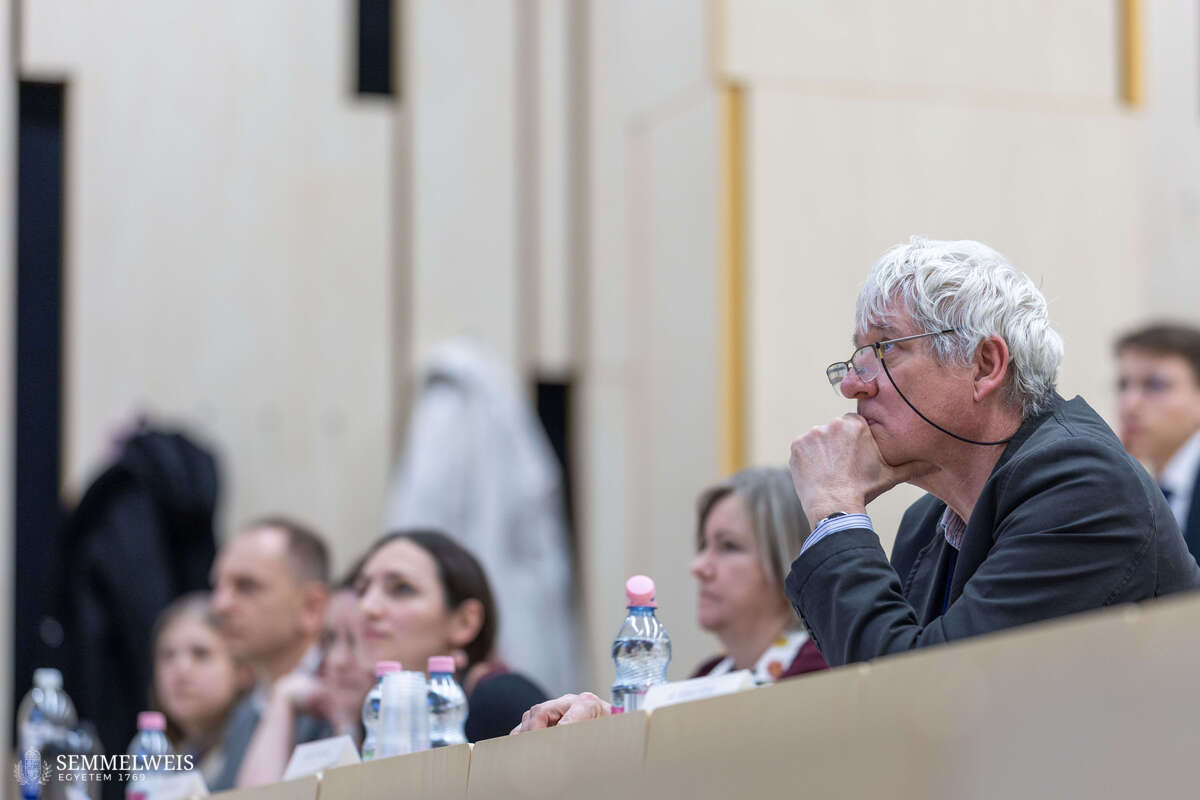
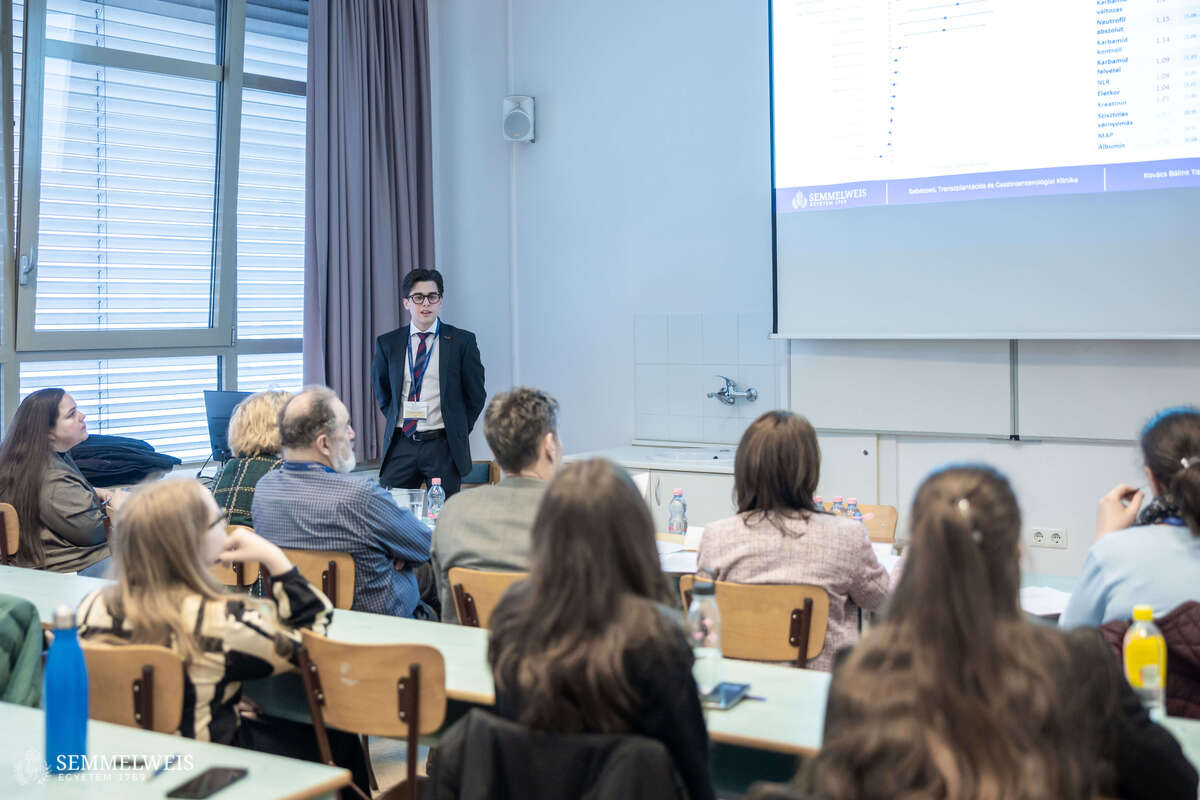
Closing ceremony
“We have come to the end of an excellent, high-quality scientific conference,” concluded Dr. Attila Szijártó, President of TDT, at the closing ceremony. As he explained, participants not only had to focus on one task, i.e. presenting synthesized knowledge, but also had to defend their thesis in the form of a presentation, supported by reliable data, arguing credibly, and facing debates, thus preparing themselves for real conference presentations.
In his talk, Dr. Péter Ferdinandy, Vice-Rector for Science and Innovation at Semmelweis University, emphasized that TDK work was an excellent foundation for a scientific career. Following this, the most dedicated and outstanding students may participate in the parallel graduate and PhD (MD-PhD) program offered by the Doctoral College, which can reduce the time required to obtain a degree by two years. He also pointed out that Semmelweis University offered one of the most flexible doctoral training programs with its Translational Medicine PhD Program, which combined residency with doctoral training.
The Cooperative Doctoral Program is based on industrial connections and is open to part and full-time employees. Dr. Péter Ferdinandy also touched on the significance of individual degree programs and research excellence scholarships. As he emphasized, a doctoral degree served as a passport to the world of science, entitling young researchers to publish and submit grant applications. He also reminded the audience that scientific knowledge published in academic journals should be commercialized so that medicines, medical devices, and software could be utilized in patient care, generating not only economic but also social benefits. The university also supports young researchers in ensuring the intellectual property protection essential for this, and accordingly, the abstracts protected in this way were presented in a closed session at the Students’ Scientific Conference.
The list of this year’s TDK award winners can be found HERE (in Hungarian).
Melinda Katalin Kiss, Judit Dőtsch
Translation: Judit Dőtsch
Photos by Bálint Barta, Boglárka Zellei – Semmelweis University