Behind the numbers lie human destinies and hard decisions that determine many lives. Such is the story of a married couple, Dr. Katalin Lakatos and Károly Lakatos, which clearly illustrates that living donor kidney transplantation not only makes it possible to avoid dialysis, but can also ensure a good quality of life in the long term, while preserving the donor’s health. Katalin’s condition – genetically-induced polycystic kidney disease – was diagnosed in her early adulthood. Its progression was slow for a long time but gradually accelerated over the years. Severe hypertension during her pregnancy was also a symptom of worsening kidney function, after which she lived her daily life under regular nephrological care.

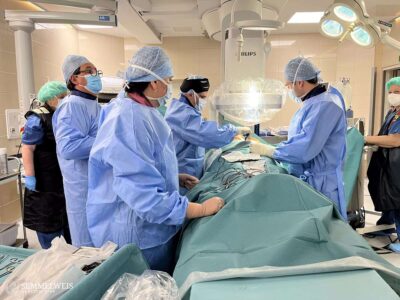
Her condition continued to deteriorate, and a mandatory fit-for-duty exam revealed her end-stage renal disease: Her eGFR value had dropped to 20. She managed to avoid dialysis by following a strict diet and undergoing regular medical checkups. The long-term solution was a living donor kidney transplant: Her husband, Károly Lakatos, proved to be a suitable donor. After several months of testing, the surgery was performed in May 2025 – on their son’s ninth birthday – and was a success: The transplanted kidney began functioning immediately.
Dr. Katalin Lakatos’ kidney function has improved significantly. Her lab values are currently stable, and she is living and working under regular supervision. She requires immunosuppressive treatment, while her husband recovered without complications and returned to work and competitive sports quickly. Katalin and Károly also volunteer to support the activities of transplant foundations. Their goal is to provide as much help and support as possible to their peers.
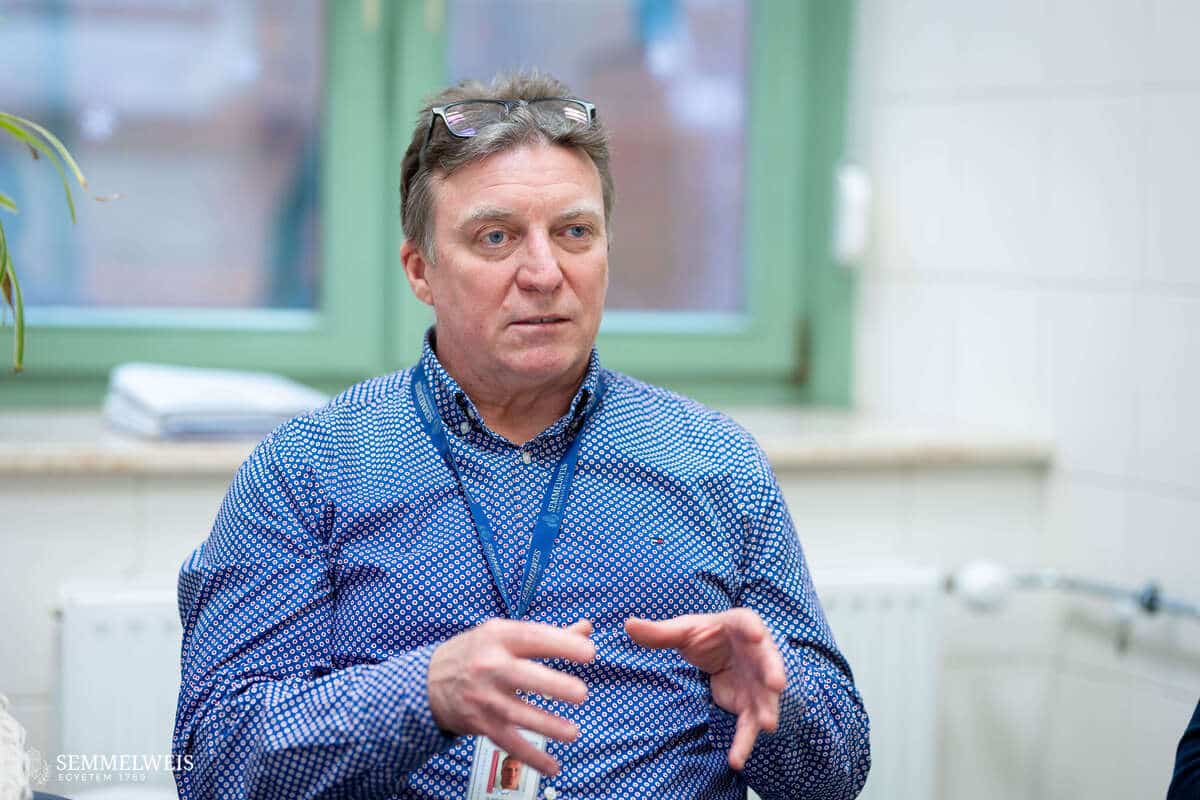 The increase in the number of living donor kidney transplants is the result of several factors, said Dr. János Balázs Kovács, surgeon and Assistant Professor at STéG. The social acceptance of living donations has noticeably increased. The number of applicants increased significantly in the past decade but has stagnated at this higher level for several years. Approximately 100-110 donor-recipient pairs are examined simultaneously each year, which allows the surgical program to run continuously even if some pairs drop out of the process for medical reasons. This means that surgeries are no longer unpredictable. Instead, an average of one to two procedures can be scheduled per week, if necessary.
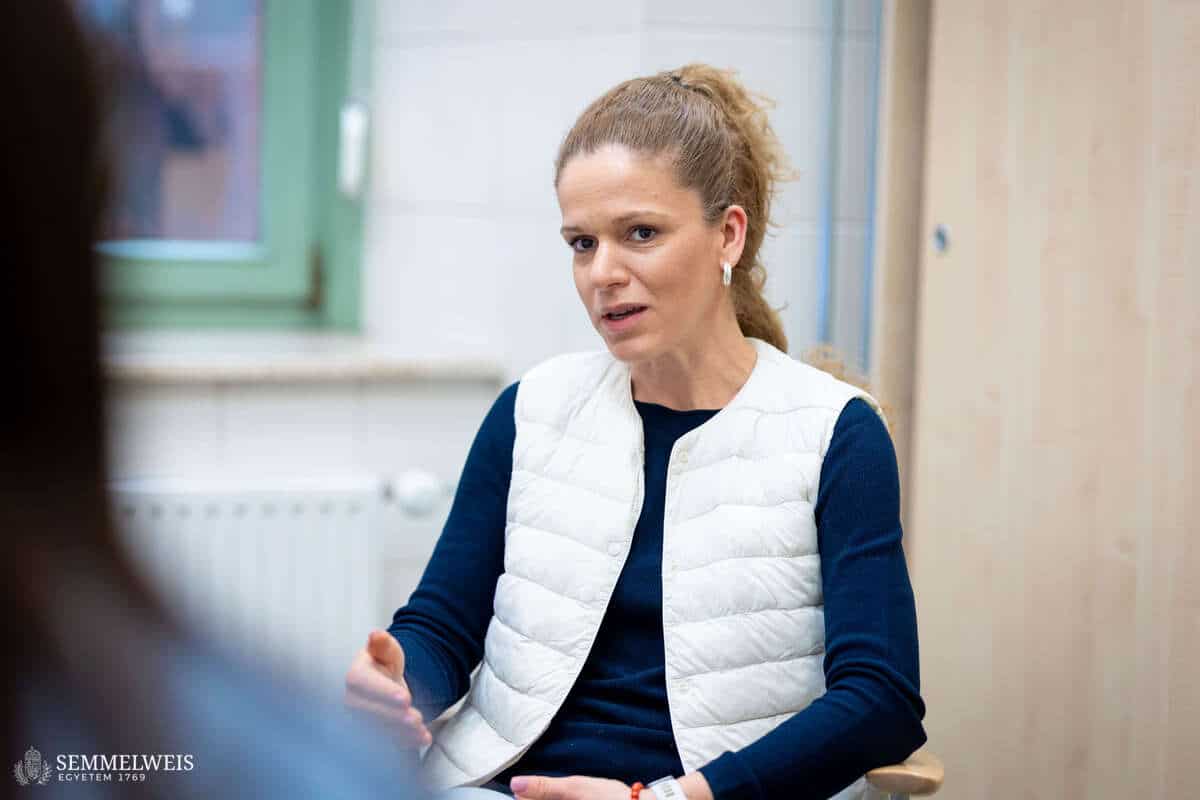 Donor safety is the most important principle in the examination process, explained Dr. Orsolya Cseprekál, Assistant Professor and specialist in internal medicine and nephrology at STéG. If someone is not suitable as a donor, this is most often due to contraindications related to internal medicine or anesthesiology, or less frequently to surgery. The nephrologist emphasized that donation can only take place if the risk of unacceptable damage to the donor’s health does not increase even in the long term. Serious metabolic disorders (e.g., severe diabetes) or damage to the organ to be transplanted are excluding factors, while in cases of minimal metabolic abnormalities where no damage to the target organ can be detected, donation can be safely performed.
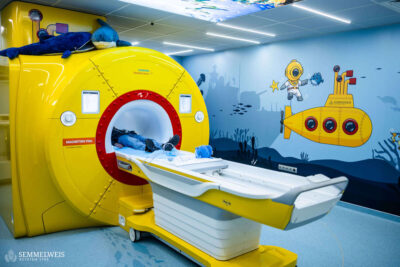
The safety and effectiveness of the transplant program have been significantly enhanced by the regular use of modern imaging and surgical planning, noted Dr. János Balázs Kovács. Each living donor procedure is preceded by a CT angiography scan, which is converted into high-resolution, three-dimensional (3D) reconstructions that are used to model the organ. These models enable precise surgical planning and preliminary mapping of vascular structures and anatomical variations, eliminating the possibility of unexpected anatomical variations during surgery.
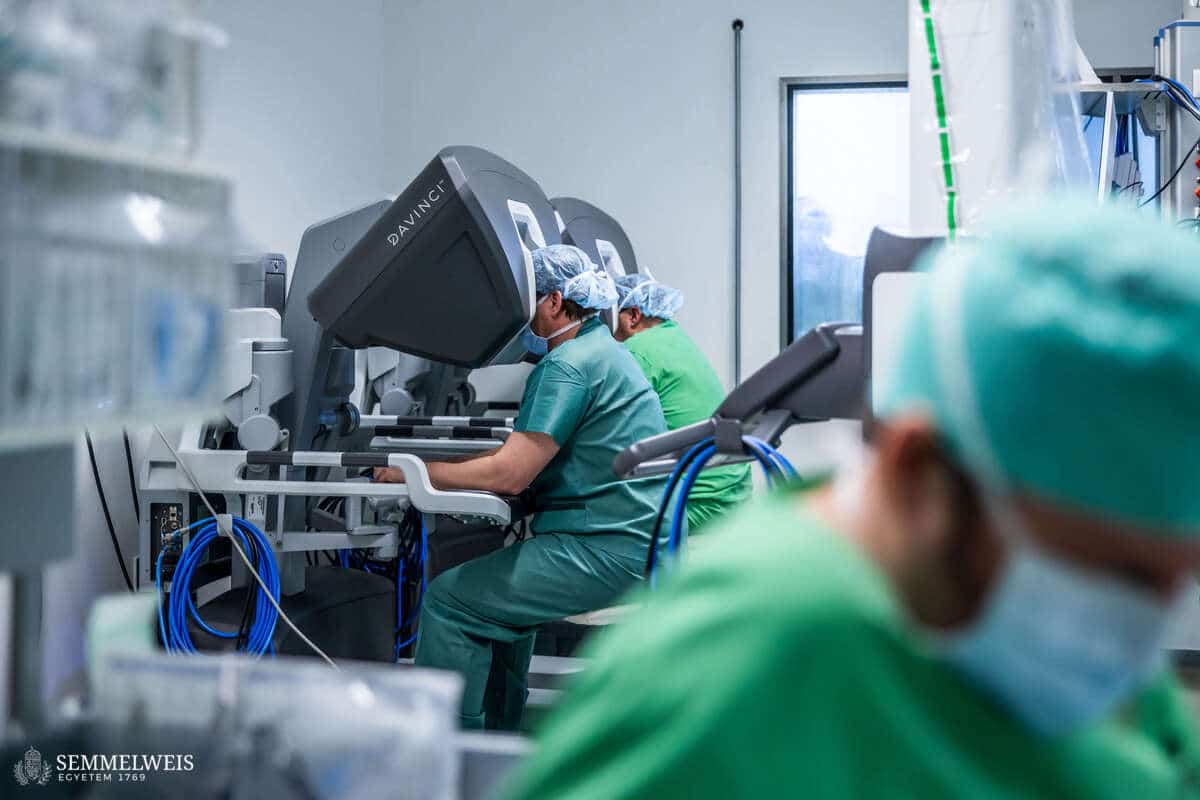
Another important milestone in the development of surgical technology is the emergence of robot-assisted surgery, added Dr. János Balázs Kovács. Within the department’s transplant team, a specially trained surgeon, Associate Professor Dr. László Piros, is responsible for performing the procedures. The da Vinci Surgical System has been put to use on multiple occasions over the past year to extract donor kidneys. Although laparoscopic techniques remain the gold standard, robotic surgery offers surgeons greater precision, better visualization, and more ergonomic working conditions, thereby indirectly increasing donor safety and the predictability of the procedure, according to Dr. János Balázs Kovács.
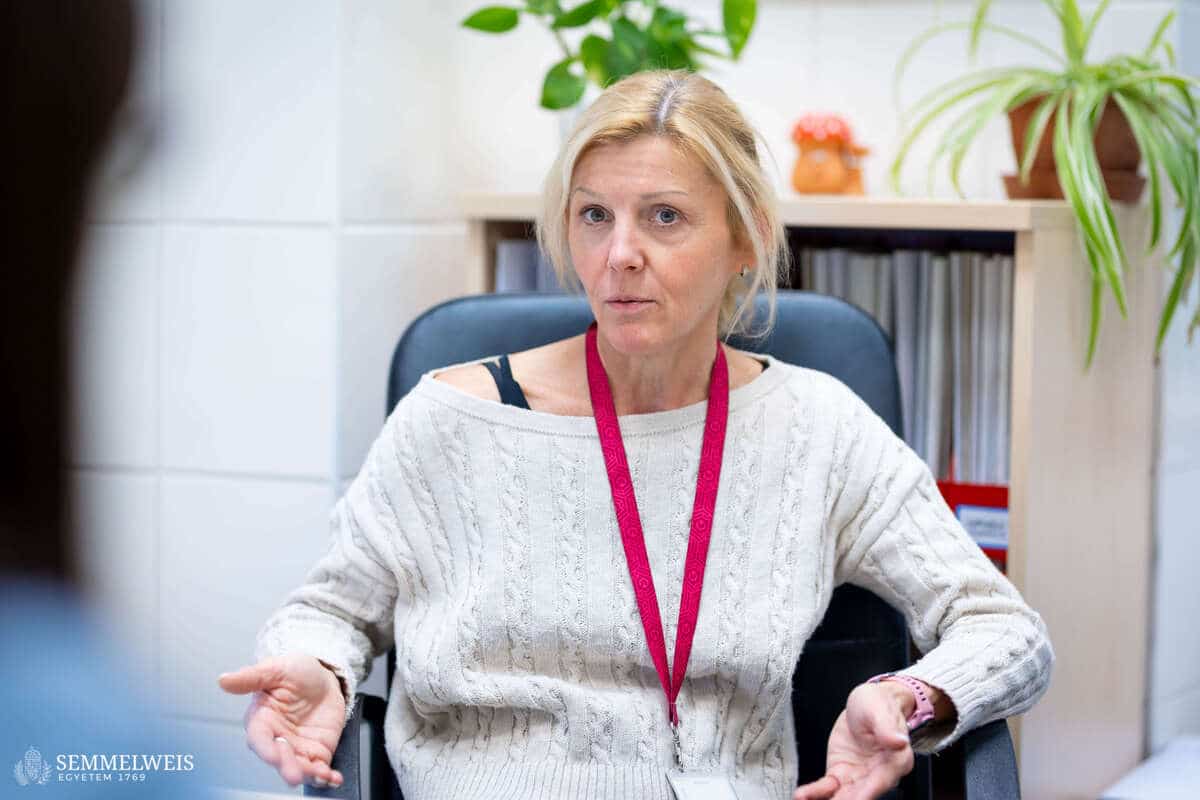 Patient coordinator Anikó Maléth emphasized that one of the keys to success and the increasing number of living donor transplants is a well-organized patient journey. Tests are conducted over the course of four to five visits. Any additional examinations are performed close to the patient’s place of residence. This is all the more important because donors are healthy, active people for whom every appointment means time off work.
The outcome of living donor kidney transplantation is largely influenced by the close cooperation between surgeons, nephrologists, anesthesiologists, radiologists, coordinators, and nurses, right from the examination of the donor and recipient to post-operative care. This teamwork ensures optimal timing, rapid flow of information, and minimization of complications, which are critical factors in the success of the procedure. The concerted effort of multiple disciplines improves the quality of the transplant process and increases patient survival rates.
Dr. János Balázs Kovács added that the launch of the kidney paired donation program could also contribute to the increase in the number of living donor transplants in Hungary. This provides an opportunity for immunologically incompatible donor-recipient pairs to obtain suitable organs through swap with other pairs, even with the participation of more than two pairs. The program is particularly valuable for patients who have been on the waiting list for a long time due to antibody-related barriers.
The experts agreed that the most important prerequisite for the further expansion of living donor transplantation was to strengthen public awareness. Patients rarely “ask” their relatives for organs; such offerings typically come from family members and friends. For this reason, it is crucial to raise public awareness of living donation – in nephrology clinics, dialysis centers, and among the wider public, including the media, concluded Dr. Orsolya Cseprekál.
Based on clinical experience and data from the research literature, living donor kidney transplantation is the best option for end-stage renal disease at any age: It provides a better quality of life and significantly longer survival than long-term dialysis. However, the success of the program depends on long-term follow-up, multidisciplinary teamwork, and adequate human resources, warned Dr. Orsolya Cseprekál, adding that the successful outcome of living donor transplants is the result of lifelong care.
Anna Miskolczi’s story is a good example of how it is possible to live life to the fullest after a transplant: The 14-year-old girl, who lives with a genetic kidney disease and has undergone a kidney transplant, has achieved domestic and international sporting successes with extraordinary perseverance. Her illness was diagnosed at the age of 11 during a sports pre-participation evaluation; she received a new kidney from her father, László Miskolczi, in February 2023. During the first post-op year, Anna was particularly prone to infection due to her immunosuppressive treatment, and during this period she had to be hospitalized several times due to various viral and bacterial infections. Once her condition stabilized, her weight and physical endurance started to improve, and with regular medical checkups, she was able to live an increasingly active life. Sport, which had been an important part of her life prior to her illness, remained so after her recovery and even took on a decisive role. Encouraged by communities and professionals supporting children who have undergone organ transplants, she took up athletics and swimming, initially in competitions organized for organ transplant recipients, and later among non-transplant individuals as well.
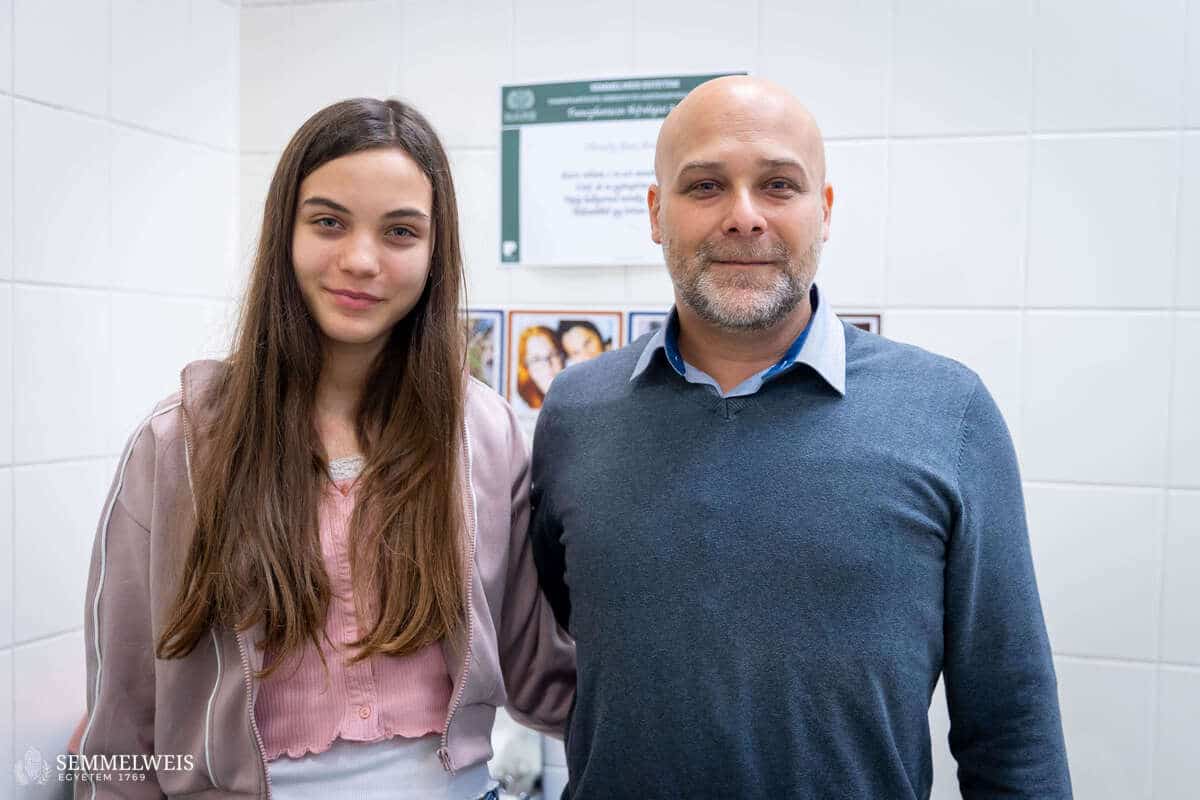
Anna’s results quickly began to stand out: She achieved success in county and national student competitions, then went on to win several titles at the 2025 World Transplant Games in Dresden. The athlete from Szolnok (seat of Jász-Nagykun-Szolnok county) won a gold medal in swimming and excelled at two events in athletics: She won the long jump with a world record of 474 centimeters for her age group and also finished first in the 100-meter sprint. Her performance has attracted international attention, earning her recognition as the most outstanding young athlete at the world games. Meanwhile, she is also successful on the domestic athletics scene, achieving podium finishes among non-transplant athletes as well, something she is particularly proud of.
Her father is her donor, coach, and mentor all rolled into one, supporting her in everything she does. Anna’s story proves that even after an organ transplant, it is possible to live a fulfilling and even extraordinary life – you can reach the top with a single kidney. László Miskolczi and his daughter are now actively involved in raising awareness of organ transplantation. Their goal is to use their personal example to help inform people and reduce uncertainty about transplantation.
Eszter Keresztes
Translation: Judit Szabados-Dőtsch
Photos by Boglárka Zellei, Bálint Barta – Semmelweis University; cover (illustration): Bálint Barta – Semmelweis University