The National Musculoskeletal Institute and the health center in Gödöllő have been integrated into the university.
A new organizational unit called the Department of Rheumatology and Immunology was established at Semmelweis University following the integration of the National Musculoskeletal Institute (OMINT) on March 1. As a result of the accession, the full spectrum of musculoskeletal care has become available at the university, and immunological care has been enhanced as well. Since September 1, the Tormay Károly Health Center has been operating under the name Semmelweis Health Center, Gödöllő (town in Central Hungary, near Budapest). The institution, which has a territorial service obligation covering more than 100,000 people, has since expanded its services to include ultrasound diagnostics, and patients now have faster access to laboratory test results. A comprehensive health prevention program has also been launched in Gödöllő, organized by the university.
The Városmajor Heart and Vascular Center can become a European supercenter
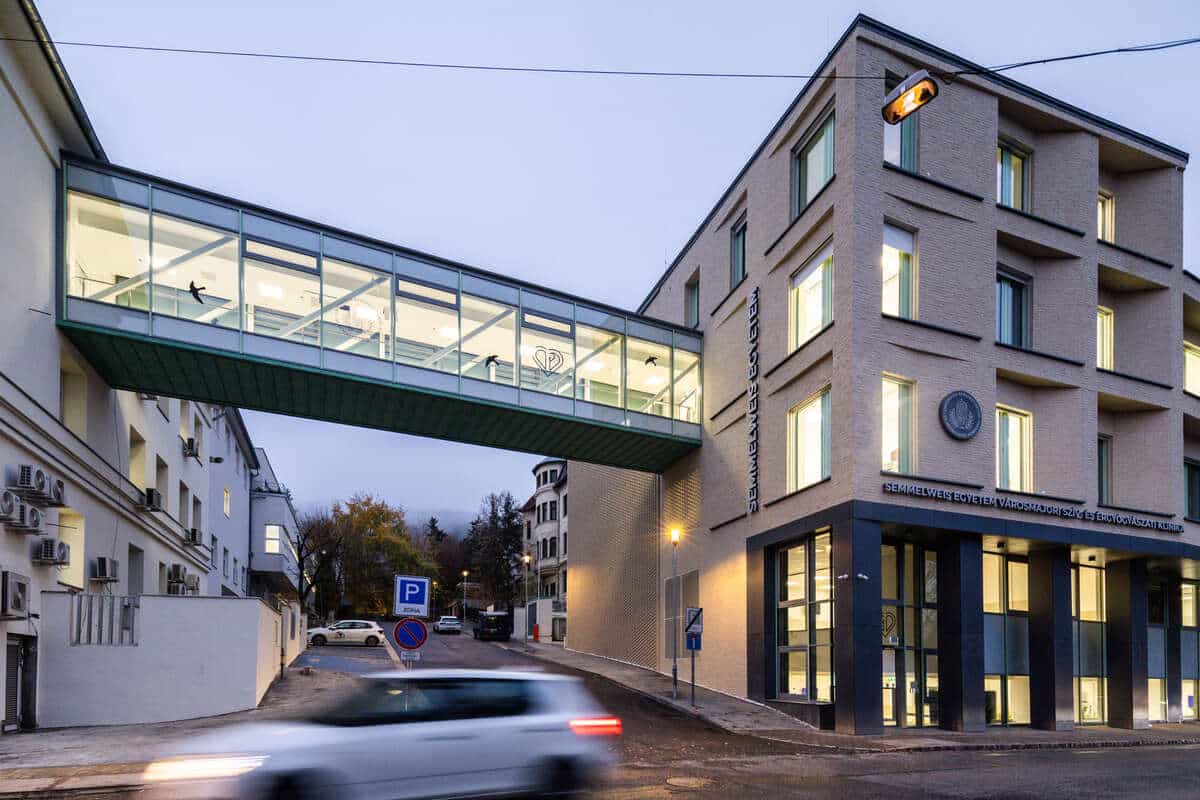
The new seven-story wing, which is connected to the main building at 68 Városmajor Street by a covered bridge, has expanded the floor area available for patient care, education, and research at the Városmajor Heart and Vascular Center by 50 percent. The institute celebrated the biggest development in its 113-year history with a ceremony: The HUF 9.1 billion investment can transform the clinic into a true European supercenter and the continent’s largest heart transplant center. A state-of-the-art photon-counting detector CT system suitable for cardiac examinations and the most advanced 1.5T magnetic resonance imaging (MRI) scanner of the market were handed over at a ceremony in the new wing of the clinic in December.
The world’s most advanced CT scanner was inaugurated at the Medical Imaging Center
The Siemens Naeotom Alpha.Prime photon-counting detector CT system allows the entire body of a trauma patient to be scanned in less than two seconds with low radiation exposure, allowing treatment and shock management to begin immediately. The world’s most advanced, state-of-the-art equipment was handed over on January 9, months before its world premiere, at Semmelweis University, where it is used specifically for the care of emergency and trauma patients requiring urgent intervention.
WHO Collaborating Centre for Healthy Ageing established at the university
The Institute of Preventive Medicine and Public Health at Semmelweis University has become a WHO Collaborating Centre for Healthy Ageing. The certificate of validation was presented to the rector of Semmelweis University by Dr. Hans Henri P. Kluge, Regional Director of the World Health Organization (WHO) for Europe, at a formal ceremony. Dr. Béla Merkely emphasized that Semmelweis University considered improving public health to be its primary mission. Dr. Balázs Hankó, Minister of Culture and Innovation, stressed that the cooperation between the university and the WHO would also contribute to Semmelweis becoming one of the world’s 100 best universities by 2030.
Special recognition for the stroke care program at the Department of Neurosurgery and Neurointervention
The stroke care program at Semmelweis University’s Department of Neurosurgery and Neurointervention received the Diamond Status of the ESO Angels Awards Program, the highest qualification to be granted by the European Stroke Organisation (ESO). The ESO’s evaluation assesses the speed and efficiency of patient care, as well as its compliance with professional standards. The department offers care 24/7 at the highest quality standards, with therapy commencing promptly, within one hour of admission.
First robot-assisted liver surgery on a child performed in Hungary
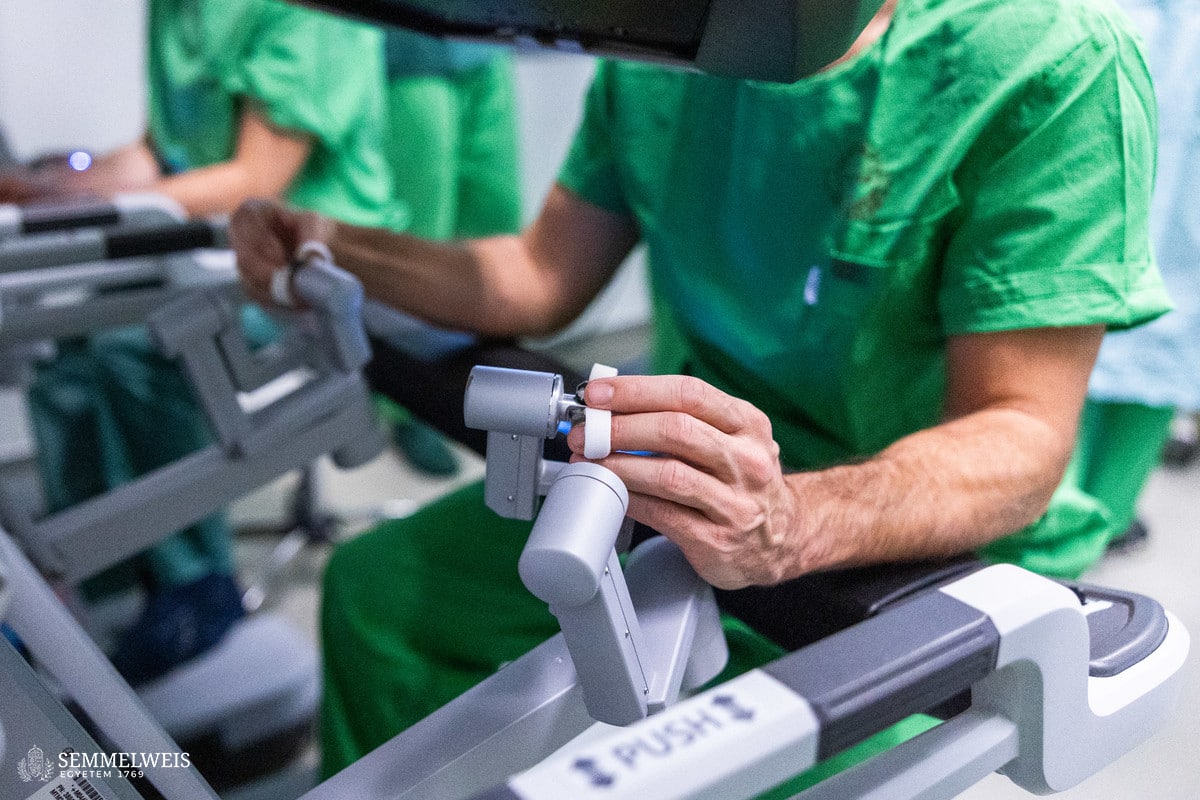
A 14-year-old girl with a liver tumor is the first child in Hungary to be operated on with the da Vinci Surgical System. The intervention was performed at the Department of Surgery, Transplantation and Gastroenterology (STéG). During the procedure, the right lobe of the liver was removed due to a malignant lesion. The operation was preceded by chemotherapy. The child was discharged home on the 8th day after the operation with a chance of full recovery thanks to the complex treatment. Since then, six robot-assisted pediatric liver surgeries have been performed, according to Dr. Oszkár Hahn, Associate Professor and Deputy Director of STéG. This statistic is unique worldwide, as is the liver surgery performed in December on a four-year-old child in terms of their age and weight, he added.
New endoscopic spinal surgery technique used at the university
For the first time in the country, a patient suffering from spinal disc herniation was operated on using a special type of single-channel endoscopic technique at Semmelweis University’s Department of Neurosurgery and Neurointervention. Thanks to the minimally invasive procedure, which is mainly used in the treatment of certain spinal diseases, patients recover faster and the risk of infection is lower.
Groundbreaking hand surgery performed at the Rehabilitation Clinic
For the first time, a third-generation trapeziometacarpal (TMC) joint prosthesis implantation surgery was performed at the Rehabilitation Clinic. Third-generation prostheses developed to replace the thumb carpometacarpal (CMC) joint offer faster recovery, more naturally functioning joints, better results in the long term, and can also be of great help to patients following rehabilitation from a stroke or partial spinal cord injury.
The first MR-guided catheter ablation performed in Hungary
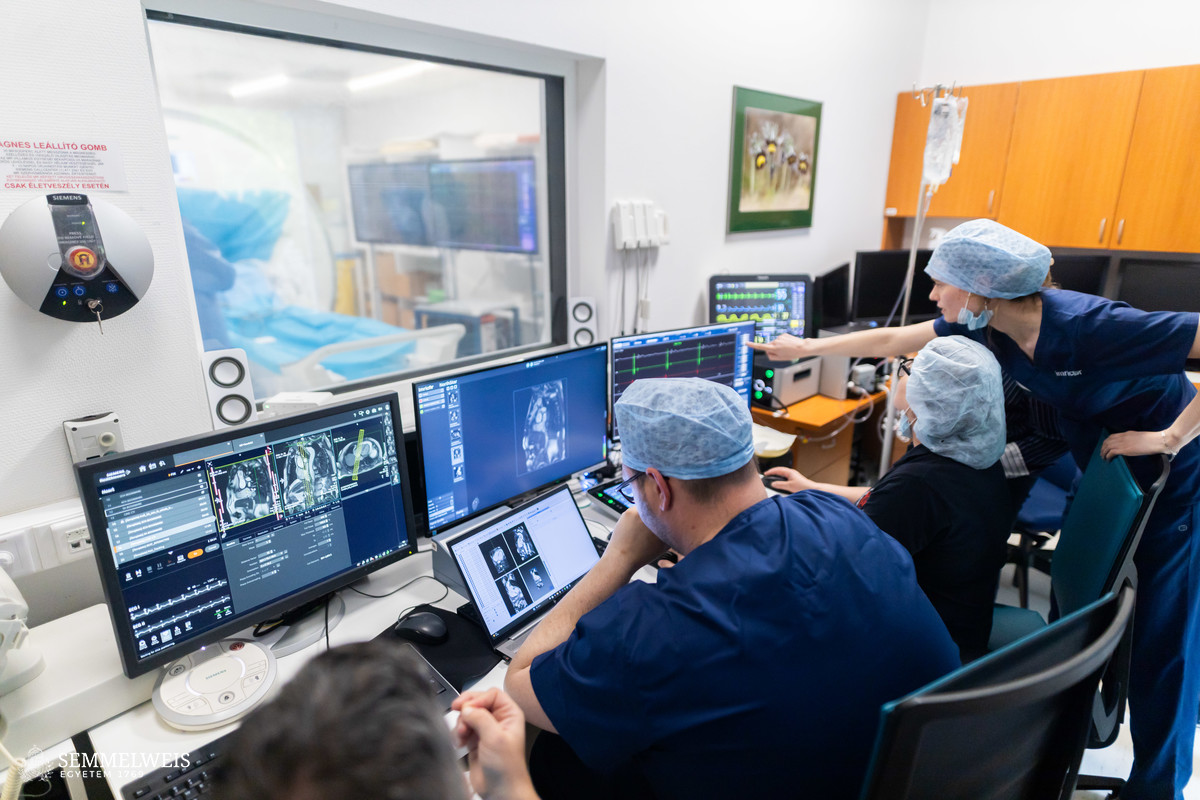
For the first time in Hungary, cardiac catheter ablation was conducted using an MRI scanner at the Városmajor Heart and Vascular Center. The patient required the procedure for an abnormal heart rhythm, called atrial flutter. Semmelweis University was among the first in Europe to perform the intervention, which enables better imaging and does not involve radiation compared to traditional X-ray ablation; the latest mapping software from the catheter manufacturer was applied for the first time in the region.
First robot-assisted kidney removal from a living donor
Hungary’s first robot-assisted live-donor kidney removal for organ transplantation was performed at the Department of Surgery, Transplantation and Gastroenterology. The da Vinci Surgical System can track even the most subtle hand movements, allowing the blood supply of the donor organ to be more accurately prepared and preserved, thus ensuring safer transplantation.
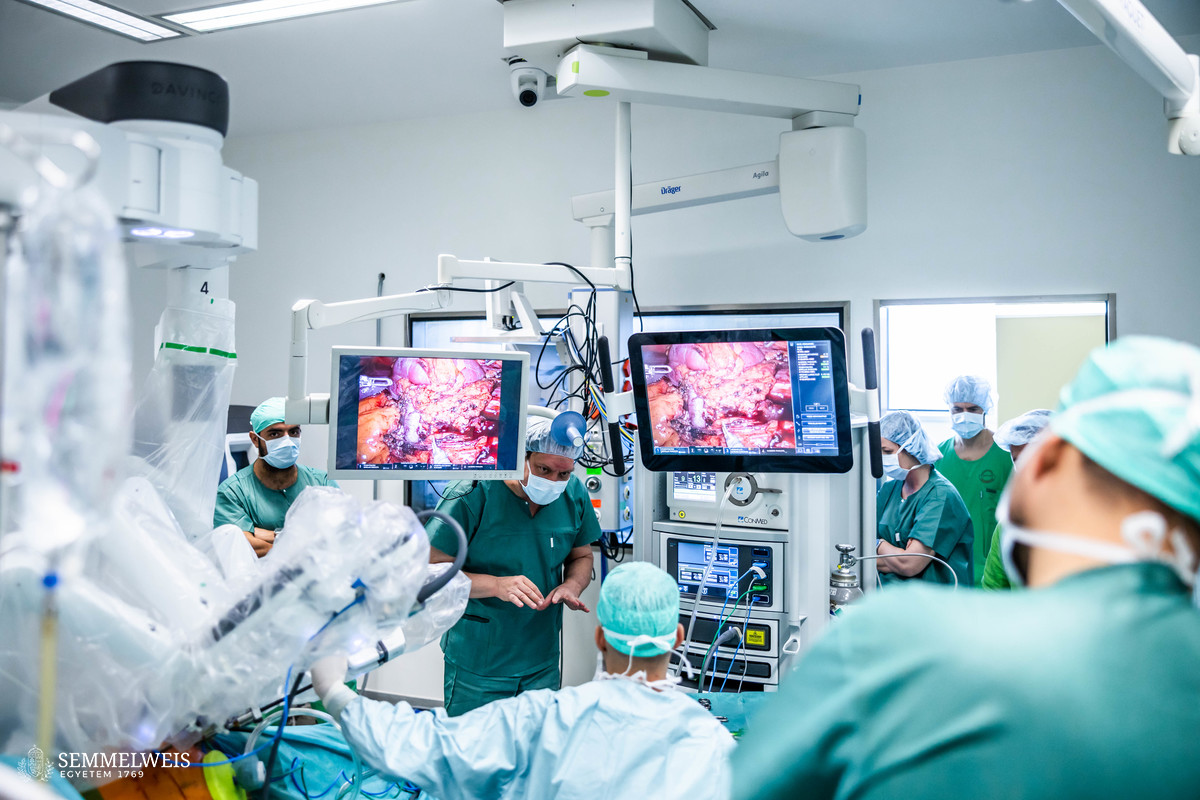
Successful robot-assisted ear surgeries performed
Specialists from the Department of Otorhinolaryngology, Head and Neck Surgery successfully restored the hearing of four patients in early March with cochlear implant surgery as they tested an ear surgery robot. The clinic also received another smaller and even more precise robotic surgery device for temporary use, which was also used to perform successful cochlear implantations on children and adults. In addition, the clinic’s operating room block has been modernized with an investment of more than HUF 500 million, improving both healthcare and education.
The Hungarian lung transplant program celebrates its 10th anniversary
On the occasion of the 10th anniversary of lung transplantation in Hungary, a film about the first procedure was screened at the Department of Thoracic Surgery based at the National Institute of Oncology. At the ceremony, Dr. Sándor Pintér, Minister of the Interior, spoke about the establishment of a Central European lung transplant training center, while Dr. Ferenc Rényi-Vámos, Director of the department, received the Pro Universitate Order of Merit from Dr. Béla Merkely, Rector, for his exemplary, dedicated and internationally outstanding work in establishing a lung transplantation program in Hungary.
Special exercise physiology lab to help paralympic athletes in their training
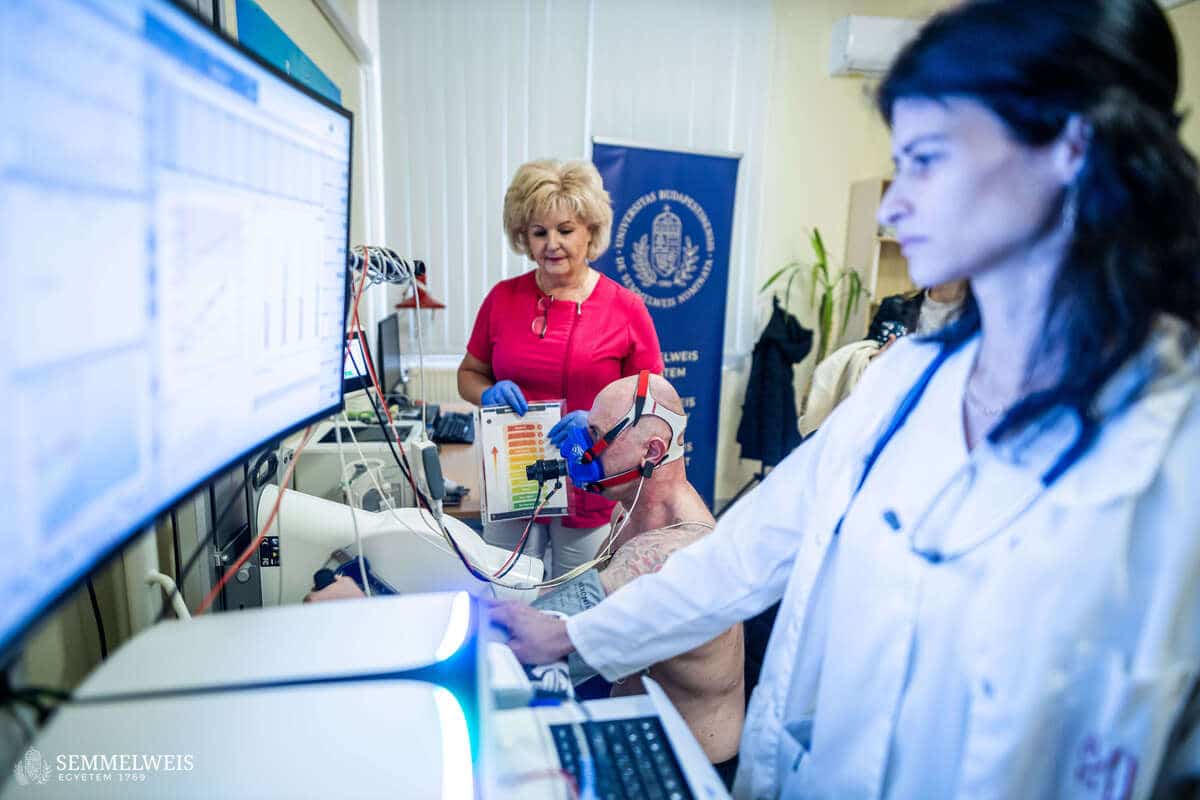
The exercise physiology laboratory at the Rehabilitation Clinic has been renovated. It is the only facility in the country capable of performing stress tests on patients who have undergone amputation, suffered a stroke, or suffered severe brain or spinal cord injuries (paraplegia). The spiroergometer, a special device used at the clinic with nationwide service obligation that treats thousands of patients annually, will also be applied to diagnose the performance of para-athletes.
Eszter Keresztes
Translation: Judit Szabados-Dőtsch
Photos by Bálint Barta, Boglárka Zellei – Semmelweis University