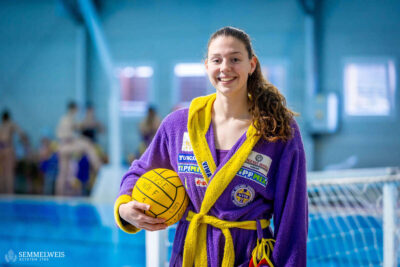
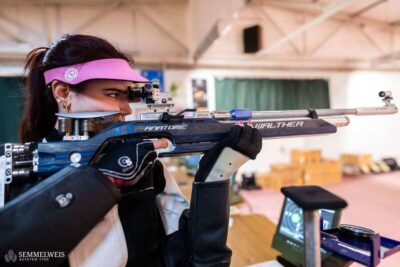
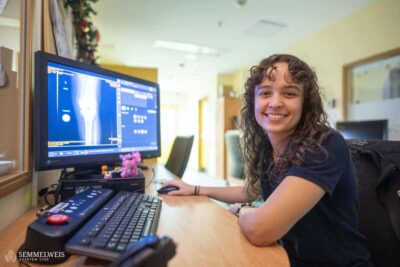
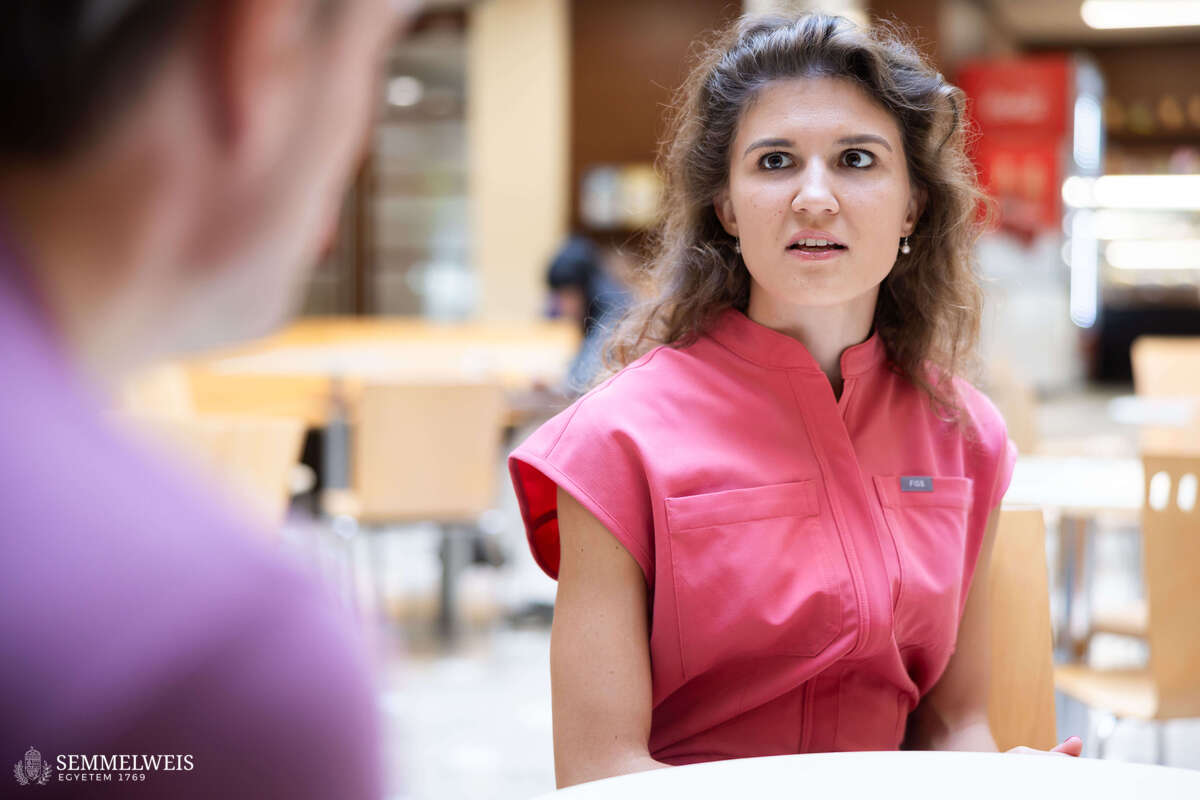
 She has been competing in track and field since she was six years old. Before that, she tried ballet, ice skating, and pentathlon, but she quickly found her way to track and field, specifically the triple jump, says Dr. Enikő Kónya, a resident at the Department of Restorative Dentistry and Endodontics and an athlete of the Ferencvárosi Torna Club (FTC). “For nine or ten years now, the triple jump has been my main event, and it’s what defines me most; what has shaped and molded me above all else is sports and the sporting community,” she emphasizes. She adds that she owes a great deal to sports. She specifically mentions her current coach, Mária Vágóné Solti, and her former youth coach, Levente Käfer.
Perhaps it’s thanks to my athletic background that I’m able to solve problems more easily and handle difficult situations with greater flexibility. This also provides me with a framework, because life has its ups and downs: Just as you have to be able to bounce back from failures, you also have to keep individual successes in perspective.
She also notes that balancing sports and work has a fundamental impact on her daily life and time management: “I have to do several event-specific training sessions each week, along with supplementary workouts. And it’s important to have at least four sessions that prepare me for my event.”
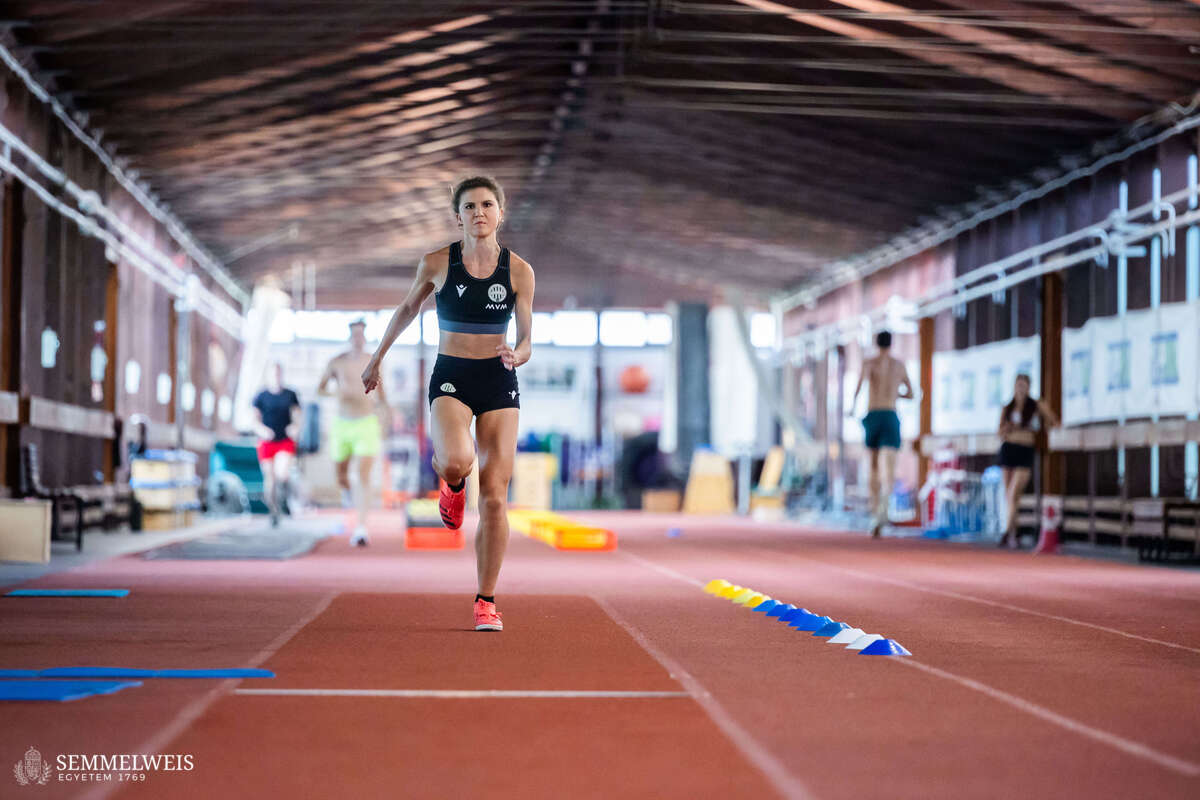
Her residency training also presents numerous challenges. There have been times when, after her clinical shift from 8 a.m. to 4 p.m., she was only able to go to the emergency department from 7 p.m. to 7 a.m. to complete her internship as part of her residency training. Therefore, she also had to reschedule her training sessions. Despite all this, during this period she won a bronze medal in the triple jump at the Hungarian Indoor Athletics Championships 2026.
A career in dentistry
Dr. Enikő Kónya graduated from the Faculty of Dentistry (FOK) at Semmelweis University in the summer of 2025 and has been working as a resident at the Department of Restorative Dentistry and Endodontics since September 1, 2025. Her work consists of patient care and teaching. “This year, during the second semester of the program, I already had clinical teaching responsibilities – I served as an instructor and clinical tutor for graduating students, and I also teach so-called ‘propedeutic’ courses, where students practice on phantom heads, plastic teeth, and medical mannequins,” she explains. Another part of her work involves specialist patient care and residency training: During office hours, she performs treatments specific to her field, and as an endodontics resident, she handles more complex root canal cases, thereby fulfilling the quota set for a specific type of treatment over the three years of her training. An important part of her work is also providing emergency dental care.
“I started competing in combined track and field events, and at age 15, with my parents’ support, I decided to focus on the triple jump,” she says, offering a glimpse into her athletic background. It was around this time, in 2017, that she also competed at the European Youth Olympic Festival (EYOF), one of the Olympic Movement’s most significant multi-sport events, held every two years for athletes aged 14-18, with 2,500 athletes from 50 countries. “This is one of the greatest competitive sports experiences I’ve had so far. When you get to represent your country, it’s an uplifting feeling and always a tremendous honor,” she adds.
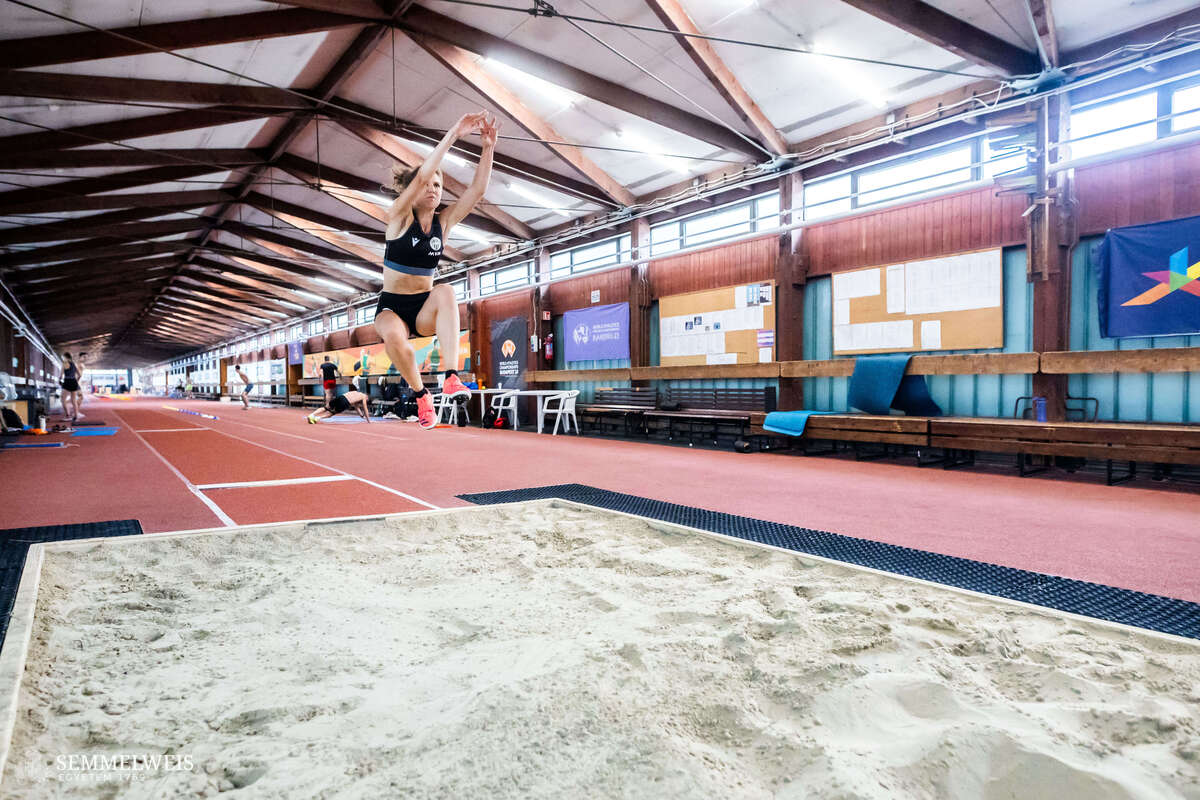
After that, as a multiple national team member, she regularly competed in international events, but serious injuries forced her to take a break from competition for several years, and then the COVID-19 pandemic struck. “In the meantime, I was admitted to the Faculty of Dentistry, and I focused primarily on my studies,” she recalls. She was able to return to competitive sports at the very end of 2024, and in the summer of 2025, she won a silver medal in the triple jump at the national championships. “I had just earned my degree and took part in the competition as a newly qualified dentist. It was a great experience to compete in the new track and field stadium. Even I was surprised by the result – plus, I achieved a Universiade-level jump,” she highlights.
About the triple jump
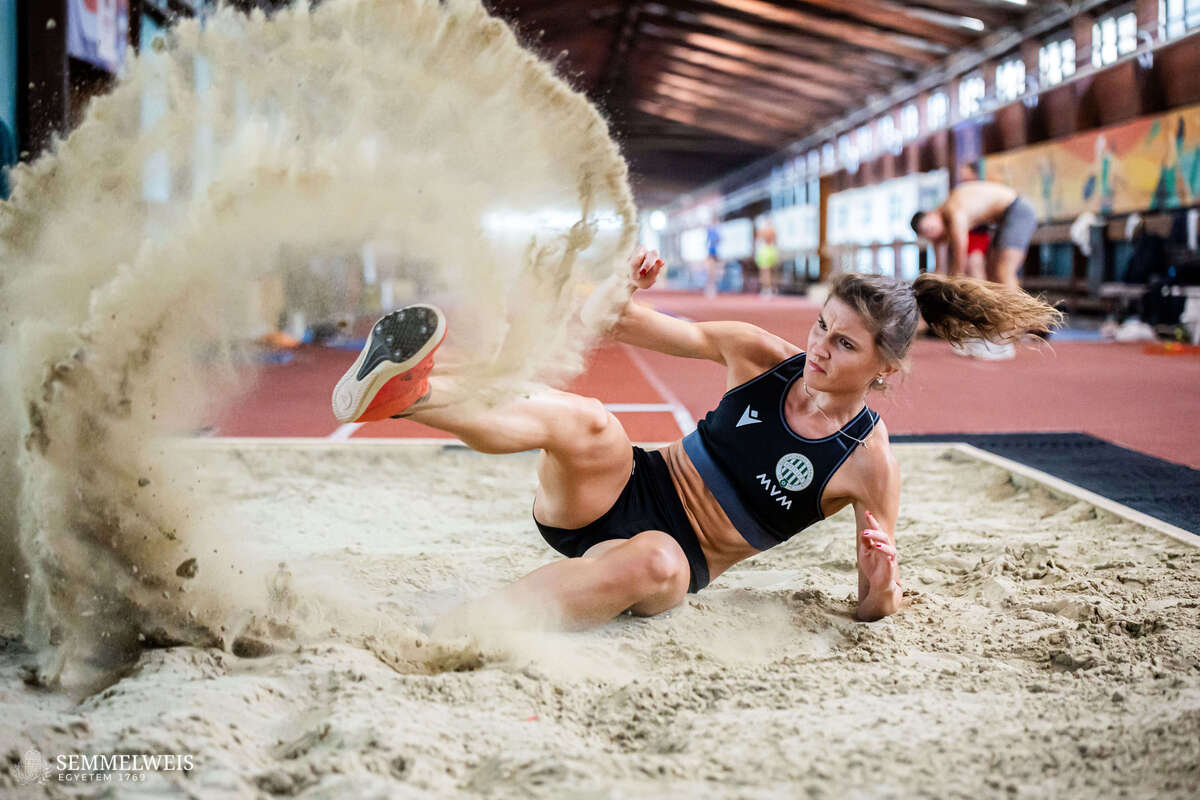
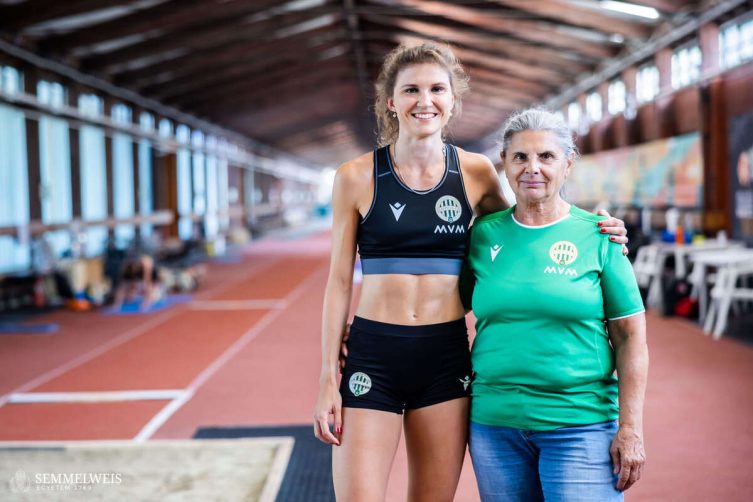 “It’s similar to the long jump – we jump into the sand the same way – but after the run-up, when we reach the take-off board, we push off: I jump off with my right foot, land on my right foot, switch to my left foot, and then land in the sand. It’s a fairly complex sequence of movements,” she explains. “My build and physical attributes are well-suited to it, and being tall is an advantage, but it also requires explosiveness, agility, and endurance. I’ve always been good at bounding, but my performance on any given day depends on where I stand in terms of speed during training, because I’m more of a long-stride, slow-run-up type. But if I manage to reach a fast speed, then there’s no real problem,” she summarizes.
“Everyone has their own way of recharging after a tiring day: I draw strength from sports. Instead of watching a series or scrolling through TikTok when I get home, I head down to the club, where I can have honest conversations with my fellow athletes. I set aside these two hours a day for that – for an environment I really love. I think this has a positive effect on my mood and my health,” she underlines.
Her father graduated as a primary care physician in Debrecen, her elder brother is a pharmacist, and her mother is a physical therapist, so she had a strong family influence on her career choice. “When I applied to university, I knew I definitely wanted to be involved in patient care, and dentistry was closest to my heart,” Dr. Enikő Kónya recalls. “It’s a profession where I feel I have to push my limits. My five years at university were anything but easy, and it gives me a sense of integrity that I worked hard for this degree and chose a career that matches my abilities. This motivates me every day to keep improving,” she points out.
Regarding her work, she emphasizes that she particularly enjoys teaching, and over time she realized that the best way to become a credible instructor – and to help her students most effectively – was to continuously improve her own professional skills. To do this, she needs to be as involved as possible in patient care and medical treatments.
As a beginner, having to make so many decisions on my own was difficult at first, and dentists too face emotional and mental strain from daily work. Sports help me deal with this as well, among other things.
“I’ve reached a point where I enjoy patient care, and I feel that I have more knowledge and experience than I did even a year ago,” she stresses. Regarding her specialty, she adds that she fundamentally sees herself as having a “more fiery temperament,” yet endodontics is precisely about searching for root canals measuring tenths of a millimeter under a microscope. “Perhaps life wanted to teach me in this way as well, and becoming more patient is something I really needed,” she also notes.
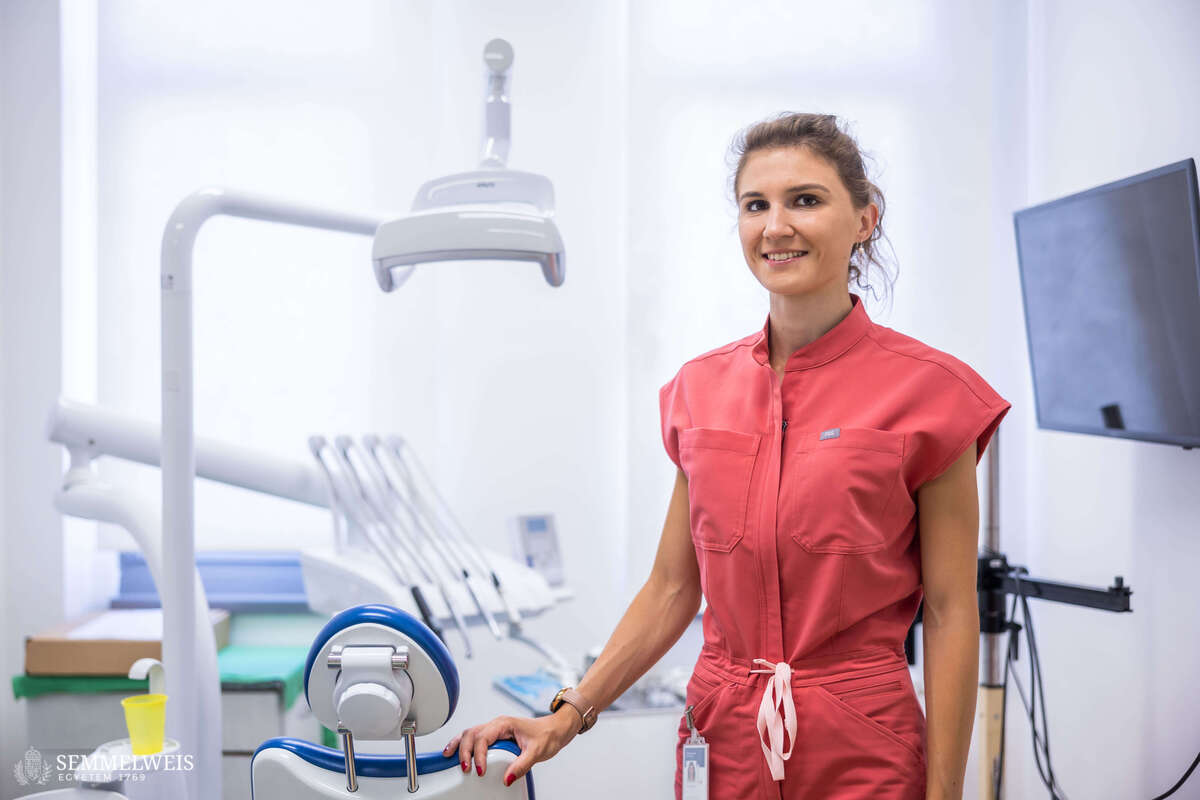
Looking to the future, she says: “I can see the path ahead of me – the kind of life I want to live. I didn’t see my parents rushing around aimlessly either. If you have a goal – whether in sports or in your career – you need to know what that goal is, where you are headed, and you have to stick with that path. It takes time and sometimes involves difficulties and a lot of effort, but I’ve found that in the long run, it pays off in every area of life. And if I can show even just a few people that persevering is worthwhile, then it’s worth the struggle for that alone.”
Róbert Tasnádi
Translation: Dr. Balázs Csizmadia
Photos by Bálint Barta – Semmelweis University