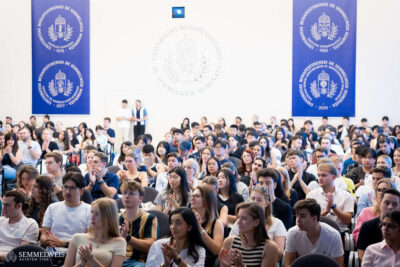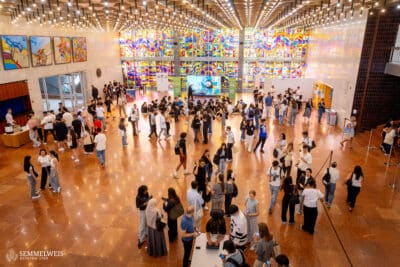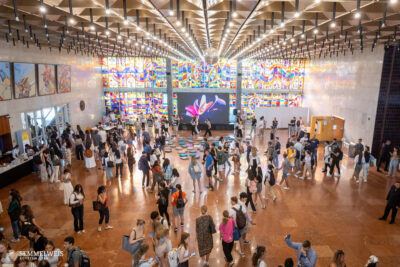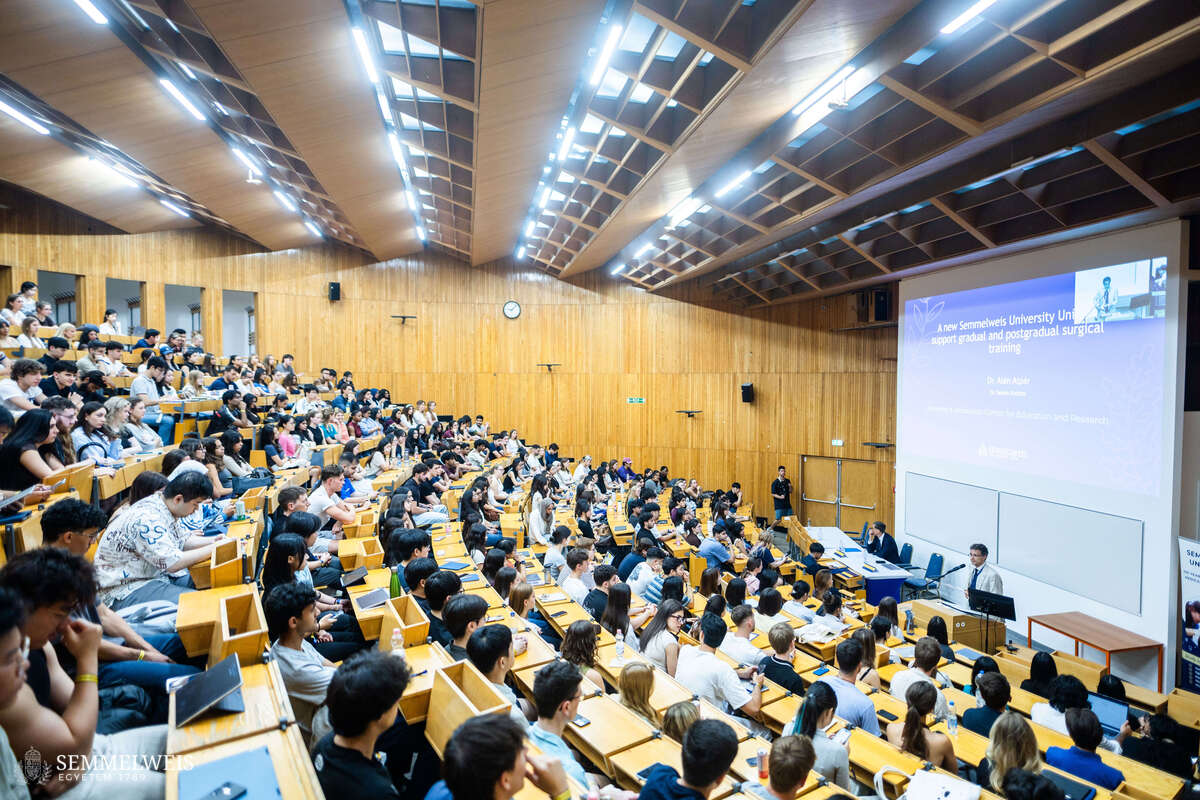
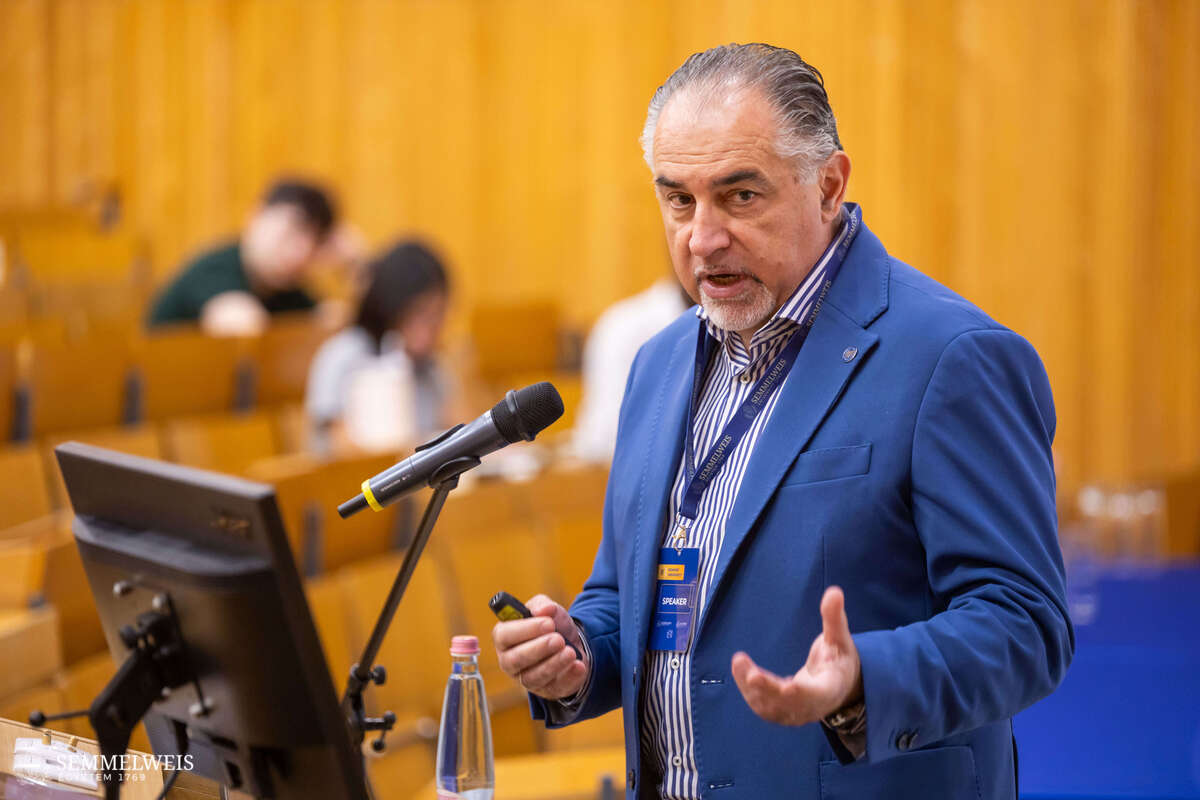
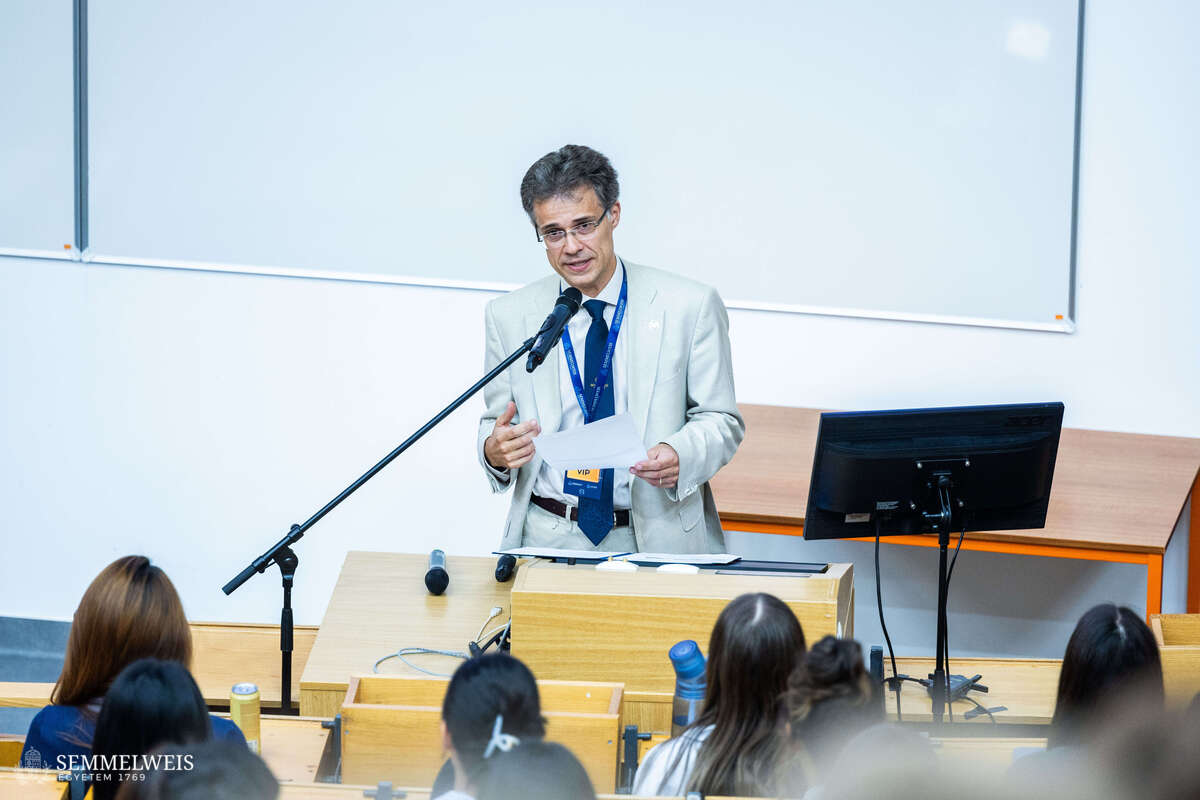
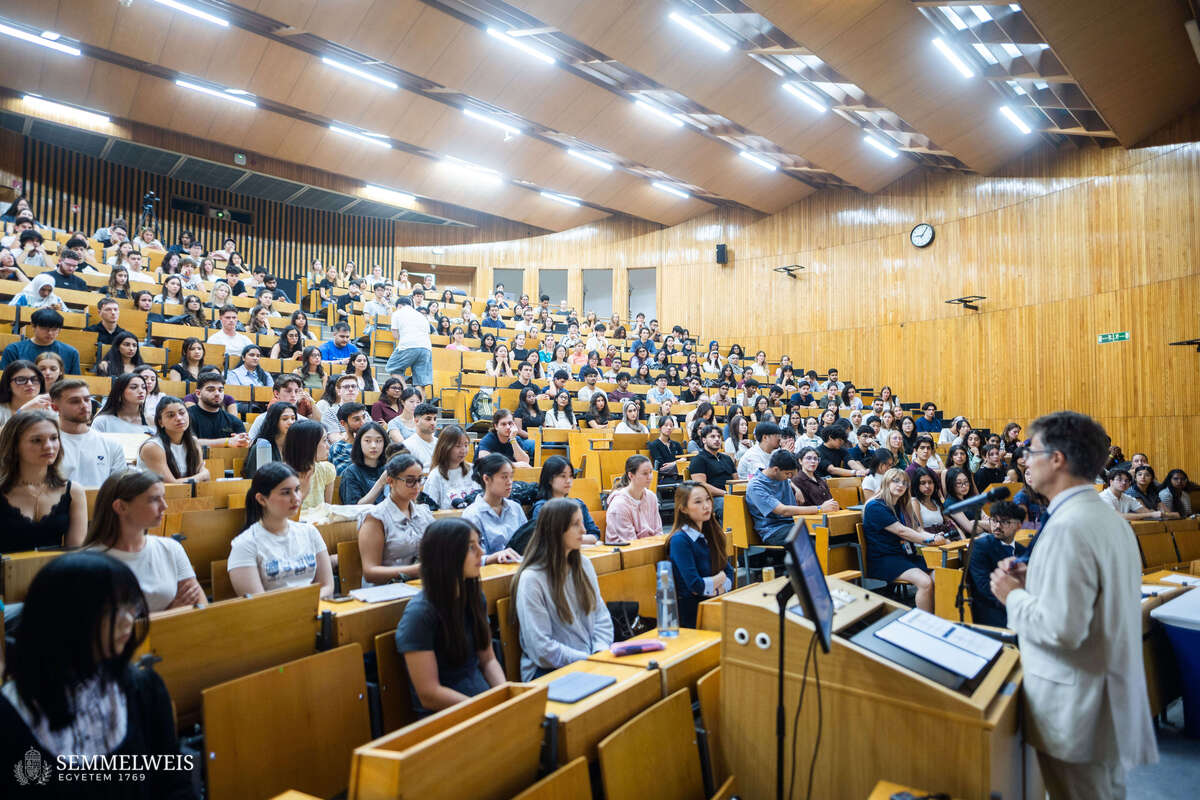
Dr. Alán Alpár, Vice-Rector for International Studies, opened the series of events. He recalled that the Semmelweis Summer University concept was created eight years ago to celebrate the institution’s 250th anniversary with extracurricular lectures. He noted that each year, the speaker lineup is assembled to reflect student demand. While students of the Hungarian-language programs are usually more interested in topics revolving around public concerns and entertainment, those of the English and German-language programs tend to prefer academic topics. The vice-rector also mentioned that “hardcore science” lectures would be supplemented with an introduction to non-academic tools and skills to help first-year students with their studies. He pointed out that this was the first academic year in which artificial intelligence was included as a mandatory subject in the program curricula.
The lecture sessions opened with a presentation on the Anatomy & Innovation Center for Education and Research (AICER), a new university unit for surgical training (Dr. Alán Alpár). Talks covered the oral health–systemic disease link (Dr. Ákos Zsembery), AI in dental radiology (Dr. Bence Szabó), robot-assisted pediatric neurorehabilitation (Dr. Márk Ágoston Pulay), food allergy prevention and immunotherapy (Dr. Lajos Attila Réthy), and pharmacokinetic models (Dr. György Tibor Balogh).
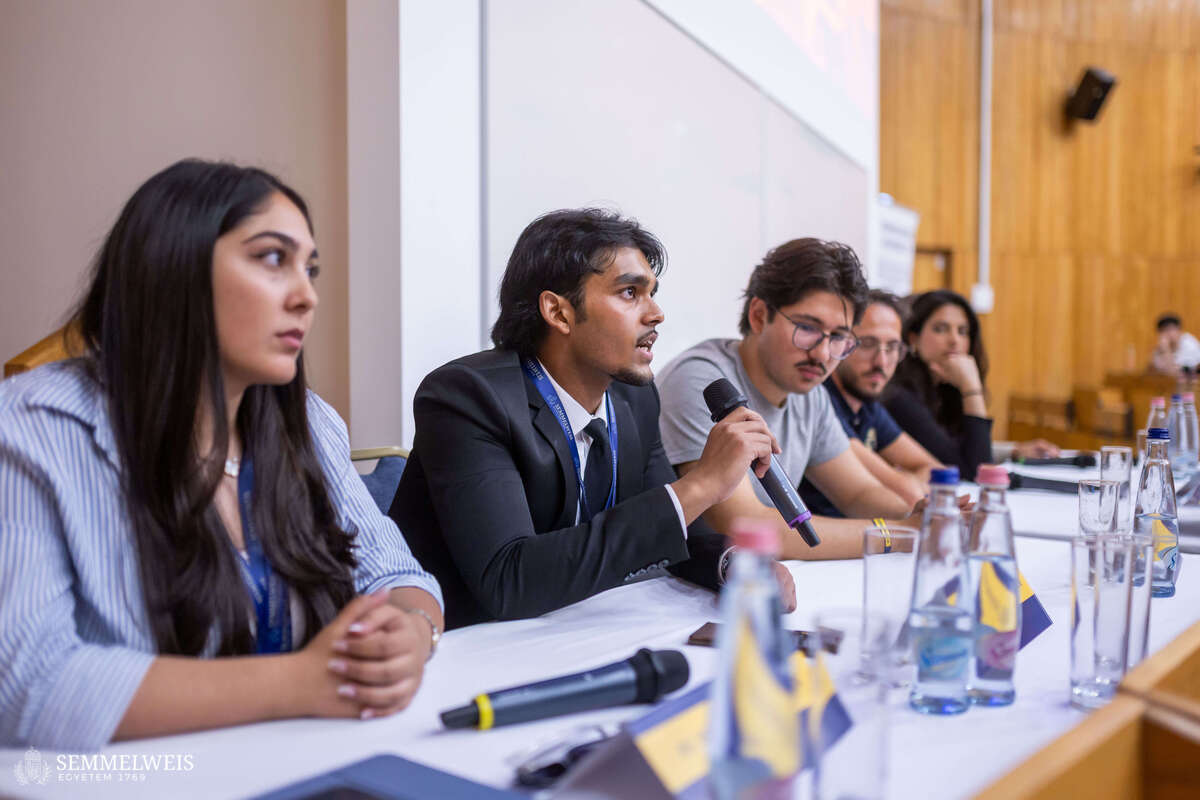
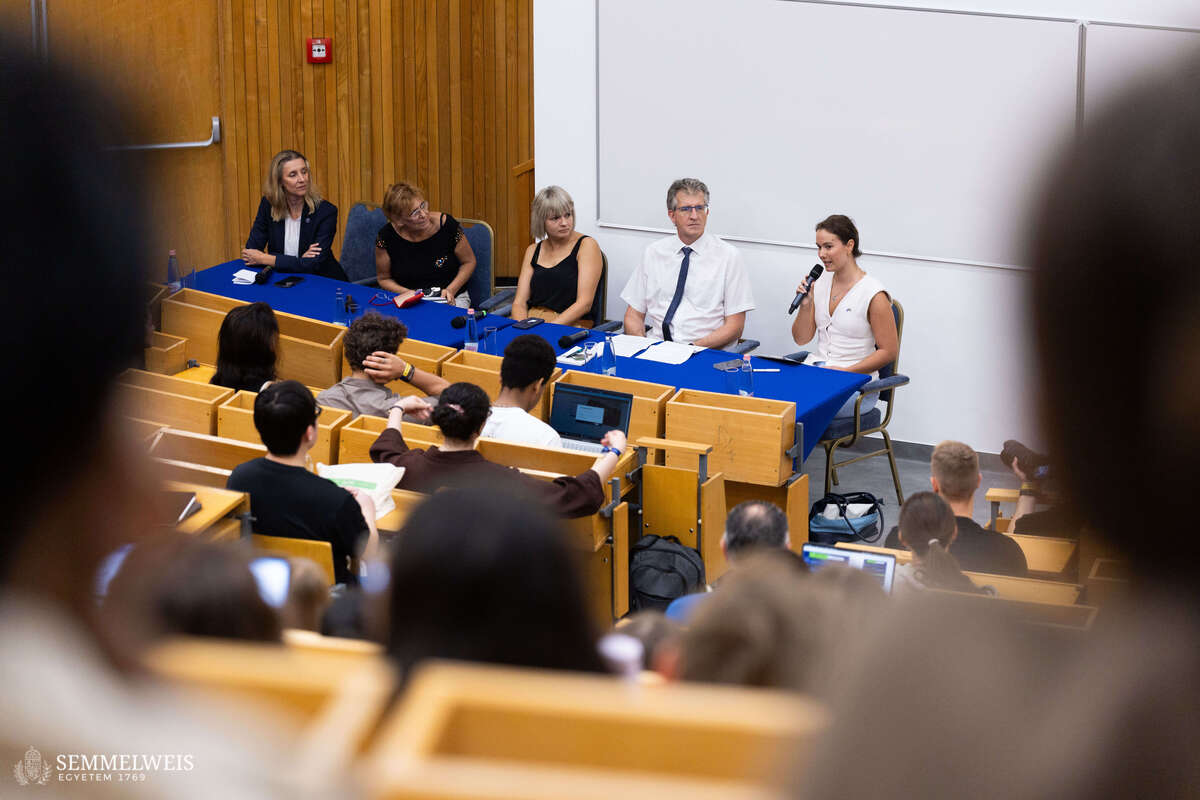
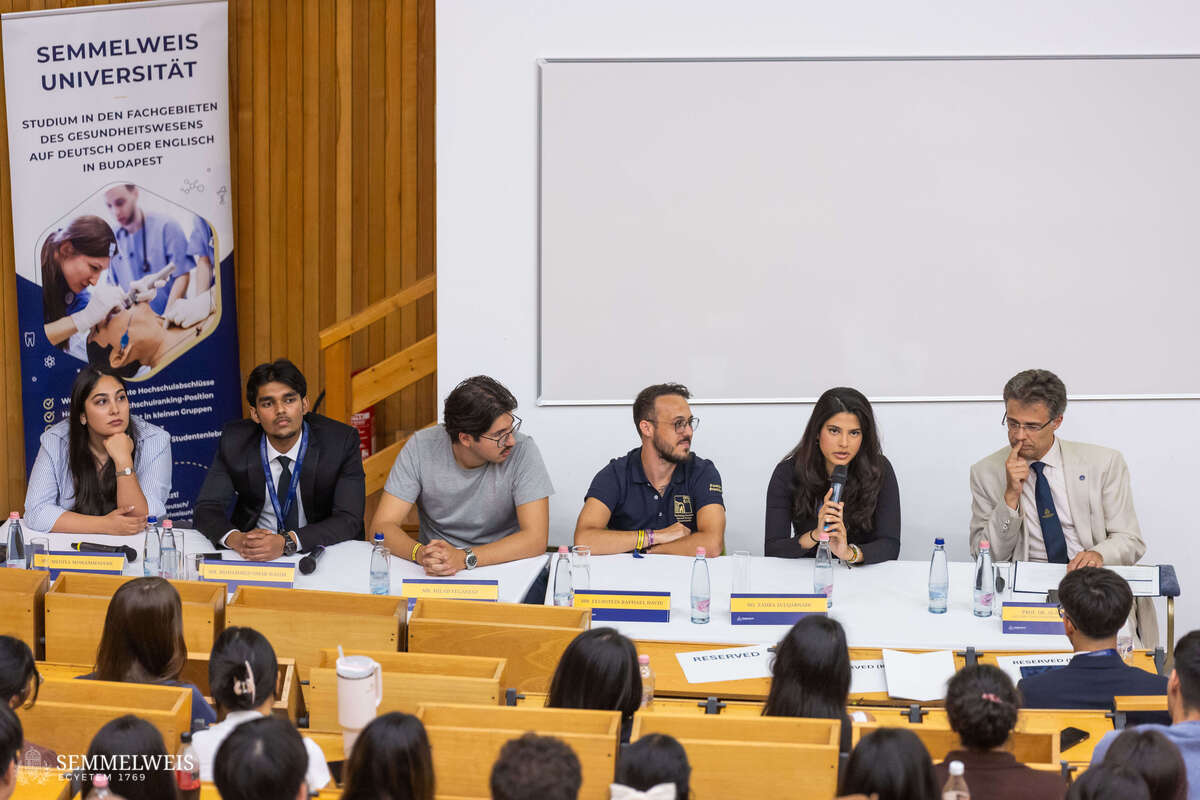 The afternoon session on the first day of the International Summer University featured a round-table discussion chaired by Dr. Alán Alpár, with the participation of experienced Semmelweis University students: Zahra Zulqarnain, Head of Student Affairs for Medicine in the International Semmelweis Student Association (ISSA); Raphael Feurstein, former President of the Deutschsprachige Studentenvertretung Semmelweis (DSVS), the association representing the interests of German-speaking students; Milad Yeganegi, Head of Events at DSVS; Mohammed Omar Wasim, who serves as a student representative in his first year at ISSA; and Mediya Mohammadian, second-year dentistry representative at ISSA. The discussion focused on key topics such as challenges, what helps students settle into university, life in Budapest, cultural differences, opportunities available when studying at Semmelweis University, or how to find balance between studying and a social life.
The participants stressed that settling in becomes easier with the help of student organizations, senior students, and the university’s support services. They also highlighted the practical, hands-on nature of education and the challenges of adapting to oral examinations, encouraging newcomers to start studying from the beginning of the semester and to ask for help whenever needed. Budapest was described as a colorful, vibrant and welcoming city offering abundant cultural and social opportunities. The students also talked about the international community at Semmelweis, where people from diverse cultural backgrounds can learn from one another and build friendships. Research opportunities, early involvement in scientific work, and diverse career prospects were described as some of the advantages of studying at the university. At the same time, the panel stressed the importance of maintaining a healthy balance through sport, hobbies, friends, and time spent outdoors.
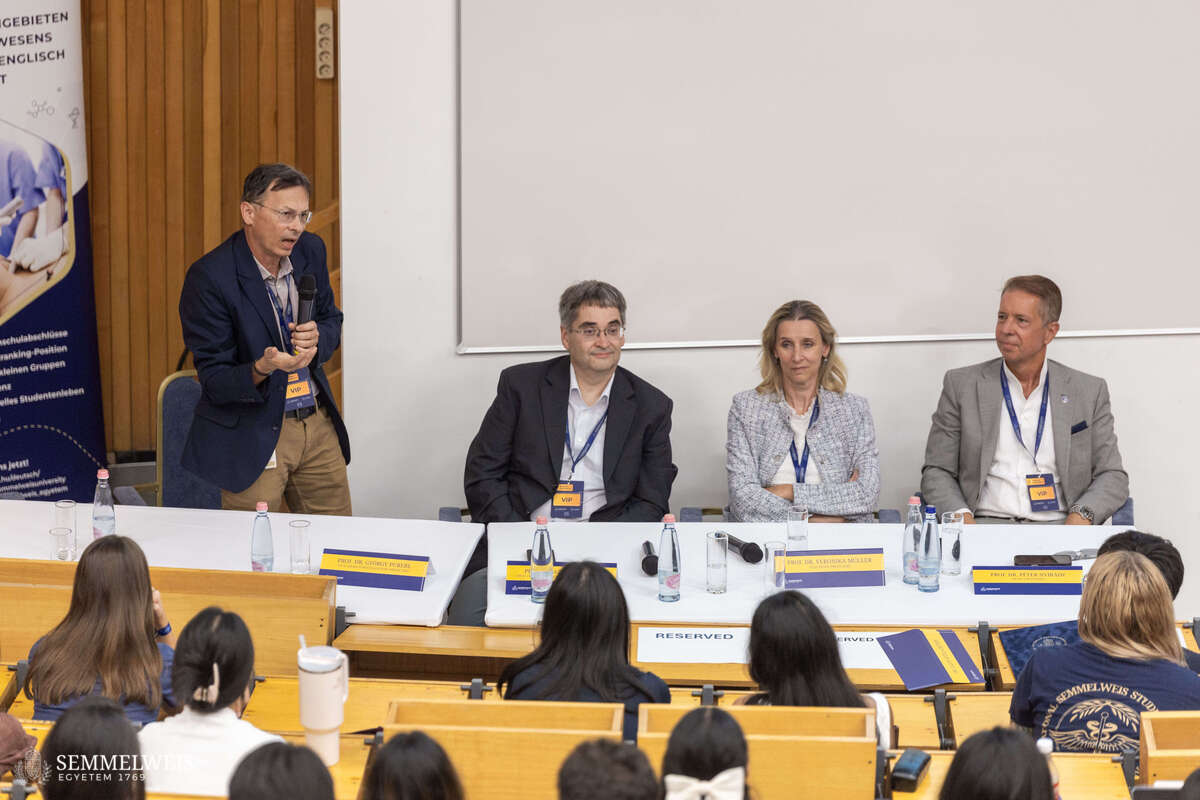 This was followed by a round-table discussion on challenges and opportunities at Semmelweis University, moderated by Dr. Péter Nyirády, Dean of the Faculty of Medicine (ÁOK). The three speakers were Dr. Attila Mócsai, Vice-Dean for Science at ÁOK and Head of the Department of Physiology; Dr. György Purebl, Vice-Dean for Educational Affairs at ÁOK and Director of the Institute of Behavioral Sciences; and Dr. Veronika Müller, Vice-Dean of ÁOK and Director of the Department of Pulmonology. Dr. Péter Nyirády welcomed the new students and encouraged them to be diligent on their journey to becoming knowledgeable, skilled, and compassionate physicians: “Whenever you learn something, never forget: Your aim is to become an excellent physician.” He also urged the freshmen to join Semmelweis University’s student associations and sports teams.
Dr. Attila Mócsai introduced physiology as the science of how the human body functions. He outlined how the theoretical years build on subjects such as anatomy, biophysics, biochemistry, and cell biology, providing the foundations needed to understand disease processes and later clinical studies, while already introducing students to clinical examples. Dr. György Purebl highlighted that medical education develops not only knowledge but also essential practical skills: professional observation, communication, manual skills, and the ability to identify reliable information. He also talked about the role of the university’s mentoring and support services, student organizations, and sports opportunities in helping everyone adapt and maintain their well-being. Dr. Veronika Müller outlined the clinical training of the later years, combining rotations, bedside teaching, and skills practice. She advised students to seek early clinical and research experience and explore the university’s scientific, sporting, and artistic opportunities. “Please never be too shy to approach us also in the clinical field. We are very, very happy to involve younger students as well in clinical research,” she added in conclusion.
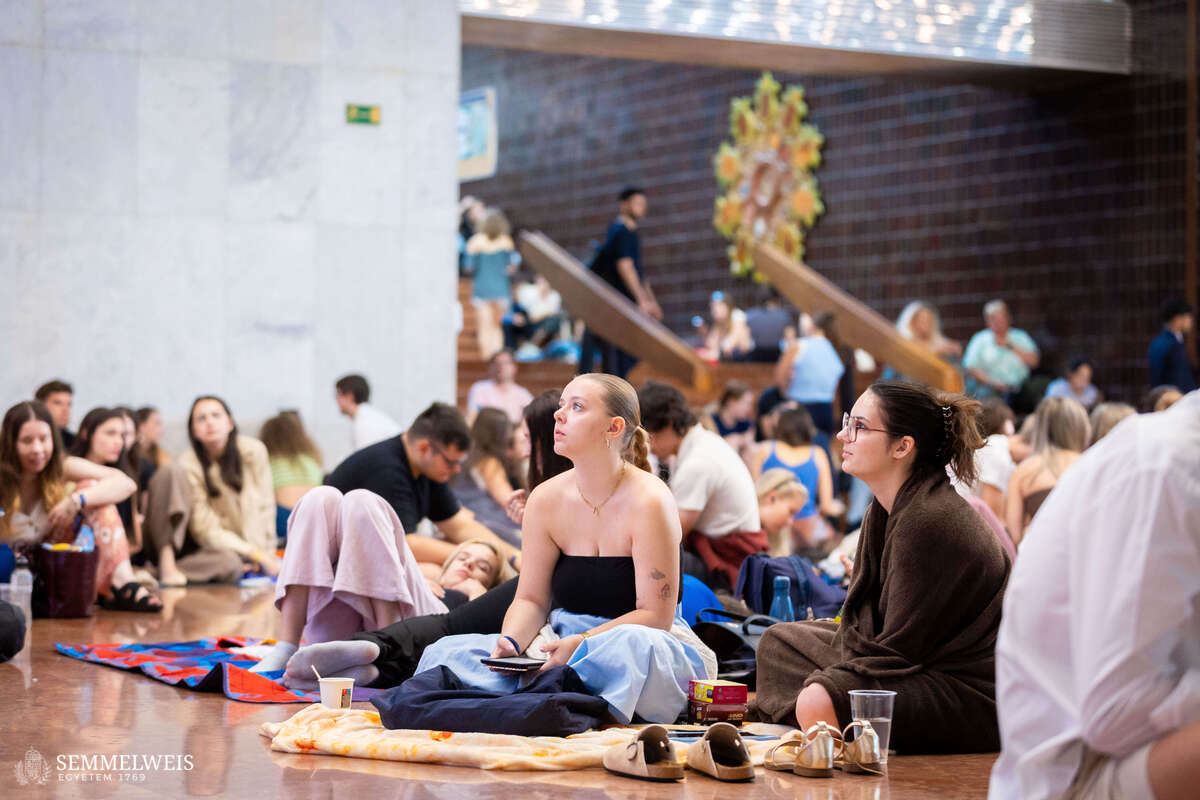
Day 2 started with a morning energizer (Fanni Rácz), then world record holder freedivers Zsófia Törőcsik and Petar Klovar spoke on breath control and mental endurance, while two-time Guinness World Record holder Gábor Rakonczay recounted ocean rowing and reaching the South Pole. A Hungarian-for-healthcare session (Dr. Éva Toronyi, Szandra Borda), a mental health lecture (Dr. György Purebl), a session on AI as a learning tool (Dr. László Tornóci), an interactive health choices workshop (Semmelweis Health Promotion Center), and a water-themed Budapest city tour (Elza Morcsányi, Júlia Wärmer) completed the academic program.
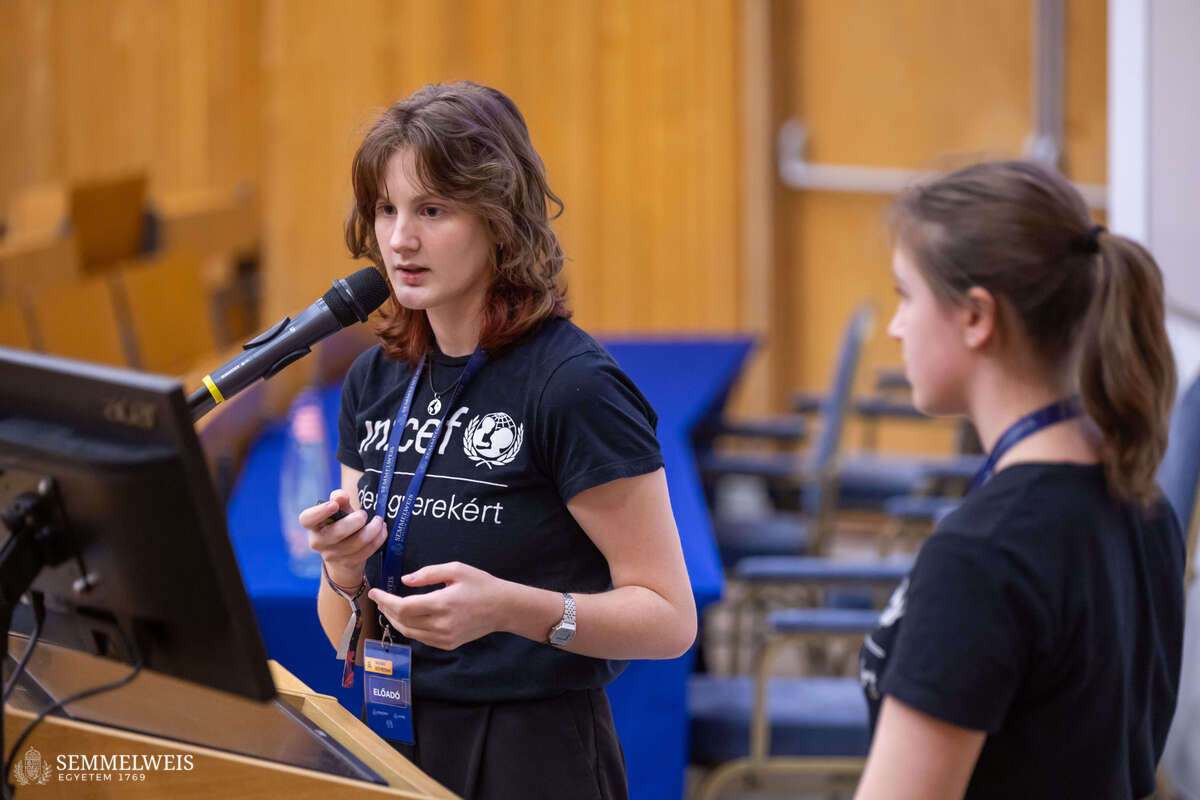
Green University Day on Friday focused on sustainability across sectors. Morning sessions covered the beauty industry’s environmental impact (Máté Szász), transforming higher education for sustainability (Dr. Katalin Ásványi), circularity in healthcare and pharmaceuticals (Dr. Aderemi Baderinwa), urban biodiversity (Dr. Francesco Ferrini), and the UNICEF Climate Heroes Programme (Viola Felső-Nemes, Emma Rhode). Afternoon talks framed climate change as a health challenge (Zofia Tarcz), assessed whether sustainable development is achievable (László Borbély), examined local climate impacts in Hungary (Péter Szabó), and stressed international scientific and policy cooperation (Dr. Tibor Faragó). The final session linked business continuity with climate resilience in hospital operations (Dr. István Mészáros).
Gallery
Dr. Balázs Csizmadia, Judit Dőtsch
Photos by Bálint Barta, Boglárka Zellei – Semmelweis University