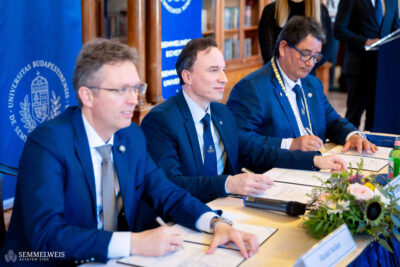
The Memorandum of Understanding (MoU) concluded in 2024 between Semmelweis University and Showa Medical University, Japan, aims to strengthen long-term cooperation in education and research, as well as promote academic mobility. The agreement provides a comprehensive framework for the possibility of exchange of academic staff and students, the initiation of joint research projects, and the organization of conferences, symposia, and professional workshops, based on the principles of mutual benefit and reciprocity.
In line with the MoU, the two institutions subsequently agreed to send and receive two students each year to undertake a four-week clinical traineeship. Participants may complete their clinical practice in a discipline of their choice, subject to the capacity of the host institution. The program is designed to offer students hands-on international clinical experience while broadening their professional perspectives and fostering intercultural understanding.
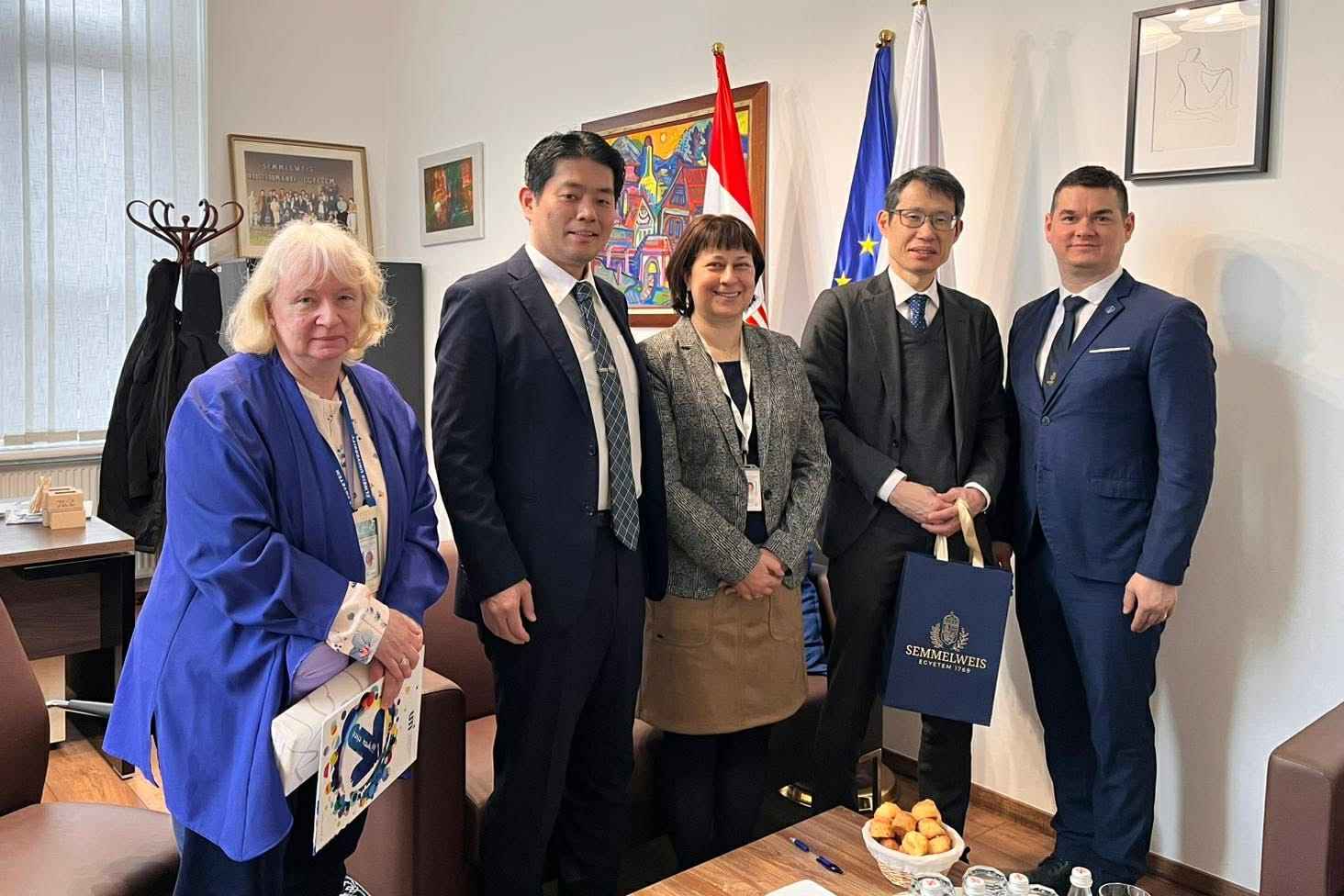
As an important milestone of the cooperation, Professor Takaaki Matsuyama, Chair of the International Exchange Committee, School of Medicine, Department of Forensic Medicine, and Professor Shizuma Tsuchiya of the International Exchange Center, both in charge of international relations at Showa Medical University, arrived in Budapest in February as part of the university’s European partner visit program.
The guests received a comprehensive overview of Semmelweis University’s educational structure, clinical training opportunities, and student infrastructure. The delegation was welcomed by Levente Vágó, Deputy Director of International Relations and Alumni Affairs, and Judit Szlovák, Head of the Bilateral and Priority German Relations Department.
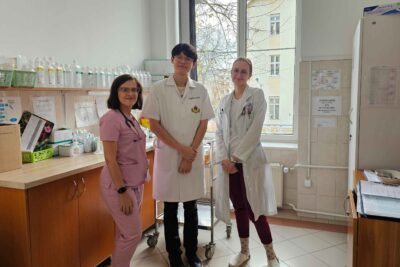
The visit then continued with clinical site visits to establish the framework of the student exchange program. The delegation first visited the Department of Obstetrics and Gynecology, which will serve as the host department for a future clinical traineeship. The guests were welcomed by Associate Professor Dr. Sándor Valent and enjoyed a detailed, multi-hour tour with the participation of several department heads.
The Japanese professors had the opportunity to visit several operating rooms and observe ongoing procedures. Particular emphasis was placed on the close integration of education and clinical practice, which is crucial for successfully training international medical students.
The delegation also visited the Center for Translational Medicine, where they were offered and in-depth presentation on neonatal and preterm care. The visitors gained insight into incubator-based care, modern neonatal protocols, and the importance of the skin-to-skin method, which supports both the physical and emotional development of newborns.
At the Assisted Reproduction Unit, the guests were welcomed by Dr. Tímea Buzder, Head of Laboratory and Clinical Embryologist. The specialists presented the full spectrum of assisted reproductive technologies through case studies, including hormonal stimulation protocols, embryo cryopreservation, and laboratory workflows. The professional discussion also included comparisons between European and Japanese practices, addressing both technological and ethical considerations.
As part of the visit, the delegation was introduced to the Tulip Ward and the Premium Unit, which exemplify family-centered care combined with a high standard of patient comfort.
At the Department of Surgery, Transplantation and Gastroenterology (STéG), the delegation was greeted by Director and Professor Dr. Attila Szijártó. The visitors were guided by Dr. Tamás Marjai, Specialist Surgeon and Educational Coordinator for postgraduate training. Discussions focused on the development of laparoscopic surgery, the application of Japanese techniques, and the integration of innovative procedures into surgical education, particularly for residents and international trainees.
One of the highlights of the visit was an introduction to the da Vinci Surgical System, which clearly demonstrates Semmelweis University’s commitment to cutting-edge surgical technologies and offers excellent potential for future joint educational and professional initiatives.
The program concluded with a visit to the Balassa János Dormitory of Semmelweis University, where Ágnes Tóth, Head of the Secretariat and Administrative Coordinator, offered an insight into the accommodation options available for international students.
The visit clearly reinforced both institutions’ commitment to deepening their cooperation further. The student exchange program not only supports the professional development of participating students but also contributes in the long term to strengthening the strategic partnership between Semmelweis University and Showa Medical University, opening new opportunities in education, research, and clinical practice.
Image and text: Directorate of International Relations and Alumni Affairs