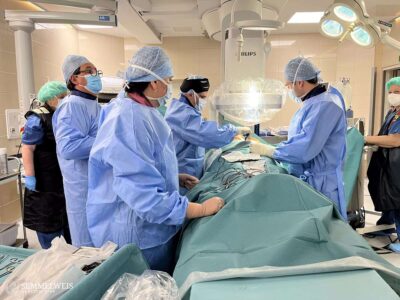
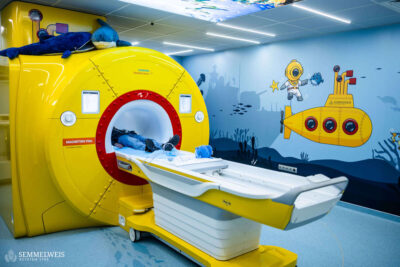
Epilepsy is one of the most common neurological disorders worldwide, affecting approximately 60,000 to 70,000 people in Hungary. Epileptic seizures come in many forms, but they all have one thing in common: They significantly affect patients’ everyday lives, hindering them in their work, studies, and social relationships. Patients for whom drug treatment proves ineffective find themselves in a particularly difficult situation, as their seizures occur unpredictably, says neurosurgeon Dr. Loránd Erőss, Director of Semmelweis University’s Department of Neurosurgery and Neurointervention (SE-INK).
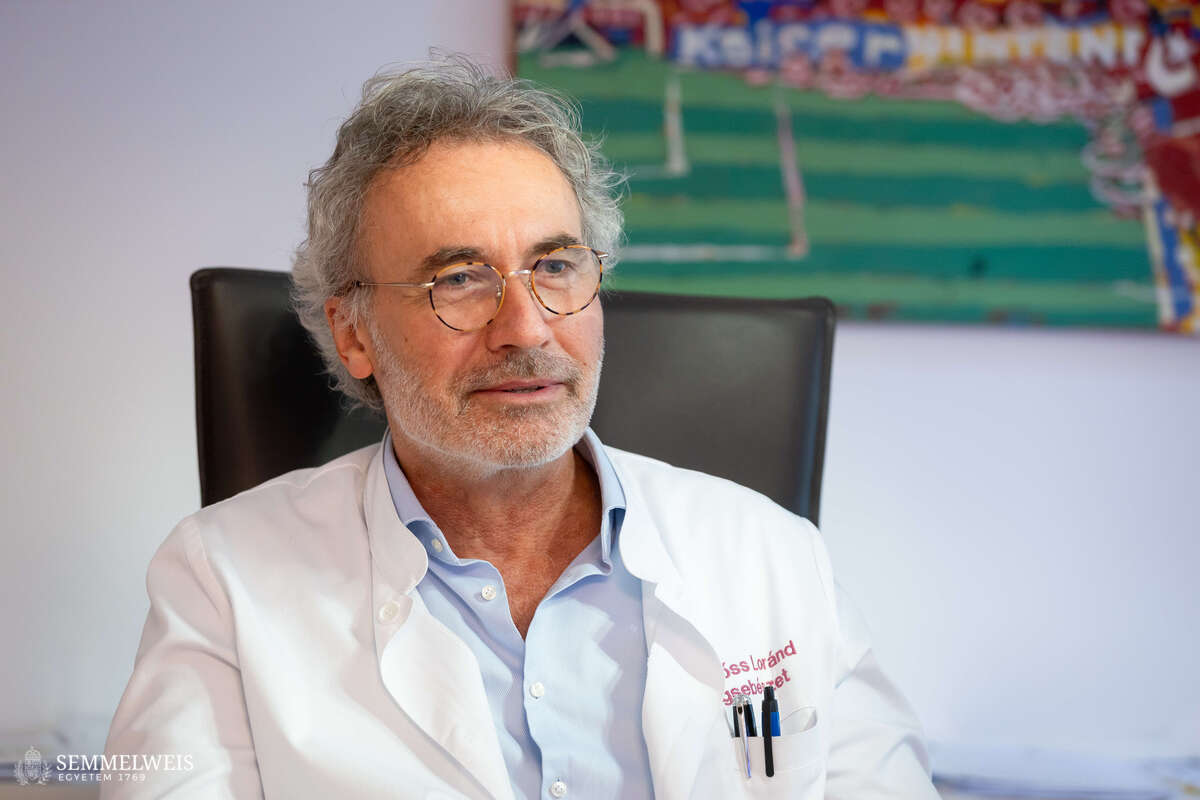 There are quite a few patients affected, as nearly 30 percent of people with epilepsy are drug-resistant. For them, the new Hungarian development, a semi-invasive device that works with electrodes placed under the scalp but not penetrating the skull, could mean a revolutionary breakthrough, ensuring targeted and time-controlled stimulation. “Our plan is to use a small pacemaker to operate the device to be developed, so all parts will be placed under the skin. Metal detectors may signal the device, but patients will always carry documentation certifying what metallic device is implanted in their body. We hope that this solution will enable us to effectively prevent epileptic seizures,” says Professor Loránd Erőss.
Leading role in epilepsy research and treatment
Semmelweis University’s Department of Neurosurgery and Neurointervention is one of the most important centers for epilepsy research and treatment in Hungary, and one of the leading epilepsy research and treatment institutions in the Central European region. It has been conducting clinical research into drugs and devices for decades, aimed at introducing the most modern therapeutic procedures, among other things. Dr. Loránd Erőss is an internationally acclaimed expert in the field of epilepsy surgery and neuromodulation treatments. His scientific work and clinical experience have contributed to Hungary becoming one of the leading centers for epilepsy surgery and neuromodulation in the region. The co-leader of the research, epileptologist Dr. Anna Kelemen, Head of the department’s Epilepsy Center, is one of Hungary’s leading specialists in the diagnosis and treatment of patients with complex epilepsy. She has participated in numerous Hungarian and international research projects aimed at gaining a more accurate understanding of epilepsy and developing more effective therapeutic options.
The clinical trial is being conducted by SE-INK with the support of Neunos Inc. and a research group at the University of Szeged. The research builds on work performed by Dr. Antal Berényi, György Buzsáki, and their teams, who have developed a new approach to neurostimulation for the treatment of epilepsy in New York and at the University of Szeged.
In the procedure, an electrode is implanted under the scalp on the patient’s skull, which is capable of continuously monitoring the brain’s electrical activity. As soon as it detects signs of an impending seizure, it emits a targeted electrical impulse that can prevent the seizure from developing before its symptoms appear.
“One of the biggest advantages of the procedure is that it does not require invasive surgery, which is associated with significant risks. With the help of electrodes implanted under the skin, we employ a new, semi-invasive method that is much less stressful for patients, as it does not require penetrating the skull and implanting a device into the brain tissue, yet it is still able to effectively intervene in abnormal brain activity,” explains Dr. Loránd Erőss.
The study began in 2021, and the research team has been working continuously ever since to increase the device’s effectiveness and reliability, as well as to ensure optimal, personalized treatment for patients. If further studies confirm the effectiveness and safety of the method, it could offer a new treatment option for drug-resistant epilepsy patients in the future, bringing a breakthrough in epilepsy treatment not only in Hungary but also internationally.
New training course to mark International Epilepsy Day
On the occasion of the International Epilepsy Day in February, the Pál Juhász Epilepsy Center at SE-INK and the Psychosocial Working Group of the Hungarian Epilepsy League organized a new epilepsy continuing education course for professionals working in the psychosocial field for the first time this year. The training session featured presentations by doctors, psychologists, and social workers experienced in treating epilepsy and gave participants a comprehensive, interdisciplinary overview of the medical, psychological, and social aspects of epilepsy. Video demonstrations and case studies allowed attendees to expand their practical knowledge.
Organized by the Bethesda Children’s Hospital of the Hungarian Reformed Church, Bethesda Academy offered a training course entitled “Confident Presence – Effective Treatment of Epileptic Seizures for Teachers and Kindergarten Teachers.”
Éva Haiman
Translation: Judit Szabados-Dőtsch
Photos by Boglárka Zellei – Semmelweis University