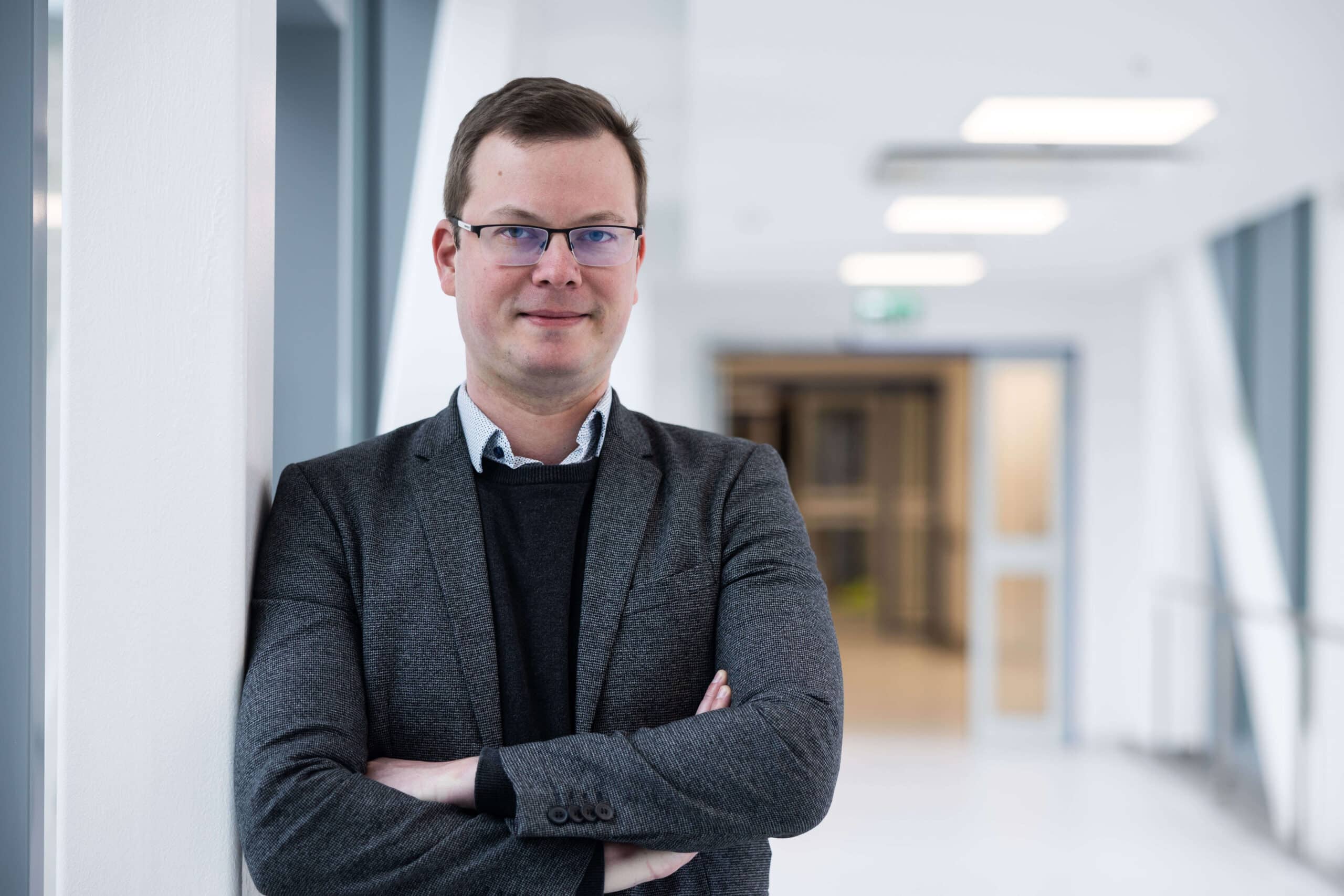
“I believe that no higher education institution can be satisfied with just providing the best education; it must also pay attention to the well-being of its students,” pointed out Dr. Péter Vámosi, Head of the Directorate of Supporting Services and Student Relations, in connection with the university’s plan to renew the student services system in order to enhance the student experience and satisfaction. He added that the issue of student well-being was not only a matter of the university’s own commitment, but also an important part of European quality assurance standards for higher education. The directorate’s remit covers everyone who studies at the university, and its primary goal is to standardize the quality of services provided by Semmelweis University, Dr. Péter Vámosi told our website. At its meeting on November 27, the Senate of Semmelweis University decided to establish a new directorate under the rector’s leadership, while at the same time discontinuing the former Directorate for Student Services.
Dr. Péter Vámosi believes that the university does not currently provide various student services in a uniform manner, which is partly due to the fact that, in addition to the organizational units of the faculties, the central organizational units also have such tasks, and the division of labor between the units within the latter also needs improvement.
In the future, we would like to establish more targeted and focused central coordination and management in order to provide smoother services, in close cooperation with university student organizations, and within those, primarily with the Students’ Union and the Doctoral Students’ Union. – Dr. Péter Vámosi
He added that the university management considers the work of student organizations to be important, and that they can continue to count on support for their tasks and activities that are performed in the interests of the university and are aimed at enriching student life.
The new directorate’s tasks also include supporting the work of the vice-rector for educational affairs in coordinating and supervising scholarships awarded in cooperation with the Students’ Union (HÖK). The goal is to ensure that the system operates in a stable, transparent, and – as far as possible – simpler manner through the implementation of appropriate control mechanisms and smooth administration. To this end, under the leadership of Dr. Péter Hermann, Vice-Rector for Educational Affairs, a review of the regulations, operations, and labor requirements of the processes is currently underway.
“In addition, we wish to strengthen the prestige of certain scholarships, such as the National Higher Education Scholarship, to the extent possible,” said Dr. Péter Vámosi. In the case of the latter, he would like to propose making the awarding of the scholarship more formal and ceremonial, and they are also examining the possibility of initiating an increase in the amount.
In 2019, the university’s leadership launched a process to name several scholarships awarded within its own jurisdiction after outstanding predecessors at the university: Thus, the educational scholarship became the János Bókay Scholarship, and the one for public work the János Szentágothai Benefit. “It would be good if students were not only informed about these through a message sent in the Neptun system, given that the university wants to recognize good academic and research results or outstanding public work in as many ways as possible,” the director noted.
Another important task this year will be to expand the number of staff in the directorate in order to perform tasks to an appropriate standard and to develop new services and opportunities, Dr. Péter Vámosi said. He considers it a priority that the various services provided by the university to students (e.g. coaching; counseling related to burnout, substance use, and mental health; mental hygiene services, and mentoring programs) be available to everyone on equal terms and consistently, regardless of faculty or language of instruction. In order to achieve this, he regards it as necessary to monitor services continuously based on data and to ensure that students have the opportunity to provide feedback, including comments on the organization as well as the professional content. “Data is needed to make good decisions,” Dr. Péter Vámosi believes.

“It is equally important that students are kept informed about the opportunities and services there are to support their progress, that they are aware of their content and benefits, and that the necessary capacities are available accordingly,” emphasized Dr. Péter Vámosi.
He also considers regular student satisfaction surveys important because with the results of these surveys the directorate can help prepare decisions on larger-scale infrastructure developments at the university and develop smaller projects, such as classrooms and student spaces. In cooperation with HÖK and faculty leaders, an assessment of the condition of the rooms functioning as student spaces is currently underway, and suggestions are being sought as to which buildings are most in need of improvement in this regard.
“I think it is extremely important to help make the lives of international students here easier and to support their settling in. We need to provide coordinated services that help students in their first few weeks, from visa administration to opening a bank account, finding accommodation, and purchasing a phone,” the director added. In the longer term, he would like to see the range of discounts made available to students by the Family-Friendly University Center expanded. As an example, he mentioned that it should be examined whether the discount system supporting sports activity could be extended in some form to them and to doctoral students.
Among his long-term goals, he mentioned the development of a system to monitor the dropout rate so that those at risk can be identified in time. In collaboration with the university’s Doctoral College, he has already initiated research to develop the most effective warning system possible.
“We will continue the programs we have already started, building on a stable foundation,” said Dr. Péter Vámosi, former Head of the Semmelweis Doctoral Students’ Union (DÖK), who has also served as president of the Association of Hungarian PhD and DLA Candidates (DOSZ) from January 1, 2026. Among his plans, he mentioned research comparing the benefits available at doctoral schools operating in Hungary, a survey examining the role of supervisors in determining the success of doctoral students and the differences in this respect between universities and doctoral schools in the country, as well as a national mental health survey. Another major task this year will be to organize the conference of the European Council of Doctoral Candidates and Junior Researchers (Eurodoc) in June.
Melinda Katalin Kiss
Translation: Dr. Balázs Csizmadia
Photos by Bálint Barta, Boglárka Zellei – Semmelweis University