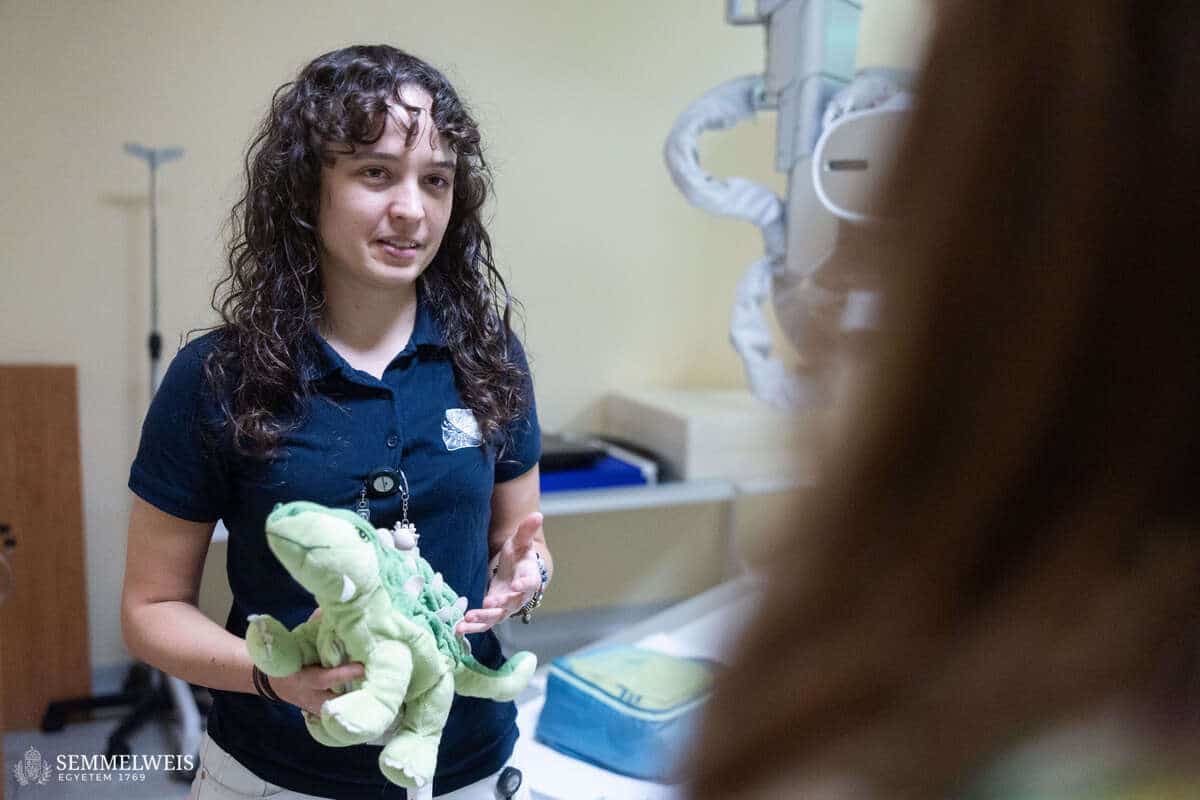
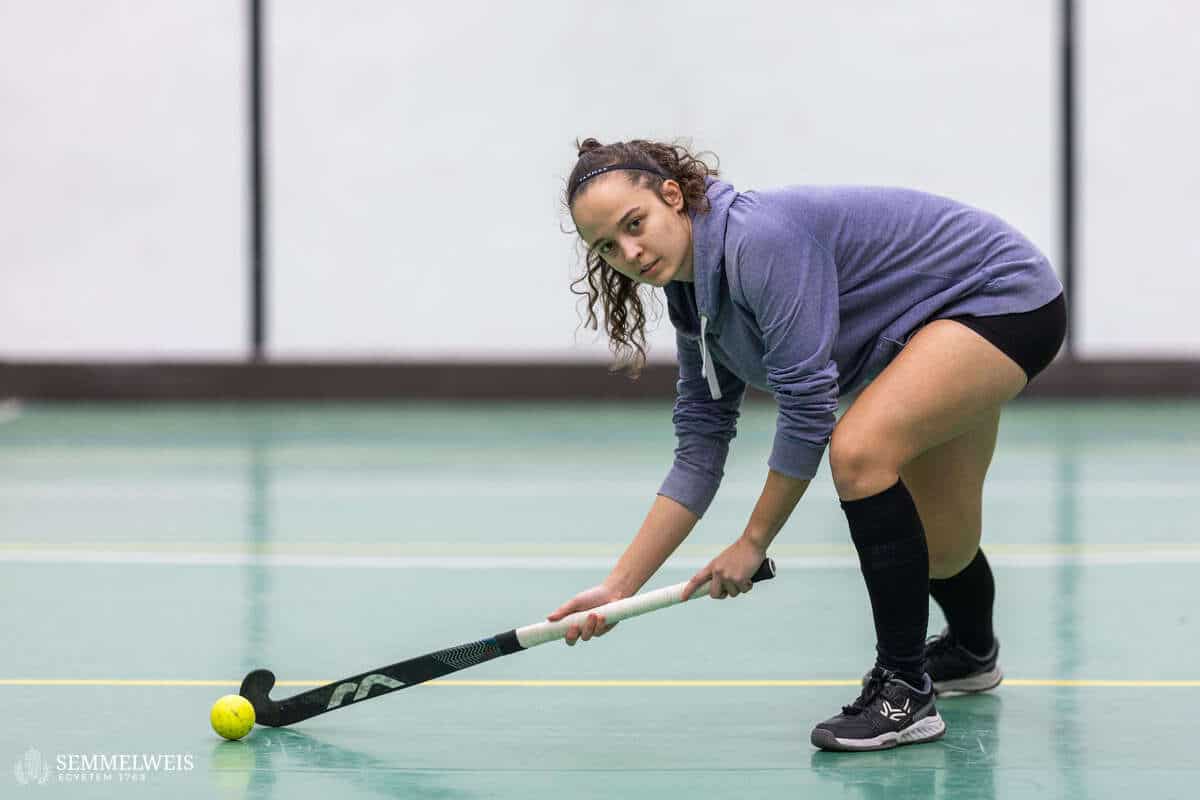
After a quick late lunch at the end of the shift, it’s time for another round of X-rays. The green plush dinosaur, an important accessory for examining children, is returned to its home in the basket. The dosimeter is set aside in a drawer until the next day. A large stickbag, weighing about six kilos, emerges from the closet, and off she goes to the sports field in City Park. “The bag has a distinctive shape, and I’ve been stopped several times on my way to and from the center by students from the German program who ask me where they can play field hockey,” says Zsuzsi Tóth as she shows us the equipment hidden in the bag: jerseys, sticks, and balls.
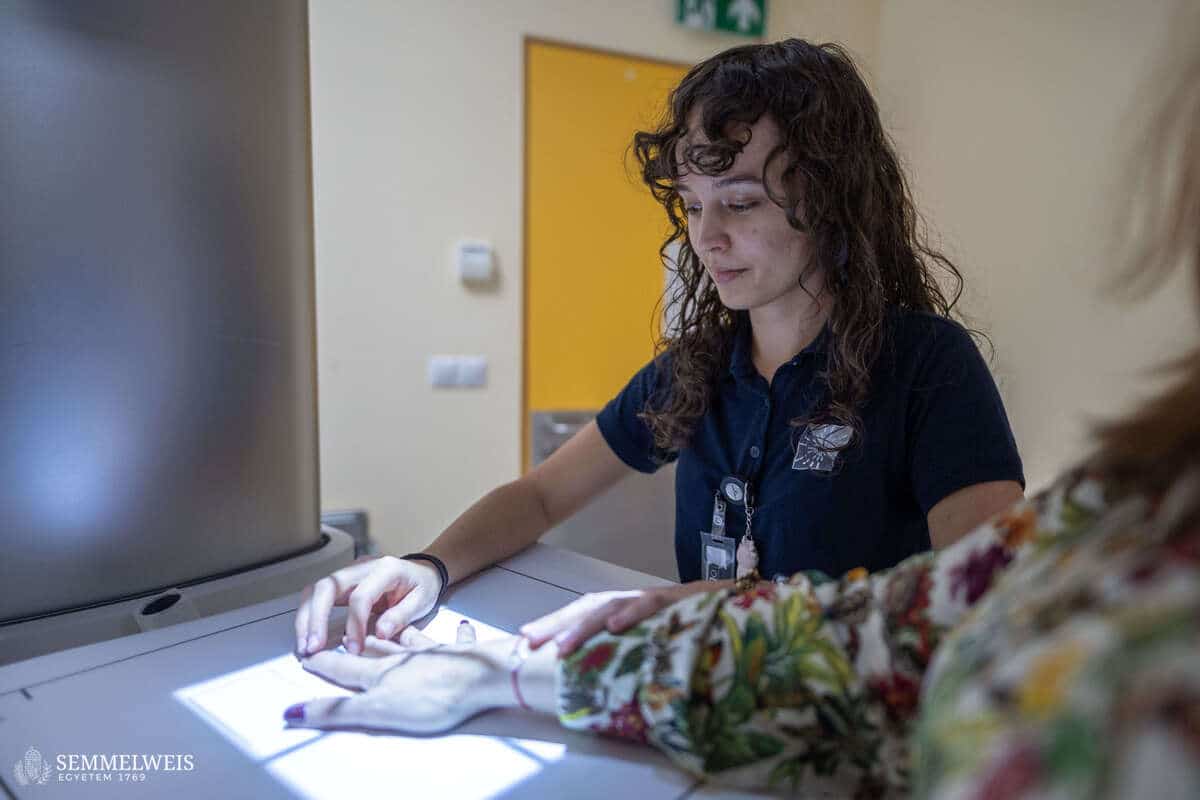
 The young X-ray assistant started working at the Medical Imaging Center (OKK) three years ago, but her commitment to healthcare and helping patients dates back much further. “There are doctors and health visitors in my extended family, so I was introduced to the field at a young age. It also became clear very early on that I needed to choose a vocation where I can work with people, or more precisely, where I can help people. After high school, I first obtained a massage therapist qualification at the Raoul Wallenberg Multipurpose Vocational Training Institution of Semmelweis University. I have been playing sports since I was a small child, I have been playing field hockey for 11 years, and before that I played competitive soccer, basketball, and did jiu-jitsu, and I also used to swim, so this seemed like a very natural and practical career choice. I felt that this could be my calling, as it would be very useful for me as an athlete, and I could even help my teammates,” recalled Zsuzsi, adding that she discovered field hockey by chance. “On our way to the high school orientation camp, we chatted about sports with our homeroom teacher, who talked about field hockey. When I told her that I was a competitive athlete, she simply said, ‘Zsuzsi, then you’ll be playing field hockey starting in September!’ And that’s how it happened: I started in the fall and immediately fell in love with this sport,” she shares her story.
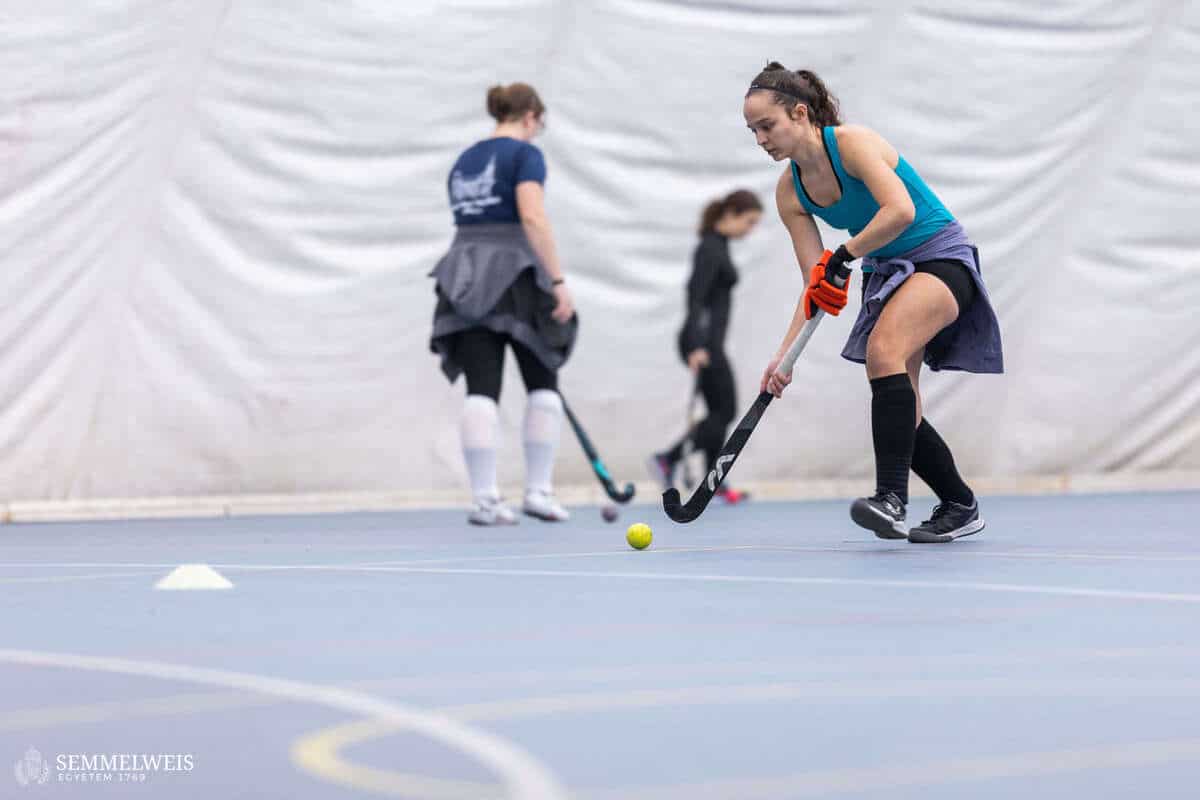
Field hockey is a team sport originating in England. It has been an Olympic sport since 1908. It is played by two teams, each with 10 field players and one goalkeeper, in four 15-minute quarters. The aim of the game is to maneuver a solid plastic ball with a circumference of approximately 225 millimeters and a weight of approximately 160 grams into a handball-sized goal on a field roughly the size of a soccer field using a special curved stick. The Hockey World Cup is held every four years and the EuroHockey Championship every two years. Women’s field hockey was first introduced to the 1980 Olympic Games in Moscow.
When it came to choosing a career path, something drove her even further; she felt that she wanted to delve deeper into healthcare and get even closer to patient care. “I have been interested in emergency medical services for a long time, so I obtained my paramedic qualification, but this was during the COVID pandemic, when we could gain much less practical experience due to the lockdown. However, we had amazing theoretical instructors, and that’s how I fell in love with radiology. I had an epiphany: As an extremely active child and then an athlete, I was somewhat familiar with the world of medical imaging. I had been to the X-ray lab quite a few times and remembered being fascinated by it even back then. That’s how I became a qualified radiology assistant, and since I had already caught the attention of the staff during my internship, I started working at OKK immediately after graduating,” she recalled.
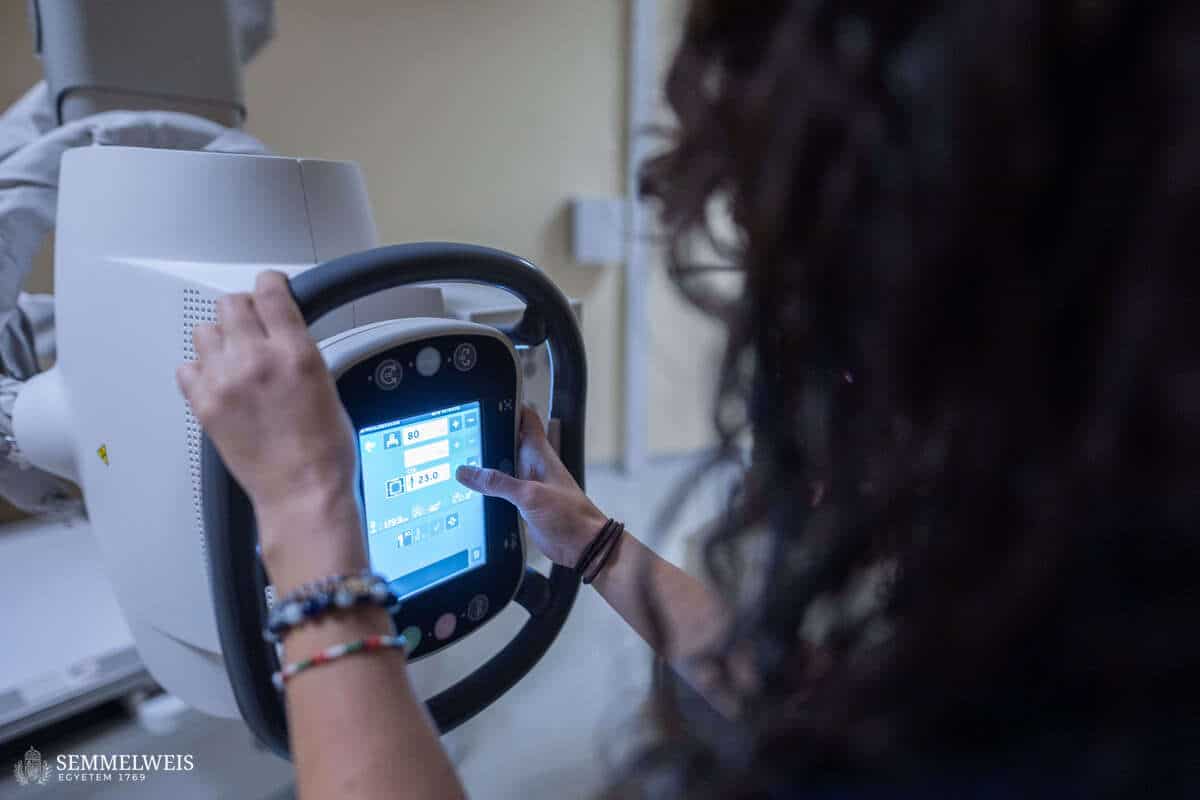
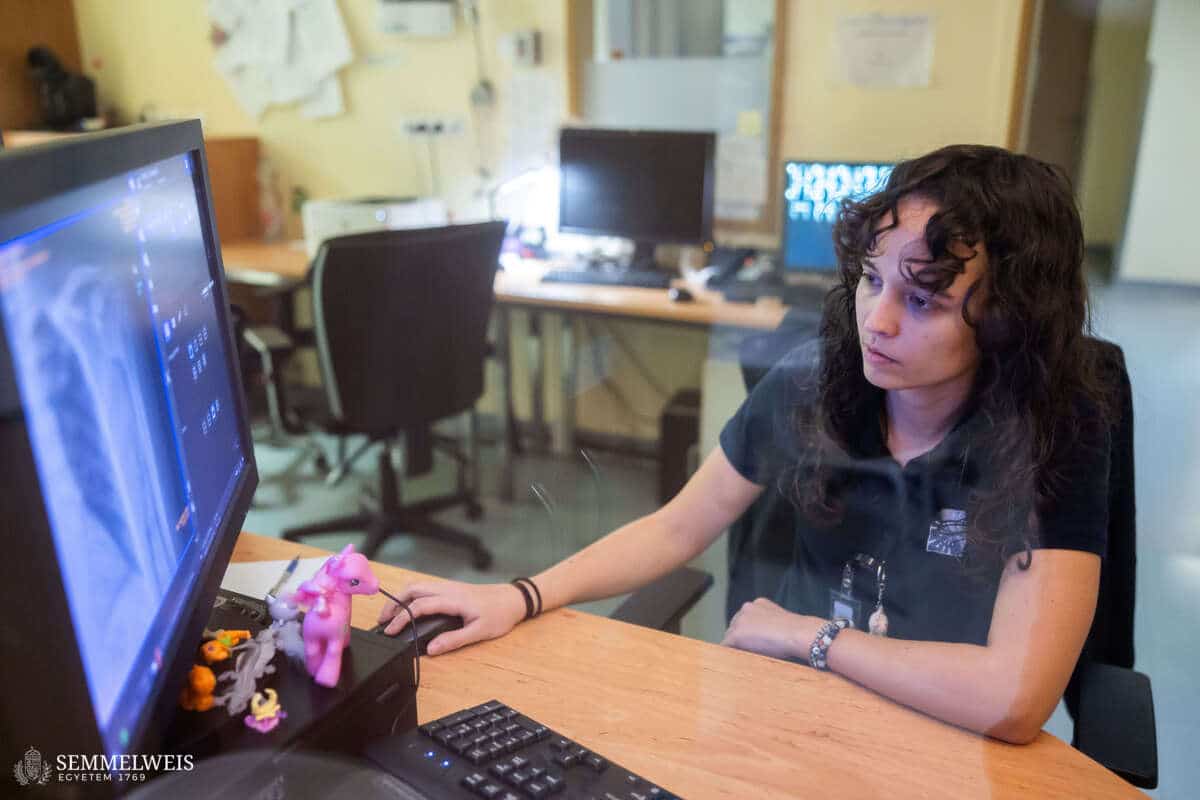 As she said, she got into a very good working environment where she receives all the help she needs for her professional development and to fulfill her potential as a competitive athlete. “I mainly work in the X-ray department, participating in acute care, but I also work in the emergency X-ray department and assist with ultrasounds in both the transplant and outpatient sections. We have a lot of orthopedic cases, including many children, who are of course our absolute favorites. We ‘run’ a complete plushie zoo to ensure that kids arrive in the friendliest possible environment and have the best possible experience during each examination. Sure, there are tough days, too: In the ER and trauma unit, we encounter a lot of serious injuries, tragic fates, real life-and-death situations. This is perhaps where the power and importance of this amazing teamwork is most evident: When a patient’s life literally depends on minutes, it is our duty to prepare the imaging as quickly and accurately as possible so that the other team members involved in the care – doctors, nurses, and allied health professionals – can begin treatment, therapy, and often life-saving interventions as quickly as possible,” she explained.
She shared that the center staff can count on each other in more than just tense situations. She also owes her opportunity to travel to the European championship finals largely to her colleagues.
In addition to scheduling shifts to fit in three training sessions a week and five during competition season, as well as participating in weekend tournaments, they organized a fundraiser before the European championship to support our participation. This was because we, the team, had to finance the trip ourselves. It was incredibly touching to see the solidarity – with OR nurses, doctors, and radiologists sharing the post or encouraging others here at the center to support the team. It gave me the tremendous mental strength I needed because preparing for the European championship was physically challenging.
Zsuzsi recalled that, on one occasion, the team bus picked her up from the center after her night shift when they were headed for a training match in Zagreb.
Gallery
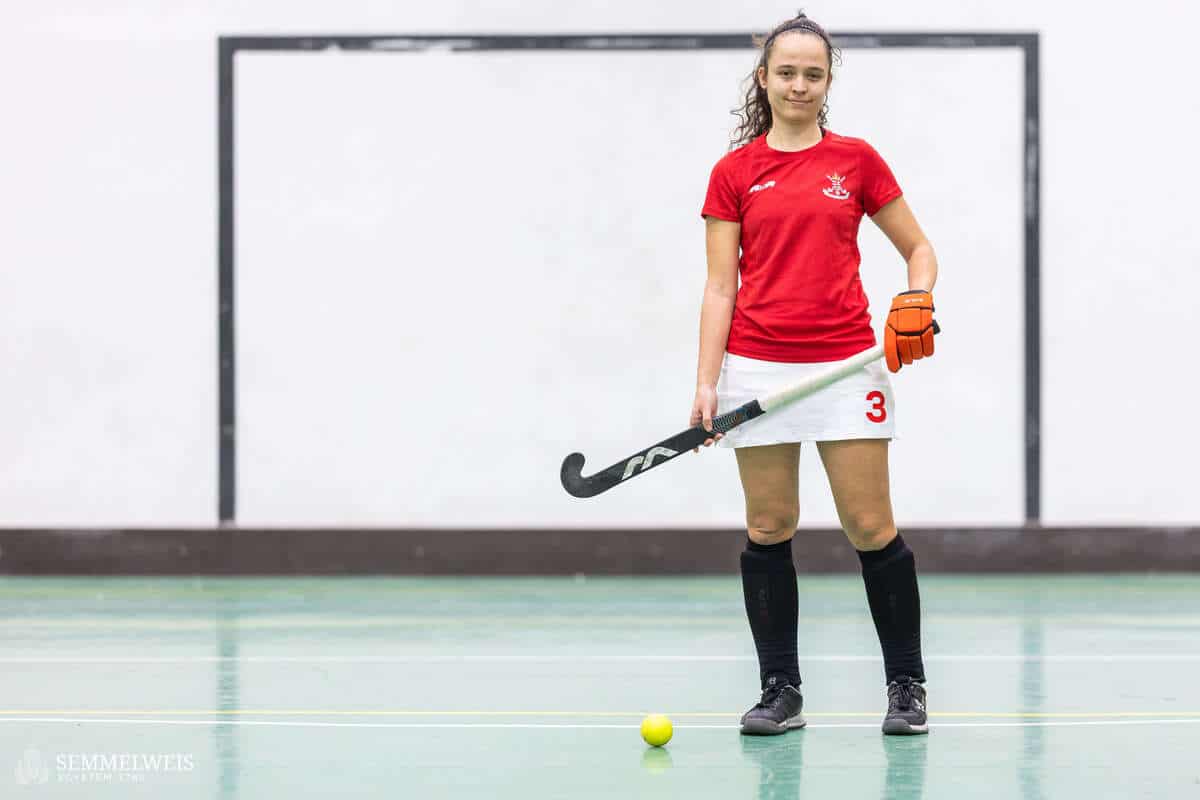
“We trained a lot with the Croatian national team, because although field hockey is an Olympic sport, it is a relatively ‘small-scale sport’ with only a few teams. If we want opponents of a suitable level, we need to travel: the Croatians, Slovaks, and Slovenians are particularly strong. But in addition to team training, each player must also do their part individually. During the preparation period, for example, I get up at four in the morning, go for a run, then do strength training, take a quick shower, and come to work at 8 a.m. In the afternoon, I head to training,” she added.
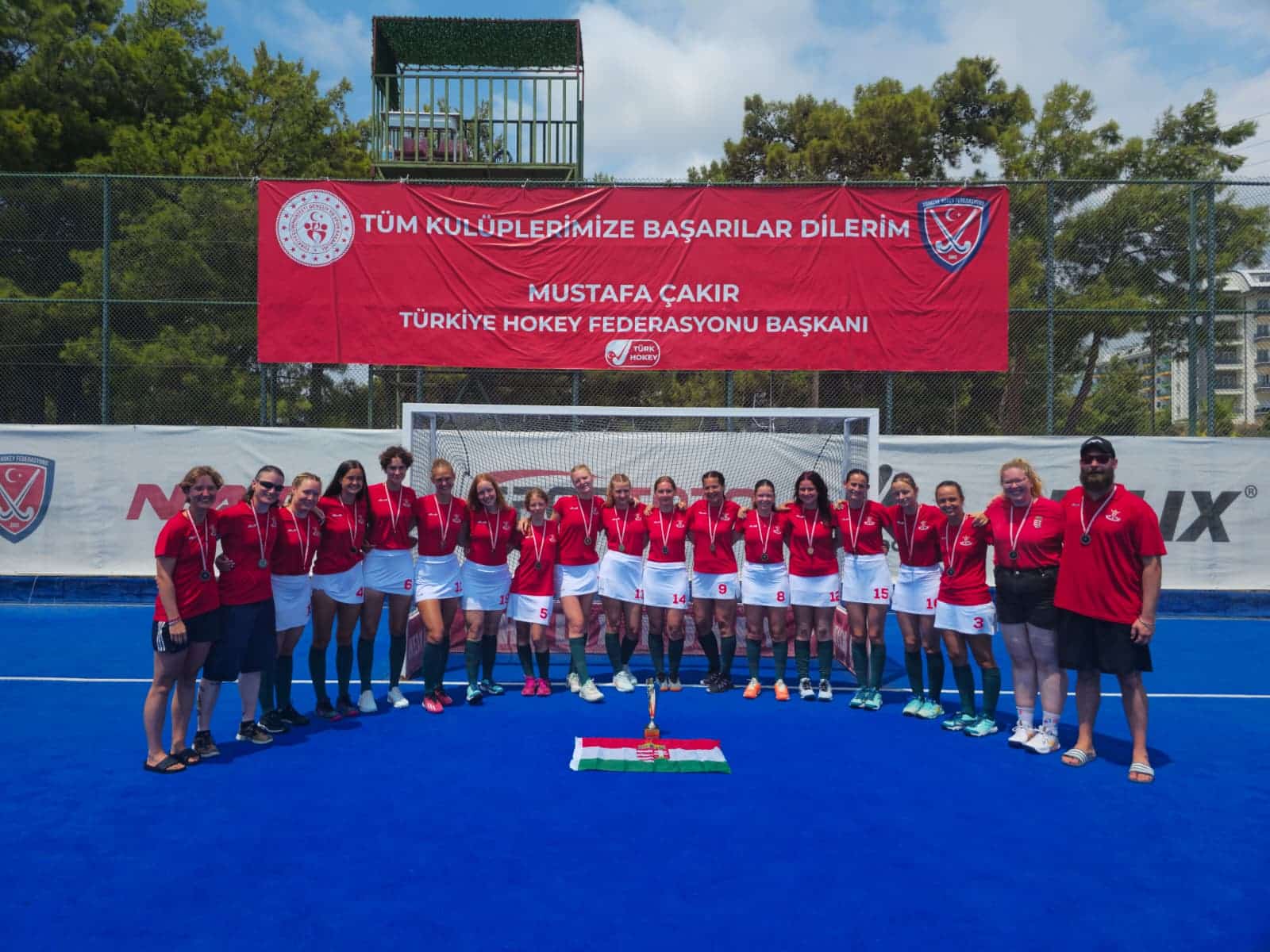
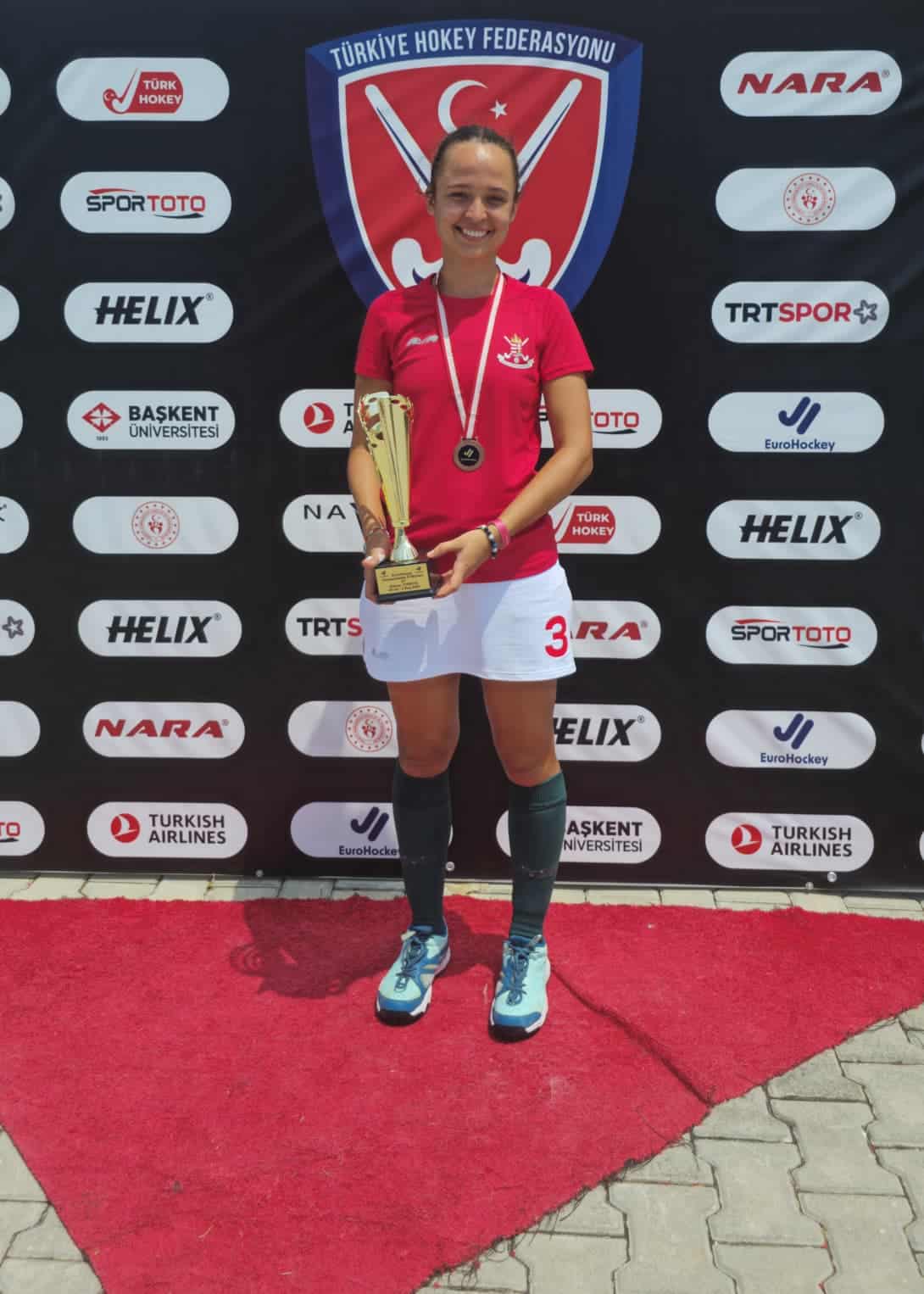 The joint effort and Zsuzsi’s hard work paid off: She got to stand on the podium at the 2025 EuroHockey Championship III, as the national team won the bronze medal. “It was a wonderful moment! We did our best, even though we were playing in the scorching heat of the Turkish summer. Our coach shared with some concern that he had walked over to the stands, where it was 41 degrees Celsius in the shade. But we made it! My parents were also very happy. My mother was quite worried, as field hockey is not without its dangers. The ball is made of solid plastic. I hit it at 60 kilometers per hour, but one of the men’s team’s Olympic gold medalists hit the ball at 120 kilometers per hour. I was fortunate enough to never suffer any serious injuries, apart from a few minor ones – a split eyebrow and a mild concussion. I try to be extra careful so that my colleagues don’t have to take care of me, and so that I’m not the one who ends up in the next X-ray picture!” she remarked.
Zsuzsi shares that her goal now is to develop her skills in X-ray and ultrasound to the highest possible level and then move on to diagnostic imaging.
“During our on-call shifts, we get to see the work of our CT colleagues, which I find fascinating. What’s more, the center has a photon-counting CT scanner, representing the current state of the art in this field worldwide. This gives me plenty of motivation! In terms of sports, my goal is to compete in the 2027 European championship. Before that, I want to perform as successfully as possible in the qualifying matches leading up to it!” she said, sharing her ambitions.
Éva Fekete-Obreczány
Translation: Judit Szabados-Dőtsch
Photos by Bálint Barta – Semmelweis University; Zsuzsanna Tóth