“Lower back pain, also known as sciatica or lumbago, is a widespread condition. According to health insurance data, it is one of the main causes of long-term sick leave and, if left untreated, mobility impairment. That is why it is important to distinguish between trivial cases and those in which seeing a doctor is necessary,” Dr. György Nagy explains.
As he says, in Hungary, many people immediately consult a doctor when they have pain in the lower back, while others who would really need to do so downplay the problem and only seek help when their symptoms worsen or become persistent.
 “In most cases, it is not necessary to see a doctor if the lower back pain is the result of physical effort, such as moving a heavy object. Most people are not used to this type of exertion, so pain develops from overstraining the muscles and ligaments, which is usually mild, moderate pain that subsides spontaneously, eases at rest, and does not radiate to the limbs. This type of lower back pain can be relieved with rest and over-the-counter painkillers, and it goes away on its own,” Dr. György Nagy points out.
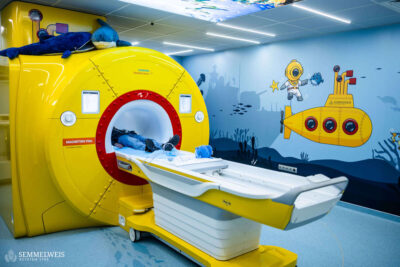
Nevertheless, one common cause of lower back pain, a slipped disc, requires specialist medical care. “This typically results in pain that radiates in one direction and is sometimes very severe; it may be accompanied by numbness or even paralysis, as well as problems with bowel and bladder control. Disc herniation can also be caused by sudden exertion, and if this is the problem, surgery may be necessary, but this is a joint decision between a neurologist, neurosurgeon, and rheumatologist, and may be preceded by an MRI scan,” the director emphasizes.
It is also possible that a vertebra cracks under heavy strain, not only in the lumbar region, i.e., the lower back, but in any section of the spine. This is accompanied by intense pain, which may not necessarily be relieved by rest. In such cases, specialist care or even hospital treatment may be required. Dr. György Nagy stresses that a specialist examination is important in such cases because vertebral compression fracture can be caused by osteoporosis, but also by a number of other conditions.
Medication is not always a must
Painkillers and various anti-inflammatory drugs are not necessarily the solution for lower back pain. In the case of chronic lower back pain, regular physiotherapy is the most effective treatment. Hungary has a long-standing tradition of excellence in physiotherapy, including balneotherapy, but various electrical and ultrasound treatments can also be very helpful for patients with lower back pain. Those who prefer medication, however, should read the package insert carefully.
Dr. György Nagy also draws attention to a type of lower back pain that is not associated with sudden and great physical exertion. Instead, this type of pain develops gradually, with stiffness in the lower back after waking up. It is not radiating in nature, but may be associated with various conditions: psoriasis, inflammatory bowel disease, different forms of eye and peripheral joint inflammation, as well as tendonitis.
These so-called spondyloarthritides mostly occur in young adult men, often show a family history, and, since those affected typically do not see a doctor for a long time, unfortunately often lead to permanent mobility impairment.
The director therefore advises those who experience pain in the lower back not only during physical activity but also at rest to consult their general practitioner by all means. In the event of sudden and extremely severe pain, inability to move a limb, decreased muscle strength, reduced bowel and bladder control, or numbness in the perineum or legs, it is important to seek emergency medical attention as soon as possible.
“In addition to the above, psychological factors may also be behind lower back pain, in which case identifying and treating psychosomatic causes will help the patient the most,” Dr. György Nagy notes.
Éva Haiman
Translation: Dr. Balázs Csizmadia
Photo by Boglárka Zellei – Semmelweis University; illustration: iStock – InnerVisionPRO