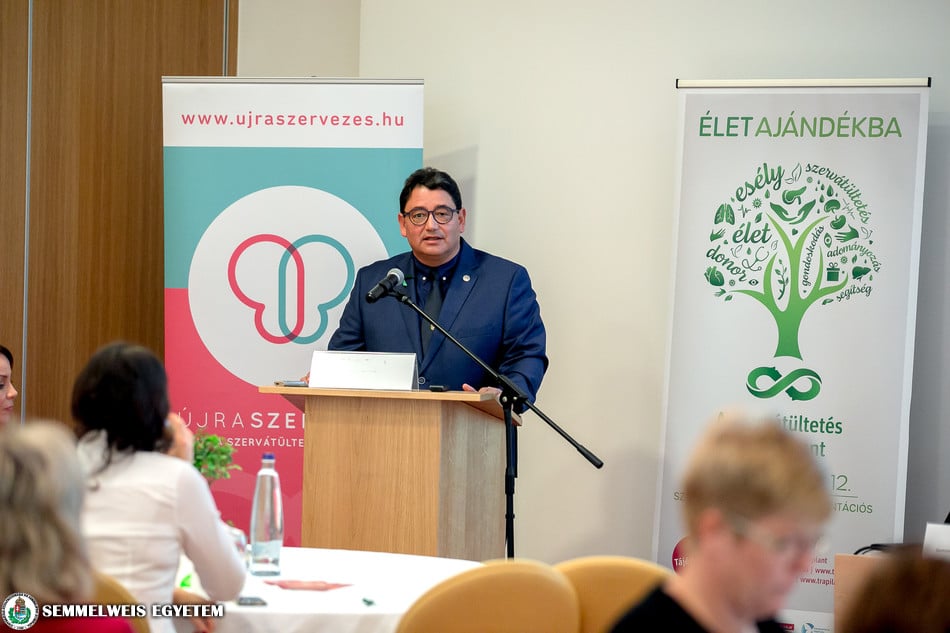
 Based on the number of deceased donor kidney, liver and heart transplantations, the Department of Transplantation and Surgery and the Városmajor Heart and Vascular Center are among the top centers in Europe: among Eurotransplant members, Semmelweis University is second in heart transplants, fourth in kidney transplants and fifth in liver transplants, Dr. Béla Merkely, the university’s rector and the director of the Városmajor Heart and Vascular Center said at a press conference about the upcoming European Day for Organ Donation and Transplantation on October 12. He pointed out that the number of organ transplants increased by 10% last year, including a 15% rise in heart transplants. Of the total 505 transplantations carried out in Hungary, 327 were performed at the university. Transplantations are very complex procedures that require close cooperation between 100 professionals, around one-third of whom are doctors and two-thirds are other health care professionals, he said. He added that transplantations require being prepared 24/7, around the clock, noting that just this past weekend there were six kidney, three heart and one liver transplants performed at the university.

The rector also pointed out that in its current 250th anniversary year, the university has set the goal of becoming one of the top three centers in Europe over the next five years in every organ transplantation, and number one in at least one type of organ transplantation. “We have set this goal not just because it would give us pride but also because it would mean we can help more and more people in need,” he declared.
 Dr. Ferenc Rényi-Vámos, the director of Semmelweis University’s Department of Thoracic Surgery operating on the basis of the National Institute of Oncology (OOI), recalled that the first lung transplant in Hungary was performed in 2015 in cooperation between the university and OOI. In the first year after the program started, 17 transplants were performed, and since then the number of transplantations has been above 20 each year, which is a point of pride, as it usually takes new centers years to reach this capacity. He pointed out that Hungarian experts learned the procedure in Vienna, which has the only world-class program in neighboring countries. Results here are similar to Austria, with the one-year survival rate at 77% in Hungary, he noted, adding that he would like lung specialists to recommend transplantations more.
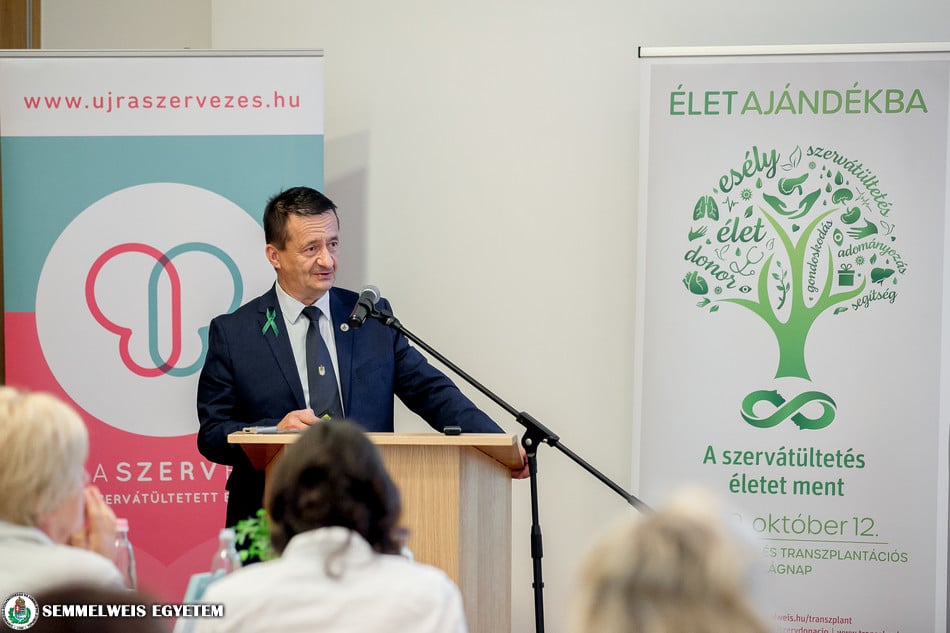 Dr. László Kóbori, the director of Semmelweis University’s Department of Transplantation and Surgery, talked mostly about liver transplants, noting that it is a life-saving procedure following which patients can live long, high-quality lives. He pointed out that the liver transplant program of the university started in 1995, and after 24 years 71% the patients are still alive, while the five-year survival rate is more than 91%. Liver transplants can be recommended for a variety of indications, and it is the only organ where even certain cases of cancer can be addressed with transplantation. Among future goals, he mentioned the development of split and living-donor transplantations.
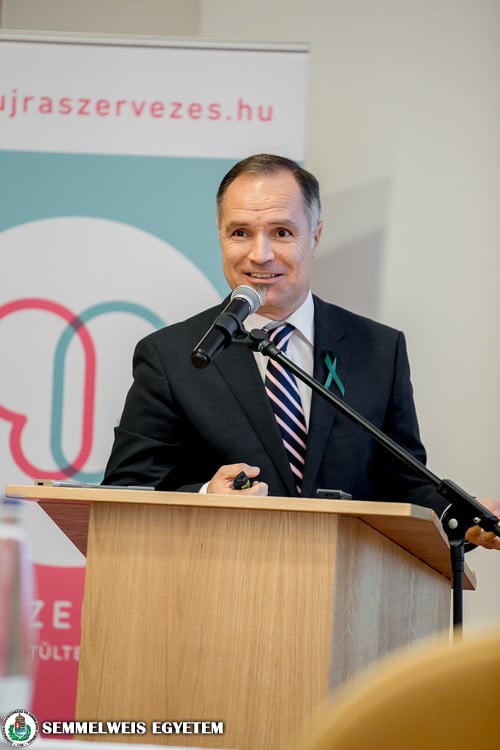 Speaking about kidney transplantations, Dr. László Wágner, an associate professor at the Department of Transplantation and Surgery noted that limited kidney function does not show any symptoms for a long time, so in half the cases patients are close to end-stage by the time the problem is discovered and they are put on dialysis machines or receive a transplantation. Kidney transplants provide better quality of life than dialysis, while living-donor transplants provide even better quality of life. Transplant patients also need constant aftercare, where their cooperation is essential – in one-third of cases where the organ is rejected this is the reason.
Donating organs saves lives and we are the ones that can give the organs, said Dr. Sándor Mihály, the transplantation director of the National Blood Transfusion Service (OVSZ), noting the importance of making a decision about what should happen to our organs after we die. If we support organ donation, we should talk about this with our families, since they will be their in those tragic moments when the doctor talks about organ donation in case of brain death.
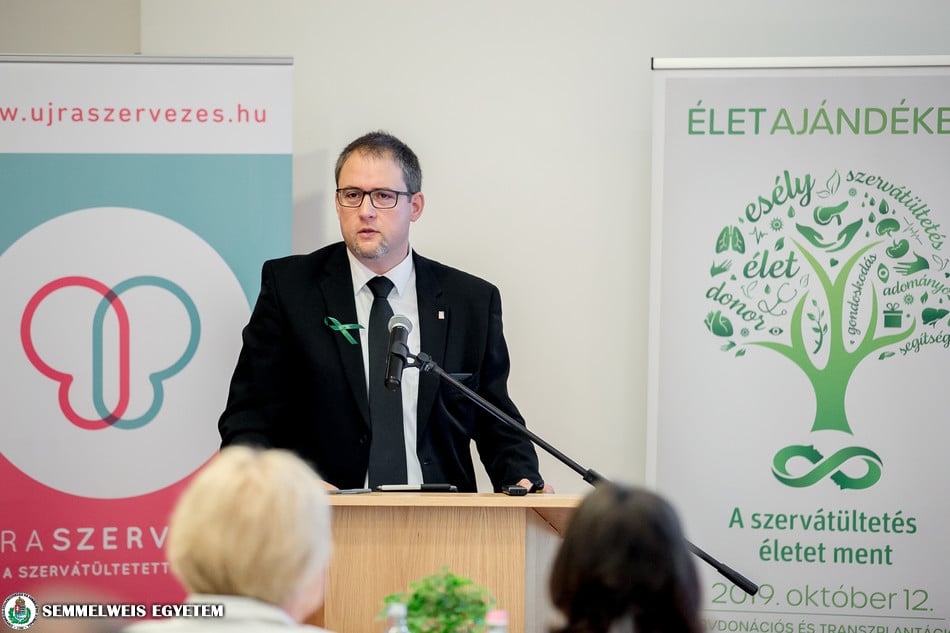 Studies show that 73% of Hungarians would offer their organs for transplantation, but only 23% are familiar with the laws on organ donation. Hungarian laws are based on assumed consent, meaning that if a person did not explicitly prohibit it in writing, their consent should be assumed.
The OVSZ director also listed some recent statistics showing that in the five years since Hungary joined Eurotransplant, the number of organ transplants has increased by 46% in Hungary. The number of deceased-donors has also increased significantly, by 22%.
Pálma Dobozi
Translation: Tamás Deme
Photo: Attila Kovács – Semmelweis University