Luca Róka, a member of the Data Science in Healthcare and ArtificiaI Intelligence Knowledge Center at the Health Services Management Training Centre of Semmelweis University, in her presentation titled “AI Quick Guide – How to Use AI Effectively and Safely” at the 25th National Professional Congress of FESZ, held in Cegléd on 25 September 2026.
She mentioned several hot topics: What exactly is AI? What is an LLM and how do the most well-known AI models differ from one another? When is it better to use Google Search and when might an AI tool be more useful? And perhaps most importantly, when should we not trust AI?
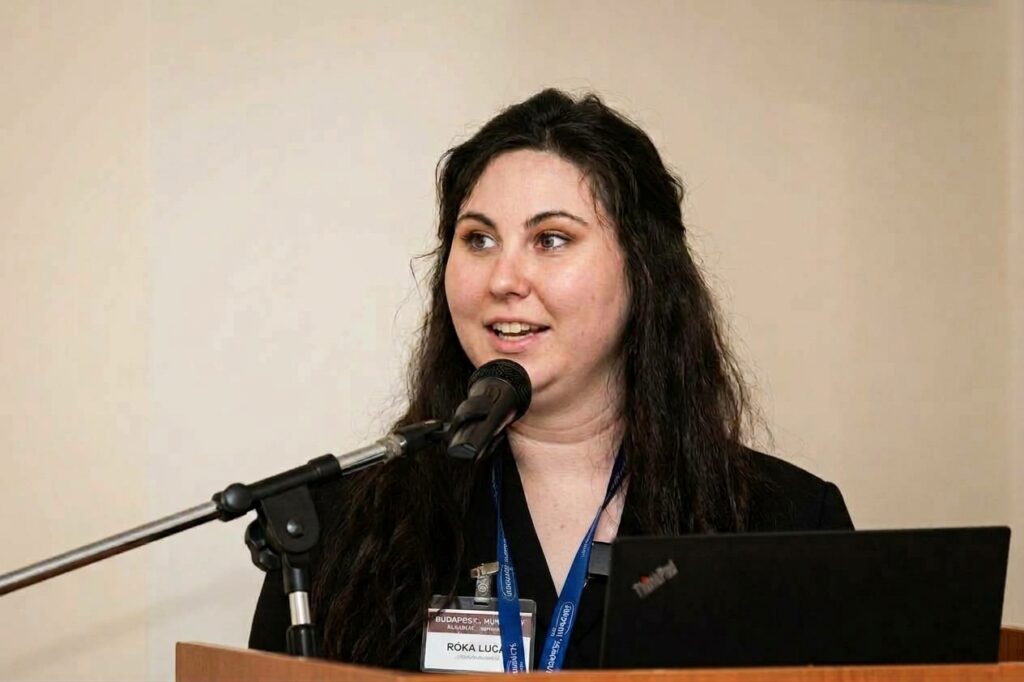
The annual FESZ professional congress is also an accredited, credit-bearing continuing education program for healthcare professionals. In this context, understanding how to use AI effectively, critically and responsibly is becoming an increasingly important part of professional development.
The 20-minute, practice-oriented presentation introduced the key concepts of the AI landscape before exploring how and for what purposes these tools can be used in everyday life and at work. Topics included the capabilities of different AI models, AI applications that can support learning, Gemini Notebook and a range of other useful AI tools.
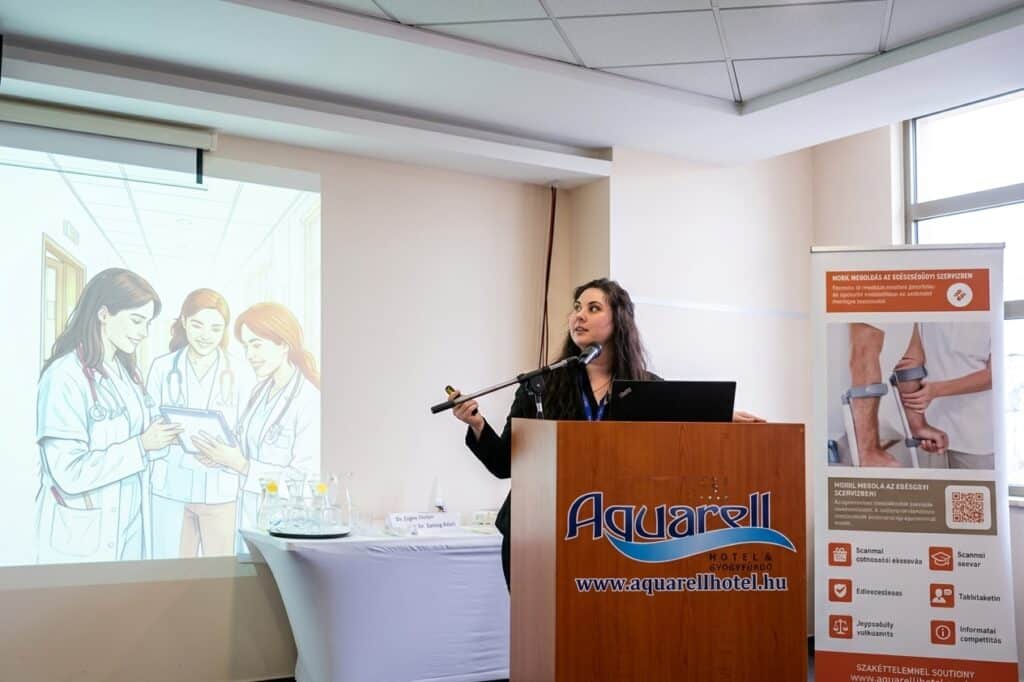
Alongside practical applications, safe and responsible use was a central theme. Luca explained why AI-generated information needs to be verified, what is meant by so-called “hallucinations,” what types of information should never be shared with AI tools, and in which situations AI-generated responses should be treated with particular caution.
The presentation also covered the basics of effective prompting and highlighted the importance of transparency. Where appropriate, it should be made clear when artificial intelligence has contributed to the creation of content.
AI was used to edit the photos.