| Pályázat: | TKP2021-EGA25 |
| Támogatási összeg: | 66.000.000 Ft |
| Időtartam: | 2021.08.0. – 2027.12.31. |
| Vezető kutató: | Mahmoud Al-Khrasani PhD, István Gyertyán PhD |
Summary
Our research focuses on two important factors in maintaining mental and physical health during healthy aging: preserving cognitive abilities and achieving a pain-free existence. Uncovering the complex neurochemical processes underlying brain aging is of paramount importance, as these mechanisms are directly linked to the decline in cognitive performance and to neurodegenerative diseases.
Our goal is to develop compounds with potential anti-aging effects, thereby helping to preserve neural functions and maintain mental performance. A particularly interesting area for us is the role of phenyl-amine derivatives, as certain compounds may exert beneficial effects even in trace amounts.
Neurodegenerative processes, which become more common in older age groups, can significantly contribute to the development of neuropathic pain. Therefore, the effectiveness of pain relief is important not only for pain itself but also from the perspective of cognitive health. While traditional painkillers, such as opioids, carry addictive potential and can also cause cognitive function decline, the development of alternative, non-opioid molecules and the repurposing of drugs approved for other indications are key in the treatment of neuropathic pain, thereby reducing the risks associated with classical analgesics.
Overall, our aim is to develop anti-aging agents and new approaches to treating neuropathic pain that promote the preservation of cognitive functions and delay neurodegenerative processes.
Participating leading researchers, collaboration partners, universities, companies
Dr. Mahmoud Al-Khrasani, PhD, clinical pharmacist, with more than 20 years of experience in the field of analgesics and central nervous system drugs. He participated in the successfully completed joint research and development project between MEDITOP Gyógyszeripari Kft. and Semmelweis University, funded by the National Research, Development and Innovation Fund (2018-1.3.1-VKE-2018-00030). Co-investigator in several K- and FK-grants.
István Gyertyán, PhD, biologist, with more than 30 years of pharmaceutical R&D experience in the field of CNS drugs. He is one of the inventors of cariprazine, the now blockbuster Hungarian original antipsychotic. In recent years, with his research group established within the framework of the National Brain Research Program, he has been working on a new rodent test system necessary for the development of cognitive-enhancing agents.
Collaboration partners:
- University of Vienna, Department of Pharmaceutical Chemistry
- George Emil Palade University of Medicine, Pharmacy, Science, and Technology of Târgu Mureș (UMFST) – formerly Marosvásárhelyi Orvosi és Gyógyszerészeti Egyetem (MOGYE), Department of Pharmacology and Clinical Pharmacology
- Research Centre for Natural Sciences, Hungarian Academy of Sciences (MTA TTK)
- Department of Anaesthesiology and Intensive Care Medicine, Charité University Berlin, Campus Virchow Klinikum and Campus Charité Mitte, Berlin, Germany
- Department of Drug and Health Sciences, University of Catania, Viale A. Doria 6, Catania 95125, Italy
- Department of Pharmacy and Biotechnology (FaBiT), Alma Mater Studiorum University of Bologna, Via Irnerio 48, 40126 Bologna, Italy
Applied methods and tools
Behavioural methods:
|
behavioural assay |
species |
equipment |
|
spatial navigation |
rat, mouse |
Morris water-maze, Barnes-maze |
|
attention |
rat, mouse |
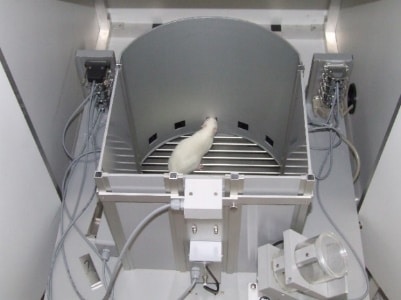
5-CSRTT apparatus |
|
cooperation |
rat |
Skinner-box |
|
visual discrimination |
rat |
touch-screen apparatus |
|
fear condtioning |
rat, mouse |
fear.condtioning apparatus |
|
procedural learning |
rat |
pot jumping setup, rotarod |
|
active avoidance |
rat |
shuttle-box |
|
passive avoidance |
rat |
passive avoidance box |
|
novel object recognition |
rat |
NOR box |
|
place.recognitoin |
mouse |
Y-maze |
|
spontaneous alternation |
mouse |
symmetrical Y-maze |
|
motor activity |
rat |
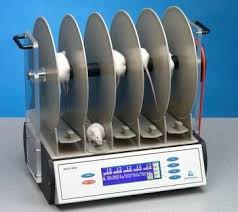
motimeter |
|
anxiety |
rat |
elevated plus-maze |
|
non-invasive blood pressure |
rat |
tail cuff BP apparatus |
|
home cage behaviour |
rat |
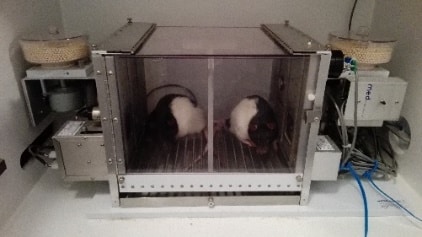
Phenomaster |
Pain tests:
|
pain assay |
species |
equipment |
|
acute thermal nociception |
rat, mouse |
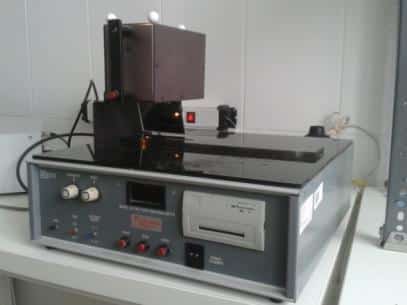
tail-flick test apparatus, hot plate test apparatus |
|
mechanical/tactile allodynia and hyperalgesia |
rat |
dynamic plantar aesthesiometer |
|
mechanical hyperalgesia |
rat |
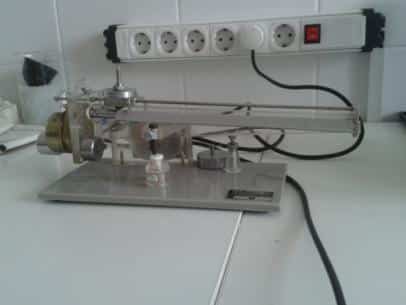
Randall-Selitto apparatus |
|
visceral pain |
rat, mouse |
chemical-evoked pain |
|
acute inflammatory pain |
rat |
formalin assay |
|
subchronic inflammatory pain |
rat |
carrageenan test |
|
chronic inflammatory pain |
rat |
CFA/FCA model |
Other methods:
|
other assays |
species |
equipment |
|
rat/mouse vas deferens assay |
rat, mouse |
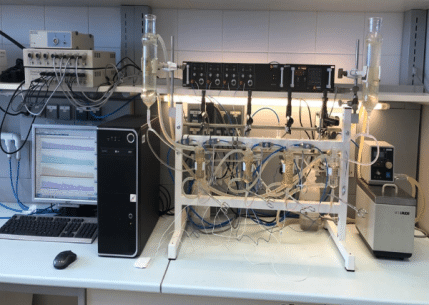
PowerLab apparatus |
|
motor function, coordination |
rat, mouse |
Rotarod apparatus |
|
righting reflex |
rat |
observation |
|
opioid withdrawal assay |
mouse |
popcorn assay |
|
guinea pig ileum |
guinea pig |
PowerLab apparatus |
Pictures
Gallery
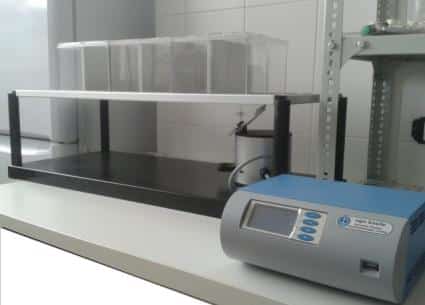
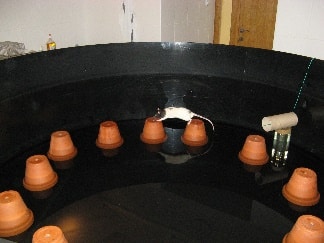
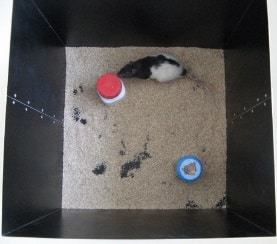
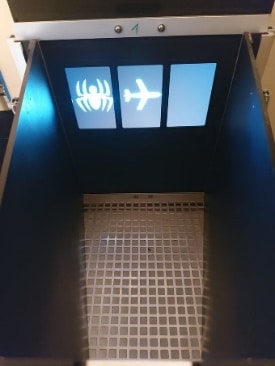
Mission and benefits
Our research centers on investigating nervous system mechanisms and dysfunctions related to aging. During our work, we identify new therapeutic targets and are establishing a highly predictive cognitive test system applicable in rodents.
Specific objectives:
- Investigation of the modulation of the trace amine-associated receptor (TAAR) and its signal transduction system by enhancer compounds in rat brain slices.
- Investigation of the effects of non-opioid receptor ligands on neuropathic pain in rats.
- Development of a predictive cognitive test system for mice.