History of the Building
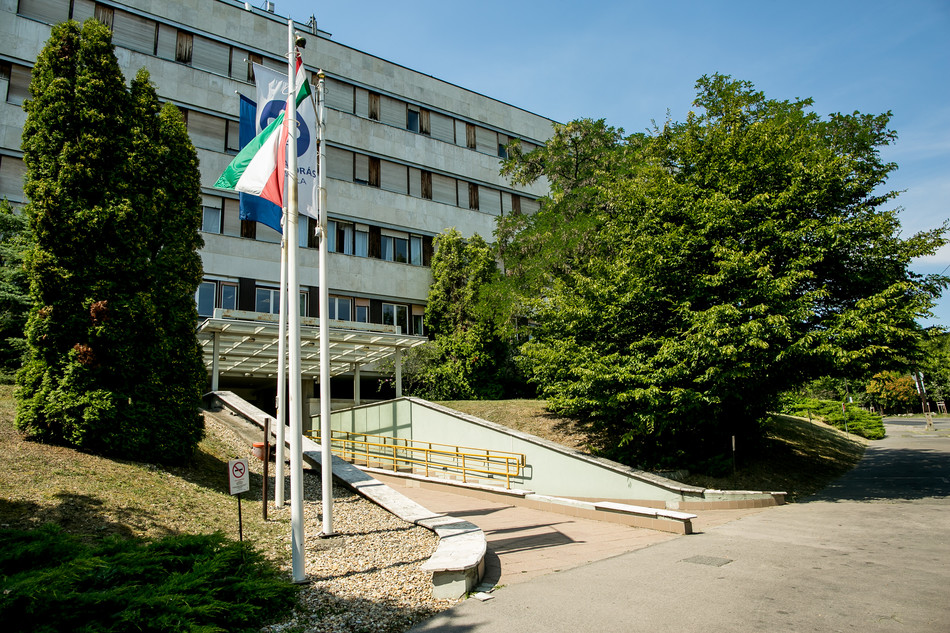
Located at 8 Kútvölgyi út in Budapest’s 12th district, this complex serves as the central hub for conductive pedagogy, rehabilitation, and related higher education both nationally and internationally.
The construction of the building was ordered by a government decree as early as 1963. Dr. András Pető, the creator of the method, was personally involved in its planning, while the chief architect was Antal Reischl, whose work was carried on by architect Sándor Szentirmay after Reischl’s death in 1979. Although construction began in 1976, the project suffered long delays due to various challenges, including contractor withdrawals and structural modifications required when transitioning from oil heating to natural gas.
Following years of challenging construction work, the building was officially opened on April 16, 1985. The new complex provided a fitting home for higher-level conductor training, the Children’s and Adult Outpatient Clinics, the Kindergarten Section, the International Section, the Aftercare Station, and the Parents’ School. Over the decades, the complex has undergone continuous development, including numerous energy-efficiency upgrades, modern educational technology integration, and accessibility improvements.
The Institution Today
The former Pető Institute and Pető András College integrated into Semmelweis University on August 1, 2017, and the building now operates as the headquarters of the András Pető Faculty of Semmelweis University. The building uniquely combines higher education, research, patient care, and public education. The eight-semester Bachelor of Arts in Conductor Education offered at the faculty stands out for its remarkably high practical training ratio of over forty percent, preparing specialists from all over the world in both Hungarian and English.
Services Currently Available
The services provided within the building are dedicated to the comprehensive development and rehabilitation of children and adults living with central nervous system damage (such as cerebral palsy, stroke, Parkinson’s disease, or multiple sclerosis).
The care based on conductive pedagogy encompasses early intervention for infants and young children, group and individual rehabilitation, independent living programs, outpatient specialist services, screenings, and modern robot-assisted therapy. Additionally, the complex houses educational institutions: it is home to the Early Childhood Development Centre, the Conductive Pedagogy Kindergarten, the Adult Rehabilitation Center and the International and National Services Center. The academic and research background is provided by the Dean’s Office, professional institutes and the Mária Hári Faculty Library.