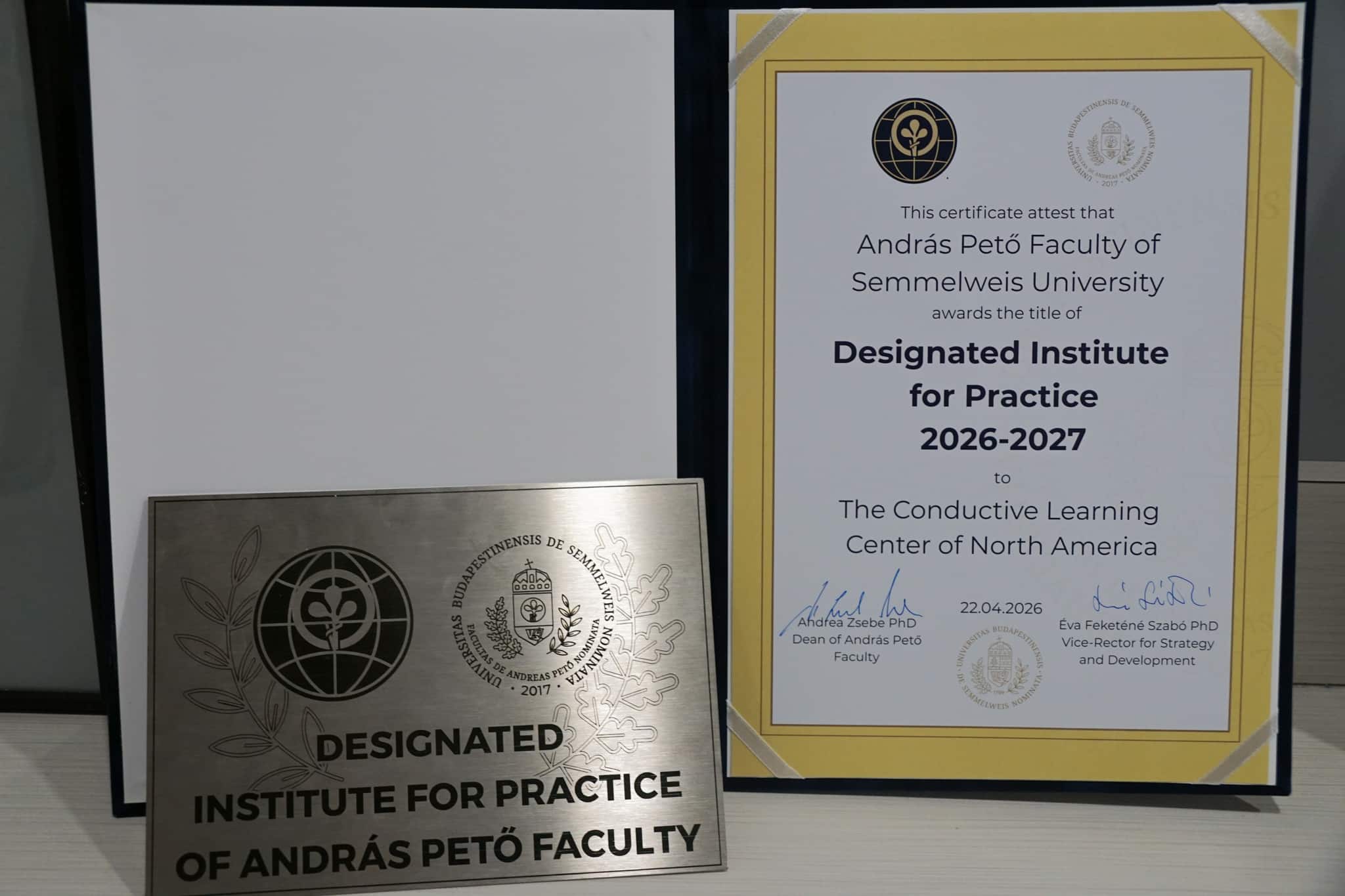
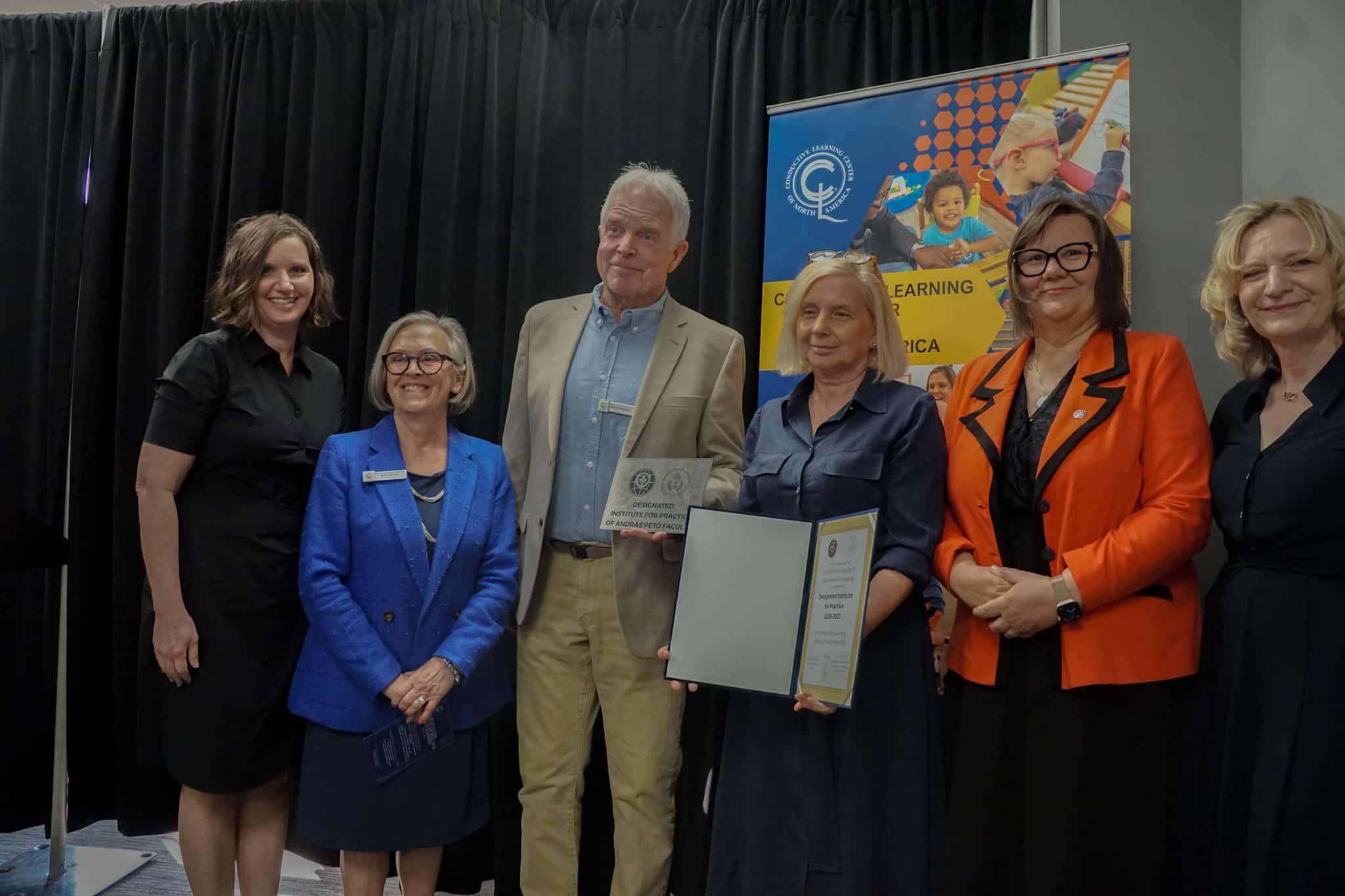
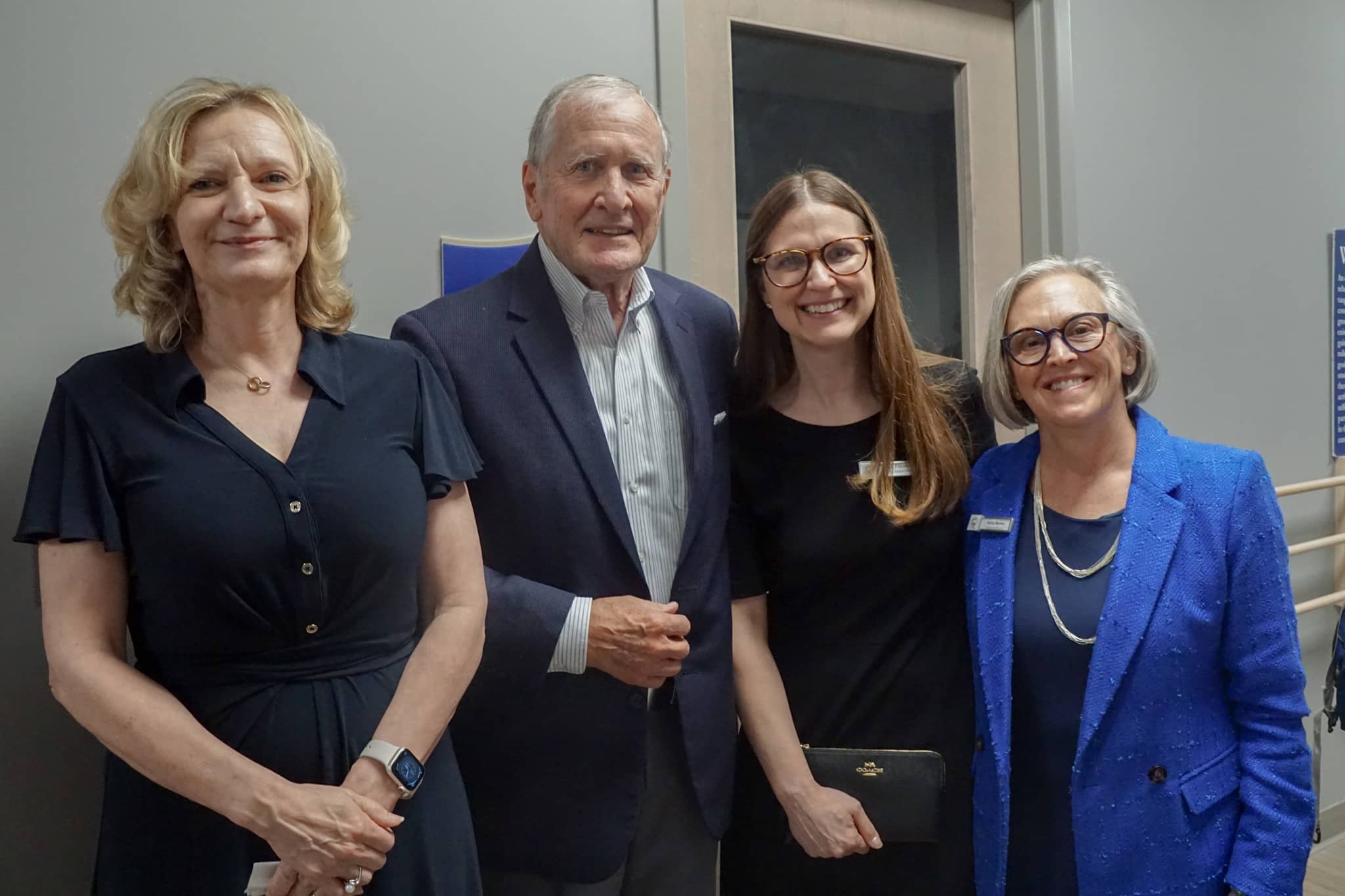
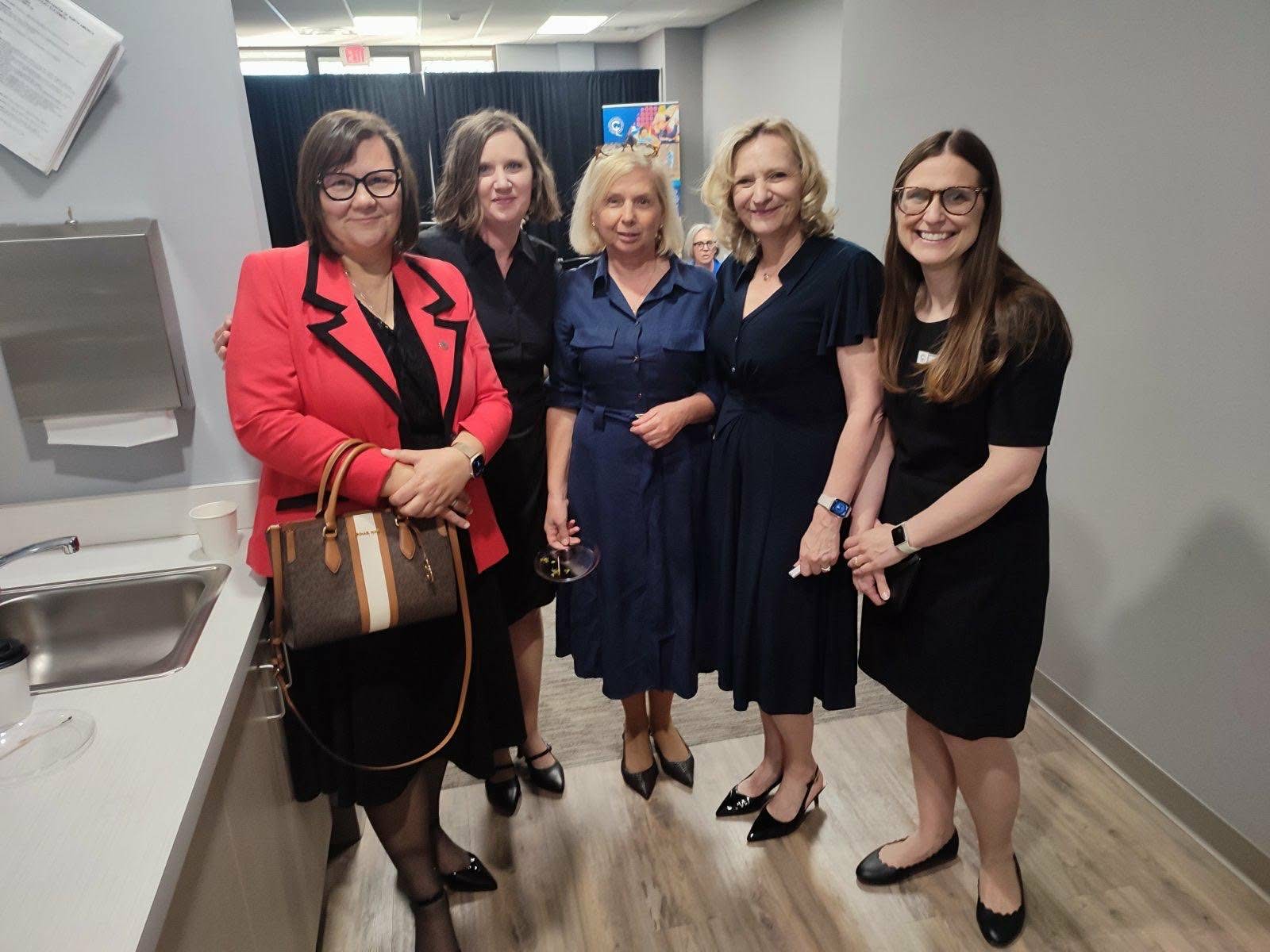
In 2025, the András Pető Faculty of Semmelweis University announced the “Designated Institute of Practice” initiative, which can be awarded to international conductive institutions that can demonstrate the practice of conductive pedagogy at a quality approaching that of the parent institution. Éva Feketéné Szabó PhD, Vice-Rector for Strategy and Development, and Andrea Zsebe PhD, Dean, ceremoniously awarded the two-year “Designated Institute of Practice” title—the first in the world—to the Conductive Learning Center of North America in Grand Rapids, an institution that has been providing services based on the principles of conductive education for 27 years.
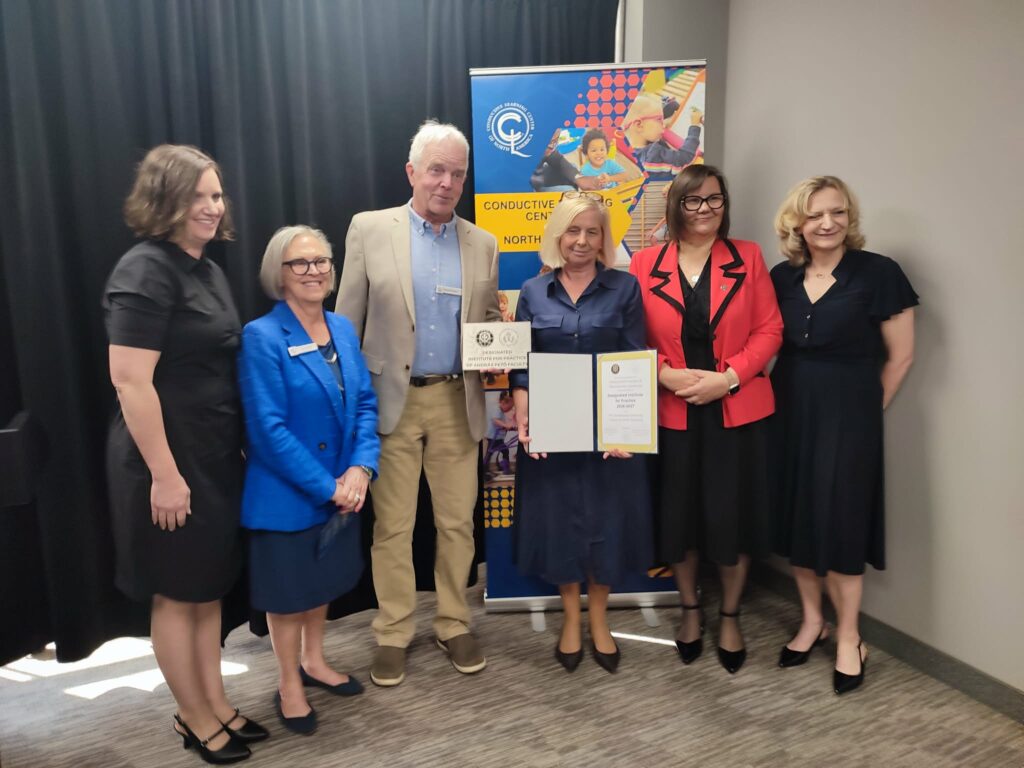
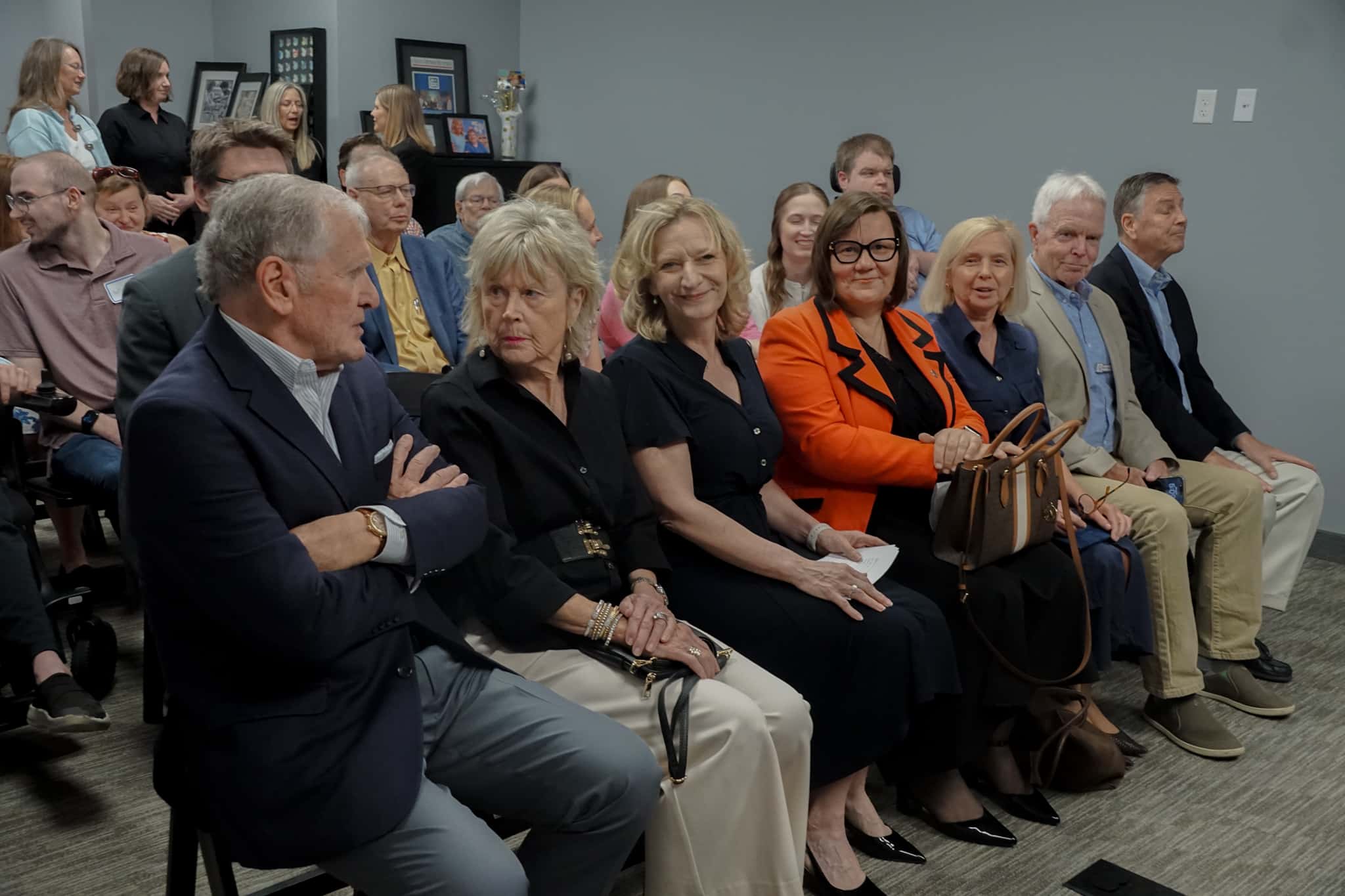
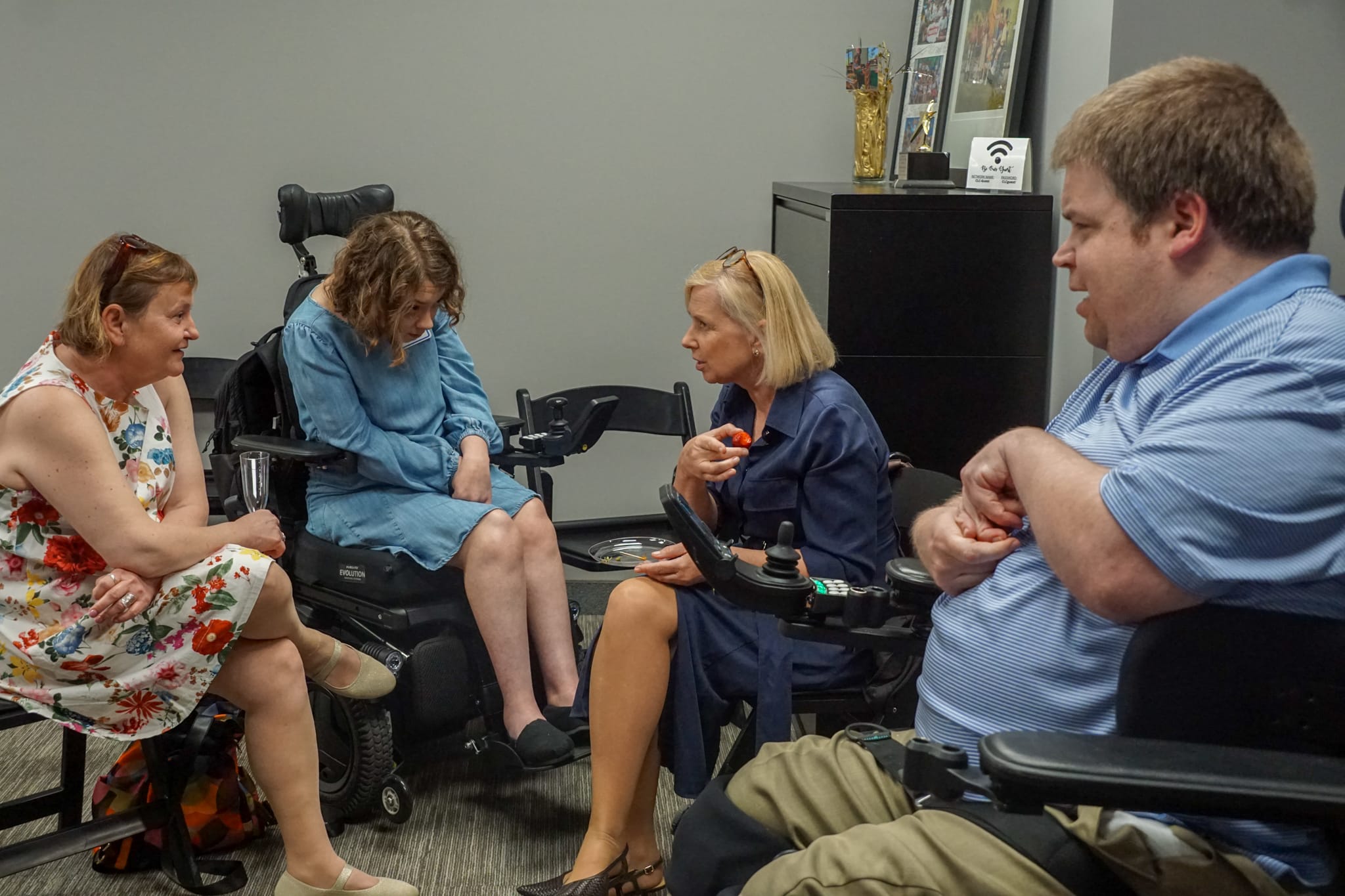
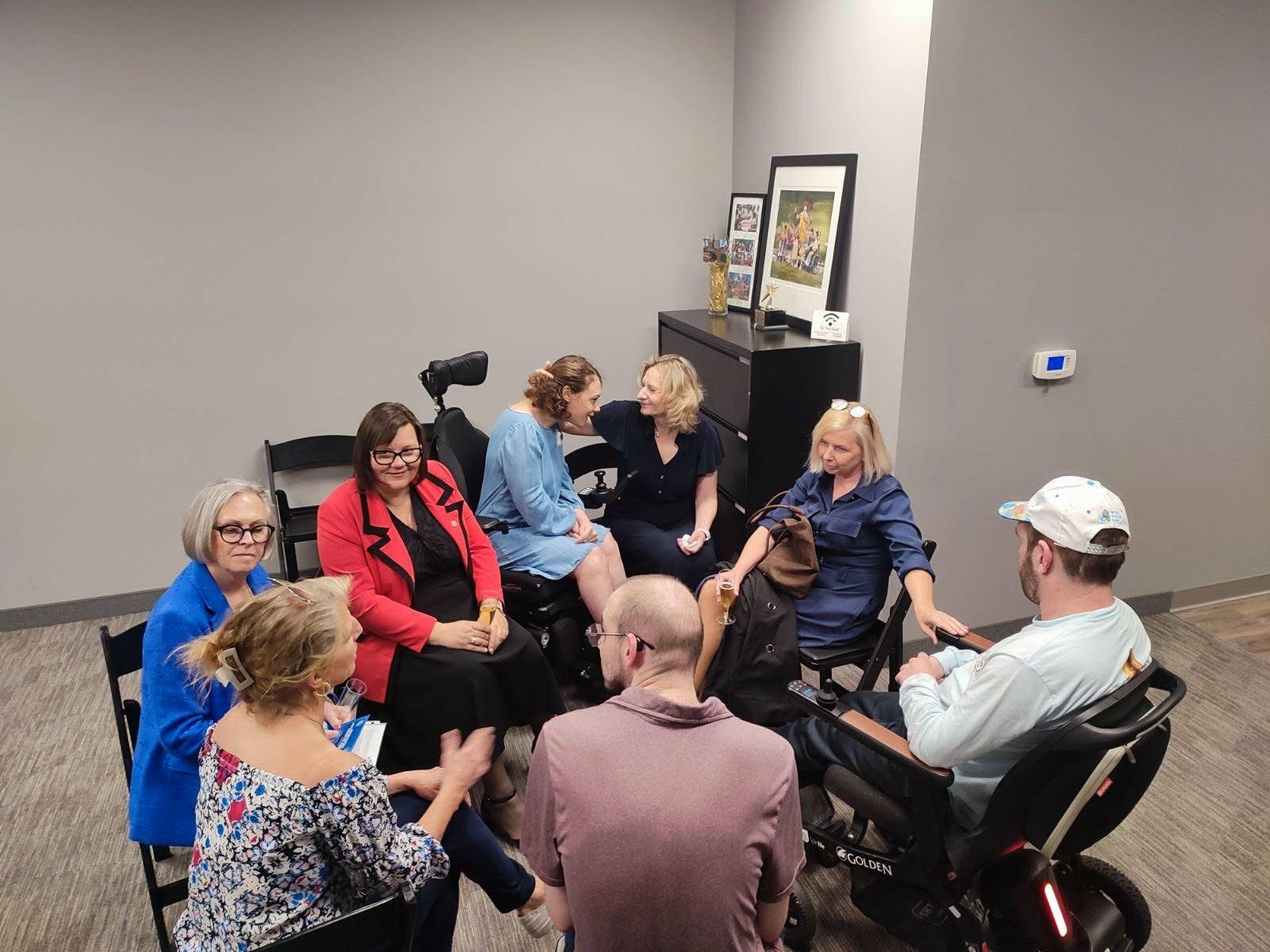
The ceremony took place on April 22, in the presence of the institution’s staff, founders, and supporters. At the event, attendees were welcomed by Kathy Barker, Executive Director of the CLC, followed by founders Chuck Saur and Harry Knopke, who recalled the institution’s history and the first implementation of conductive pedagogy in America. In connection with the event, Andrea Benyovszky PhD, a member of the Faculty’s staff, played a key role in establishing the professional and organizational foundations of the Designated Institute of Practice program, and contributed to its development through several decades of leadership at the institution.
Subsequently, Éva Feketéné Szabó conveyed the greetings of Béla Merkely MD PhD, Rector of Semmelweis University, and stated that the CLC is more than just an institution; it is a symbol of hope and human will, where knowledge with Hungarian roots meets American commitment. The Vice-Rector, who herself assisted the work there as a professional consultant years ago, recalled that the program has helped countless children and families during the years of cooperation that began in 1999. Beyond movement therapy, its most important element is that it restores the children’s independence and dignity.
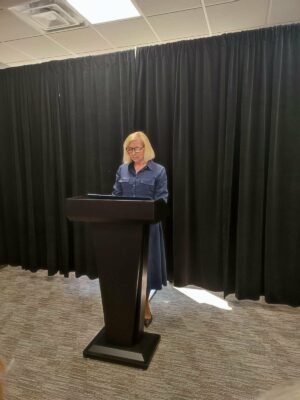
At the end of her speech, looking to the future, she noted that this new type of cooperation provides students of the András Pető Faculty with the opportunity to gain high-quality international professional experience during their studies.
Following this, in her address, Andrea Zsebe recalled that 10 years ago, the leadership of the András Pető Faculty made a major decision: to open the institution’s doors to international and Hungarian partnerships in order to strengthen conductive pedagogy, choosing partners where the practice rests on strong professional foundations and has a secure future—such as the CLC in Grand Rapids.
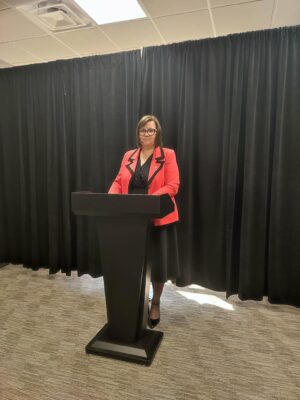
She expressed her hope and commitment that the CLC, as the András Pető Faculty’s first international practice site, will be a successful and long-term partner for both conductor students and those interested from related professions.
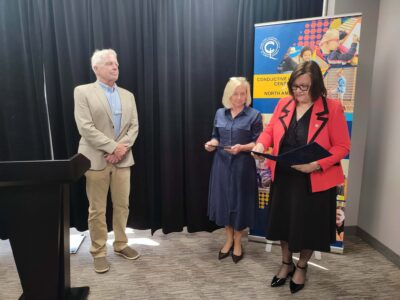
It is no coincidence that the American institution earned the “Designated Institute of Practice” title, announced in 2025, before the end of the year. The Dean congratulated the institution’s leadership on this milestone and expressed her hope that after finding the appropriate academic partner, the training of conductive professionals can continue in a new, stronger form.