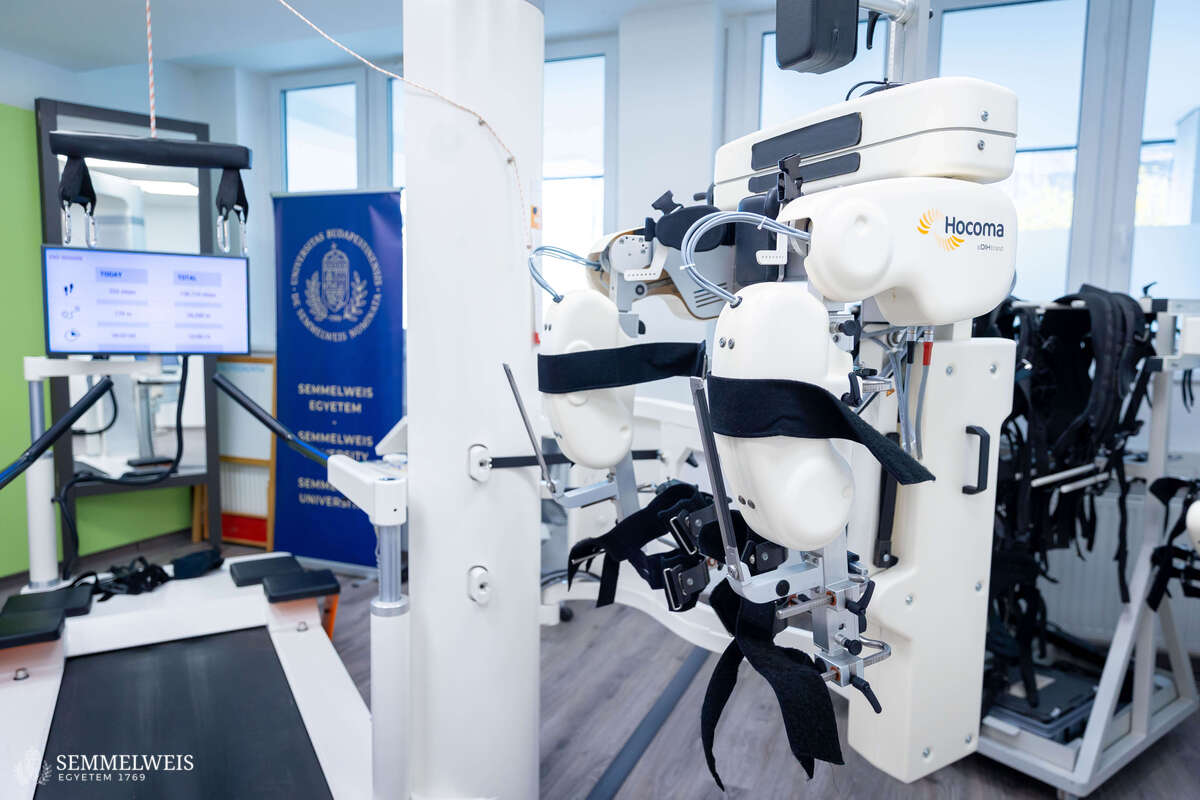
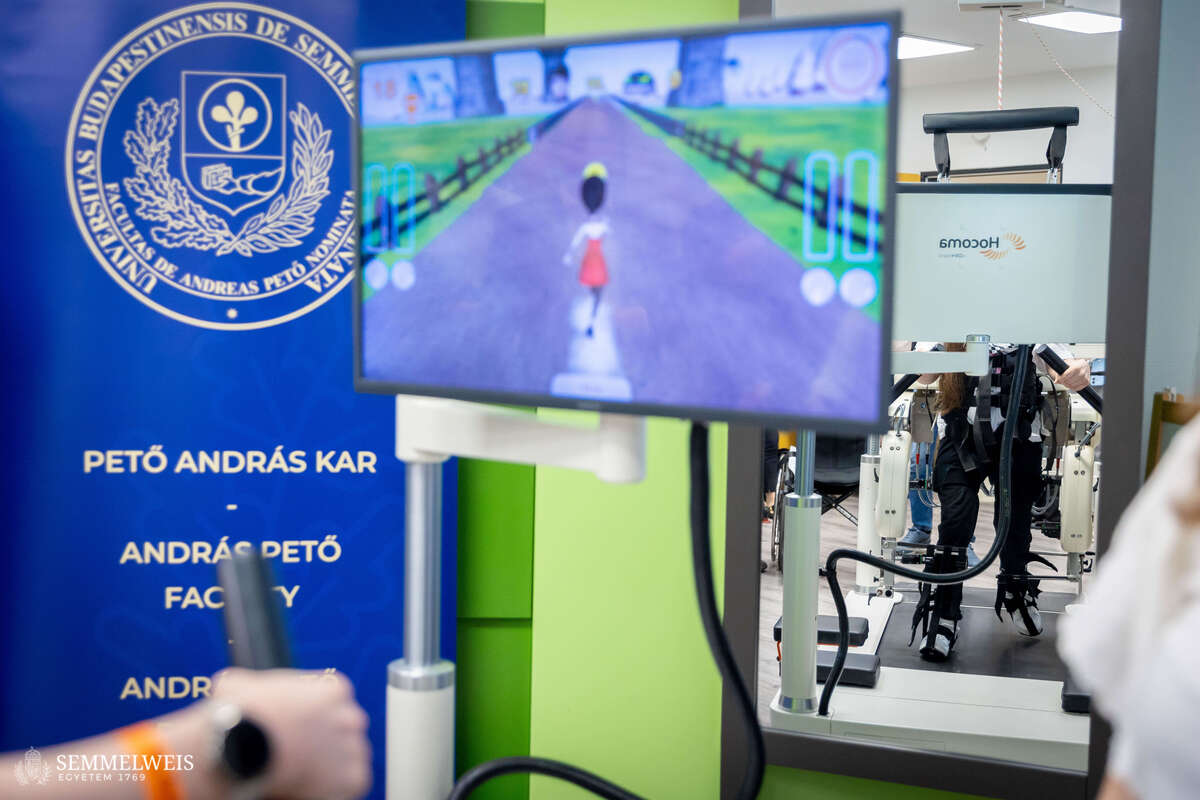
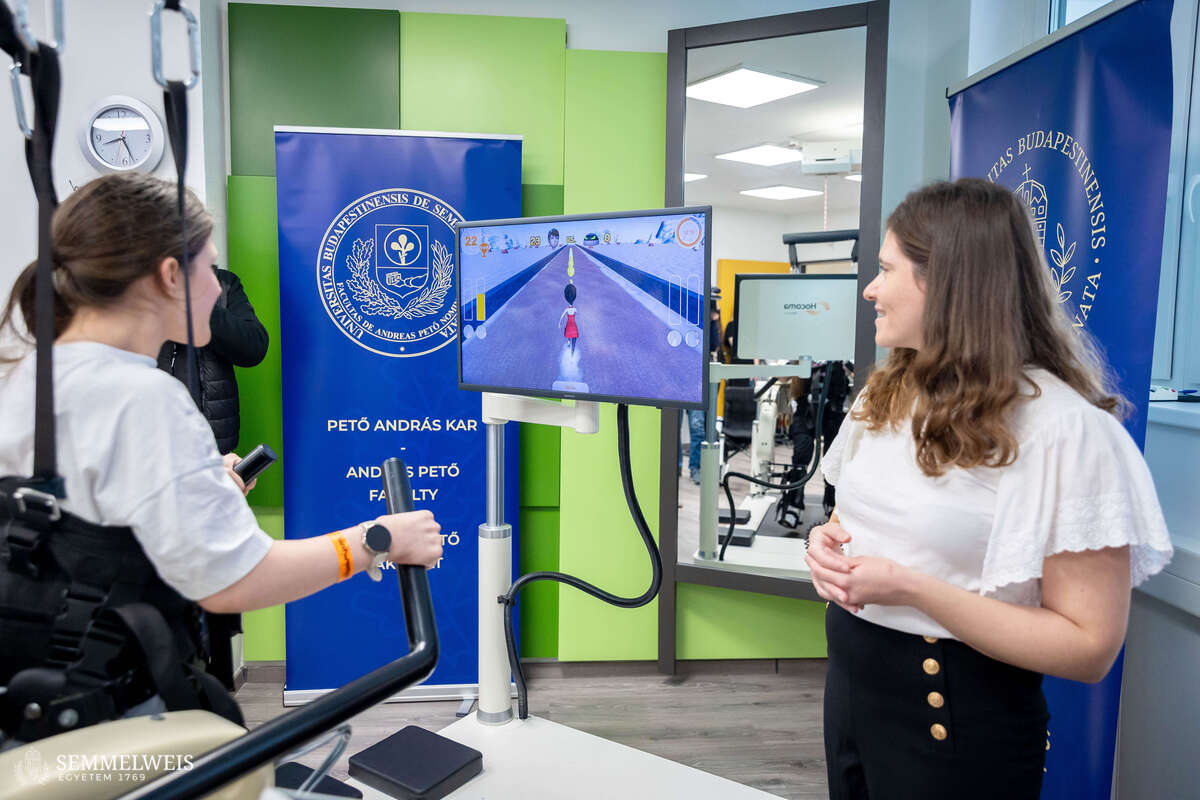
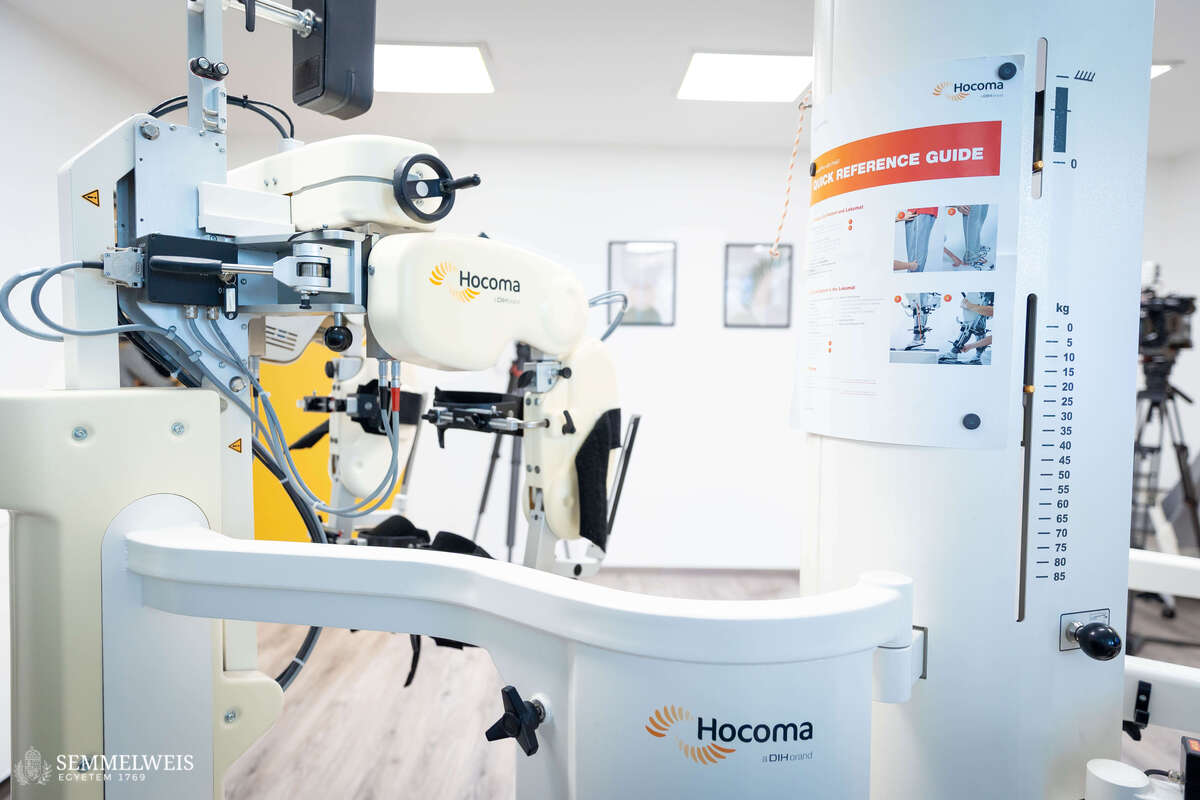
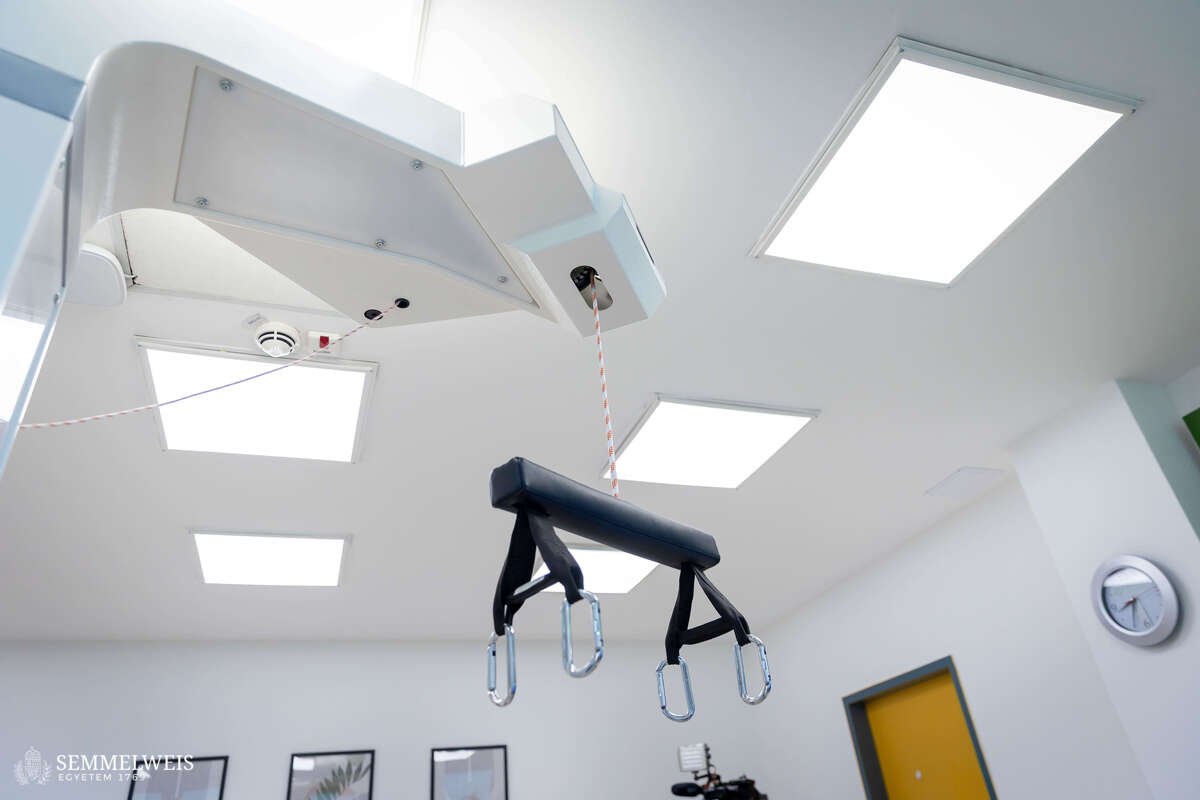
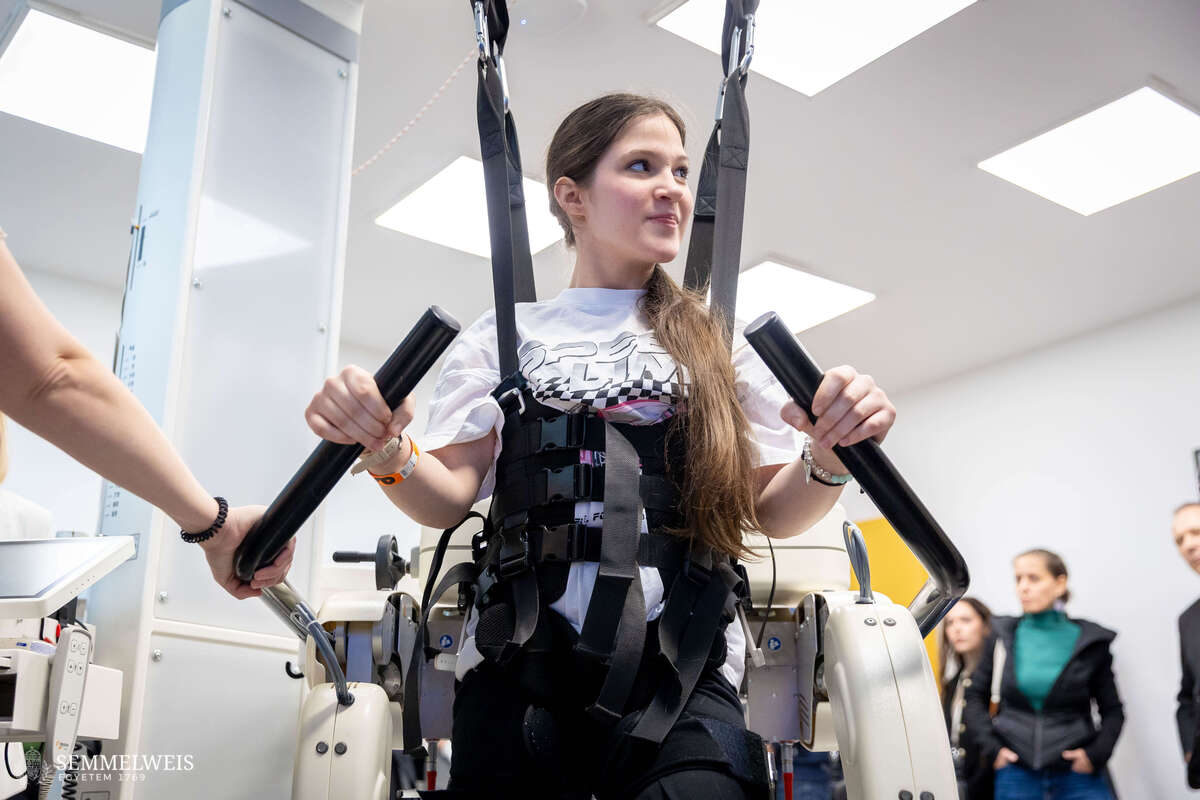
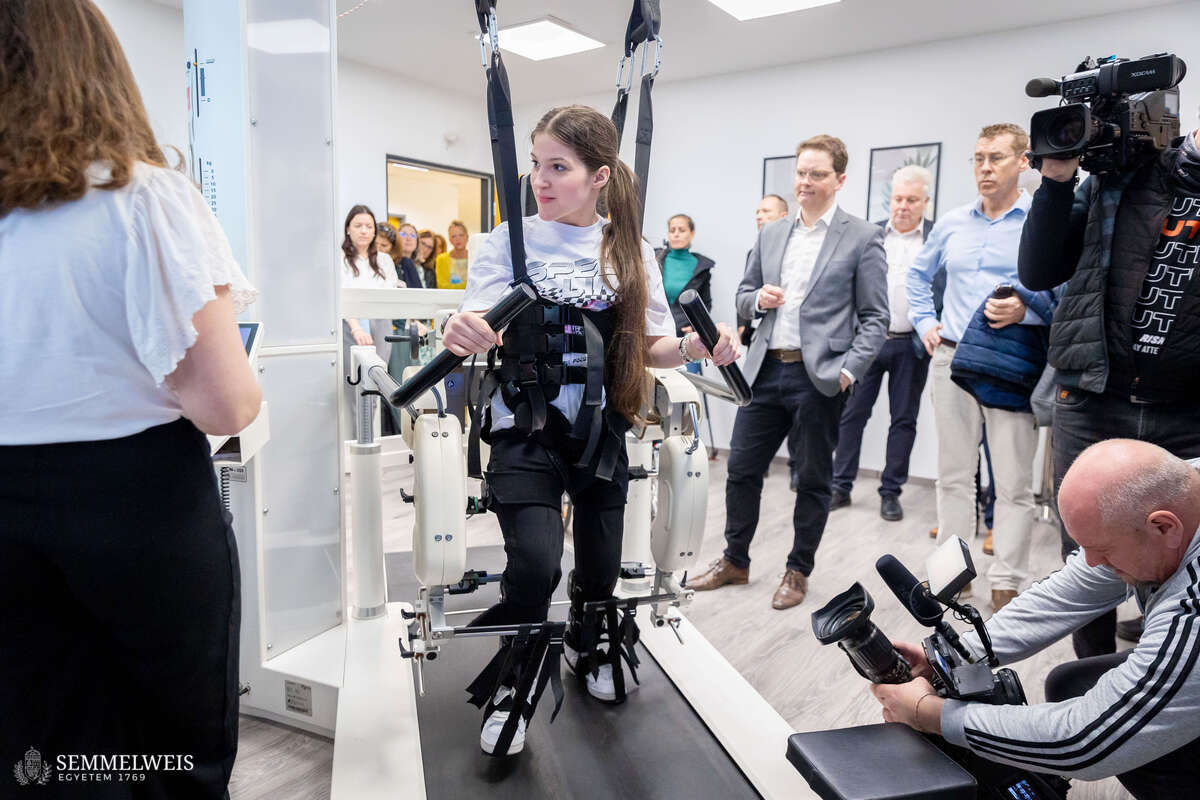
At the inauguration of the new robotic equipment at the András Pető Faculty (APF) of Semmelweis University, Rector Dr. Béla Merkely highlighted the investment as a milestone. He praised the faculty’s staff and the world-renowned Pető Method—officially a “Hungarikum”—which supports children with central nervous system injuries in living fuller lives. The Rector emphasized that the 300 million HUF university-funded project is fully accessible through public healthcare.
Dr. Péter Takács, State Secretary for Health, described Semmelweis University as a flagship in clinical innovation. He noted that thanks to NEAK (National Health Insurance Fund) financing, this advanced robotic technology is now widely available in state-supported pediatric care.
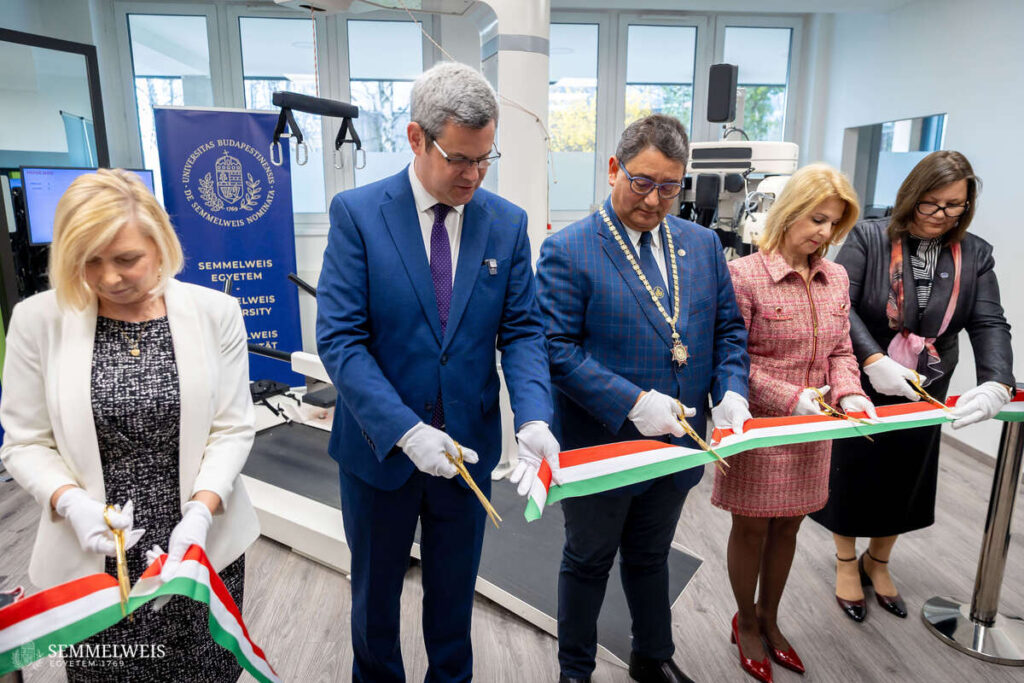
Feketéné Dr. Éva Szabó, Vice-Rector and Director of the Conductive Pedagogical Center, explained that services began on March 1, 2026, with the involvement of experienced physiotherapists. “Robotic therapy is not a standalone solution; it is integrated into the coordinated work of specialists and conductors, in harmony with the principles of conductive education,” she stated. The university’s leadership, including Chancellor Dr. Lívia Pavlik and Dean Dr. Andrea Zsebe, officially opened the facility with a ceremonial ribbon-cutting.
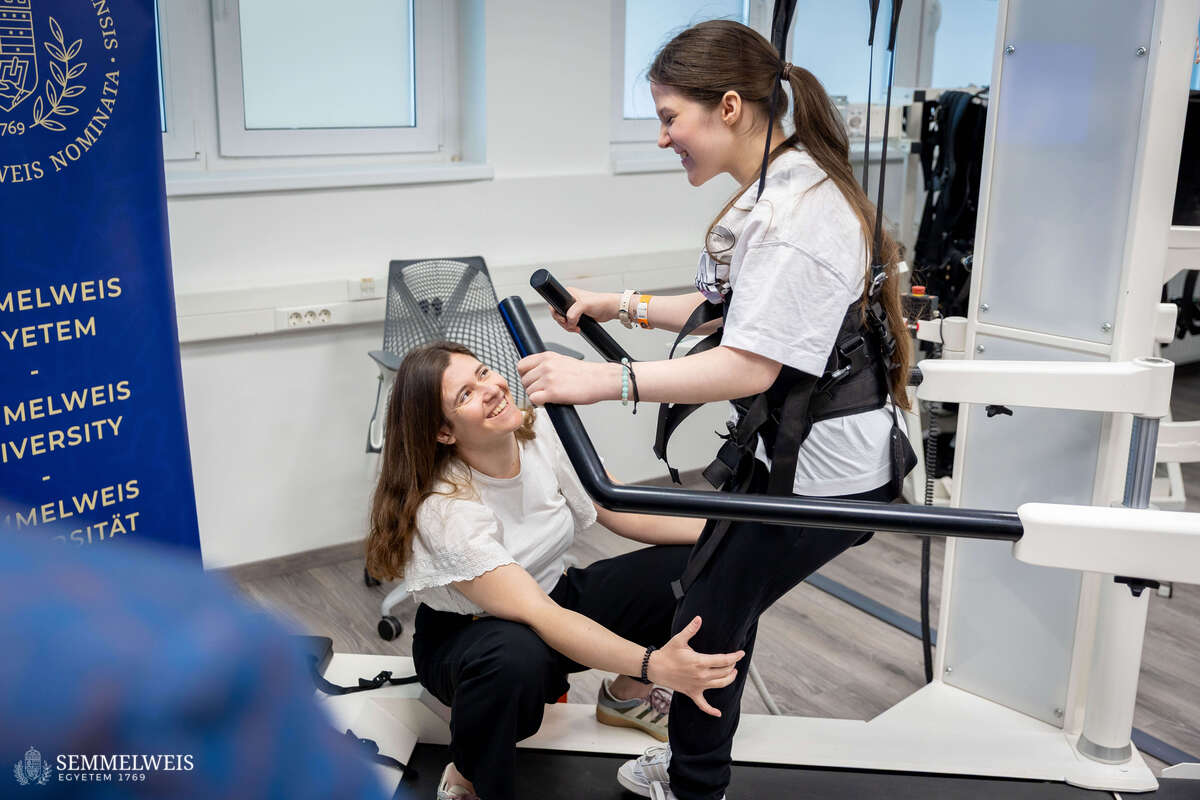
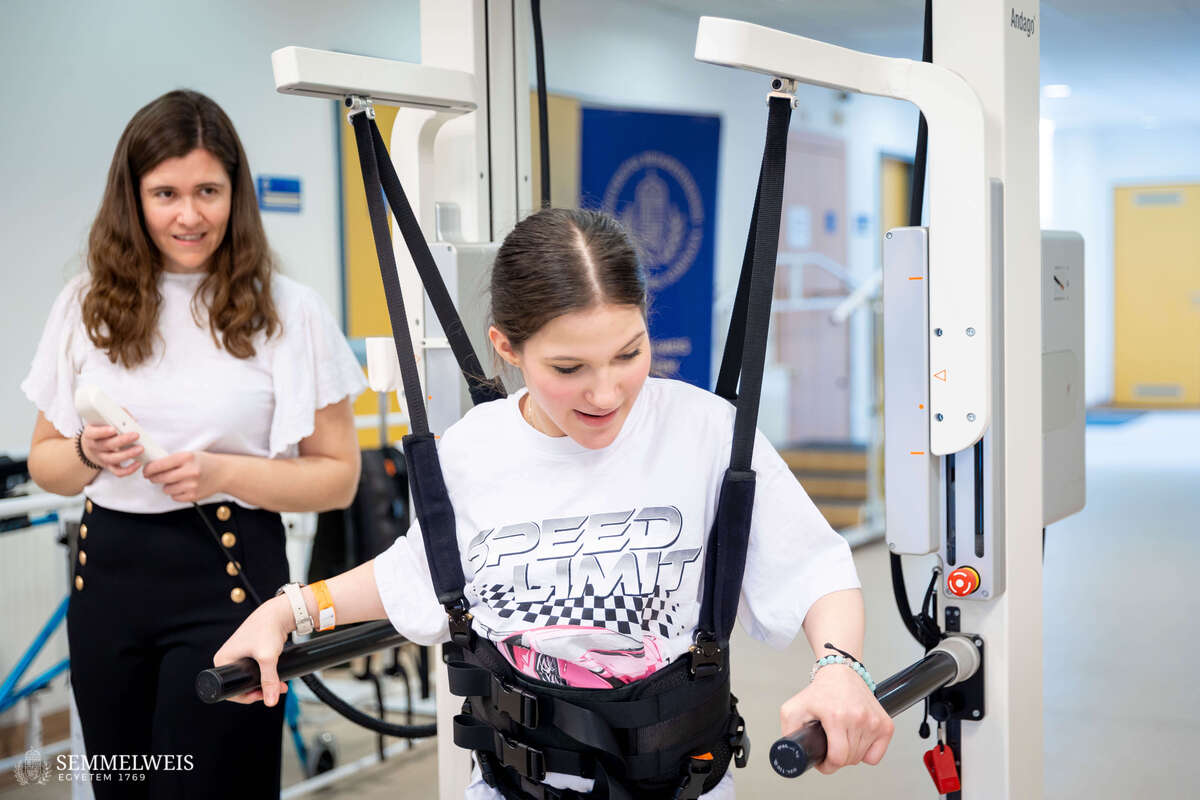
The center features state-of-the-art machines target functions from fine motor skills to gait development. These tools allow for personalized therapy and measurable performance; improved motor coordination and muscle strength; enhanced neuroplasticity and physiological movement patterns.
The primary goal of András Pető Faculty remains to increase the practical efficiency of conductive education, providing children with greater independence and a higher quality of life.
Gallery