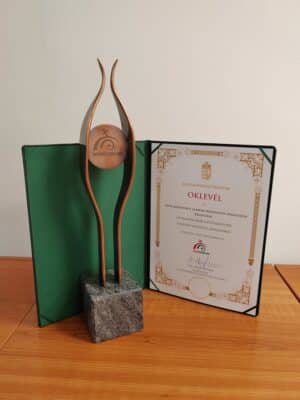
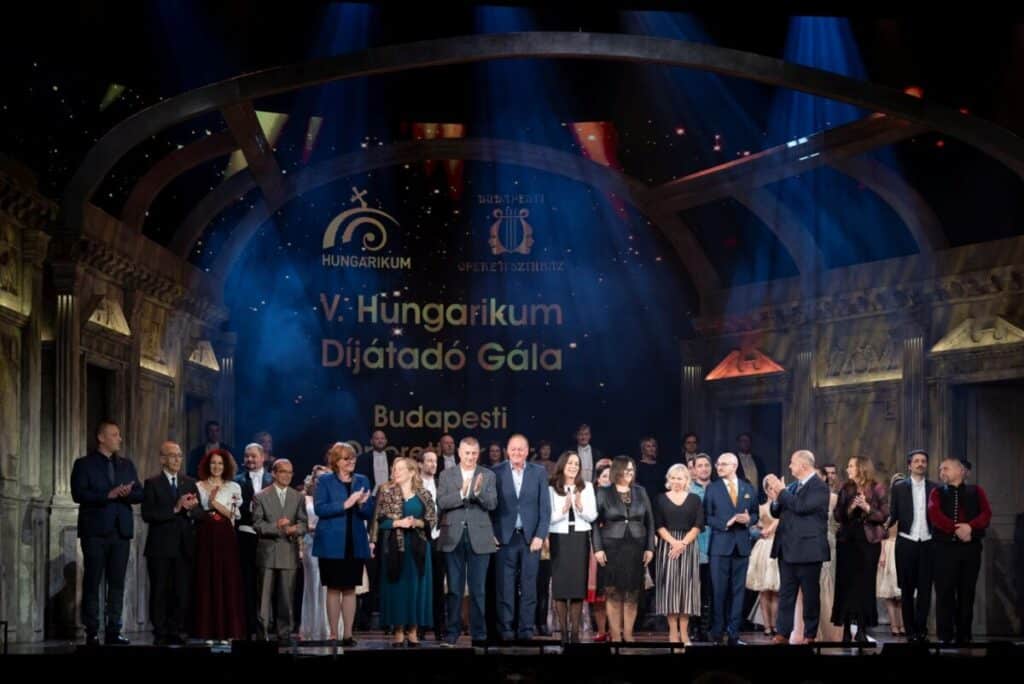
István Nagy, Minister of Agriculture and Chairman of the Hungarikum Committee, ceremoniously presented the certificates attesting to the inclusion of elements in the Collection of Hungarikums at the 5th Hungarikum Gala, held at the Budapest Operett Theatre. This year, the list of Hungarikums has expanded by nine elements, now numbering 98, one of which is the system of Conductive Education based on the Pető Method. As highlighted at the ceremony, the system of Conductive Education, as a Hungarian intellectual heritage, provides support to families worldwide.
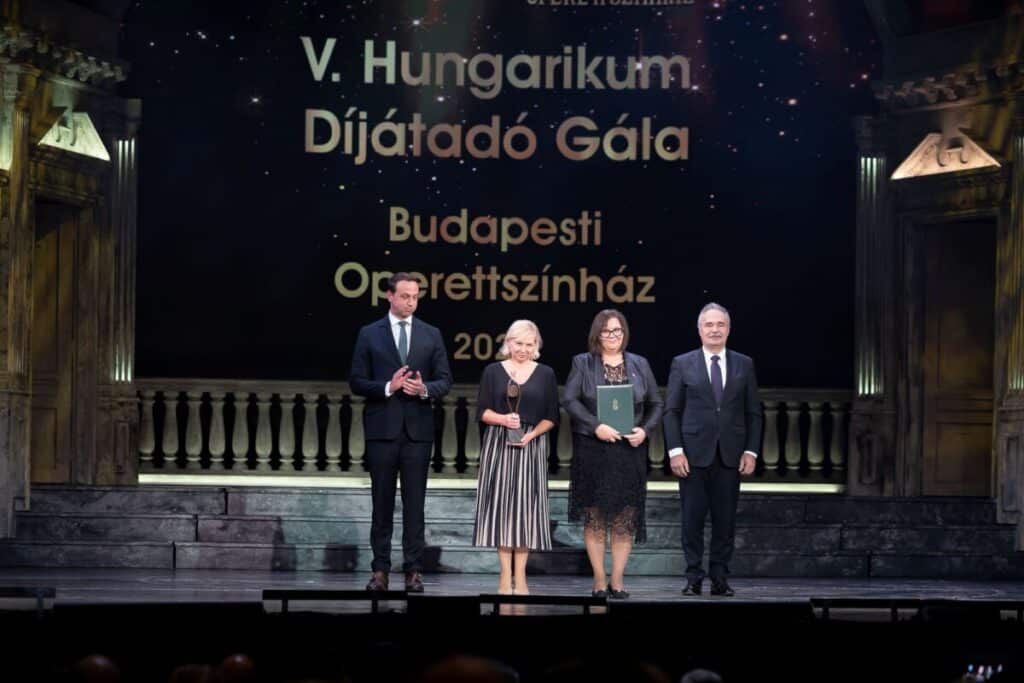
“The inclusion of the system of Conductive Education based on the Pető Method in the Collection of Hungarikums means that we are the custodians and guardians of a unique value that is important for Hungary and enhances the social commitment of Semmelweis University,” said Andrea Zsebe PhD, Dean of András Pető Faculty. She stated that the Hungarikum award will help promote wider awareness of the method and facilitate the establishment of new collaborations, both within Hungary, in Hungarian-populated areas beyond the borders, and internationally. “We are confident that under the university’s management, this method will be sustainable in the coming years as well,” the Dean said.
She recalled that the András Pető Faculty joined Semmelweis University in 2017, but the transformation of the institution’s operation had already begun earlier. Over the past 10 years – and with the university’s support since the merger – a new structure has been developed in both clinical care and academic tasks. The Faculty has successfully become a part of all university programs, committees, and educational, research, and talent management projects in which it is competent.
“In the last ten years, we have restructured our kindergarten care, developed our primary school services, launched our vocational school training, stabilized the operational conditions of our adult care program, and opened our doors to partner professions and organizations within the framework of educational and research collaborations,” said Andrea Zsebe. Conductive education-based care started 75 years ago in the Faculty’s building on Villányi street, and this pedagogical-based habilitation and rehabilitation clinical care for children and adults with nervous system damage is kept up-to-date in line with changing social and family expectations, and alongside the extremely rapid development of medical science.
The Dean recalled that András Pető, as a physician, recognized that the (re)habilitation of people with motor disabilities due to nervous system damage can only be successful with a complex, pedagogically-based program. The concept of “learning through doing” opened up a new path for these children and adults, which was unknown, and perhaps even alien, in the medical-pedagogical procedures of the time. The fundamental principles of the system are seeing the disabled person as a unified whole, building upon the existing capacities of the nervous system, and improving the quality of life in accordance with the lifelong nature of the condition. In recent decades, many other development methods have emerged that have adopted these principles, making it possible to help families and those affected through the cooperation of multiple professional fields and teamwork. There is both a demand and a need for this among children and adults whose nervous system damage affects multiple areas of the brain and who struggle with compounding difficulties, said Andrea Zsebe. She added that nowdays only a few people live without any kind of daily difficulty, therefore Conductive Education can also provide life management guidance for them as well.
The definition of well-structured goals, the role of a daily routine, the acquisition of pathways to problem-solving, and the ability to make decisions are paramount. “We can view the system of Conductive Education in this way; the wider its recognition in society, the more people will be able to use these coping and life management strategies in their own lives,” the Dean stated.
The profession of a Conductor (Conductive Teacher) is a helping profession that stands at the intersection of several scientific fields, allowing for varied and diverse professional tasks. Andrea Zsebe expressed hope that the Hungarikum award could further motivate young people choosing a career to acquire a profession at the András Pető Faculty of Semmelweis University that is a national and social value, and is surrounded by recognition and prestige. Within the Conductor Bachelor’s program, our students acquire the medical, pedagogical as well as the conductive pedagogical knowledge of the Conductor profession through an exceptionally high number of practical hours, working with those receiving care and in cooperation with practical experts. While our training has never been, and is not expected to be, mass education, we are trying to find answers to generational challenges within the university’s Curriculum 2.0 reform by reviewing educational strategies, keeping the knowledge base up-to-date, providing multi-faceted support for the acquisition of theoretical material, and modernizing assessment – declared Andrea Zsebe PhD.