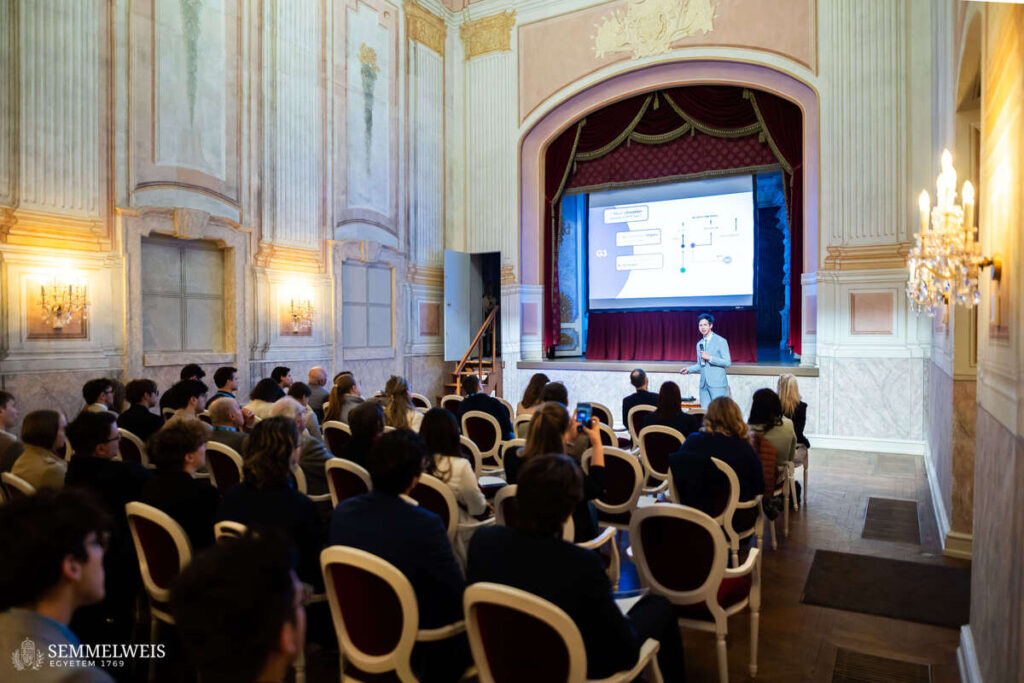
Outstanding undergraduate and PhD students from the Semmelweis University Kerpel-Fronius Ödön Talent Support Program presented their research findings to fellow students, mentors, and senior faculty members during Kerpel Day, which this year was organized at a new venue, the Grassalkovich Palace in Gödöllő.
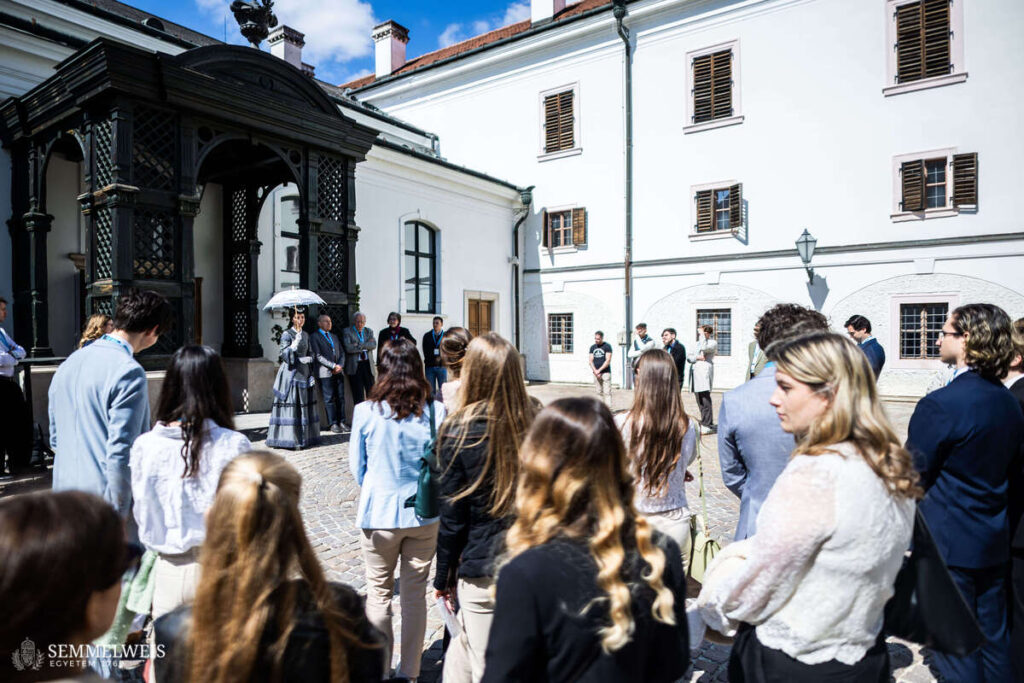
The Kerpel-Fronius Ödön Talent Support Program was established in 2007 to identify and support exceptionally talented students throughout their academic and scientific careers. Named after former university professor Ödön Kerpel-Fronius, the program provides outstanding undergraduate, doctoral, and young researcher participants with personal mentoring, scholarship opportunities, and access to a wide range of academic and international experiences.
The program combines scientific excellence with community building and personal development. Around 200 students currently participate under the guidance of nearly 90 active mentors, including leading professors and researchers of the university. Participants are encouraged to engage in research projects, conferences, international exchange programs, and cultural activities, while annual events such as Kerpel Day offer students the opportunity to present their scientific achievements and creative work. The program also supports international mobility through scholarships, including study and research opportunities at universities such as Heidelberg and Freiburg.
The scientific event was also connected to several anniversaries, including the 120th anniversary of the birth of the program’s namesake, Dr. Ödön Kerpel-Fronius. During the event, Outstanding Mentor and Outstanding Student awards were also presented.
“In Hungary, one of the first higher education talent support programs is approaching a major milestone. The Kerpel-Fronius Ödön Talent Support Program was launched at Semmelweis University in 2007 and will celebrate its 20th anniversary next year,”
emphasized Dr. Attila Szabó, president of the talent support program and Vice-Rector for Clinical Affairs at Semmelweis University, during the opening ceremony of the Kerpel Day and Scientific Workshop. He also highlighted that Dr. Ödön Kerpel-Fronius was born 120 years ago this year, and fifty years ago he became director of the predecessor institution of today’s Department of Pediatrics. Before the COVID pandemic, it had been customary for participants in the program to gather once a year outside the university’s buildings and beyond the borders of Budapest — something that could finally happen again after several years.
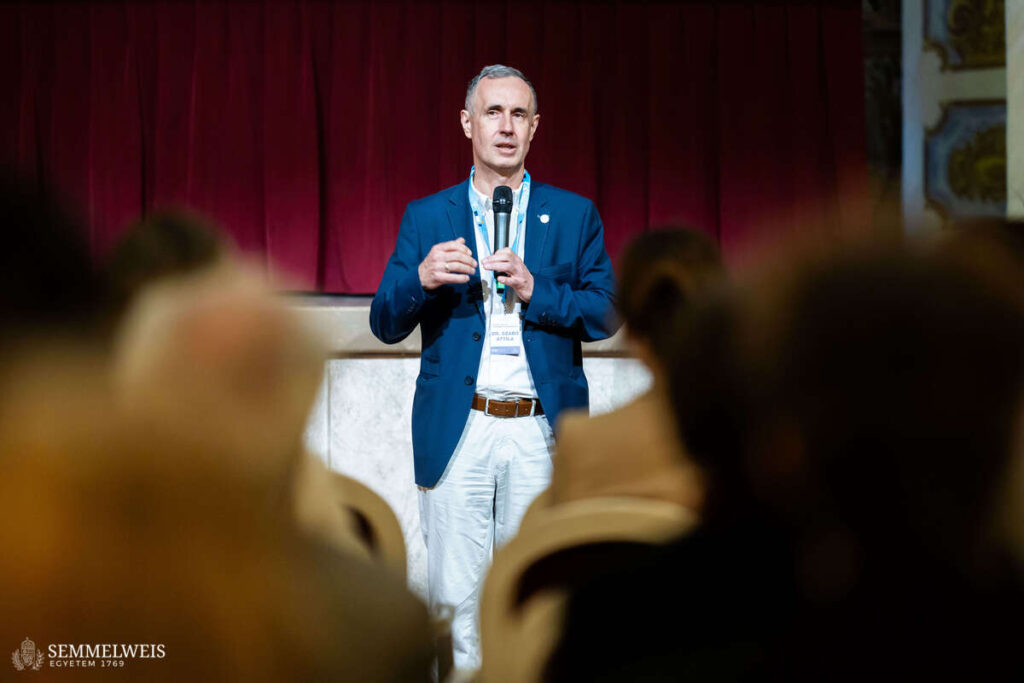
“This conference in Gödöllő provides an excellent opportunity to showcase scientific achievements so far. Furthermore, through the cultural programs and informal discussions, participants can get to know each other better, which may lead to future collaborative plans and projects,”
the Vice-Rector stressed.
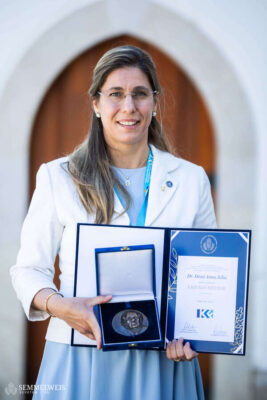
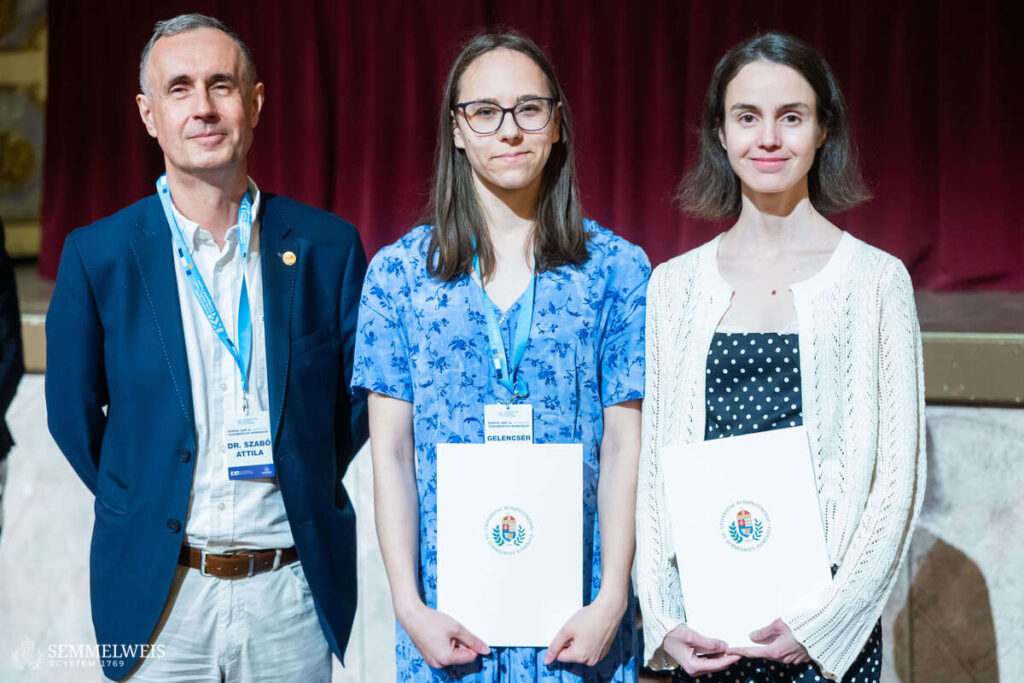
Dr. Szabó added that the success of the joint work is well demonstrated by the fact that the talent support program once again received the title of Accredited Excellent Talent Point from the National Talent Support Council for another three years. He noted that Kerpel Day is also an opportunity to thank those who move the program forward. This year, the Kerpel-Fronius Talent Support Council awarded the Outstanding Mentor Prize to Dr. Anna Dézsi, assistant professor at the Department of Propedeutics, who is one of the driving forces behind the university’s high school program, the Junior Academy, and the Semmelweis-Kerpel Summer Talent Camp.
The Outstanding Student Award, supported by the Friends of Semmelweis University Association, is given to students who contribute not only to the development of their own talents but also to the community. This year, the award was presented to Rebeka Gelencsér and Anita Varga, fourth-year students at the Faculty of Medicine, who organized several community programs including a carnival event and a reading club.
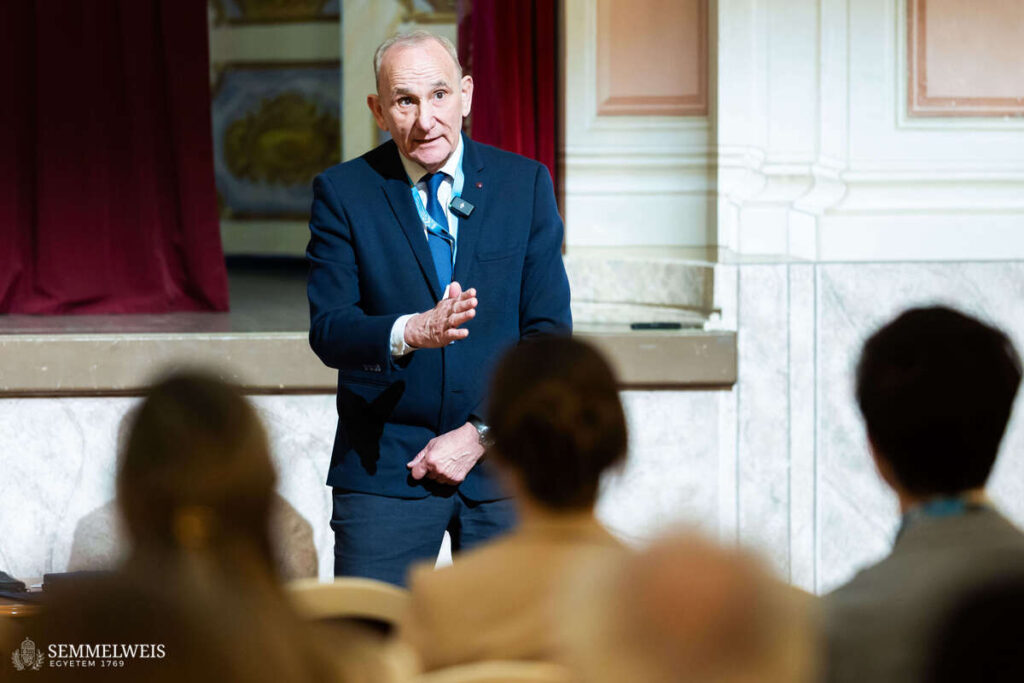
Participants were then welcomed by Dr. György Gémesi, physician, mayor of Gödöllő, and alumnus of the university. He emphasized that talented individuals drive the medical profession forward with the knowledge and innovative solutions demonstrated at events like this, thereby improving patients’ safety and overall health.
During the morning session, participants listened to the following scientific presentations by students of the Kerpel-Fronius Talent Support Program:
– Dr. Réka Kollarits, gynecology resident and PhD student, presented research on biomarkers for endometriosis (mentor: Dr. Szabolcs Várbíró);
– Dr. Botond Bukovszky, assistant lecturer, gave a presentation entitled *Head and Neck Tumors and Oral Leukoplakia: Clinical Investigation of Open Questions* (mentor: Dr. Csaba Dobó-Nagy);
– Fruzsina Szilágyi, sixth-year medical student, spoke about the treatment of idiopathic intracranial hypertension, comparing endovascular sinus stenting and ventriculoperitoneal shunting (mentor: Dr. Veronika Müller);
– Dr. Fatime Szalai, PhD student, discussed therapeutic possibilities related to glutamine and GABA metabolism in lymphangioleiomyomatosis (mentor: Dr. András Kiss);
– Tamás Zsoldos, third-year medical student, focused on the role of the median raphe in the formation of fear memory (mentor: Dr. Anita Kamondi).
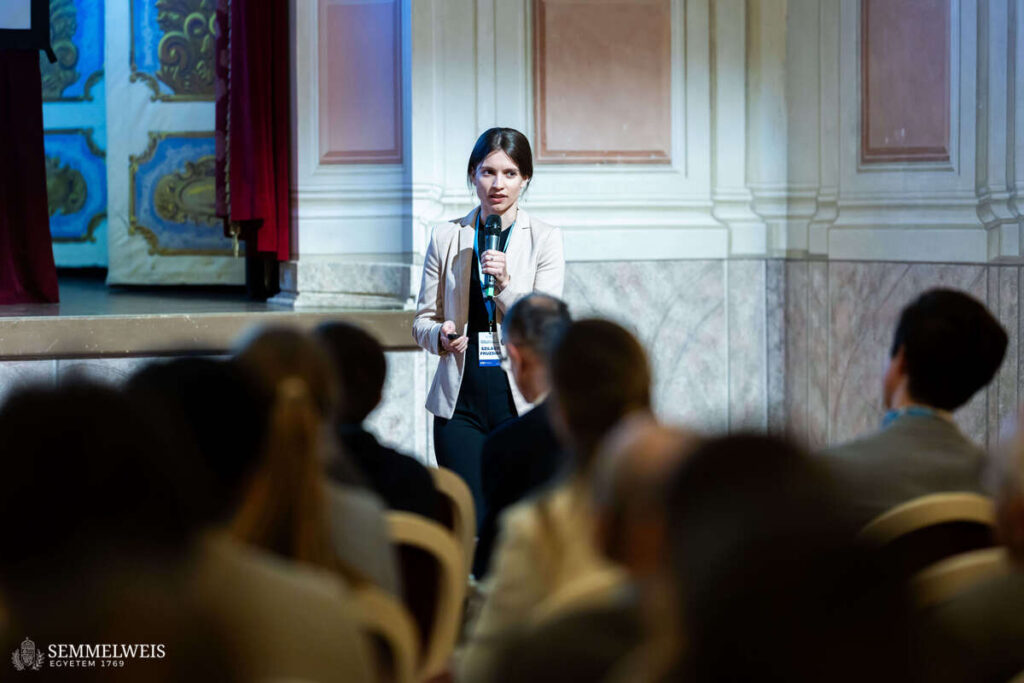
At the end of the morning session, Dr. Réka Kollarits shared her experiences from a scholarship at the Heidelberg University in Germany, where she spent a year working and conducting research at the university’s gynecology clinic (Frauenklinik), which she noted ranked 14th worldwide in its field last year. Her participation was supported by the Harry Jellinek Scholarship, the Kerpel Research Scholarship Program, and the Pannonia Program.
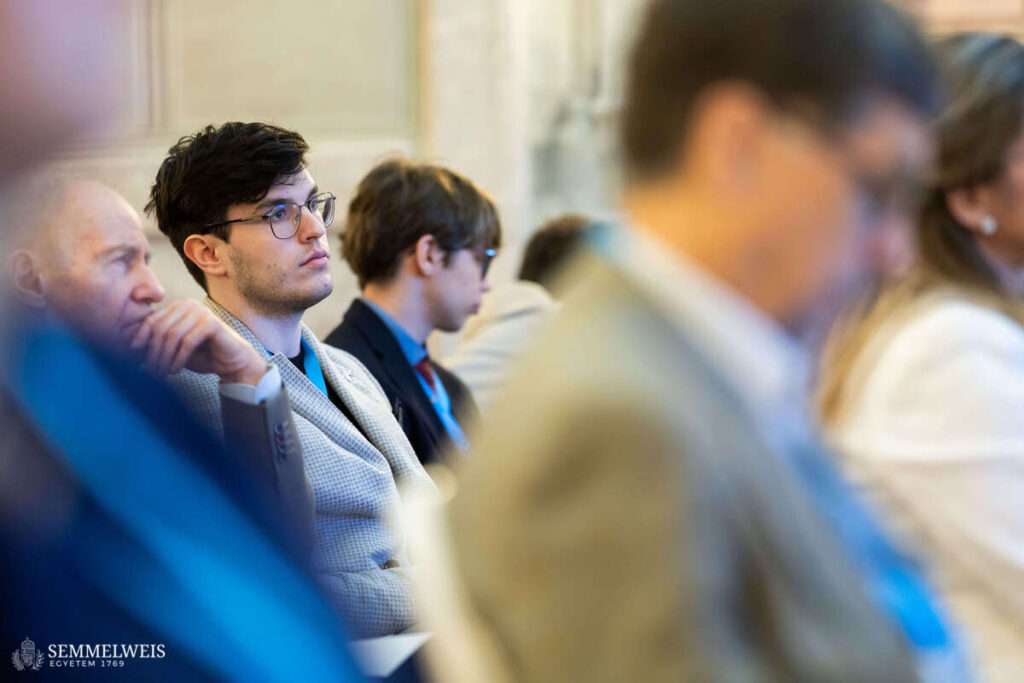
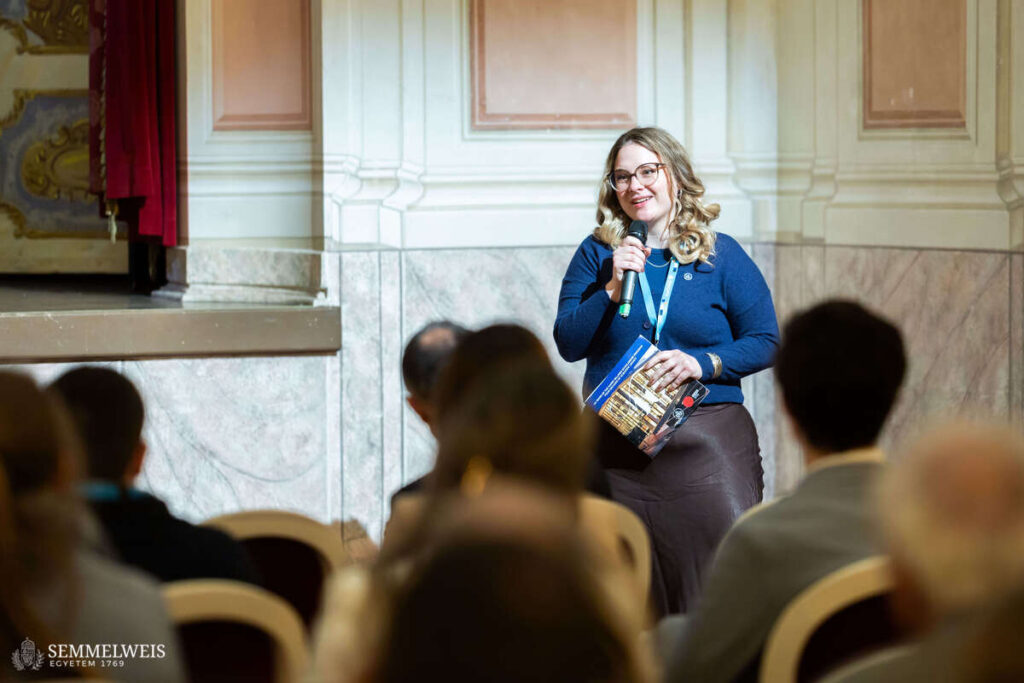
Nagy Mária, international relations expert at the Directorate of International Relations and Alumni of Semmelweis University, explained that every year two students may apply for programs at the University of Freiburg and four for Heidelberg University. These programs have a decades-long history and provide outstanding opportunities for young researchers to gain professional experience and build international networks. She added that while previously only medical students could apply, students from three faculties — medicine, dentistry, and pharmacy — are now eligible from their fourth year up to the PhD level.
The Harry Jellinek Scholarship is a prestigious international mobility and research scholarship program that supports outstanding Semmelweis University students in gaining academic and clinical experience abroad, particularly at partner universities in Germany such as Heidelberg and Freiburg. The scholarship provides talented students and young researchers with the opportunity to participate in international scientific work, expand their professional networks, and develop their research careers in an international environment.
In addition to the Harry Jellinek Scholarship, the Kerpel-Fronius Ödön Talent Support Program also provides financial and professional support for the university’s most exceptional students. Through research grants, mentoring, conference participation, and international opportunities, the program helps outstanding young talents further develop their scientific achievements and academic careers. The application period for this year’s Harry Jellinek Scholarship has now concluded, attracting significantly greater interest and a higher number of applicants than in previous years. This increase was largely thanks to the informative presentations and promotional activities held during Kerpel Day.
In the second session, lectures were given by:
– Dr. Ákos Zsembery on the relationship between oral health and widespread diseases;
– Dr. Andrea Fekete on the adventure of drug development, highlighting the role of science, perseverance, and coincidence;
– Dr. Alán Alpár on international students at Semmelweis University.
At the end of the day, participants enjoyed cultural performances by students of the Kerpel-Fronius Ödön Talent Support Program. Anna Tory, a third-year medical student and member of the János Bihari Dance Ensemble, together with Botond Piukovics, a graduating high school student, performed traditional dances from Kalotaszeg in the theater hall. Ballet dancer Noémi Verbőczi, a second-year medical student, performed a ballet piece specially choreographed for the occasion by the Harangozó and Seregi Prize-winning choreographer András Lukács.
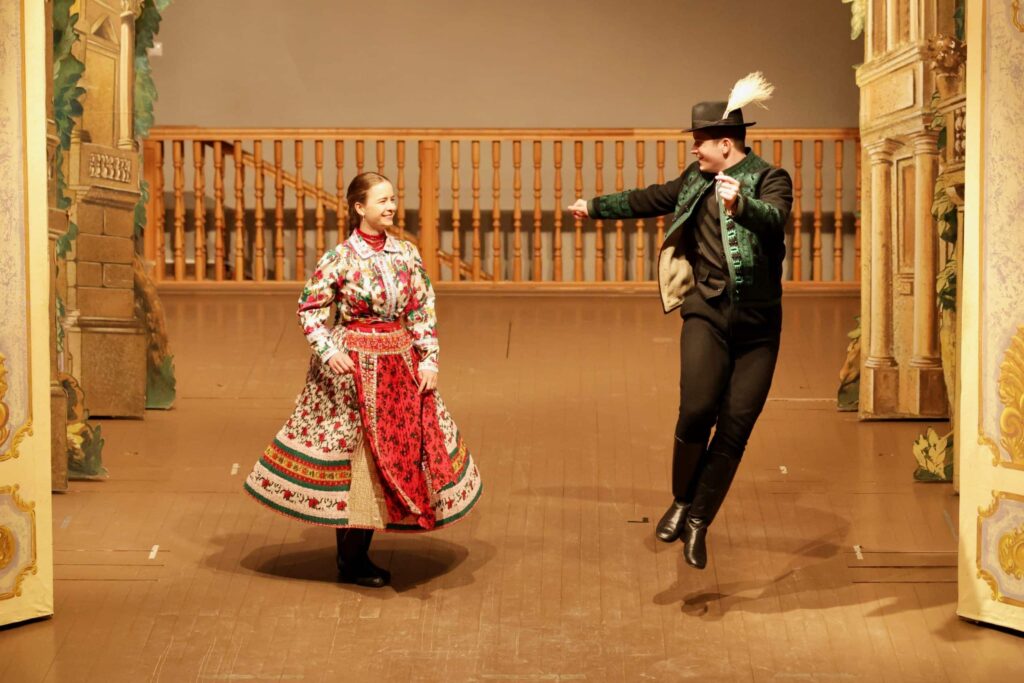
Photo credits: Bálint Barta, semmelweis.hu