Colleagues Karola Réka Halmay from the Mobility Office of Semmelweis University and Mária Nagy, representing the Bilateral and German Priority Relations Department, participated in a joint UNICA and Science Business event titled Fostering Innovative Careers, held in Zagreb between 26–27 March 2026. The event placed a strong emphasis on networking and partnership-building, particularly with institutions in the Balkan region, where several potential collaborations were explored and initiated.
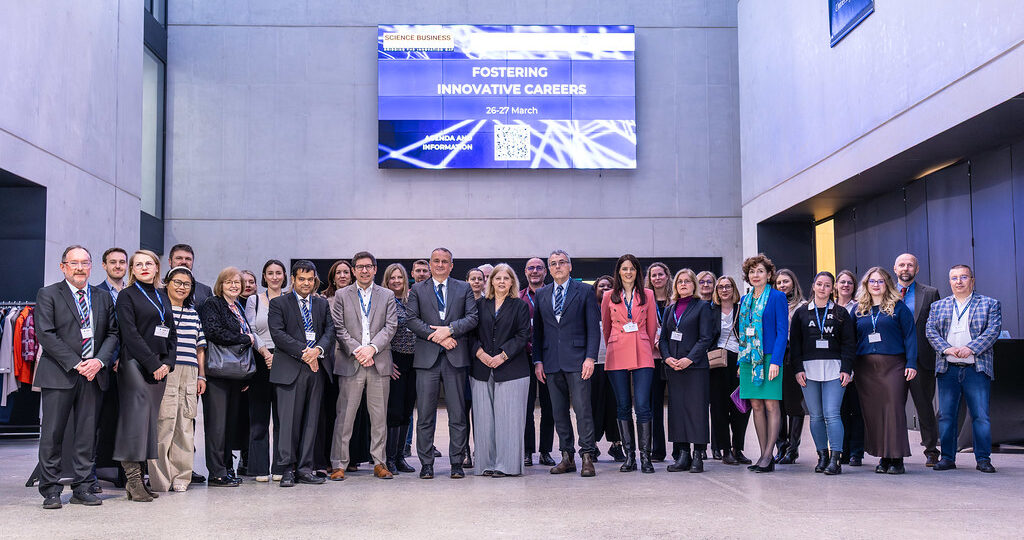
The programme addressed not only academic perspectives but also interdisciplinary opportunities, the conscious development of future generations, and the expansion of openness and cooperation within Europe.
The event opened with welcome speeches delivered by Jurica Pavičić, Edit Herczog, and Luciano Saso, followed by an online keynote presentation by Manuel Heitor.
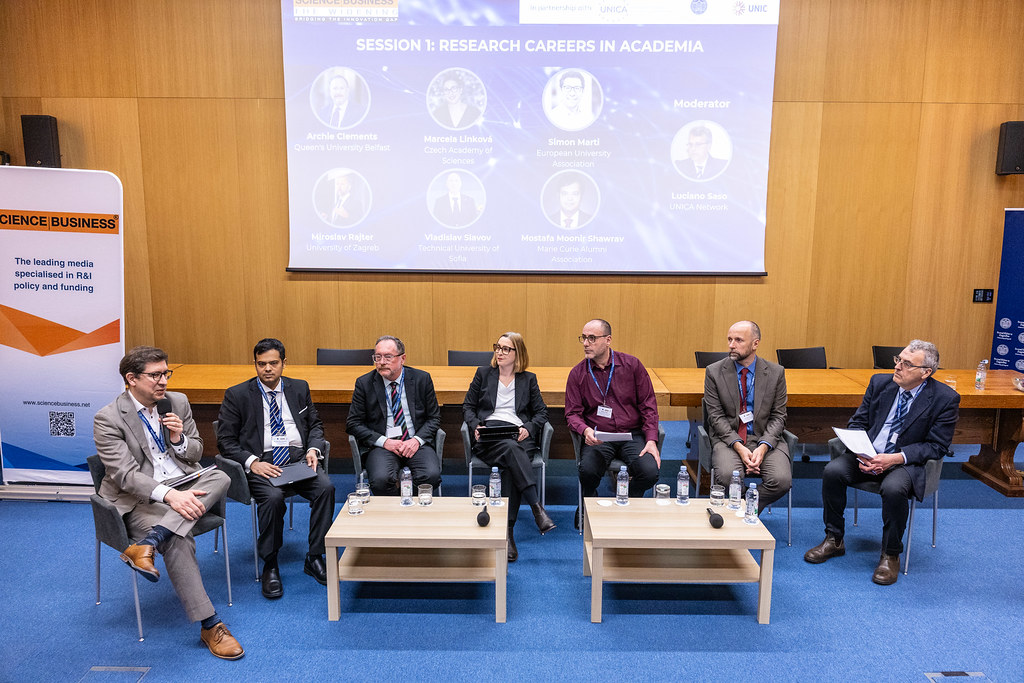
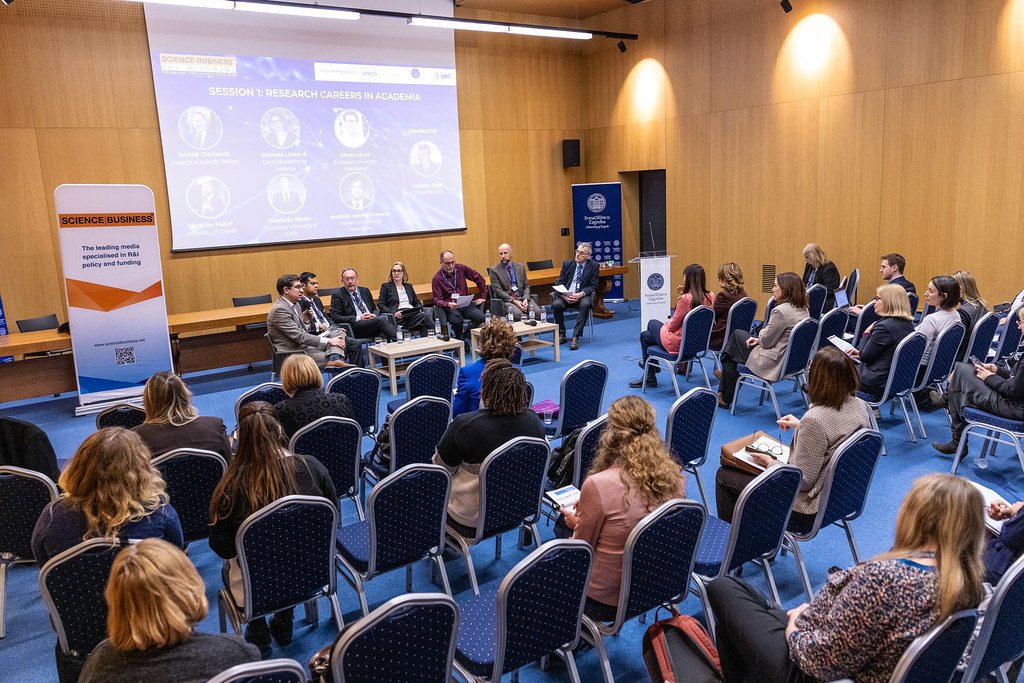
The first roundtable discussion, Research Careers in Academia, was moderated by Luciano Saso and featured speakers Simon Marti, Mostafa Moonir Shawrav, Archie Clements, Marcela Linková, Vladislav Slavov, and Miroslav Rajter. Discussions focused on gender inequalities in academia, the challenges faced by early-career researchers, and the balance between mobility and stability in academic career development.
The programme continued in the afternoon with the second session, Careers in the Public Sector from Local to European, moderated by Edit Herczog, featuring contributions from Olga Borissova, Goranka Lalić Novak, and Gabrijela Radić. The day concluded with a networking dinner, providing further opportunities for professional exchange.
The second day began with the third roundtable discussion, Job Creation, moderated by Denitsa Nikolova, with participation from Nina Begičević Ređep, Miro Hegedić, and Gabriela Kostovska Bogoeska. This session addressed the standardisation and funding of research across Europe.
The fourth session, How to Win the Future?, featured contributions from Eszter Salamon, Gojko Bežovan, and Dipti Pandya, highlighting the importance of early educational development and the need to prepare young people for higher education and future careers. The discussion also addressed ongoing challenges related to student housing and living conditions.
Based on the discussions and networking opportunities, it became evident that participants within Eastern and Balkan regions—such as Zagreb, Split, Bucharest, North Macedonia, and the Czech Republic—are increasingly open to strengthening intra-European cooperation. At the same time, institutions in Western and Northern Europe, including countries such as Norway and Belgium, are also showing growing interest in expanding partnerships and student recruitment efforts.