Research and Innovation Ecosystem
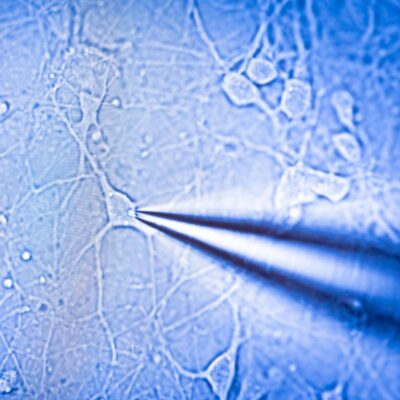
AICER functions as the multidisciplinary translational hub of Semmelweis University. It unites anatomy, engineering, and clinical science in one environment where education, research, and innovation converge.
The center supports the full translational cycle from hypothesis and cadaveric validation to biomechanical testing, digital modeling, and clinical translation. Research activities span biomechanics, histology and pathology. Applied projects extend into orthopedics, trauma, and sports medicine, focusing on motion analysis, joint loading, and implant validation.
Through partnerships with technical universities, clinical departments, and MedTech companies, AICER creates a collaborative ecosystem that blends engineering precision with clinical insight.
Opening Timeline of AICER
Semmelweis University’s new research center in Budapest, AICER will be inaugurated in early 2026 and is expected to operate at full capacity across all areas by the end of the year, after which AICER will begin hosting international cadaver-based courses, translational research programs, and MedTech validation projects.
Technological Capacity and Key Innovations
The AICER technological ecosystem follows a continuous translational loop from data acquisition to digital modeling, biomechanical testing, and clinical application. Each cadaver-based study generates structured data that can be analyzed, modeled, and validated before implementation – transforming every experiment into a step toward real-world clinical impact.
THE INNOVATION PORTFOLIO IS BASED ON FOUR PILLARS, WHICH TOGETHER OPEN UP A WHOLE NEW DIMENSION IN MEDICAL AND ENGINEERING EDUCATION, RESEARCH, AND INDUSTRIAL COLLABORATION.

1 / 4
-
Digital twins created from fresh cadavers (ct, us)
-
VR/AR visualization, AI-based analysis
-
A new level in surgical training and education
Impact: a comprehensive digital cadaver database
2 / 4
-
Robotic pathology – automated sampling, processing, precision measurements
-
Repetitive tasks requiring high precision performed by robots
Impact: Faster, more accurate and safer testing that speeds up research and education
3 / 4
-
Real-time functional and biomechanical measurements on cadavers
(force, strain, material fatigue, rom, flow) -
Development of digital models and simulations
4 / 4
-
Open lab environment for testing new medical technology devices
-
CE/FDA compliance simulations
Impact: a Medtech innovation hub of the region
Molecular Diagnostics and Translational Research
The Molecular Diagnostic Laboratory complements AICER’s innovation ecosystem. It connects biomechanical data with histological, genetic, and proteomic analyses to uncover biological mechanisms of tissue degeneration, inflammation, and repair. This integration supports the development of biomarkers for healing, evidence-based clinical protocols, and novel therapeutic targets – uniting basic research and clinical translation.
Aicer aims to serve as a center covering a wide spectrum of translational medicine processes, making it unique in Hungary and Europe.



1 / 6
Leveraging the extensive clinical and educational expertise of Semmelweis University to identify unresolved challenges in healthcare and medical training. By systematically mapping real-world needs – such as procedural inefficiencies, unmet diagnostic requirements, or gaps in clinical education – the service initiates the translational research cycle, transforming practical issues into research-driven innovation.
Ensuring that new projects and technologies are grounded in authentic clinical relevance, guiding researchers and industry partners toward solutions that directly improve patient care, medical outcomes, and professional training.
2 / 6
Comprehensive capabilities for histological and genetic testing, tissue analysis, and molecular profiling, supporting translational research from bench to bedside. With expertise in biomarker discovery, target identification, and physiological characterization, the lab provides high-quality analytical services that advance both fundamental and applied biomedical investigations.
Researchers and industry partners can access state-of-the-art molecular diagnostics, cellular assays, and imaging-based analyses to validate hypotheses, optimize therapeutic strategies, and accelerate the development of novel diagnostics and treatments. This integrated platform bridges experimental biology and clinical innovation, fostering impactful collaborations across the biomedical field.
3 / 6
AICER provides cutting-edge capabilities for functional modeling, biomechanical measurement, and immersive visualization of human anatomy and movement. By integrating high-fidelity motion capture, force analysis, and computational modeling with augmented and virtual reality platforms, the facility supports the development and validation of new surgical techniques, implant designs, and rehabilitation technologies.
These services enable real-time simulation and performance assessment of medical devices or procedures within dynamic, anatomically accurate environments. The combination of biomechanical testing, digital twins, and immersive visualization makes this platform a powerful resource for both academic research and industrial innovation in surgery, orthopedics, rehabilitation, and medical device design.
4 / 6
AICER's cadaver laboratory serves as a collaborative hub where academic expertise and industrial innovation converge. By providing access to a controlled, high-fidelity experimental environment, the facility enables the joint development and validation of novel surgical tools, implants, and medical technologies.
Researchers and industry partners can conduct pre-clinical testing, usability assessments, and procedural optimization under lifelike anatomical conditions, ensuring that new devices and methods meet the highest safety and performance standards before entering clinical practice. This collaborative model fosters translational research, accelerating the path from concept to clinical application.
5 / 6
Small and large animal laboratories are available, offering a wide range of services for preclinical studies in a GLP-accredited environment.
These facilities provide optimal conditions for testing tools, materials, and methods on live animals, supporting research across various stages. From experimental design and execution to post-experiment tasks such as sample collection and data analysis, the university plays an active role throughout the process. In addition, the laboratories offer specialized support for surgical technique validation and pharmacological testing, crucial steps before human application, ensuring comprehensive assistance in the development of new therapies and technologies.
*Service available at other facilities of Semmelweis University.
6 / 6
Clinical research can be conducted across the university’s clinical departments, which belong to some of Hungary’s largest and most advanced healthcare institutions. Operating at the highest level of medical progressivity, these clinics provide a unique opportunity to study even rare and complex cases.
“Back to the patient” – clinical trials at Semmelweis University represent the final phase of translational research, where validated methods, therapies, and technologies are applied and evaluated in real clinical settings, ensuring that scientific innovation directly contributes to improved patient care.
*Service available at other facilities of Semmelweis University.
Aicer fuses medicine, education, cadaver surgery, molecular laboratories, and innovative engineering.
INTERESTED IN PARTNERING WITH AICER?
Whether you are a medical professional seeking hands-on experience, a researcher looking to collaborate, or a representative of the medical technology industry exploring partnership opportunities, AICER is being built to support your goals — in Budapest, at the heart of Europe.